Characters make the core part of your story. They are the ones that provide depth and guide the story forward. As of its most crucial elements, it becomes important that your characters are well-rounded and compelling. Last year, we wrote extensively about the various types of characters: protagonists, antagonists and other stock characters. This time, we will be telling you how you can create them with depth, how you can make them realistic and relatable.
How do writers create characters that we relate deeply to? How do they make them so realistic that we want to go into their universe and be a part of their happenings? Why are we so invested in their lives,m actively rooting for them? These are the types of questions we hope to answer in this article.
As you may have gathered, there are roles that characters inhabit in a story that may determine their course of action. For example, a protagonist is heroic, and an antagonist is villainous. (Of course, this is a generalization that is made purely for understanding the elements of a story.) There are also guidelines about specific kinds of characters in specific genres: like detectives in a crime mystery or a wizard in a fantasy novel. Due to the specificity, these characters will have traits that are already implicit; ones that your reader might expect. For example, the detective is naturally inquisitive or the wizard shows exceptional wisdom in guiding the protagonist.
But if the audience already knows what to expect, then where is the suspense? Doesn’t the character become automatically predictable?
Perhaps. But there are ways to fix this. The trick is to introduce depth to establish that a character is more than what the story needs them to do.
#1: Go beyond archetypes
The key is to go beyond the formula. Develop their personalities to give them their own voice. Talk about little things like the food they like to eat, their favourite color, maybe a detail about their favourite book or so on. Think about what they love and what they don’t like as much. Your guiding question could be: what makes this character tick?
#2: Find out their motivation
As a writer, you need to figure out these three things: goals, motivations, and intention. What does that mean, you ask? A goal is what a character wants to do/achieve, a motivation is why the character wants to do it, and the intention is how a character wants to do it. Once you’ve figured these things out, you can map out the ch=ourse of your character’s action.
#3: Understand their emotional landscape
Your characters will seem lifeless if all the reader sees from them is a series of actions. Your characters, though fictional, have their own set of emotions too! Your job as a writer is to tap into them. What makes them happy? What makes them sad? What excites the? What haunts them? These are all things you can think about.
#4: Explore their flaws
One way to add depth to your characters is to explore their negative aspects. Reality isn’t a bed of roses, and realistic fiction captures that sentiment. Explore their flaws and failing in their ideologies. Your character’s voice, this way, is not just restricted to what you write about them since what’s on paper is not selective to their virtues. It introduces an element of ‘greyness’ which allows your character to be interpreted differently by different people. Maybe even by the same people across different readings!
#5: Go beyond what’s on paper
What your readers see in a story is only a glimpse of your characters. If it’s a story across a short period of time, your readers may get a closer look at your characters’ behavior, for instance. There is so much that they don’t get to see. There’s a lot that goes unsaid.
As a writer, if you restrict yourself to fleshing out characters only to the extent of the events of your book, your study of them may look incomplete. After all, your character just didn’t emerge out of a vacuum, right? Within their universe, they definitely existed before and after the events of your story.
One way to overcome this is to place them in circumstances outside of what you are writing about in your story. This is simply an exercise for you to get in the shoes of your character to understand how they would react in these situations. This allows you to navigate their characteristics and belief systems on a much larger scale, which you can later incorporate – implicitly or explicitly – into the story.
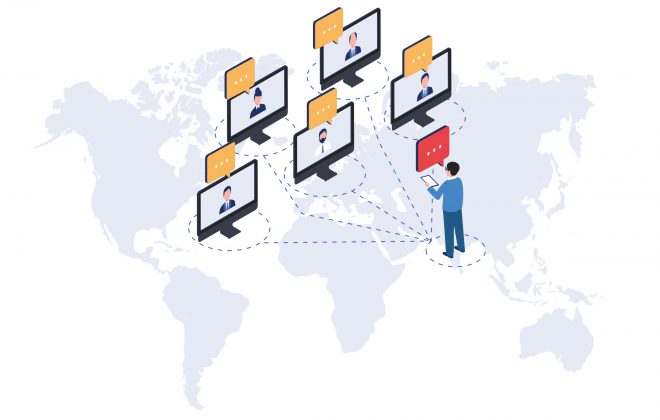
Writers all over the world have not been deterred by Covid-19, conjuring up innovative ways to keep their writing skills sharp. Online workshops, webinars, seminars, discussions, and competitions have spurred their determination to churn out writing during the pandemic. Our team attended a LOT of webinars and workshops, and while we were left thoroughly overwhelmed by the amount of learning, we couldn’t help but notice one thing. All of these webinars were centered in the US, UK, Australia, and any other country except India.
India has a vibrant crowd of young and upcoming authors trying to navigate the Indian writing and publishing industry on their own. This is because unlike writers in the States, Europe, and other countries, who go through the conventional route of getting a BFA in Creative Writing (or an MFA), and pursue writing as an extension of their academic qualifications, writers in the Indian subcontinent pursue writing as a passion. As part of our aim to improve the quality of writing that our editors receive and to help writers navigate the Indian publishing industry, PaperTrue is going to organize a series of webinars, the first of which will be ‘What are Indian Publishers Looking For?’ This webinar will be held on the 5th of December, 2020 from 6PM-7:30PM.
The publishing industry is competitive and the information is exclusive to the agents of this industry, with no way of helping outsiders or interested authors engage with it. Apart from this, there are limited resources, and it will take a lot of time if an author is to embark on this research independently. Our webinar aims to bridge the gap in the topic and its easy availability to those passionate about pursuing a career as a published author.
This webinar will cover a wide range of topics that are of interest to interested authors like the process of approaching publishers, the kind of manuscripts that Indian publishers are looking for, the commissioning process of a manuscript, and industry insights. And all of this will be meticulously explained by our panel of experts, Kavita Kane and Pranita Chettri. To register for the webinar on Eventbrite, click here!
And this isn’t the only webinar, there will be more! We will be touching upon a multitude of aspects of the writing and publishing scenario in India. To get updates, subscribe to PaperTrue Resource Center!
The bedrock of marketing has shifted drastically to purely content-based promotions. More specifically, it has become content-intensive. According to Hubspot’s 2017 State of Inbound report, 53% of marketers have content creation as their top priority, and with good reason.
Great content increases customer retention and drives them to your website again and again. Apart from this, it’s not only important to get followers but also to create content that trends. There are a multitude of reasons having a solid content strategy should be one of your most important priorities. A lot of companies don’t focus on content as much as they should. The few that do still struggle with trying to understand what kind of content they should put out and why they should divert resources to content creation.
This is where content editing comes into the picture. It is very important to market your company and to gather the desirable target audience. Here are some ways editing can make a huge difference in enhancing your content:
1. It makes your content more algorithm friendly
Search engines like Google are constantly releasing new features and updates that aim to make it easier for people to look things up. With the rapid development of algorithms of search engines and social media sites, there’s a risk that your content may not reach your target audience. An editing process that is cognizant of such requirements allows you to put out content that is algorithm-friendly, thus increasing your reach.
2. Content editing makes technical language more accessible
As writers or experts of a particular subject, it’s easy to be biased and lose track of how much your reader might actually know of what you’re writing about. An editor can put that in perspective for you and give you notes about how jargon or niche processes can be more accessible to the layperson.
For example, if your company specializes in creating high-end engineering equipment, you might need to explain jargon to someone unfamiliar with such equipment. A content editor helps you revise your content and ensures that the inherent meaning of your content doesn’t change but the reader still understands what you’re exactly trying to convey.
3. Editing gives your marketing material an even tone
As a brand, you don’t want each social media channel giving a different impression and then the website giving a completely different impression than the rest. An editor helps even tone the style of your copy so that it doesn’t seem jarring.
They can even help you retain this consistency on a broader scale, throughout your content strategy, by collaborating with you on a stylesheet or standardized guidelines that set the tone of your brand communication in each piece of content you create.
4. You can avoid embarrassing errors!
How many times have you seen another company’s embarrassing typo and cringed to yourself? Well, it could happen to you, only if you don’t have a content editor go over all your copy first.
Grammar errors, typos, missing punctuation, bad sentence structure and other language errors may seem like minor issues to you, but to your reader they may seem jarring and even leave a bad impression. These are errors that are really easy to eliminate, and a content editor is your go-to person for that.
5. A revision makes for engaging content
The kind of language that your copy incorporates is the face of your company. Do you want to be known for tedious content? We thought so. That’s where an editor comes into place and helps make the advertising copy less “sales-y” and more interactive and informative.
Their expertise of languages allows them to make content suggestions that make your copy more dynamic, in turn allowing you to present yourself as more approachable, friendly, and (ultimately) customer-oriented.
6. Editing makes your content error-free and accurate
The main job of the editor is editing your copy to ensure that your content is error-free. A comma could mean a world of difference between what you’re trying to say and what you actually end up saying.
You could have the best copywriter in the world, but a little editing does no harm to enhance their work further!
7. An editor can help you create a style guide
A content editor does not just look at removing errors from your copy but also develops a style guide for your company. Style guides are necessary for every marketing company; they make your branding consistent on every channel.
Style guides have protocols on spelling, the dialect of English you will be using, what vocabulary you should use and avoid, formatting guidelines, tone, style, etc. This is especially important when you have a lot of people writing or creating content on behalf of your company and want to maintain a global presence.
8. Define, prioritize, and refine your message
An editor helps you frame your content in such a way that the reader/viewer gets the exact message that you were aiming for. This is done by removing any inconsistencies in the form of unwanted subtext.
9. Not only edit, but help in creating content
A content editor helps you to create quality content for your branding across all channels. Instead of creating content that is sale-sy and seems hollow, having an editor helps the content be more authoritative.
Most marketing companies are hesitant to spend on an editor, often undermining their role in the growth of the company as a whole. We suggest that if you don’t have an editing team, you should outsource one. Apart from understanding the language of your target audience, editing makes technical language more accessible, helps avoid embarrassing errors, makes your copy more engaging, and avoids normal grammatical and spelling errors. Even if you think you can do it, sometimes minor things slip from under your eyes which then go online. This is why it’s better for a trained eye goes over the content. It won’t burn a hole in your pocket and you can focus on content rather than how it’s presented, which gives you more time for creative concepts.
Here are some related articles that you might find interesting:
In a professional landscape that necessitates the use of the internet, interesting concerns arise. Although this trend has been recent, it has prompted the rapid growth of content marketing, and digital marketing in general. While visibility, in a way, has always been important to a company’s growth, never has it been more important than now. The ease of setting up an internet presence has, in turn, made it increasingly difficult to actually make it to the top – in this case, rank on search engines.
This is particularly important for B2B marketers, who often attempt to reach out to a base that is unfamiliar with their work altogether. So the question is: how do you approach this? How do you ensure that your niche does not drown into oblivion in the internet’s abyss?
If you’re a novice in digital marketing, stick around as we explore how paying attention to the way you write and organize content is the most reliable game changer.
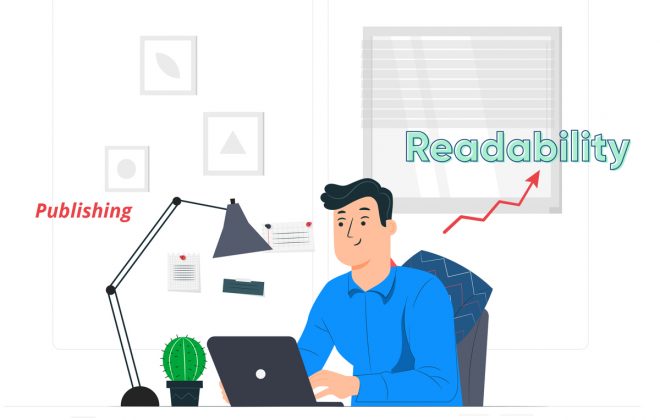
If you think about it, it’s really just a matter of common sense. What ranks on the internet is what people can read and understand easily. The idea is not to dilute what you have to say, but how you say it. It should be – and here’s the keyword – readable. Readability is an important metric that tells you whether the layperson can understand what it is that you’re talking about. This means that you’ll have to use your jargon sparingly, a task that becomes tricky the more specialized your domain is.
The goal is simple: If you want your audience to widen, your language has to become more accessible. Once that happens, your content becomes more approachable, spreads wider and increases the chances of converting customers.
What can you do to ensure readability?
There are innumerable steps you can take to make sure that the ticker against readability does not go red.
Position yourself as the reader:
When you’ve been involved in a niche job for a long time, some lines blur. It’s easy to forget, when you’re talking to someone outside your workspace, that both of you aren’t on the same page. Try to position yourself a reader looking for a concise introduction in whatever you’re talking about. As for writing, this means that you have to put things in context and explain difficult terms and concepts as you would to a total newcomer – a surprisingly effective way to reduce jargon.
Avoid passive voice as much as you can:
It’s far easier to fall into this issue than one would think. Fortunately metrics tell you when you’re shooting the limit, often giving you a percentage count of how much of your text is in passive voice. Passive voice is generally used in academic or technical writing, whereas active voice is considered more conversational. For the purposes of sounding approachable, active voice makes more sense.
Keep it concise:
This applies to sentences, paragraphs, entire section even. Readability is not just easy-to-understand text, but it is also about a visually appealing/accessible arrangement. If a user stumbles upon your webpage only to find it thoroughly cluttered, rest assured, they’re not converting.
Kill your darlings:
This one’s a no-brainer. Eliminate words that are not necessarily. Using excessive language often alienates a reader. Remember, you’re not aiming for literary genius here: just enough to reach out to your intended audience.
Working on a dissertation can be daunting. Whether it’s your first one or your tenth one, dissertations are a massive undertaking. And then, there’s the preparation. This is where the proposal comes in. It is the first step towards writing a dissertation. If you ever find yourself writing a dissertation, this is where you begin.
What is a dissertation proposal?
As the name suggests, it is a proposal for an original research project. It acts as a blueprint for the whole project and generally outlines what the project is, why you have chosen it, and how you intend to carry it out. If you’re writing a proposal to secure funding, then it’s important to be as clear as possible about your research goals.
More than often, during the research process, you may find yourself deviating from what you wrote in the proposal. That’s okay, too, because the proposal is like the first draft of your research idea. Deviation happens due to trial and error, and that’s totally acceptable in research. It’s okay if you don’t have all the details planned out just yet!
What you definitely need to be sure about is the originality of your research idea, its broader significance in your chosen field, and the research questions themselves.
How long should a dissertation proposal be?
There aren’t rigid guidelines for how long a dissertation proposal should be. But, you should definitely check if your university has provided any guidelines about page length or word counts. It’s far more important for you to outline the plan of action. Word count is a secondary concern, but make sure that it is brief and concise. On average, dissertation proposals are between 15 and 20 pages long. They are almost always over 10 pages long.
What should a dissertation proposal include?
Introduction to your broad area of research: Introduce the reader to the topic of your project. Establish a context that will allow you to segue into the research questions or problem you intend to tackle.
Research objectives: First, write about why you are undertaking the research project. Write about what prompted you to work on it, and how you are or plan on acquiring funding and resources for it.
Literature survey: In this section, the goal is to provide a summary of existing research in your field. It will also lay out your thought process to show from where you are developing your ideas.
Research question and hypothesis: The literature review should lead to your hypothesis. This is the core of your proposal because this is where you really get to elaborate on what the work will be about.
Methodology: Here, you really dig deep into how you plan on conducting your research. Are you going to conduct in-depth interviews or do some lab experiments? Lay it out on the table with great detail. Take as many pages as you can (unless there’s a limit) for this.
Research timeline: Dedicate a page or two to plot out the timeline of your project. Be clear in stating how long to complete each component on the project.
Formatting a Dissertation Proposal
Formatting and structuring your research is an important part of any academic undertaking. Your university and field of research should already give you some idea of what referencing and citation style you’re likely to use. So make sure you check the guidelines about that. You should look out for details about in-text citations, documenting your sources properly, and information about compiling the reference list and bibliography.
And browse through our blog for introductions on APA, MLA, and Chicago citation styles.
So there it is! An introduction to how to write a dissertation proposal. We hope this guide was helpful to you and sets you on a path to writing an invigorating dissertation!
We’ve also compiled a checklist for you, which you can use to see whether your dissertation proposal follows the conventions and guidelines set by your university.
And while you’re doing just that, don’t forget to follow our blog for detailed guides and tips that will help you throughout your dissertation writing journey.
For the last year, PaperTrue has been diversifying its clientele to work with businesses that require editing work. So far, we have collaborated with educational publishers, agencies providing technical content, and educational consultants. We also hope to branch out to manufacturing industries, pharmaceutical companies and translation agencies that regularly outsource editing work.
One of the main motivations for this shift is the changing landscape of the broader publishing industry. The rise of digitization, coupled with the current healthcare crisis, has opened up opportunities for professionals across the industry to collaborate with each other towards producing better publication material. Establishing long-term tie-ups through outsourcing means that the publisher and editors can focus on their respective specializations to publish better material. PaperTrue, as experts of language editing, are also a part of this phenomenon.
In this article, we hope to lay out this process between PaperTrue and a business. How does a business sign us up as a vendor? How do we manage businesses as clients? How are contractual agreements negotiated? These are some of the questions that we will answer in this article.
Signing up with PaperTrue
We usually find our clients either by lead generation or they directly approach us via email with specific requirements. To give them an understanding of how things proceed at PaperTrue, we initially offer them a sample edit.
While we generally restrict the sample edit to 300 words, we tend to extend the word count for business clients. This allows the company to understand PaperTrue’s internal processes, provides transparency, and allows them to gauge whether we are the right fit for their work.
Following the sample edit, the firm and PaperTrue proceed to negotiate a contract that is suitable for both parties. Since each firm has its own specific requirements that need to be catered to, this is where there is scope to really plot out the details. Specifics about word count per month, special pricing deals and other logistical processes are negotiated. Due to the nature of flexibility across deals, we do not offer the rates specified on our website. Instead, we offer flexible pricing options that are consistent with the company’s requirements. We also offer discounted rates for larger, more long-term contracts. There are also options for prepaid and postpaid payment.
The Logistics of B2B Contracts
Once all the terms and conditions of the contract have been agreed upon, the firm signs a non-disclosure agreement (NDA) and the official contract. They are then assigned a point of contact as a project manager from the Customer Service department, who is responsible for communication regarding editing requirements, logistics, and billing procedures. This person would act as a bridge between the firm and the editors assigned to them. A member of the Operations team is also assigned to the firm to ensure that all internal processes and communication is smooth.
The Editing Process
As a business client with a long-term contract, your work will be edited on a priority basis. Each client is assigned a team of editors, a Senior Editor, and a Managing Editor. This three-tier system will ensure multiple thorough reviews that will eliminate grammar and language errors, and enhance the overall quality of the text.
PaperTrue has a three level editing process, each of which focuses on different aspects of editing.
Level 1, which is proofreading, focuses on technical issues like grammar, spelling, punctuation, sentence structure, and formatting.
Level 2 editing is more in-depth, and focuses more on language clarity, word choice and coherence within paragraphs.
Level 3 focuses on larger structural concerns such as the overall organization of the document and language quality.
The initial round of editing is standard to all clients. The assigned editor(s) work by the requirements/guidelines that have been specified by the firm, and edit the documents accordingly. Each editor maintains an in-depth stylesheet that contains said requirements and revisions requested by the company. This allows us to understand where we can adapt and improvise our work, but it primarily helps us maintain consistency in format and language throughout all the documents.
The work is then reviewed by the Senior Editor. In the event that changes to the documents are required, the SE sends the work back to the editors or makes the changes themselves. Once the SE sends their seal of approval, it then goes through to the Managing Editor, who does a quality check. After thorough review from the editors in all three tiers, the work is sent back to the company within the stipulated deadline. The edited document(s) can be downloaded from the dashboard of the firm’s account on PaperTrue’s sites, or, upon request, can be directly e-mailed.
Post the initial editing process, we hold a feedback session (via call) with the client to address queries and (potential) pain points. The call would generally be held between the points of contacts of the firm and PaperTrue. We discuss feedback and give them more clarity about who we are and the work we do. This call is yet another way for PaperTrue to establish transparency in our editorial and logistical processes.
This call allows the client to provide positive and negative feedback: whether (and why) they liked our work, how we can further improve it, and solutions for pain points that are negotiated and offered based on what’s suitable for both parties. We also take the opportunity to reexamine the contract to discuss future collaboration and the time-frequency in which they would occur.
Post-Service Support
A writer-editor relationship is never a one-time relationship. This is the guiding philosophy that helps us establish systems of post-service support to all our clients. This is why, even after we have delivered edited work, we have open channels of communication with PaperTrue. If anyone should have further queries or grievances, we will be happy to be of service to you via phone, email or chat. Additionally, we also provide a free revision period, within which clients can approach us for further edits. Since our business clients’ documents are edited on a priority basis, our post-service support is also equally prompt in these cases.
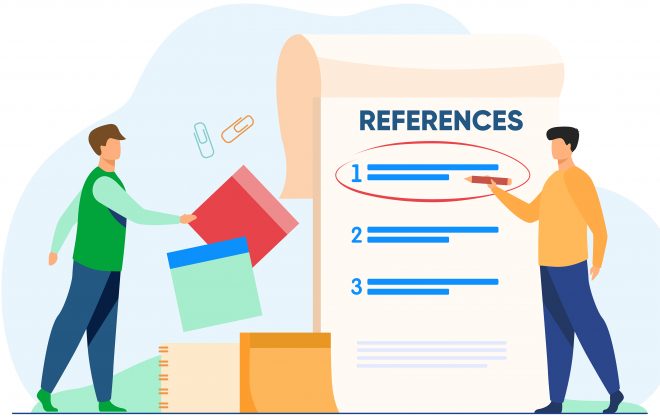
One of the most important but tedious tasks while writing a paper is compiling a reference list. Whether it’s Chicago, MLA or APA you are trying to wrap your head around, it’s a task that can baffle the best of us. But don’t worry, because we’re here to help you out with exactly that. How can a student effectively edit and proofread the reference section of a paper? Let’s find out.
Preliminary steps:
It wouldn’t be surprising if you were the sort of student to scramble for your sources at the last moment. It’s guaranteed cause for total chaos, and that’s putting it graciously. This is why we say it’s important to log your sources while you are studying them.
You can choose to do this however you may wish to, but you can also take our advice on the matter.
The other thing you should have done before beginning this herculean task is to note down what citation style you are supposed to use in your paper.
Things to remember:
Despite the citation style you’re using, there are certain elements that are commonly used.The difference usually lies in how these components are organized.
Name of the paper
Name of the author(s)
Date of publication
Name of the publication
Volume and issue of the publication
Page numbers of the journal/book (if applicable)
A URL/DOI (for digital sources)
These are the components you are looking for while compiling your reference section.
We have already written about the specifics of each format, including Chicago, APA and MLA styles, so you can go check them out as well. We are not going to dwell on it now.
Editing and proofreading
The purpose of reviewing the references is to make sure that everything is cited correctly, but it also to ensure that you are referencing the correct information. Therefore, this reviewing should be done in three layers.
Check if all your in-text citations match up
Check that you are citing exactly what you are claiming to cite.
Make sure all the components of your citation in the reference list are ordered correctly.
a. Reviewing in-text citations: Before you even begin to look at the references/works cited/bibliography section, the first step is to cross-check your in-text citations with your list of references. Every in-text citation must correspond to an entry in the reference list.
b. Reviewing the cited material: It’s not enough that you have attributed the reference to the right paper. In addition to getting the paper written, you also have to ensure that the quote or the paraphrasing has been cited correctly.This means that you have to specify the page number(s) of the paper as well. If you are paraphrasing or quoting the paper, add your in-text citation after your explanation. Keep in mind that if you are mentioning the author within your text, you only have to put the year of publication in parenthesis.
c. Reviewing the reference section: The reference section (or the “bibliography” or “works cited” section, depending on the citation style) is the last part of your paper. It is a list of all the works you have referred to while studying and writing the paper. You will have realised by now that this section has to follow a particular format. Once you have figured out the format that you need to use, you can use a citation machine to generate your list of references. Once you have done that, cross-reference your list with the format that you need to follow and fill out any missing details.
So there you have it. An easy guide to get you started on refining your reference section and making sure that your citations are in order. Editing and proofreading your reference list is the most effective way to eliminate plagiarism in your paper. By reviewing it, you also end up checking if your arguments are in place and if they align with the literature you are citing, referencing and deriving from.
Hope this was a helpful guide into academic writing’s most difficult task. Don’t forget to follow PaperTrue for more tips about writing, editing and proofreading academic papers.
Academic papers do not get written in one night. They have to be written multiple times, revised and edited countless times to get all your academic juices flowing in just the right direction. Evidence suggests that 21% of papers are rejected without review and apparently 40% of papers are rejected after peer review.
Rejection happens to the best of us but it can be a learning experience. Don’t rip your letter to shreds or in case you receive a rejection e-mail, don’t throw the computer to the ground. Don’t get heartbroken and vow to never write another paper. And this is the case for even the most seasoned researchers. Experienced researchers face rejection for their papers even after their credibility and expertise has been established. Therefore, we suggest that researchers should focus not on avoiding rejection but on what their options are after rejection.
1. Deal With Your Feelings
Rejection is never is easy to deal with, and is particularly hard at the beginning of your career. It’s best if you identify your emotions and employ the most wholesome best coping mechanisms: relaxing with a cup of hot beverage and music, calling your best friend and getting a hug from your kids, or your dog. This will put you in a calm state of mind and help you rationally evaluate your rejection.
2. Read the Rejection Letter
Read the rejection letter carefully. Don’t skim or only read the subject line. All of your queries are usually answered in the rejection letter itself and it’s surprising how many authors direct questions to their friends or teachers that have already been answered in the letter itself.
Amidst a rise in journal article submissions, journal editors review the paper and determine the relevance for the journal audience, checking whether they are on par with the recent publications or upcoming accepted papers and the overall quality of the journal. Journal papers that do not pass this initial filter tend to get rejected without any further review. Review the rejection comments because they provide the next steps to re-submitting your paper.
Papers that pass the initial filter are sent for peer review. If they are rejected in the peer review, they usually have detailed comments about the strengths and weaknesses of the paper according to the reviewers.
3. Follow the Author Instructions
In the review process for many journals, many papers that do not follow the author instructions in terms of word limit, style, formatting and number of tables and figures will immediately be rejected. Author instructions continue to expand, and they’re not the friendliest of instructions out there. And if your paper has deviated from the rules, attach a cover letter with your submission, stating the deviations and your reasons for it. Make sure that your reasons are not hollow and actually add to the importance of the core subject of the article. When you submit a paper that does not adhere to author guidelines, you risk annoying the journal editors and in doing so, delay the review of your paper.
4. Match Paper to Journal
A common reason for internal rejection of submitted papers is a mismatch between the paper and the scope of the journal, which is closely related to the journal’s target audience. Even if the title gives an idea of what the journal is about, make sure to check out the website for an in-depth understanding of what kind of articles are published. Go through 1 or 2 journal issues to understand the most common themes, research designs, and authors. Thus, reviewing a few journal issues for content and format, before submitting your paper, is highly recommended.
5. Resubmitting to the Same Journal
If the problems that were mentioned in your rejection letter referred to the steps/results that you have done, it is possible for you to resubmit with the missing data. In any case, it is best to check with the journal office first. Another possibility is that the reviews may suggest that you need to put your paper in a different category. This means that you will have to do a complete rewrite of your paper so that it fits the author instructions for the new category.
Resubmitting to a New Journal
You could try resubmitting to another journal but it is important to make all the appropriate changes before doing do. Editors of the journal that you’re resubmitting to are usually pleased to receive a manuscript that has been previously reviewed and revised, and that’s why it is better to avail yourself of paper editing services. It’s important that your paper has been edited and proofread for contextual inaccuracies, grammar errors, spelling mistakes, and structural flaws. Check out PaperTrue for journal editing services! Use all the valuable feedback and the chances of your paper getting rejected are none!
Most of our journal papers have been rejected more than a few times, and that’s okay! But the important thing is to not stop questioning and revising your paper according to the feedback you get from the journal’s editors. Remember; even the best papers get rejected. Part of the reason for this may be your paper got assigned to reviewers whose expertise doesn’t fit it, reviewers who are bad at reviewing or reviewers who simply do not have the time to review it properly. It’s not the end of the world to have your paper rejected. With the best paper editing services, a little determination, and hard work, it’s bound to get published in a good journal!
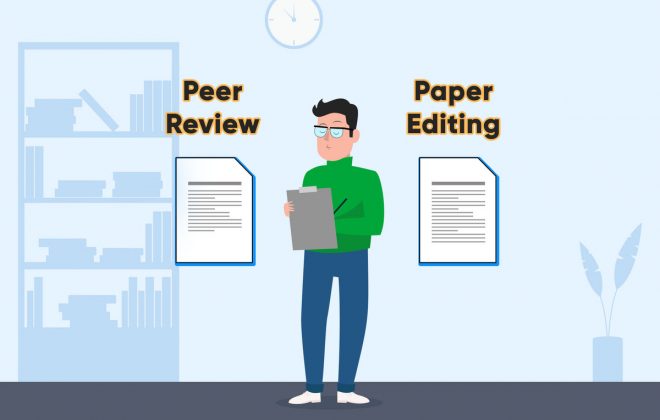
It’s academic writing season! Folks everywhere are hanging out their journal articles to dry, sipping tea nervously. A journal article could be a great segway between your thesis submission and acceptance time. But a good journal article needs to be edited, proofread and peer-reviewed thoroughly. But both of these terms are not the same. Then how are they different if they essentially and superficially might mean the same thing? Read on to find out!
What is a peer-reviewed article?
A peer-reviewed article or ‘refereed journals’ has an editorial board of subject matter experts who review and evaluate the submitted articles before accepting them for publication. The steps to peer review an article are:
An editorial board asks subject experts to review submitted articles before accepting them for publication in a scholarly journal.
The criteria to evaluate the submissions include excellence, novelty and significance of the research or ideas.
What is journal editing?
Paper editing is to have an external editor to review your journal article for grammar and punctuation errors, structural errors, and provide suggestions regarding the written matter. These constructive suggestions help make your journal article more cohesive, coherent, and well-structured.
What is the difference between peer review and paper editing?
To put it shortly, paper editing is reading and evaluating a manuscript and providing constructive feedback for your journal article. A peer review is a review done by more or less independent scholars of the same field to assess the quality of work.
Not only journals, but independent researchers can also get their paper peer-reviewed. Journals include this process in their manuscript submission guidelines, but this is not necessarily the case for paper editing. The only purpose of a peer review is to upgrade and polish the standard of a journal article, whereas paper editing aims to improve the quality of the article in terms of structuring the article, removing any grammatical and punctuation errors, etc.
An editor deals with aspects like logic, presentation, formatting, tone and style of writing. They ensure that the researcher’s opinions are presented in the best way and with an impact. Look at it like this: an editor is like a mechanic, they will fix your car and tell you what problems are there in the mechanism of your car. On the other hand, a peer reviewer is like an automobile expert who looks at improving the speed of the car, looks at how the mileage would increase, what new features can be added to it, etc. As opposed to an editor, a peer reviewer advises the researcher of how he would have conducted his research, and what research methods would have made a difference.
For a good journal article, both the editor and peer reviewer are important. While editing corrects the structure of your article whereas a peer reviewer gives you an extensive analysis. A peer review provides you with a detailed report in which the following things are checked:
1.Does the article need rewriting?
2.Is there any ambiguity regarding jargon in the journal article?
3.Does the journal article require any modifications regarding the theories?
4.Is it broadening the scope of research?
Conclusion
Both peer-reviewed and edited articles are important because the processes work as a quality assurance mechanism. Without an independent review for your article, it could just be an opinion piece. This part-disadvantageous and part-collegiate process spots flaws in your argumentation, research quality, grammar and punctuation and the interpretation of results. The difference to spot between these two can be hard and it can be even harder if you are in a frenzied state of mind because of the amount of black coffee you’ve had while writing your article. Check out PaperTrue to get quality editing and proofreading for your journal articles!
Subscribe to our Newsletter
Get carefully curated resources about writing, editing, and publishing in the comfort of your inbox.
[contact-form-7 id="12723" title="Subscribe Form"]
How to Copyright Your Book?
If you’ve thought about copyrighting your book, you’re on the right path.