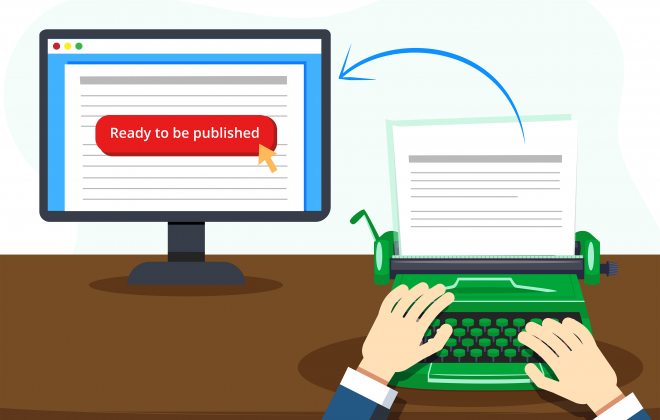
Audiences are moving rapidly from print media to online media, for consuming content. Books, magazines, newspapers, articles, you name it and the internet will have it. The world of online publishing has grown to accumulate this rapid change. Apart from providing readers with a wide variety of content, it also provides a platform for new and upcoming writers to publish their work and get noticed. Starting an online publishing company has also proved as a way to formalize and monetize content production itself, within a larger business model and as a way to provide some structure to struggling creatives. It’s a great idea to start an online publishing company, but what are some things you should keep in mind? Let us take you through it.
- Follow your passion.
This might seem like an idea that has been eaten and regurgitated multiple times. But this is the foundation on which your company will be built and will succeed. If you don’t start an online publishing company about something you love, then it won’t be as successful or as dynamic as you want. Put your desire of doing something to good use, be it writing or baking or digital marketing. Find something that gets you excited and make that the core of your online content production.
- Contacts, Contacts,,Contacts! .
When you are a fledgling in an industry, try to learn as many ropes as you can and meet with as many people as you can. These contacts will prove to be a beneficial network that will:
- fill in the skills gaps
- provide ideas and resources to remove some of the challenges along the way,
- and lead to connections that can propel your business forward.
Use the contacts that you had made from previous jobs and previous projects, especially if they are people in high places, who will definitely help you develop high quality and creative content. The success of these previous projects was due to the people who worked on them and this is precisely what will help you tap into great talent. Always look to those around you so you don’t have to start from scratch.
- Spot a gap in the market.
Spend time researching what is already out in the market and identify what is missing. Locate a niche, find out what remains untouched in there and target all your audience that wants more content on it, towards it.
- Focus on quality.
Focus on making your content fully researched, well written and creative. Bring in a team that will combine their talent and creative potential to create highly-engaging and informative content. Make it the best or don’t make it at all, because your audience deserves the best.
- Develop what your target audience wants more of.
Focus on creating creative series’ on your online publishing platform that engages the audience and leaves them wanting more. When you create a series, it creates a hook that will enable readers to check whether there is a new article or a post in the continuation of the same series.
- Business and Marketing Plan
You need a proper business plan before you open up any business. Make a few important decisions like:
- What is your budget?
- Advertising and marketing plans?
- Niche?
- Are you going to require more people?
- Company Name
Think carefully about your company name. Your company’s name will be its identity. It has to be short, clever and eye-catching for people to take notice and think about checking your company out. Make sure that the name you choose has not already been taken. Register your company name with an appropriate authority to ensure that there is no copyright infringement.
- Build a Database
Target and pitch writers from your chosen genre to publish with your company. The first thing that you would do for this is create a list of authors and have their writing samples evaluated so that you know which authors align with the kind of brand you’re trying to set up.
- Website
This is the basic first step that you need to take in order to build an online publishing company. Secure a domain name and establish a web presence. Your domain name can be the name of your company, your name or a quirky name that is related to the genre you are based in.
But these aren’t the only things that you need to keep in mind while starting an online publishing business. It also must be guided by the knowledge of basic business operations, and overall daily planning. These tips provide an excellent framework to conceptualize the kind of content you need to make your online publishing company relevant and successful.
PaperTrue helps you out with tips and tricks to improve your writing along with sharing industry insights about editing and proofreading. To know more about what we do, or to place an order, visit PaperTrue!
Want to keep reading? Here are the newest articles we’ve worked on:
10 Things to Keep in Mind While Hiring a Copywriter
According to a survey by Roper Public Affairs (2012), 80% of people prefer to know about a company through written content. But in the decade since then, we know that the scope of content marketing has grown exponentially, and now relies on social media content, Google ads, email marketing, and much more — besides long-form articles. A compelling piece of content is likely to generate more internet traffic which will convert into leads, ergo more sales for your company.
Web content and the writing on your website’s landing page will also determine whether your customer will stay. A lot of business persons do not have the time or experience to create copy that is engaging and interesting to your customers. This is why it’s important for you to think about hiring a copywriter for your firm.
But what factors must you look for when you do this? Let’s have a look.
1. Research your target audience
Who is your copywriter targeting through their copy? Who is your main target market? It is better to do your research thoroughly and then hand over that data to your copywriter so that they can write targeted copy instead of undefined copy. Even the best copywriter in the world will not be able to give you the desired results if they don’t have a defined target audience. Make sure that you have the following data before you hire your copywriter:
- Your (potential) customers’ key pain points
- Their desires and their problems
- Their spending habits and what they dislike
Your resultant copy will be highly targeted and powerful. It will speak to them directly and is more likely to convince them to invest in your product or service.
2. Have clarity about what you want the content to do
What results do you want to get? Even if it may sound obvious, saying “to make more sales” or “increase web traffic”, is too vague and undefined. Your copywriter will need to understand what your targets are and what results you want to achieve. Do you want to increase your website conversion rates? Do you want to increase your followers? Share these goals with your copywriter. They will be better able to suggest ways to reach those targets and suggest realistic options suited to your company’s needs.
3. Experience within your industry isn’t always necessary
Even if an experienced writer for your particular industry isn’t available, a writer’s ability to write well for the medium takes precedence above all. A good copywriter will write just as well for a hipster book cafe as they write for a giant mobile apps company. A copywriter well-versed in industry standards will have the necessary research skills to learn about your industry and your organization, and make necessary recommendations about what content strategy will work for you.
This may differ if you need strictly technical content which requires an in-depth knowledge of the industry. In that case, you may have to hire someone who has more experience in copywriting for that field and knowledge of the medium you want them to write for.
4. Vet the applicants and contact their references
All writers can give you samples of written work, but you need to understand how they work, how they communicate, and what their work ethic is. For this, you need to contact their references and enquire about all these things. An experienced copywriter will have a bunch of references, but you have to at least contact two of them and ask about their strengths and weaknesses.
This way, you get a more thorough understanding of their work experience and their knowledge about copywriting, industry practices, and their fields of expertise.
5. You get the copy that you pay for
A good copywriter will demand a due fee and rightly so. Just as you pay graphic and web designers their quote, you must pay for good copy. Remember that a copywriter is not just being paid for writing – what you see are just words, but what goes behind the scenes is a lot more. You’re also paying them for the time and effort they put into research, revisions (perhaps multiple), editing, proofreading, possibly even keyword optimization.
All of this takes hard work, but investing in an efficient copywriter is absolutely worth it because well-crafted web content is timeless, provides utility to your clients, and brings you leads! It’s a win-win situation, wouldn’t you say?
6. Look for a voracious reader
It’s always better when it’s a reader, isn’t it? Even if this is not the most important thing that you need to keep in mind, it is definitely an added benefit when you look to hire a copywriter. Being a voracious reader certainly gives them that edge and a flair for literary language.
A vibrant reading habit also exposes them to a variety of topics and ideas (perhaps many of them unrelated to your niche), allowing them to think from different angles. A good reader always has good instincts and a good copywriter should always think from the customer’s point of view. This is a combination of skills you can’t go wrong with and allows them to give their content that human touch.
7. Hire someone (who can make you) likable
Since we’re on the subject of copy that speaks to the human spirit, it’s an apt time to remind you that effective content is so because it makes you friendly, helpful, and approachable.
So hire someone who understands communication and is just as friendly, helpful, and approachable in person (or virtually). A copywriter will help you create digital content that is probably going to be many people’s first impression of your company, so you want someone who will help you craft that image. Moreover, they might even have to interact with clients when necessary. (Plus, they’ll be around you all the time!
It may seem obvious, but it’s worth remembering that it’s important that your copywriter’s demeanor is pleasant and their work ethic suits your company.
8. Hire a copywriter, not a wordsmith
Of course, prose is a priority. But with digital content, sometimes it’s better to be straightforward than to be clever or obscure.
A copywriter writes copy, first and foremost, but that’s also the beginning of the process. They also have to keep track of technical aspects of writing for the web; this includes checking for SEO, doing content research, understanding the target audience, using keywords and phrases that will tell internet algorithms who to direct your content to, and so on.
It is important that you hire a person proficient in all of this process.
9. Clarify their turnaround times and deadlines in advance
If you’re working with a freelance copywriter, this is something you should definitely be on the same page about, preferably before they even start working with you.
No matter how great a copywriter’s work is, your content has a timeline that they need to follow. If they are already overworked, your company may not be a priority. This can result in the late delivery of your content or poor communication.
10. Test their skill before hiring them
It’s important to give the copywriter a test that offers a practical example of the kind of content they’ll be expected to write for your company.
Once they complete a test, offer them feedback on what they can do better. Give them another test and check whether they’ve incorporated the feedback. This is a great way to test their responsiveness and how well they retain your feedback.
A great copywriter is an amalgamation of a good editor, writer and collaborator. With these tips, make sure that you hire the best for your company.
For more tips and tricks on writing business copy, subscribe to the Resource Center by PaperTrue.
Why Does a Business Need a Stylesheet?

Industry Insights: Proofreading Tips for a Business
Why Content Marketers Need a Professional Editor

The saying that goes around these days is that “content is king.” Nowadays, it is so common that we say it in passing: but it holds a tremendous amount of importance. People from all walks of life have immersed themselves in creating content, whether it is for personal branding or as part of a larger organization.
There is a lot of creative liberty involved in content creation. Still, it calls for technique and precision. You may understand the know-hows of your market and target audience, but are you as knowledgable in the art of persuasive writing? We have written about how this works on an individual level, but it is time to look at the same considerations from an organizational perspective.
Content is the face of your company.
Regardless of what field your company is in, there are two certain things. One, you’re neck-deep in competition. Two, an online presence is crucial in making yourself heard. Your internet presence is the first thing that a prospective customer encounters: either through your website, social media presence, or reviews. In a sense, the content you generate and publish should represent what you stand for. Moreover, it should be visually vibrant and aesthetically pleasing.
The truth is, though, language is not everybody’s cup of tea. Writing for a specific audience and a specific purpose takes a bit of precision.
An editor makes your writing more persuasive.
The best kind of content is one that is well-thought-out. It is compelling, succinct, yet persuasive. The heart of content marketing is in writing. It is in the language. An editor can help you achieve precisely that. This is when an editor becomes more than just your spell-checker app. One of the most successful ways your writing can become powerful by the word choice you use. An editor will help you write better based on your goals.
Bad grammar is the #1 reason you’ll lose credibility.
Ever found yourself snickering at a badly written billboard while driving? Or spotted an error in a menu while at a restaurant? It’s a little difficult to trust the quality of a brand after that, right?
Having blatant errors in ad copy or a social media post brings down credibility considerably. It may give the impression that you haven’t bothered to go through your copy.
An editor can help you improve your writing.
If language is the heart of content marketing, then the how of crafting copy is just as important as actually doing it. As a language expert, an editor can help you craft your copy to make it more effective. They can enable you to use language as the tool it is. In addition to commenting on things like word choice and sentence structure, they can also
The advantage of having an editor – a non-marketer, for this purpose – comment on your marketing copy is twofold. Not only can they tell you exactly how someone might react to your copy, but they can also help you write towards the reaction you seek out of an audience.
Editing services and research: Common misconceptions
As if academic writing wasn’t hard and intricate enough, there are technicalities of editing and proofreading that only a fraction of the academic writing community knows. This gives rise to so many misconceptions about sending your work to a professional editing service and hampers your work.
#1 An editor/proofreader might rewrite your work.
This is certainly a valid concern for some writers, but the role of a professional editing and proofreading service is not to change what you have written but to give you suggestions for improvement and correct the superficial grammar and punctuation errors.
Rather, a professional editor revises the distinct elements of your work such as structure and style to help improve your research and bring out the intended message more strongly. If it requires more intensive changes, for example something to do with the actual content in your thesis that the editor finds a little hazy or skewed, they leave suggestions instead of changing the text completely.
#2 You only need to edit your research once.
Usually, a lot of writers make this common mistake of thinking that their writing is 100% error-free. No matter how skilled a writer is, their work will have mistakes, be it small or consequential. Even the most famous and experienced writers have to make multiple revisions of their work. Revising your work helps you understand where you need to clarify meaning, where do the arguments need to be more cohesive and strong, and make your work impactful.
#3 Editing and Proofreading: aren’t they the same?
Editing and proofreading confuse many people, many thinking that both of them are the same. While both terms might be close enough, they aren’t similar.
Editing involves revising structure and flow, maintaining the authenticity of the author’s voice, and making the content clear.
Proofreading, on the other hand, is the ultimate stage of revision of a document’s completion. It helps proofreaders skim the final copy for any surface level mistakes likes grammatical errors, typos, punctuation mishaps and irregularities in formatting. The rectification of these issues can mean the difference to your research getting accepted or rejected.
#4 You don’t need an editor if you’re publishing it
In comparison with traditional publishing, self-publishing might be better in terms of censorship and limitations. But this does not mean you should edit your own research. Since a writer is too close to their work, they might not catch the mistakes in their work if they edit and proofread it themselves. They already know how their work is going to look and sound, so they have a biased view while editing and proofreading it.
#5 All editors can edit research
Writing and editing are not interchangeable skills. This does not make any sense. For example, academic fields use specific terminology that only works in a particular context. That is why there are different types of editors for different types of documents. A fiction editor cannot have the same depth into editing academic documents and research and will not be familiar with the terminology.
At PaperTrue, we have specialised editors who are experienced in editing all types of documents: academic, fiction, non fiction and more.
These 5 misconceptions about sending in your research to an editing and proofreading service are very common. We hope that clearing them will help you understand the importance of making a good number of edits to your research. No matter how confident you are in your research and writing, it is important to submit your document to a professional editor and proofreader. They will take to one step ahead in your quest for getting published!
The pros and cons of hiring freelancers
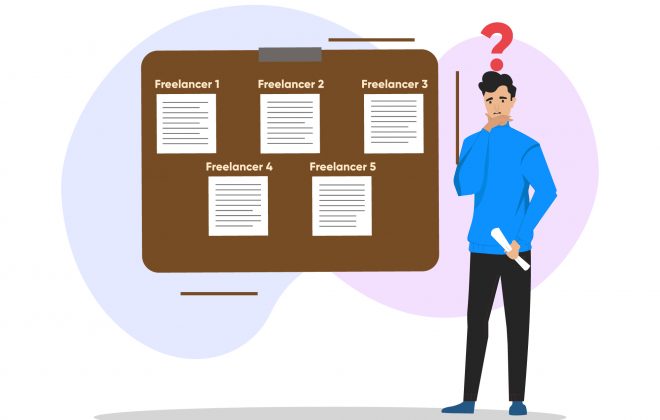
What is freelancing?
Ah, to live by your own rules and work ethic! What a joy. That is exactly what freelancing is, and more. A freelancer is a self-employed person who works on multiple assignments for different clients at a time.
Even if a freelancer is not officially employed by another company, other businesses can subcontract them for temporary periods of time, where their other work can be contractually restricted until they complete the project.
Some very common freelance jobs within the publishing industry are copywriting, graphic design, copywriting, editing and proofreading.
Pros of hiring freelancers
The Price
One of the most basic things to think about while hiring a freelancer is the price. One of the greatest benefits to hiring freelancers is, of course, the price. They will save you the total salary that you usually pay your full-time employees, but also health benefits, company perks, desk space taken up in the office and other expenses.
Lower Financial Risk

A company needs to hire freelancers only when they have work. Almost all freelancing is done on an hourly or a project-by-project basis. This is great to avoid digging yourself a hole into a pit of financial bankruptcy and less of a risk, especially for a company.
Freelancing Platforms Make Hiring Freelancers Easier Than Ever
There are multiple platforms like Freelancer, Fiverr, Upwork and Thumbtack from where hiring freelancers becomes much easier and hassle-free. These platforms streamline the process of posting job offers for freelancers, filtering candidates, selecting the best ones and helping you negotiate with them about the pricing.
Additionally, these platforms help companies see reviews left by previous customers on the freelancer’s work and take a look at their job history.
Cons of hiring freelancers
Lack of Supervision

Most freelancing assignments are done remotely so there is no way to know whether the freelancer you hired will spend all that time scrolling mindlessly on YouTube. Not all of them do this, but without immediate supervision, it becomes difficult to keep a track of work completed.
2. Unpredictable Quality of Work

One of the main advantages to hiring them is the speed, there is no way that a company can conduct a thorough interview of a freelancer as they do for hiring full-time people. As a result, the company tends to breeze through the their resume and portfolio.
3. Lower Investment in the Company
Freelancers are often juggling multiple jobs and have to pay their bills. So if you are thinking that their loyalty lies completely with your company, think again. Their loyalty to your brand is probably lower than your full-time employees. This is not make or break, but you should consider this before hiring them.
4. Lack of Ability to Train a Freelancer
Sometimes, there are nuances to your company that can’t be explained to them over a short Skype call. These could only be explained to them if they are physically working at the company. A lot of times, the company does not have the ability to properly train and onboard a freelancer. This causes them to miss out on crucial details.
Freelancers can prove to be a very valuable asset for an entrepreneur, especially those who are in the early stages of development or those who are running on a tight budget. Do your homework and read more about outsourcing here.
Keep reading with more resources from your loyal editors and proofreaders:
How is outsourcing work to proofreaders advantageous?

What is proofreading?
Let’s address the elephant in the room. What exactly is proofreading? For individuals in communications, digital marketing, publishing and other companies whose end product is content, listening to ‘proofread it before you send it out’ is very common to hear.
Proofreading is reviewing the final draft of a piece of writing to ensure that there is consistency and accuracy in grammar, spelling, punctuation, and formatting. When most people refer to ‘proofreading’, they mean it in the context of just checking for any superficial errors in content. Proofreading is much more than that. It is about finding errors both small and large, which were missed or were introduced during editing. A proofreader ensures that the document’s final draft is completely flawless, free from any grammatical errors,, incorrect word choices, improper punctuation and incorrect spelling, along with making sure that the document adheres to the chosen style guide. You can read more about the job of a proofreader here.
What is outsourcing?

Outsourcing is basically the practice of obtaining goods and services from a foreign supplier. But it has come to mean a host of other things, one of them being getting freelancers to work on a contract basis for different kinds of projects. Outsourcing has opened doors to a lot of opportunities, especially in regards to acquiring a skillset that you may not have access to in your company or is too expensive to keep full-time.
Outsourcing proofreading work gives companies access to ‘specialists’, who bring in-depth experience on a variety of projects. Although in-house teams know the structure and functions of their company, outsourcing work to a proofreader might provide with a fresh perspective, and can provide a skills or a knowledge boost. They can also provide inputs regarding the overall content plan and editorial management.
Outsourcing proofreading becomes a viable option. You pay none of their expenses, except the project costs. The rest is taken care by the team, whose proofreaders work out of their own office and use their own resources. As opposed to full-time proofreaders, freelance proofreaders and the team that you outsource work to don’t incur the burden of benefits (insurance, medical expenses, etc).
There is an additional benefit to outsourcing proofreading. It becomes much more feasible to outsource specialised work to an proofreader instead of recruiting full-time proofreaders, who might have to be trained for this.
Often, as a company, you have to train your editing and proofreading team for at least 2-3 months. There is a substantial amount of resources that you have to invest; training material and salary. There is also the added pressure of impeccable performance that is expected of them, because during their training, they are supposed to work on projects assigned to them, which may be of regular clients. In this case, outsourcing work to a professional and experienced editing and proofreading team unburdens you of that responsibility, and at the same time, lowers your fixed costs by a considerable margin.
And there you have it! Outsourcing your work to a professional editing and proofreading team rakes in many benefits, the most important one being the substantial reduction of your company’s fixed costs. To understand what parameters to look for in an editor, you have to understand your needs and your client’s needs and according to that, settle on hiring the right kind of proofreader.
Writing A Successful Pitch: Convey Ideas Better
How do you write a successful pitch?
You take a great idea, jot it down using the least number of sentences, edit and proofread it properly and ensure that lots and lots of people read it! So what kind of successful pitch am I talking about? There are certain pitches we end up making at some or the other point in life, no matter what field we are in without even realizing what we’re doing. A business proposal, a thesis statement, article ideas and everything from a screenplay or manuscript is a pitch that you’re making to other companies, your thesis guide, filmmakers and publishing houses respectively.
You have a great idea, and you’ve probably done good research to sell it. But if you can’t communicate it right – nobody will be interested. Potential investors also need the idea to be easy to understand, since they’ve trained their minds to think how their clients would think.
More often than not, your pitch will get only 5 minutes of attention. Think about it as a version of the elevator pitch, because those are the best hooks you can use to convey and convince. So be it verbal or spoken, how do you condense months of research and passion into those few minutes, how do you edit and proofread it, and create a successful pitch?
We can tell you how.
Tease Just Right.
I know it sounds wrong, but hear me out. The first few seconds and sentences are crucial to everything. If you lose their attention here, there’s no point worrying about the rest of the points on here.
Introduce the idea briefly, but leave a little room to create suspense and garner interest. This doesn’t mean keeping it obscure. You need to be clear on what you’re offering, what you want from them, and what they can get from you. If these 3 boxes are ticked off for both parties, then you’re definitely on the right track!
Hammer In The Details
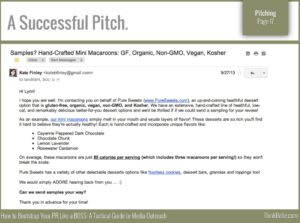
If they’re still listening, congratulations. You’ve successfully grabbed their attention. But they need more details. Here is where your research will really count, so make sure you’ve covered all your bases.
Mention the exact processes and steps you will undertake should your proposal be expected, and the time taken and if valid, a price. You need to make sure that both parties are aware of the deal they’re getting themselves into, to avoid any misunderstandings later.
Why Are You Different?
You cannot deliver a pitch without knowing the answer to this. If it’s a product, you need to know why it will change the way people live. If it’s an idea for a novel, you need to explain exactly why this story will blow people away. Everyone today is looking to put out something new, something that nobody else offers. They’re conscious of your idea applying to their clients, and the timely importance of it.
Experience is Evidence
Now that you’ve possibly convinced the investor with your revolutionary pitch, you need to have something to back it up. As of now, they just have your word and potential plans that could go wrong. So you need to attach credentials such as old references from people you’ve worked with, samples which can showcase that you know what you’re talking about.
If you let your work speak for itself, your pitch doesn’t even need to be self-praising or too complicated. So make sure you have enough relevant experience on your side.
Edit and Proofread
No really, know this by now. No matter how pleased you are with the idea, it’s all going to go down the drain if you don’t get it checked again. There are professional editors and proofreaders, and even editing and proofreading services sitting out there to polish and perfect your work, so why would you want to settle for anything lesser?
There’s no point of a wonderful pitch with an embarrassing typo, since that’s all they will remember. It’s better to have an expert look at it, improve the design and flow, possibly suggest some improvements and help your pitch be perfect!
Just remember, do great research, use powerful and compelling words – and don’t forget to edit and proofread!

Get carefully curated resources about writing, editing, and publishing in the comfort of your inbox. [contact-form-7 id="12723" title="Subscribe Form"]
How to Copyright Your Book?
If you’ve thought about copyrighting your book, you’re on the right path.
Explore more