Newsletter Sign Up

Case Study: How We Helped This Writer Publish Her First Book


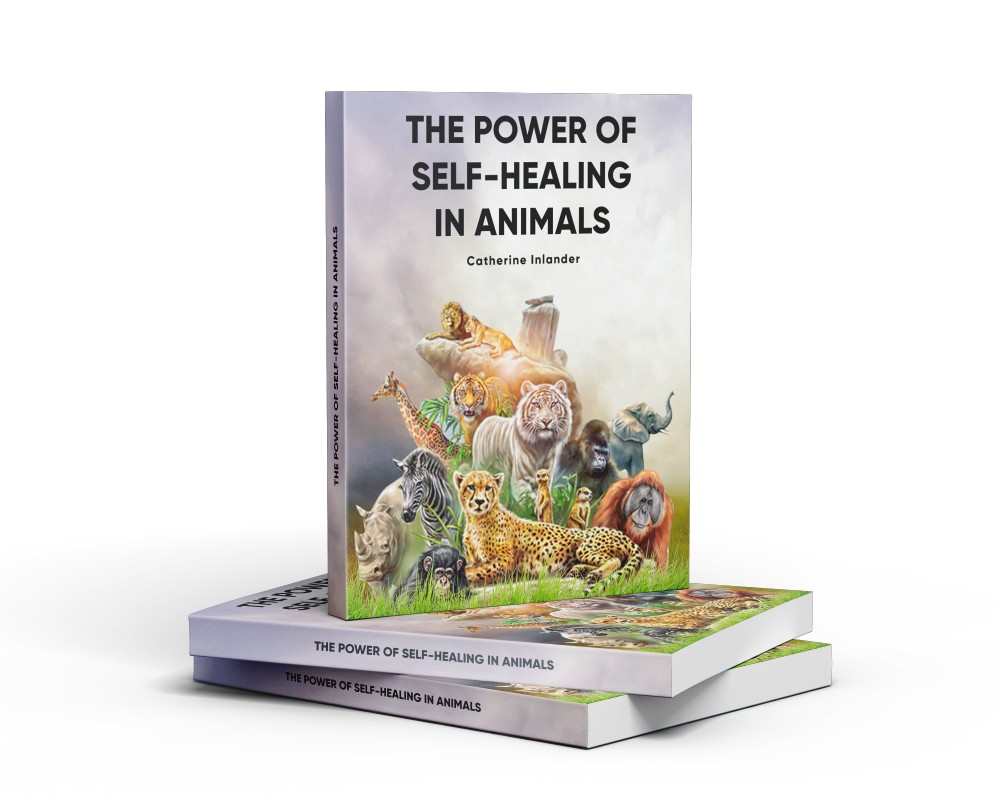
The Power of Self-Healing in Animals

Non-fiction book by Catherine Inlander


Catherine Inlander approached us with a draft of a wonderful compilation of anecdotes and techniques by which animals apply self-medication from the fruits of nature. A seasoned practitioner in applied zoopharmacognosy, this was her first attempt at getting published outside the academic sphere. 

Objective 

Catherine approached us so we could apply an equally trained eye to proofread her work and guide her through the pre-publication process. 

Solution 

While the book was well-researched, our editors felt it could be improved to make it appealing to readers from all walks of life, so she may gain a wide readership. Our first step was to proofread her work and remove minor mistakes in punctuation, spelling, and sentence structure. We also helped her bring out the best of her research by signaling inconsistencies in the content and presenting it in a manner accessible to someone unfamiliar with applied zoopharmacognosy. 

Once her manuscript was in place, we processed it for typesetting, ensuring that her text was well-formatted. Images, appendices, footnotes, and other tables throughout the book were formatted to make the jargon accessible to the novice reader, and also helped balance the contrasting tones of technical information and personal anecdotes. The content editing and typesetting processes played a key role in defining and demarcating these two goals she had for the book. A thorough review also ensured that the anecdotes and the informative content were not disjointed. 

We also designed the cover image of her book, which helped make it more inviting to someone who may not have thought of picking up a book about zoopharmacognosy.

Catherine, who was not affiliated with any university at the time of publication, chose to publish with a local independent publisher. Keeping this situation in mind, we helped get an ISBN for the book and also designed its copyright page. 

In addition to working on her manuscript, we gave her advice on how she can craft her promotional content to appeal to a wider audience. We guided her on the vocabulary she could use and the platforms she can use to have conversations about the book. 


Testimonial 

“Before I approached PaperTrue with my manuscript, I had no idea about the nuances of the publishing process. They opened my eyes to the various steps involved and worked on my manuscript with patience and impeccable eye for detail. I’m grateful that they’ve been an integral part of this new beginning, and I hope to work closely with them on my new manuscript!”


Case Studies: Applicants Who Achieved Their Dreams with Our Help

Crafting application essays, cover letters, CVs, résumés, and other documents while you’re in between things in your career can be quite stressful. You have all the skills and talents needed for that dream job or university degree, but you don’t quite know how to impress recruiters or the admissions committee. 

After all, you can’t tap into their minds and know what undertones they’re precisely looking for in your application—despite having read that job description or course requirements multiple times!

PaperTrue has helped many candidates like you achieve their dreams. Read on for real-life examples of how we have done this!


Case 1: Suraj Harminder 

Case details 

Suraj Harminder was an aspiring PhD candidate in biotechnology with an impressive suite of engagements with research institutions. He wanted our help crafting a CV that reflected his academic goals. 

Objective

With experience only in applying for jobs so far, Suraj didn’t quite know how a CV is written for a PhD application. He wanted our expert advice in reworking his professional narrative to suit the academic journey he aimed to pursue. 

Solution 

When we stepped in to help, we not only proofread his CV, application essay, and research proposal but also showed him exactly what could be highlighted in each for the selection committee’s consideration. From a content perspective, we helped him highlight specific points in his professional career that showed that he had skills needed for a biotechnology researcher. We also worked on improving his tone to make him sound inherently confident about his own abilities.

Testimonial

“I was really overwhelmed with my university’s rigorous selection process and thought there was no way my CV could compete with the other candidates. My editor really helped me hone my application and now I’m confident that I’ll be considered for my dream program.’


Case 2: Greg Wallis 

Case details 

Greg Wallis was considering a career shift when he approached us to have his CV and cover letter proofread. As a literature graduate with experience in copywriting for a digital marketing firm, he wanted to work as a research associate for a not-for-profit public policy and advocacy group. 

Objective 

He wanted our insights into how he can reframe his career trajectory to reflect his interest in a sector that he didn’t have work experience in. He requested we help him find an appropriate format to reflect his interest in the field and help him come up with vocabulary suited for the non-profit sector. 

Solution 

We helped him bring out his immense interest in their projects to make up for his lack of experience in the field. We helped him rearrange and rework the content to showcase that he has the inclination towards working in the non-profit sector. We also helped him strongly frame his rationale for wanting to switch. Helping him dig deep uncovered a lot of thoughts on what he could effectively bring to the table.

Testimonial 

“This switch is overwhelming for me, but I was at ease after my editor helped me hone my resume. Their inputs were insightful and restored confidence in me.”


Case 3: Marla Slade 

Case details 

Marla Slade, an MBA graduate with experience in recruitment consultancies, wished to return to the workforce after a five-year gap. 

Objective 

A deserving candidate like any other, she knew a gap for personal reasons shouldn’t come in the way of her professional goals but was uncertain about whether an explanation of her break was needed in her cover letter. 

Solution 

We helped her frame her cover in a way that focused less on her reasons for the break and more on her renewed enthusiasm to buckle down again. We helped her make the letter more tonally assertive to demonstrate her determination and her inquisitive nature. 

The final result was a cover letter that put her right at the front of the race with other candidates.

Testimonial 

“PaperTrue’s editors know what they’re about. They gave me a whole new perspective on applying for jobs, and their notes on how to craft a resume is going to help me in the long run.”


Case 4: Josephine Andrews 

Case details 

Josephine Andrews, a recent graduate of Social Sciences, needed help in crafting her résumé. She wanted our help in creating a résumé that showcased her skills in such a way that reflected her eagerness to pursue a professional career. 

Objective 

Although Josephine’s profile reflected her stellar academic record, she believed her experience in writing her dissertation and interning at a local research institute was insufficient to present her as an impressive candidate. She wanted our help in bringing out a confident tone in her profile. 

Solution 

In her cover letter, we brought out her suitability for the job and her ability to be a quick learner with anecdotes. We also advised her on the right résumé format, considering she was a recent graduate with no work experience. It now focuses on her achievements at her university and place of internship which are highly relevant for the posting.

Testimonial 

“PaperTrue’s expert editors helped me give my resume an edge so early on in my career. I can confidently say that they are a fantastic resource to rely on!”


Case Studies: Business Editing

After writing something, and it might be anything; from a recipe to a book, from a business document to a letter, you can’t just be done with it. You need to check and re-check, edit it, proofread it, and make sure that it reads well and does not have grammatical errors.

In businesses, especially, editing and proofreading is important because a tiny error could cost your business an important deal. Even if that error is miniscule, it could communicate that your attitude is careless and might be a reflection of the overall work ethic of the company.

The size of your business doesn’t matter. For all its promotional, social, legal, and other content, a business might need help in ensuring that it’s error-free, while trying to fulfil the responsibilities of running a business.

This is why we at PaperTrue believe that editing and proofreading is absolutely essential for businesses to get their documents presentation-ready. Here are some case studies of successful long-term projects that we’ve taken on!

Company: General Translation, USA

Topic: Website Content

Objective: Establishing a strong online presence, along with making their content more concise, impactful, rich with keyword placement, and enhanced SEO.

Solution: Our editors analyzed their website content and blog articles and provided them structural feedback to make it more appealing to anyone who visits their website. We also made sure that the promotion of their services would be more impactful by focusing on making the language more user-friendly and less littered with jargon.

Our editors also made sure that the length of their sentences was not too long, and helped keep them short, crisp, and to the point, to make them readable for their target audience. Apart from this, we made sure that the tone of the content was assuring and not too formal.

Our editors encouraged a collaborative approach, in which they worked together with the company, taking their revisions and inputs into consideration.

Testimonial: “We have more and more users telling us about how crisp and clear our articles look now! Our website content has improved tremendously and we especially loved the collaborative approach that PaperTrue took, and worked with us instead of dictating what they did. Definitely going to keep this collaboration intact!”


Company: Genuine Educational Consultancy

Topic: Academic Editing

Objective: To help their clients improve college applications.

Solution: We improve the grammar, syntax, style, impact, tone, and structure among other aspects of their documents.

With this, we make up for gaps in Genuine’s suite of counselling services with our expertise in the English language and feedback giving. This significantly betters their clients’ chances at success with their college applications.

We also offer to whitelabel our edited documents and integrate order processing on our dashboard, to make Genuine’s experience of partnering with us smooth and convenient.


Testimonial: “A college application plays a major role in determining whether the student will get in or not, and so we really stress on the style of the essays and applications. PaperTrue’s editors help our students’ essays to be structured much better apart from the normal editing and proofreading process”.


Company: Vance Gen Industries

Topic: Technical Writing

Objective: To edit their intensive user manuals and make them readable for their target audience

Solution: Technical jargon is hard to understand, especially if it’s for an audience that is only a consumer of your products, and not an expert in them. If a user manual is hard to read, then the whole objective of titling it ‘user manual’ is redundant.

We often help them with clarity, conciseness, coherence, cohesion, structure, and language. Also, we ensure that the language is fine tuned to users with all levels of technical expertise, from the novice to the skilled engineer.

We have also been assisting them with customising their user manuals for an online platform, in order to increase reach and availability for their customers.


Testimonial: “Less users call us now; because they understand our manual so perfectly! All jokes aside, PaperTrue’s editors helped us restructure our manual content in a way that it would be easily understandable and still get the gist of what was written”.


Company: Get Slim

Topic: Online Content

Objective: Effective SEO and keyword placement in their online content

Solution: Get Slim is a company that needs its content about health and wellness to be effective but not pedantic or preachy. They put out their tips in video and blog article format, which our editors proofread.

Along with their scripts for their YouTube videos, we have also been proofreading and editing their scripts for their upcoming fitness blog.

Each time we make sure that their blog is optimised with their specified keywords, but our editors make sure that it’s not overstuffed with keywords, and work with the company to make sure that all the keywords that they’ve specified are contextually used.

Our editors make sure that the video script flows smoothly for the visual medium – both conducive to the platforms for which they were written.

We also provide extensive feedback on improving their word choice, treatment of topics, and coherence by keeping their subscribers in mind.


Testimonial: “We did not want to come across as another health and wellness brand, and actually wanted our audience to understand our content without getting entangled in the sales-y part. The editors at PaperTrue really helped us reach more people, people who we are writing our articles and making our videos for, of which keywords were a crucial bit. Loved their work!”


Why You Should Consider Turning Your Book into an Audiobook

The publishing market is changing dramatically. In the past, the eBook came along to revolutionise the publishing industry driven by the worldwide adoption of innovative mobile technology and tablets. The rise of Kindle Direct Publishing (KDP) and independent publishers saw the market supply and demand explode for the publishing industry through electronic channels.

Today, we see something very similar happening; Audiobooks are the new kid on the block. Similar to how eBooks challenged traditional publishing, audio publishing is now challenging eBooks.

Just as editing and proofreading services are becoming a popular choice for independent authors to improve their book’s chances on the market. So too are audiobook production services.


The Statistics Show Growth

The audiobook market is growing, pushing the ePublishing industry to new, innovative areas. According to Grand View Research, the global audiobook market size was worth $2.67 billion US in 2019. From 2020 to 2027, it’s predicted the audiobook market will expand at a compound annual growth rate (CAGR) of 24.4%. Welcome news for authors and publishers seeking to grow their audience.

As more and more people acquire access to devices capable of using audiobooks, the industry will continue to soar to new heights of popularity.

Besides purely statistics, there are many other reasons to look at turning your book into an audiobook.


Audiobooks Improve Accessibility

One of the most significant positive applications that audiobooks have is that they increase accessibility of eBook literature to disabled audiences across the globe.

According to the World Health Organization’s recent 2021 report on blindness and vision impairment, at least 2.2 billion people worldwide have some visual impairment. These disabilities span from mild visual impairment to complete blindness. For people suffering from moderate, severe, or complete blindness, audiobooks are changing lives.

Could you imagine not being able to enjoy your favorite stories? For many people, this has been their reality. Before audiobooks, people with severe vision impairment needed to rely on brail versions of books, which many publishers didn’t supply.

Turning your book into an audiobook will open up your story or content to this keen group of readers.


Audiobooks Make Translation Easier

Increasing access does not end with disabled audiences, it also applies to foreign speaking audiences too. While English is first in the world for most overall speakers, it is only the third in the world for native speakers of a language. Spanish comes in second, and Mandarin Chinese comes in first. Hindi follows these three in the fourth position, and then Bengali in fifth.

While many people speak English as a second language, they may prefer to consume their media in their native language. They also may not have a strong enough grasp on English to enjoy books or audiobooks, to their fullest. To this end, it may be worthwhile translating your book into another language.

Audiobooks offer more translation options in comparison to regular eBooks or physical books.

Many people may have literacy issues or limitations that makes reading difficult. Translating audiobooks into the audience’s native language helps to bridge this gap. A prime example could be educational textbooks for all ages. Or learning resources for people with dyslexia.

Vigorous proofreading is valid in every sector of ePublishing, but I would argue even more so for translations. A native translation and proofreading specialist for a particular language is certainly something I would recommend if getting a translator is something that you plan to do.


Audiobooks Can Improve Storytelling

For the storytellers and fiction authors out there, an audiobook can capture the essence of your story in a way that no other medium can, with maybe the exception of TV and film. Unless you know a producer, getting your novel turned into a TV show or feature-length movie can be near impossible. However, getting an audiobook rendition? Not so much.

Telling your story via audiobook adds an extra sensory dimension that a typical book or eBook doesn’t have. The listener need not only imagine the story, the characters, and places in their mind’s eye, but they can hear sounds to accompany this imagery.

All this is revolutionary for the ePublishing marketplace. They can tell their story with sound effects, musical scores, and give their characters unique voices with talented voice actors. It is as close as one can get to a fully-fledged TV show without actually having one!

It allows you to tell your story differently, which can dramatically improve the listener experience. This has led to the popularity of fiction podcasts, and before podcasts, the radio drama format. The horror genre is an excellent example of how sound effects can amplify the story. If creepy music doesn’t get you into the mood to listen to a crime thriller, what would?

As a writer and author, I would argue that getting a professional audiobook made today is just as important as finding a good editing and proofreading specialist.


Where to get an audiobook made

So, how do I make one? Like authors outsourcing their editing and proofreading services to service providers, most authors elect to outsource the audiobook production process to companies or agencies. Another option is to find a freelancer to take care of the process for you. Still, a company or agency is usually the best way to get a professional audiobook made.

With the right voice actor, like the fine selection at Voquent, an audiobook can catapult your story to new heights and in ways that writing can sometimes fail to do.

Audiobooks add a compelling new frontier of sensation to your storytelling. Of course, you will need to invest in the narration, proofreading, and editing work, as it’s essential to buy the best you can afford, don’t go cheap. Audio publishing is a digital asset you can earn from for decades.


In Summary

Audiobooks are awesome. They are inventive, creative, and help to tell stories to share content uniquely. Not only can they improve the content of an eBook, but they can provide access to the literature you write for countless fringe audiences.

Transitioning your book into an audiobook gives unlimited opportunity for growth. If you have the means to fund one, getting an audiobook made can only improve your prospects and reach as a storyteller.


About The Author and Voquent
Stewart Storrar is a writer from Glasgow, Scotland, that writes fiction for his passion project Lore Publication in his free time. Stewart works for Voquent developing content and Voquent is one of the world’s leading voice-over production agencies. Our mission is to empower content creators with unparalleled access to outstanding, affordable voice talent.
Case Studies: Academics and Students Who Completed Their Work with Our Help

Students and professional researchers have a lot on their plate from the very beginning of their project. The approaches they undertake often lead them in different illuminating directions, making the entire project more complex. This means that the writing often takes a hit.

As experts in proofreading and editing, we have helped many researchers by taking care of the grammatical, stylistic, and other technical aspects of their draft. They’ve simply put together their work in one place and, with a sigh of relief, sent them to us for reorganization, formatting, and other finer refinements.

Let’s look at what it took for us to make some stressed researchers happy!


Case #1: Andria Waller’s dissertation Black Lives Speak: Black Students’ Experience with Institutional Discrimination in Higher Education

Topic

Andria’s dissertation investigates institutional discrimination against Black students affecting their retention rate in post-secondary education. Her qualitative approach involved data analysis from observations, journaling, field notes, and historical documents, amounting to about 66000 words. The material was thoroughly analyzed and well-argued from different sources. 

Objective

While her research was thorough and persuasive, she enlisted our services to ensure the dissertation reflected the urgency of her research. She sought the expertise of an editor to improve her writing so that it strikes the balance between objective academic writing and the subjective nature of her topic. 

Solution

We not only checked the structure of her dissertation for cohesion but also perfected the phrasing, style, word choice, citations, and formatting. The personal experiences of her study’s subjects were highlighted in an urgent and resonant manner by our changes. This made her research objectives and methods clearer and her overall work more impactful.

Testimonial 

“My editors not only have impeccable skills but they were also sensitive in their approach towards my dissertation. This is a deeply personal topic to me, and I’m glad to know that I can trust them with it!”


Case #2: Valencia Chen’s dissertation Scope for Profitability through R&D Efforts among China’s SMEs

Topic

In an economics and finance dissertation, Valencia examines the positive relationship between R&D and profitability as seen in small and medium-sized enterprises in China. She takes an analytic approach, drawing findings from several empirical studies. 

Objective

Valencia approached us with the requirement of proofreading, and she also specifically required help in simplifying sections that were peppered with jargon. She also required our help to arrange the reference list in the format prescribed to her. 

Solution

We provided alternative styles for unclear writing and improved language, readability, and expression. We also made sure the document had robust referencing according to the Chicago Manual of Style.

Testimonial 

“PaperTrue does a swift job in making the text readable and concise without changing my argument. I really liked that about their work, and I think I’ll recommend them to my peers as well!”


Case #3: Sally Chakraborty’s dissertation Reflective Lessons of a Government Official in Her Work in Canadian Bureaucracy

Topic

Sally, in her deeply personal dissertation, writes about her challenging personal and professional life. She delves into accounts about acquiring leadership qualities, developing her professional skills, and receiving her MBA degree. She foregrounds these accounts against the principles of suffering, enlightenment, and kaizen. 

Objective 

Sally’s requirements were straightforward. She wanted to work with someone who not only understood the technicalities of editing, but also someone who could understand the journey she undertook. She was particular about collaborating with someone who could keep the ethos of her experience while still maintaining the prerequisites of academic writing. 

Solution

Although the text was well written, we found it could benefit from changes and feedback about style, syntax, word choice, and structure. We helped her rearrange her personal accounts in a more linear style and guided her with providing missing information. These changes allowed for the dissertation to carry a deeper narrative. 

Moreover, we established a link between the theoretical framework and the qualitative substance of her dissertation, strengthening her arguments.

Testimonial

“I was uncertain about spending money to get my dissertation edited at first, but I have to admit now that it was indeed really helpful! Their suggestions really helped me to bring my dissertation together.”


Case #4: Margaret Thelma’s dissertation Emotional Support Provided to Young Black Students in Predominantly White High Schools and Post-Secondary Educational Institutions
Topic 

Margaret, in her doctoral dissertation, examines the emotional support Black students receive at predominantly White institutions of higher learning. She undertakes a qualitative methodology and utilizes House’s theory of social support pertaining to aid, affect, and affirmation. 

Objective 

Having made a jump from literature to education, Margaret was uncertain about how to represent data in a dissertation. Besides editing and proofreading, she required our help in matters of formatting and references. 

Solution 

We found that the style of writing could definitely be improved, clarified, and condensed in places. We also gave the formatting of her document a complete facelift, making the appendices presentable, applying heading styles, and automating the table of contents, list of figures, and list of tables. This made navigation easy. We finally corrected the format of her references according to APA guidelines.

Testimonial 

“I am a lot more confident about presenting my PhD dissertation after getting it edited by PaperTrue. Thanks for doing such an amazing job!”


News Update: We Hosted Our First Webinar!

As many of you may know, PaperTrue recently hosted its first webinar! Months were spent in preparation for the event, which we finally held on the 5th of December this year. 

Titled “What are Indian publishers looking for?”, we were in conversation with two wonderful writers, who told us all about their own publishing journeys and provided us with valuable insights into what the publishing landscape in India looks like, and what upcoming writers can do to get their work picked up by publishers in the country. 

The discussion was hosted by our very own Aurodeep Mukherjee (Managing Editor), who fabulously steered the conversation towards topics that were relevant to the panellists as well as the audience. 


The Relevance of the Topic 

The literary landscape in India has taken a lot of turns in the past decade, especially with the advent of online publishing and self-publishing. As the internet enables more and more people to publish their prose and poetry, the landscape itself becomes vaster and more competitive. 

There is a strange paradox at play here: as the internet opens up a plethora of spaces to publish, the opportunities to be picked up by traditional publications become scarce. 

How does an emerging writer gauge the literary scene then? How are they to land a stable publication deal? How has the Indian publication industry changed because of this? 

These are the types of questions that the speakers sought to ponder about, in the webinar.


The Speakers:

Pranita Chettri

Author of Kopila (Educational Publishing House, 2019), Pawankali (Educational Publishing House, 2019), and Maya (Educational Publishing House, 2020).

Pranita Chettri holds a master degree in English Studies with Communication from Christ University, Bangalore, India. She is a co-founder of BOOKS FOR CHANGE, non-profit based in Switzerland and manages the education programs of the Organization in Nepal and India.

She is also a published author of three children`s books; Pawankali, Kopila and Maya. She writes in English and her children`s books are translated into four languages; Nepali, Japanese, French and German. She believes that children`s books nourishes the creative imagination of the children and instill a strong sense of empathy, love, respect and inclusion.


Kavita Kané 

Author of Karna’s Wife: The Outcast (Rupa, 2014), Sita’s Sister (Rupa, 2014), and The Fisher Queen’s Dynasty (Westland, 2017).

Kavita Kané is an Indian author best known for writing mythological fiction. In retelling these beloved stories, she explores their relevance in contemporary life. Her bibliography includes bestselling books such as The Karna’s Wife: The Outcast’s Queen and Lanka’s Princess. A former journalist, she lives with her family in Pune. In addition to writing, she enjoys cinema and theatre.


Traditional Publishing vs. Independent Publishing in India 

Primarily led by educational publishing, India is home to the sixth-largest publishing market in the world and the second-largest publisher of English language books. According to the World Culture Score Index, Indians spend more time reading than their counterparts globally. 

These are quite hefty statistics, indicative of vibrant publishing industry. Yet, trade publishing in this country is still dominated by only a handful of players: Penguin Random House, Rupa, and Hachette, among others. Until quite recently, English-language publishing was exclusive to these spaces. Fortunately, the Indian landscape has also seen a rise of many independent and smaller publications, especially those that lay emphasis on representing non-mainstream perspectives of Indian writing. 

The conversation of the webinar revolved around the differences and similarities between these two landscapes, with Chettri speaking about her experiences with publishing with an independent publisher, and Kané taking us through her experience with mainstream publishers. 

The discussion also highlighted what a writer should consider when looking for a potential publisher. For instance, both speakers emphasized the need for doing research to gauge whether a publishing house is a right fit for their manuscript. 

In taking us through the trials and tribulations of their own journeys, we hope that the aspiring writers who attended the webinar learnt as much as we did that day. 


You can watch the full discussion on our YouTube channel here

How to Carry Out Secondary Research

If you’re acquainted with the world of research, you may have noticed that not all researchers engage in experimentation or fieldwork to collect data for their work. Some aspects of research also involve reading and examining existing work for new perspectives or findings. This method of research is called secondary research, and that’s what we will be exploring in this article.

What is secondary research? 

Secondary research is a method that involves using existing research material. Also known as desk research, it primarily involves reexamining already published research material to derive new interpretations of a particular topic. 

Secondary research can be used for many purposes including literature summaries, critical reviews of the contemporary research in a particular field, or in reviewing the validity of primary research sources. 

It is also a commonly used form of research in fields such as literature and philosophy, which require constant revisitation of the relevance of a particular text in varying contexts. For example, one may undertake a study of the philosophies of John Locke’s social contract theory to see its relevance in 21st-century politics. 


What are the types of sources used in secondary research? 

  1. Data available in public libraries and online archives: Libraries and archives host a plethora of resources regarding many topics, across many fields. Many also house archives of previously published research, in addition to books. You can visit these sources for both qualitative and quantitative studies, depending on your topic of research. 
  2. Data on the internet: In the age of the internet, one can find resources on virtually anything! The internet has become a convenient resource for many researchers who are short on funding or don’t have access to visit far-away libraries for obscure data. While the World Wide Web is a wonderful source that gives you access to information that you wouldn’t have otherwise had access to, the peril here is to verify its authenticity. The internet, unlike peer-reviewed journals, for example, does not have stringent systems of checks and balances, and anyone can publish material on the internet. Fortunately, now is when you get to exercise your critical thinking skills to know what is legit and what isn’t! 
  3. Government resources: While conducting secondary research, especially in the social sciences, you will also find yourself looking for government statistics. Government websites and archives are a great source of information here! They often have relevant data of studies that have been undertaken for policy, general documentation, etc. 

Now that you know what kind of sources you can use for conducting secondary research, here’s a list of platforms where you can find data for your project. 

How to carry out secondary research

  1. Identify your research question(s). What is it exactly that you want to find out? Why is it important to your research, and how do you expect it to strengthen your argument or position.
  2. Narrow your sources down. Where do you think you will find this kind of data? Is it going to be through books, other academic studies, or something else altogether? 
  3. Start reading and collecting data: This is the heart of your research process, and this` is when you will start getting an idea of how existing research plays a part in your work.

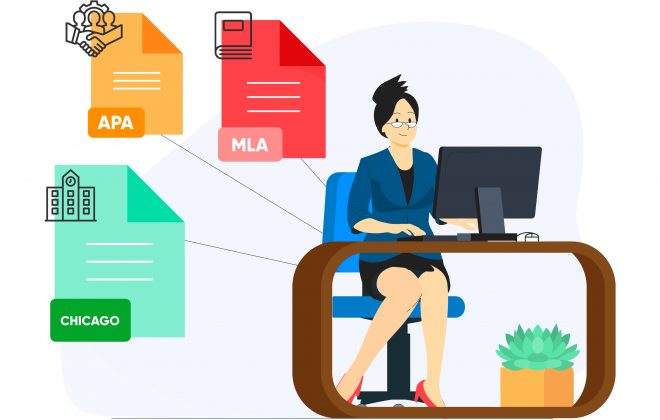
Citing References: APA, MLA, and Chicago

Writing your thesis/dissertation was a pain and even if it’s over, the hard part still remains; citing your references! Before you mull over this with a despondent attitude, know that at PaperTrue, we understand your dread. This is why we’ve written down a small guide to the three most widely used citation styles so that you can navigate them with ease.

What is a citation and citation style?

citation is a way of giving credit to individuals for their creative and intellectual works that you referenced or used to support your academic research. It is also used to locate sources and help your guides/reviewers determine whether there is any plagiarism.

citation style sets the guidelines for how a citation should be ordered, which includes punctuation and formatting.

APA (American Psychological Association)

The APA citation style is usually used by the Humanities, Psychology, and the Science disciplines.

1) Single Author’s work

When citing a single author’s work, type the author’s last name first, followed by the journal’s/book’s publication year.

 2) Multiple Authors’ work

When a work has two authors to its credit, use both of their last names each time their work needs a citation. Join the names with an ampersand if in parentheses or with the word “and” if in text:  

 3) A work with more than five authors

When you cite such a work for the first time, type the name of all authors. In subsequent citations, only mention one of the author’s name, followed by the Latin word et al. to denote rest of the authors mentioned before.

4) Multiple authors with the same last name.

When citing different authors with the same last name, type their first name and middle initial so the readers can differentiate between them.

5) Works by corporations

Even if the author’s name is mentioned in such publications, you only have to cite the corporation as the author. When citing for the first time, type it in full. For later mentions you can type the abbreviation.

 6) Citing a website

If you have to cite a source from a website, the basic format is as follows:

Author surname, initial(s). (Year). Title. Retrieved from URL

You can check out the examples of different sources cited in the APA format here.

Chicago Manual of Style (CMS):

The Chicago Manual of Style is a standard style devised by the University of Chicago Press. It is mostly used in Business, History, and Fine Arts disciplines. It has two systems of documenting sources within texts:

  1. Notes and bibliography: This style is primarily used in the fields of literature, history and the arts. Instead of most other systems that usually have the source listed within the text itself – so that you can see the source credentials while you’re reading the paper, rather than having to refer the bibliography section each time you want to verify a source – this method uses footnotes and endnotes on every page. Whenever you directly quote, paraphrase or reference an external source, it should be marked with a number that will appear in raised font which must correspond with a note at the bottom of the page. The sources of each page are usually quite brief, only containing the name of the text, and page numbers. A more extensive version is found in the bibliography.
  2. Author-date: This method of citing texts is more common in the social sciences and sciences. In text means that sources are cited briefly within the text (author, date within parentheses) must correspond to a source in the reference list. The reader must be able to cross check sources, where source’s full details must be given.

As mentioned earlier, the reference or bibliography section is where you list out all your sources in order of their appearance in your paper. According to the Chicago Style, your references must ideally have the following information about your sources: its title, the author or authors’ names (also applicable to editors, compilers and translators) and publication details. The author’s name is listed with the surname first (eg: Hawking, Stephen) and the title of the text is italicized. 

Modern Language Association (MLA):

The MLA standard citation guide is popular within literature and language studies. The 8th edition of MLA, published in 2016, is the most recent version of this format. 

It follows the author-date system for its in-text citations – the last name of the author, followed by the page number of the text you are referencing; both  in parentheses. If the name of the author is already there in the body of your text, only page numbers are mentioned in parentheses. 

As for references, it follows the following general format, subject to modifications as per source: Author, Title of source, Container (once again, in italics), version/number, Publisher, Publication Date, Location. 


Starting Your Book With a Bang: Ways to Catch Readers’ Attention

One may think that a short attention span is novel to the social media age. But I’d like to propose that if someone’s attention is caught, time is an irrelevant factor. With that being said, let’s not waste too much time jump straight into the crux of the matter: How does a writer catch a reader’s attention? 

The Art of Writing a Hook 

What you’re looking to do here, when you begin a story, is to spark intrigue. A reader should read your text and be compelled to unravel what happens next. Once you catch the reader’s attention, you have all the time in the world for exposition and establishing other elements of a story. 

There are many ways to get your reader hooked. 

#1: Open with something unexpected. 

Absurdity is a great way to catch someone’s attention. Begin your story with something that makes people pause and go, ‘Hang on, wait, what?’. Take a look at this sentence, which the opening sentence of Franz Kafka’s seminal text The Metamorphosis: 

As Gregor Samsa awoke one morning from uneasy dreams he found himself transformed in his bed into a gigantic insect. 

On reading this, your reader instantly realizes that they are moving into the uncharted territory of the unexpected, and are keen to deconstruct what this sentence implies. Is it literal or some kind of metaphor? Where exactly is Kafka leading with this? These are all questions you may have, on reading this sentence. 

#2: Start with an action. 

Action is a great way to introduce a dramatic effect. Narration is relatively pedestrian in this regard because an unexplained action creates suspense. A reader often wants to know why something is happening, and it’s far more satisfying to unravel it over a course of a few paragraphs or pages that it is to be directly told about it. 

As examples, you may open with a fight, or the discovery of a dead body, or a group of people being stranded in a jungle. You’re looking for a pivotal moment in a larger situation. This device of starting a story with an action that has no explanation is called ‘in medias res’, which literally means ‘in the midst of things’. This evokes fascination in a reader, making them wonder how things got here in the first place. 

#3: Draw them in with sensory imagery. 

Sensory details are a great way to get a reader involved/immersed in a story. 

It was a bright cold day in April, and the clocks were striking thirteen. Winston Smith, his chin nuzzled into his breast in an effort to escape the vile wind, slipped quickly through the glass doors of Victory Mansions, though not quickly enough to prevent a swirl of gritty dust from entering along with him. The hallway smelt of boiled cabbage and old rag mats.

The above passage was from George Orwell’s 1984. By describing the sensations of Orwell’s fictional world, a reader is drawn in to the universe because they visualize or simulate the experience of what’s being written. 

#4: Introduce a memorable character or narrator. 

An intriguing figure instantly catches a reader’s attention. Focus on how you can make them appear interesting and mysterious as soon as your reader encounters them. For this, you can focus on their quirks, eccentricities, anything that could spark a conversation around it. 

If you really want to hear about it, the first thing you’ll probably want to know is where I was born, and what my lousy childhood was like, and how my parents were occupied and all before they had me, and all that David Copperfield kind of crap, but I don’t feel like going into it, if you want to know the truth.

That was the opening paragraph of JD Salinger’s Catcher in the Rye, a novel that is often considered a fine example of teenage angst and alienation. Two things are happening here: one is that Holden Caulfield is established as a relatable character, and two, he is directly beckoning us to his world as we begin to see a glimpse of his worldview.

How to Copyright Your Book?

If you’ve thought about copyrighting your book, you’re on the right path.

Explore more