Newsletter Sign Up

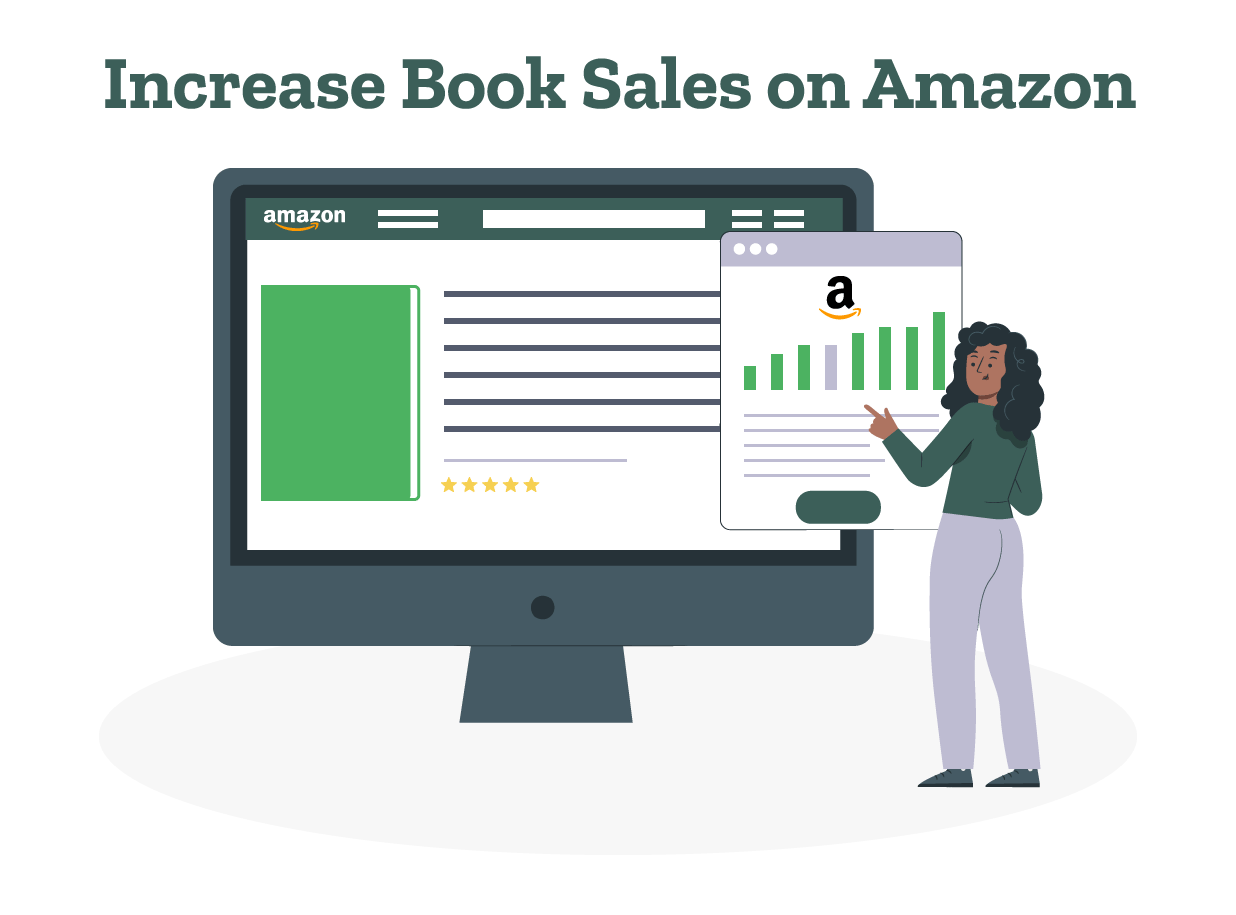
How to Market Your Book on Amazon to Maximize Sales in 2024

Want to utilize the full potential of Amazon to reach a wider audience? Browse through our 7 practical strategies to maximize sales and increase book distribution! We’ve included both free and paid strategies about how to promote your book on Amazon. 

With this, we’ve also mentioned the advantages of every strategy. These strategies can help you to increase sales, aid you in author branding, and get your book on Amazon’s bestseller list. So without further delay, let’s dive in! 

Boost your Amazon book sales with expert marketing services!

Here are the top 7 strategies to increase book sales: 

1. Optimize your book’s keywords 

Here are some methods to optimize your book’s keywords on Amazon: 

  • Use tools like keyword.io, Google Keywords Planner, and Ubersuggest, or conduct a Google Search to find relevant keywords. 
  • Include both broad and specific genres. For example, if your novel belongs to the romance genre and is an erotic romance, you can include both genres. 
  • Search keywords and categories of other books belonging to your genre to get an idea about the keyword usage. 
  • If your book is about a community (eg, Red Indians), a specific setting or time (eg, the French Revolution), and has a specific theme (eg, love), include those keywords as well. 
  • Enhance your book title and book description to include important and popular elements or themes people might search for on Amazon. This can help you in selling your book on Amazon. 

You can also approach the best book promotion services to optimize your keywords on Amazon. For readers still having the question “How to promote my book on Amazon?”, browse through the next, simple strategy! 

2. Perfect your book description 

Make your book description concise as readers have short attention spans (150-200 words, recommended)  Some ways to make your book description attractive are: 

  • If your book has received positive reviews/endorsements by famous people, publications/organizations, include 2-3 of them at the beginning of the book description. 
  • Add an intriguing statement/question and highlight tough character choices and high stakes for the protagonist. 
  • Write short paragraphs to enhance readability. 
  • Use language that evokes emotions, by adding engaging adjectives that effectively convey the story’s essence. 
  • Ensure that your readers can immediately identify the book genre from the book description. 

Now let us see another important aspect of book marketing on Amazon. 

3. Create an author profile on Amazon

You can create an author profile on Amazon Central for free. Fill in all essential details such as the author’s biography, and add all books you have written. This page will enable readers to find and follow your page for more information about your books. Wondering about how to promote your book on Amazon through the author profile? By adding your photo, and mentioning any accolades your book has won, you can increase your book’s appeal. 

In the US, Amazon offers options to add Editorial Reviews for the book and check BookScan sales information. Using these features can prove beneficial for selling your book on Amazon. 

Now let’s learn how to market your book on Amazon in detail. 

4. Use Amazon’s marketing tools 

By using tools such as Amazon advertising, Amazon KDP Select, and A+ Content, authors can boost their books’ visibility. Advertising books on Amazon using Lock Screen ads and Sponsored product ads help authors reach their target audience. A+ Content enables users to create high-quality images, texts, and videos to promote their books. 

Authors can sign up for Amazon’s KDP Select, use Kindle Countdown deals, and free book promotions to increase sales. With this, authors can also engage in Amazon book clubs and sign up for Amazon’s Associates Program for book marketing

After understanding how to market your book on Amazon, let’s see how to leverage social media to maximize sales. 

5. Utilize social media and online platforms 

You can create a strong presence on online platforms like LinkedIn, Twitter, Instagram, YouTube, and Facebook to increase sales on Amazon. By posting engaging content on these platforms, and adding a link to your Amazon page, you can drive traffic to your Amazon page. Here are some strategies you can implement to maximize book sales: 

  • Host Q&A sessions and offer giveaways and contests to create a buzz about your book. 
  • Encourage readers to leave book reviews on Amazon on social media. 
  • Create a compelling book trailer and share it on all social media platforms. 
  • Collaborate with social media influencers, and run social media ads on Facebook and Instagram to promote your book. 
  • Utilize Pinterest’s platform to create eye-catching boards about your book’s themes, characters, and settings. 

These strategies will aid you to sell your book on Amazon. Now let’s see how to increase book sales on Amazon using Goodreads. 

6. Use Goodreads to increase sales 

By creating your author profile on Goodreads, and engaging with readers, you can promote your book. Hosting giveaways, joining book discussion groups, and answering questions about your book can help in book promotion. Goodreads also offers the option of directly linking your Amazon page to your Goodreads account. This can help Goodreads users to directly visit your Amazon page to purchase your book. 

Want to know more about how to sell more books on Amazon? Follow the simple, but effective strategy given below! 

7. Use Amazon’s Read Sample feature 

This feature enables authors to give readers a sneak peek into the book’s content. Including an attractive book cover and strong opening chapters with engaging content can help in marketing a book on Amazon. A well-designed and formatted title page, table of contents, and initial chapters can enhance your book’s visual appeal. If your book consists of any attractive maps/ illustrations, you can also add them by using this feature. These strategies can aid you to sell your book on Amazon. 

Note: In mobile devices, this feature is available only for eBooks and not for print books. 

We hope these strategies have answered any doubts about: “How to promote my book on Amazon?”. As experts in self-publishing services, we’d love to help you promote your book. Whether you want to create a teaser post, press release, promotional video, or post, we can do it for you! 

Do you have any other strategy about how to increase Amazon book sales? Let us know in the comments section! 

Here are some other articles you might find interesting: 
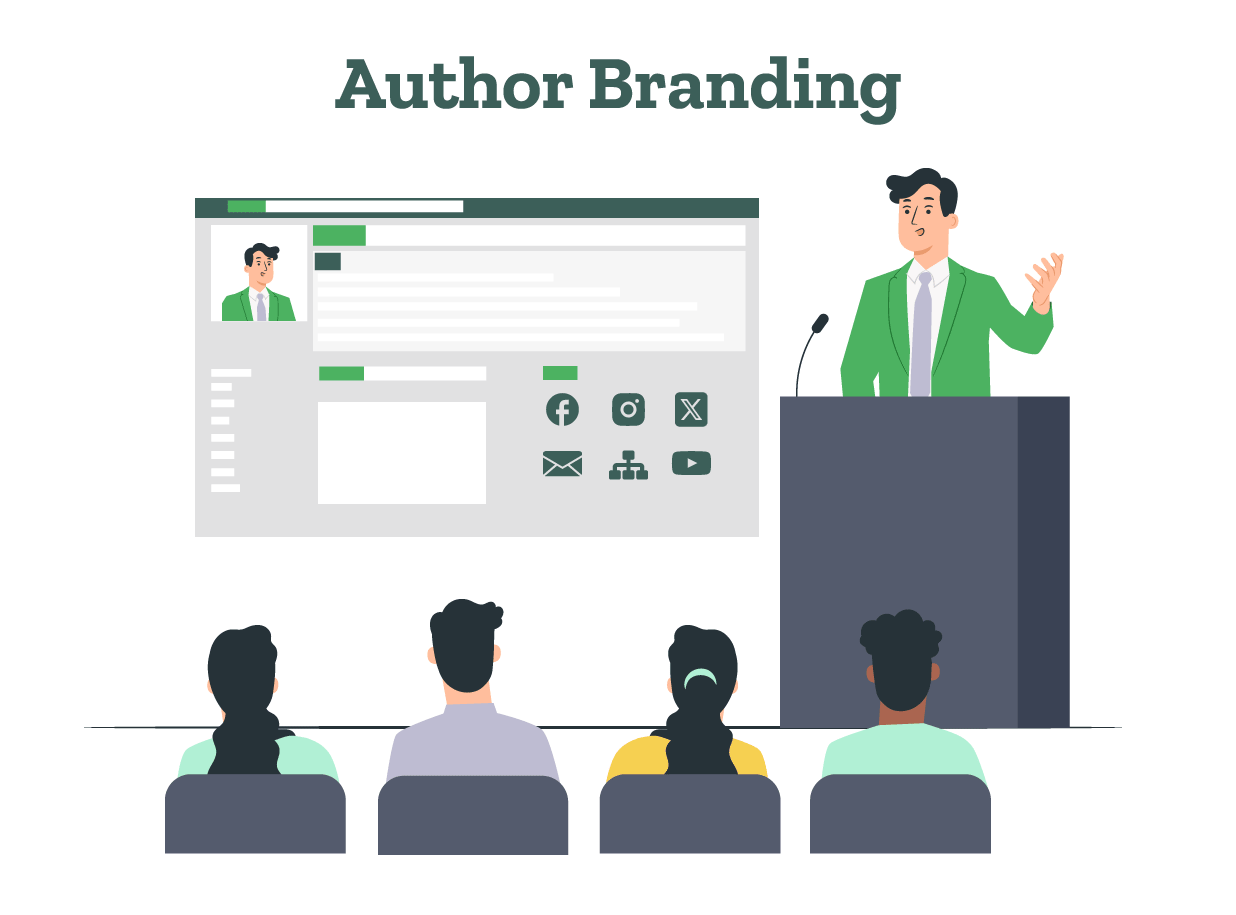
Author Branding 101: How to Build a Powerful Author Brand

In a world where everyone’s a writer and every writer is a brand, have you ever thought about what makes your work stand out? It’s not enough to simply write a great book; authors must also establish a strong brand to stand out from the crowd. 

Author branding is the key to building a loyal fan base and attracting new readers. In this article, we will explore what is author branding and look at essential author branding strategies to help you build your author brand and achieve your goals.

Elevate your author brand with expert marketing services!

Let’s begin with the basics: what is author branding?

What is author branding?

Author branding is the perception and image that readers have of an author. It is what distinguishes an author from other writers and creates a unique identity for their work. It encompasses the essence of who the author is and what they stand for.

Author branding goes beyond just having a recognizable name. An author brand is the emotional connection that readers feel when they see your name or pick up one of your books. It is the trust and credibility that you build over time through consistent delivery of quality content.

The role of branding in an author’s success

Branding for authors plays a crucial role in an author’s success. It is about building a strong and lasting connection with readers. When readers have a positive perception of an author, they are more likely to choose their books over others and recommend them to others.

Building an author brand that is strong, helps you stand out in a crowded marketplace. It allows you to differentiate yourself from other writers in your genre and showcase your unique voice and style.

Interested in building an author brand for yourself but don’t know how to? Don’t worry, we’ve listed down some author branding steps and strategies that’ll help you!

How to build an author brand?

Building an author brand isn’t a one-size-fits-all journey. It’s about finding what resonates with you and your audience. Here are 10 practical author branding strategies to consider:

1. Define your brand message: Start by clearly defining what you stand for as an author. What are the themes and values that permeate your writing? This message should be the foundation of all your branding efforts. Remember, your brand is not just about what you write, but how you present yourself and connect with your audience.

2. Develop a signature style: Whether it’s your writing style, the story themes you explore, or your visual aesthetics, a signature style helps you stand out. This could be reflected in your book covers, website design, or even the tone of your social media posts. Developing a signature style also extends to the characters and story settings you create, imbuing them with unique traits and qualities that resonate with your readers.

3. Engage on social media: Choose platforms where your target audience is most active. Share content that aligns with your brand message, engage with followers and participate in relevant online communities. To maximize your impact, consistently analyze the performance of your posts to understand what resonates with your audience. Don’t forget to leverage the power of multimedia content, like videos and infographics, to make your brand more memorable and engaging.

4. Create a professional website: Your author’s website should be the hub of your online presence, showcasing your work, sharing your bio, and potentially starting a blog. Ensure it’s professional, user-friendly, and consistent with your brand aesthetics. Additionally, integrating social media links and contact information is crucial for audience engagement and networking. Consider also implementing an email subscription or contact form, to facilitate direct communication with your audience and to build a community around your work.

5. Utilize email marketing: Build an email list to communicate directly with your readers. Share updates, exclusive content, and personal stories to keep your audience engaged. Utilize social media platforms and your personal website to encourage sign-ups for your email list, making it easier to grow your subscriber base. Additionally, consider offering incentives like free chapters or ebooks to entice new subscribers and retain the interest of existing ones.

6. Network and collaborate: Attend literary events, join writing groups, and collaborate with other authors or industry professionals. Networking can open up new opportunities and help spread the word about your brand. Also, consider attending writing workshops and seminars, which can provide valuable learning experiences and expose you to different perspectives and styles in writing.

7. Offer value through content: Whether it’s insightful blog posts, engaging videos, or informative newsletters, consistently offer value to your audience. This helps build trust and establish you as an authority in your field.

8. Leverage book reviews and testimonials: Encourage readers to leave reviews and use these testimonials in your marketing. Positive reviews on book review sites can significantly boost your credibility and attract new readers. Engaging actively with your readers by responding to their reviews can foster a sense of community and loyalty around your work.

9. Consistent visual branding: Use a consistent color scheme, logo, and typography across all platforms. This visual consistency helps in creating a memorable brand image. Ensure that the imagery and graphics used align with your brand’s core values and message. Consistent visual elements across various mediums, such as websites, social media, and print materials, reinforce brand recognition and build trust with your audience.

10. Be authentic: Lastly, stay true to yourself. Authenticity resonates with readers and helps in building a loyal fan base.

By combining these diverse strategies and following a few author branding steps, you can build a robust author brand that resonates with a wide range of audiences.

Author branding examples

Many authors have carved out unique identities that resonate with their readers. Here are four inspiring author branding examples:

  • J.K. Rowling’s wizarding world

J.K. Rowling is not just known for her books; she’s synonymous with the magical universe of Harry Potter. Her brand extends beyond the written word into movies, merchandise, theme parks, and more. The key to her branding success is the immersive world she’s created, one that offers endless avenues for exploration and engagement.

  • Stephen King’s mastery of horror

Stephen King has become a household name, synonymous with spine-chilling horror and suspense. His consistent delivery of gripping narratives and his engagement with fans, whether through his website or Twitter, keeps his brand strong. King’s personal story of overcoming rejection to become a best-selling author also adds a compelling layer to his brand.

  • Neil Gaiman’s blend of myth and modernity

Neil Gaiman is known for his unique storytelling style, blending ancient myths with modern settings. His distinct narrative voice and active social media presence, especially on platforms like Twitter, enhance his brand. Gaiman’s engagement with his audience, including his willingness to share writing advice, has cultivated a loyal fan base.

  • Elizabeth Gilbert’s journey

Elizabeth Gilbert skyrocketed to fame with her memoir, “Eat, Pray, Love,” but her brand extends beyond her books. It encompasses her journey of self-discovery and exploration, themes she consistently weaves into her writing. Her social media presence and public speaking engagements further reinforce her brand as a thoughtful and introspective author.

In the end, the goal of author branding isn’t just to sell more books; it’s to create a lasting relationship with your readers. It’s about building a community that shares your passion and looks forward to every story you tell. 

As expert self-publishing service providers, we understand the importance of branding for authors. We wish you all the best to start your journey of making your mark in the world of literature!

For more useful author resources, check out the following articles:

How to Write a Book Summary: Example, Tips, & Bonus Section

Writing a book summary is like telling a gripping story in a nutshell. It requires the knack for capturing the crux of a story without losing its essence. When it comes to summarizing a book, it’s all about weaving the key elements – characters, plot, and themes – into a concise yet captivating narrative.

In this guide, we’ll explore the art of creating the perfect book summary to intrigue readers. From how to start a summary of a book to perfectly concluding the summary, we’ve included everything. You’ll learn how to convey the heart of your story and paint a vivid picture of the world you’ve created. So let’s dive in to see practical tips and amazing book summary examples!  

Create an appealing book summary and ignite readers’ interest!

What is a book summary? 

A book summary is a short and accurate description of a book’s main themes, plot, and characters. Summaries of books highlight key ideas and messages conveyed by the author. They also convey unique story elements and information about the major events and the setting of the story. It is different from a book synopsis which is used by authors to pitch their work to publishers or literary agents.

What is the summary on the back of a book called? 

The summary on the back of a book is known as a book blurb. A blurb is a short, promotional piece that aims to generate curiosity about the book. In contrast, a book summary is longer and offers a more comprehensive story outline. 

Why is a book summary important?

A book summary helps readers make a quick decision whether to read the book or not. It can also be a good promotional tool for authors. An attractive book summary can be posted on social media platforms to increase book visibility and sales. 

How long should a book summary be? 

While the length of a book summary varies, it ranges from 100–250 words. For more complex and lengthier works (such as historical fiction), the book summary can be longer. 

How to write a book summary 

Here is a step-by-step guide about how to write a book summary: 

1. Invest time

Read the book again, or at the very least, review the main themes of the story, characters, and story points before you start writing.

2. Determine the focus

Identify the central theme, idea, or conflict that drives the narrative and ensure your opening sentence or paragraph reflects that core element.

3. Create your hook

Begin with a compelling first line that draws readers in and sums up the main points of the book. Consider mystery, intrigue, or a perplexing predicament.

4. Sketch the experience

Provide a succinct summary of the primary story points, highlighting the onset of action, climax, resolution, and stirring up of emotions. Keep it simple and rational, but refrain from getting overly technical. 

5. Lay out the personas

Give a brief introduction to the key characters, emphasizing their motivations, personalities, and roles in the narrative. Never forget: show, don’t tell! To create a clear picture, use conversation and actions that are descriptive.

6. Reiterate the themes

What are the guiding principles or theories that the book delves into? Mention the topics just enough to avoid sounding condescending. 

7. Close with impact

Pitch in further details to the reader! Put a closing thought-provoking question, an inspirational quote, or a general overview of the book’s influence at the end of your summary.

8. Edit and refine

Check for misspellings, grammatical mistakes, and consistency. Make sure the tone and style fit the genre and intended readership of the book. Whether you’re writing a summary of books or a single book, these tips will benefit you.  

Note: Use a thesaurus! Replace common words with more evocative synonyms to improve the quality and add depth to your writing.

Bonus section: 5 more tips on how to write a summary of a book

  • Write an engaging opening line

Draw them in with the opening line and pique their curiosity about what comes next. Try a witty quip, a chilling revelation, or an unnerving mystery.

Example: In the opulent haze of Gatsby’s Long Island parties, Jay Gatsby longs to recapture a lost love and rewrite the American Dream, one dazzling green light at a time. (Adapted from The Great Gatsby)

  • Be lucid and straightforward

Get right to the point without being weighed down by the details. Keep it clear and concise without the fluff or flowery language. 

Example: Hazel and Augustus, embark on a profound journey of love and discovery, despite the shadows cast by their cancer diagnoses. As they navigate the complexities of life and illness, their story poses a heart-wrenching question: how do you live fully when your time is running out? (Inspired by The Fault in Our Stars by John Green)

  • Steer clear of spoilers

Probe the conflict and the plot twists, but don’t give away the endgame. Hint at the challenges the characters face, but don’t give away the surprise element.

Example: A brilliant young scientist, ostracized for his unorthodox theories, stumbles upon a discovery that could rewrite the laws of physics… and unleash a cataclysmic force upon the world. (Inspired by The Martian by Andy Weir)

  • Highlight the book’s strong points

While writing a summary of a book, ask yourself what makes the book unique and captivating. Is it the setting, the characters, the writing style, or the profound themes it explores? Underline the distinctive features, protagonists and antagonists, or profound viewpoints. 

Example: In a tale of friendship, betrayal, and redemption, Amir and Hassan’s lives in war-torn Afghanistan test their limits of loyalty and courage. This story captures the complexities of guilt, love, and the quest for atonement amidst a country’s struggle for freedom. (Inspired by Khaled Hosseini’s The Kite Runner

  • Be Impartial

Stay true to the story and characters, and never add a bias or opinion. If the protagonist makes questionable choices, don’t sugarcoat them. Your summary should be a faithful representation of the story, allowing readers to form their own conclusions.

Example: Ten isolated souls, a storm-battered island, and a killer with a twisted agenda. And Then There Were None is an edge-of-your-seat puzzle where the line between guest and victim blurs with every death. (Inspired by Agatha Christie’s And Then There Were None)

Book summary example

The Girl With the Dragon Tattoo by Stieg Larsson

In the dark labyrinth of Swedish high society, a scandal of epic proportions is about to unfold. Mikael Blomkvist, a tenacious journalist, has his reputation and career at stake. In a desperate bid for redemption, he takes on the investigation of a decades-old mystery – the disappearance of a young heiress from a powerful family.

Entwined in this web of secrets is Lisbeth Salander, an enigmatic and fiercely intelligent hacker. With her dark past and unconventional methods, Salander becomes Blomkvist’s most unpredictable ally. Together, they delve into a murky world of hidden truths and twisted lies, unearthing a web of vicious deceit and betrayal.

As they unravel the threads, the duo confront a sinister adversary who will go to any lengths to keep the past buried. In this gripping narrative, the story weaves through the realms of power, and corruption, challenging every notion of justice and morality.

Book summary vs. book review 

A book review includes your personal thoughts and critical analysis, whereas a book summary concentrates on the book’s objective storyline and characters. While a book summary aims to merely describe a book’s content, a book review informs readers about the book’s quality. 

This concludes our guide about book summaries. After grasping how to write a summary of a book, don’t stop. Begin brainstorming ideas to create a summary of books or a single book as per your requirements. 

Want to take your book summary to the next level? Our expert team at PaperTrue can create a compelling book summary for you. We also provide expert self-publishing services such as editing, creating a book cover design, online book distribution, securing an ISBN, and creating a book copyright page. 

Here are some other articles you might find interesting: 
Alpha Readers: Where to Find Them and Alpha vs. Beta Readers

Writing a book is an intricate mix of creativity and critique spinning a tale that touches readers’ hearts. In this journey, authors often turn to a special group of individuals known as alpha readers. These are the first set of eyes, aside from the author’s, to peruse the raw, unpolished manuscript.

Their feedback can be pivotal in shaping the story, ensuring it has the strength and appeal to captivate future audiences. But exactly what are alpha readers, and why are they so crucial in the early stages of manuscript editing and development? In this article, let’s dive in and explore the world of alpha readers.

Get a perfectly refined book after alpha reading!

To start, we need to understand the basics of what are alpha readers and what is alpha reading.

What is an alpha reader?

An alpha reader reads your manuscript in its earliest draft, providing feedback on fundamental aspects like plot structure, character development, and overall direction of the story. They’re different from beta readers, who usually come in when the draft is more polished. 

They give you their first thoughts on things like the story, the characters, how fast or slow the story goes, and if it’s interesting to read. They’re like a fresh pair of eyes looking at your work. Typically, authors benefit from having a small, trusted group of about 3 to 5 alpha readers.

To understand what is an alpha reader better, we must understand what an alpha reader does.

What do alpha readers do?

Alpha readers have a few important jobs when they read your early draft. Their main role is to give you honest feedback about your story. Here’s what they usually look at:

Storytelling: They tell you if your story makes sense and if it’s interesting.

Characters: They share their thoughts on whether they like your characters and if they seem real.

Pacing: They let you know if some parts are too fast, too slow, or just right.

General Feel: They give you a general idea of how they felt about the theme of the story and the book. Was it exciting? Boring? Confusing?

Their feedback is super useful because they see your book like a reader would, not like a writer. This helps you understand what might work well and what might need some changes.

Alpha reader vs. beta reader

It’s easy to get confused about alpha vs. beta readers, but there is a difference between alpha and beta readers. Here’s how they are different:

Alpha Readers: They read your book when it’s still a first draft. It might have some rough spots, and the story might still change.

Beta Readers: They read your book later on when it’s more polished and almost ready for book publishing.

Alpha readers vs. beta readers both play significant roles in shaping a book. Alpha readers focus on initial impressions and big-picture feedback, whereas beta readers delve into more detailed critiques and reader experience.

Think of alpha readers as the people who help you while you’re still building your story.  Beta readers, on the other hand, help you smooth things out when your story is almost done. Alpha readers vs. beta readers, both are really helpful but at different stages of your writing.

How to become an alpha reader

If you’re interested in becoming an alpha reader, that’s great! It’s a fun way to help out authors and get a sneak peek at new books. Let’s understand how to become an alpha reader.

Love reading: First, you should really enjoy reading and be able to read different kinds of books.

Be honest but kind: It’s important to tell the truth about what you think of the book, but in a helpful and not hurtful way.

Pay attention to details: Notice things like how the story flows, the story setting, what the characters are like, and if there are any big plot holes.

Communicate clearly: Be able to explain your thoughts clearly to the author so they can understand what you mean.

Tip: You can start by offering to be an alpha reader in online writing communities, forums, or social media groups where writers hang out. Remember, your job is to help the author make their book the best it can be!

When to get an alpha reader

As an author, you might wonder when’s the right time to bring in an alpha reader. Here are some tips:

Early drafts: Get an alpha reader when your book is still in the early stages. It doesn’t have to be perfect. In fact, it’s better if it’s a bit rough.

Before big edits: It’s a good idea to have an alpha reader take a look before you start making major changes. Their feedback can guide you on what to change.

When you feel stuck: If you’re stuck or unsure about your book, an alpha reader can give you a fresh perspective.

Alpha readers give you valuable insights early on, which can save you a lot of time and effort in your writing process. By giving honest, detailed feedback, alpha readers can distinguish between a good book and a great one. If you’re an author looking for guidance on your early drafts, remember that this early collaboration can shape the heart and soul of a book. 

As expert providers of editing and proofreading services, we understand the importance of a refined book and can help you take your draft to the next level. After all, every great book benefits from a little guidance in its early days!

To know more about book publishing and refining, keep reading:

What Is Show, Don’t Tell? (Meaning, Examples & 6 Tips)

Imagine creating a vivid fictional world that makes the story unforgettable for readers. That’s the magic of the show, don’t tell principle. In this article, we’ve explained the meaning of this principle with amazing show, don’t tell examples. From incorporating literary devices to using dialogue creatively, we’ve covered everything! 

With this, we’ve given 6 useful tips to create a mesmerizing fictional world. So without any delay, let’s delve into the details! 

Eliminate all errors with expert editing services!

What is show, don’t tell in writing? 

Show, don’t tell in writing involves describing actions, and sensory experiences instead of directly stating facts. It includes conveying details about sounds, smells, tastes, intriguing visuals, and experiences. This helps readers to experience the story through the characters’ perspective. To understand this better, let’s see the difference between show vs. tell. 

Show: “All the ground was covered with grass of a wintry brown and out of it grew clumps of bushes which were surely rose bushes if they were alive. There were numbers of standard roses which had so spread their branches that they were like little trees.” (From The Secret Garden by Frances Hodgson Burnett) 

Tell: The garden was beautiful. 

In the words of Mark Twain, “Don’t say the old lady screamed – bring her on and let her scream.” Before we see the 6 tips, here are 2 amazing examples of this writing technique. 

Show, don’t tell examples from literature  

1. Harry Potter and the Sorcerer’s Stone by J.K Rowling 

“Once, Aunt Petunia, tired of Harry coming back from the barbers looking as though he hadn’t been at all, had taken a pair of scissors and cut his hair so short that he was almost bald except for his bangs, which she left to “hide that horrible scar”. Dudley had laughed himself silly at Harry, who spent a sleepless night imagining school the next day, where he was already laughed at for his baggy clothes and taped glasses.” 

In the above example, instead of telling readers that Harry was worried, the author mentions Harry’s sleepless night, indicating his worry. This reflects the show, don’t tell principle. 

2. The Book Thief by Markus Zusak

“The smiling bear sat huddled among the crowded wreckage of the man and the blood. A few minutes later, I took my chance. The time was right. I walked in, loosened his soul, and carried it gently away. All that was left was the body, the dwindling smell of smoke, and the smiling teddy bear.” 

Here, instead of directly stating the boy died, the author describes his death using the phrase “loosened his soul”. This illustrates the show, don’t tell principle. 

After seeing these two examples of show, don’t tell, let’s see the 6 practical tips to implement this principle. 

6 tips to use the show, don’t tell principle 

Here’s how to show, not tell while writing: 

1. Depict the character’s inner thoughts 

Use internal monologue and metaphors to depict the characters’ thoughts. Internal monologue involves directly showing the characters’ state of mind. On the other hand, metaphors are comparisons of dissimilar ideas. Here are examples of these literary devices

  • Internal monologue- “Suddenly, a chilling thought occurred to her. Had the man been waiting for her, or was this just a coincidence?” (From Are You Afraid of the Dark? by Sidney Sheldon) 
  • Metaphor- “I felt very still and very empty, the way the eye of a tornado must feel, moving dully along the middle of the surrounding hullabaloo.” (From The Bell Jar by Sylvia Plath. 

2. Use symbolism 

Symbolism means using objects, animals, birds, and characters to represent abstract ideas. This technique helps readers connect better with the story’s themes. Following is an example of symbolism: 

  • “Mockingbirds don’t do one thing but make music for us to enjoy…but sing their hearts out to us. That’s why it’s a sin to kill a mockingbird.” (From To Kill a Mockingbird by Harper Lee ) Here, the mockingbird symbolizes innocence and beauty and helps relate to injustice and the loss of innocence mentioned in the novel. 

3. Create a dynamic setting 

You can create a dynamic setting by depicting the atmosphere, characters’ moods, and foreshadowing events. One way authors can do this is by describing weather details. For example, stormy weather can symbolize impending doom. The weather can also reflect the characters’ moods. Here are some show, not tell examples: 

  • “There was no wind, and, being dead calm, there seemed to be no cloud, no sea, no sky, no horizon; only gray mist, all one, absolute.” This setting creates a sense of foreboding. 
  • “As the light began to fall, so did Anna’s spirits, her mood as gray and uneventful as the sky.” Here, the weather reflects Anna’s mood. 

4. Use body language 

Illustrate the characters’ emotions and feelings through body language and facial expressions. This will help readers think from the characters’ point of view. Some ways to do this are: 

  • Portray emotions through physical reactions- For example, instead of directly stating that a character is nervous and scared, you can describe how their hands tremble, they sweat, their breath quickens and they are unable to maintain eye contact. 
  • Convey feelings through posture- For example, a character standing up straight with his head held high can indicate confidence and pride. In contrast, slumped shoulders and a bowed head can reflect sadness or insecurity. 

5. Show how characters are emotionally impacted 

Instead of directly stating the characters feelings, describe how past actions impact the characters (positively or negatively). You can do this by portraying character reactions and using flashbacks. Following are some show, not tell examples of how Khaled Hosseini skillfully accomplishes this in A Thousand Splendid Suns

  • “Goodbye, Mariam.”  And with that, unaware that she is weeping, Laila begins to run through the grass.” (Laila’s reaction) 
  • “But now, here in this place, it’s easy to summon Mariam behind the lids of her eyes: the soft radiance of her gaze, the long chin, the coarsened skin of her neck, the tightlipped smile.” (Laila remembering Mariam, a flashback). 

6. Creatively use dialogue 

You can write dialogues to portray emotions and conflicts, instead of blandly stating essential details. Following are some ways you can do this: 

  • Use incomplete sentences- You can include incomplete sentences to show the character’s emotional turmoil, and reluctance, or to depict the character being overwhelmed by something. For example, “I just can’t believe she…I mean, after everything we..” Here, the incomplete sentence reflects emotional turmoil. 
  • Use repetition to create an impact- Repeat a word or a phrase to show the character’s emotional state. For example, “What if they don’t like me? What if they laugh?” Here, the repetition of the phrase “what if” shows anxiety. 

We hope this article has helped you understand the narrative technique of show, not tell. You can bookmark this article for future reference about how to show, not tell. Once you finish writing your first draft using this technique, the next step will be to edit your content. As experts in editing and proofreading services, we’d love to polish your writing! 

Here are some other articles you might find interesting: 
How to Get a Literary Agent in 2024: The Complete Guide

If you dream of publishing your book through a major publishing house, you need to know how to get a literary agent. Literary agents help you improve your work, send out book proposals, and negotiate contracts in your favor. But they’re almost always drowning in queries, so yours must stand out.

In this article, we’ll tell you everything there is to know about agents: What is a literary agent? What do literary agents do, what should you send them, and most importantly, how to find one? Let’s begin with the basics.

Take control of your publishing journey today!

What is a literary agent?

A literary agent is a professional who represents a writer and their work to publishers, theatrical producers, and film studios. They use their connections to get book deals, negotiate publishing contracts, and handle the business aspect of a writer’s career. 

A literary agent is more than just a book publishing agent. They’re an ally and a business partner that you’ll (hopefully) work with throughout your career. The publishing industry is ever-evolving, and at times, overwhelming, and your agent is your guide through it all.

But what exactly do they do?

What does a literary agent do? 

A literary agent offers literary advice, sends out queries to publishers, handles contract negotiation, and manages legal affairs for a writer. This mix of tasks differs with every case since new writers need more editorial and career guidance than established ones. Here’s everything a literary agent does for you:

  • Represents you and your work to publishers and producers.
  • Helps revise and refine your manuscript to increase its chances of acceptance.
  • Submits your manuscript to publishing houses on your behalf.
  • Negotiates publishing contracts to get you the best deal while protecting your rights.
  • Offers expert advice that helps you make the right career decisions.
  • Resolves any issues or conflicts during the publishing and distribution process.

Often, the role of a literary agent falls somewhere between an author’s personal and professional life. They’re not just book publishing agents; they’re also the biggest supporters of writers’ work. Sometimes, this involves defending it from an author’s own crises of faith! An agent knows how to get you out of a rut and how to lift your spirits after a rejection.

How much does a literary agent cost?

A literary agent costs nothing. They get paid only if and when you make a sale, which is usually 15% of advance and royalties. If an agent asks for an upfront payment or more than 15% of your earnings, you should explore other options instead.

What should you send them?

Agents ask authors to send some material before they review the entire manuscript. However, make sure your entire manuscript is ready and has been edited several times before you reach out to literary agents.

Here are some materials an agent may ask you to submit:

  • Query letter: A concise one-page letter introducing yourself, your book, and why you believe it’s a good fit for the agent.
  • Synopsis: A summary of your novel or memoir, usually one to three pages long, outlining the plot and major characters.
  • Sample chapters: The first few chapters of your fiction book or any chapters from your nonfiction book. In the case of poetry or cookbooks, the agent may ask for sample sections.
  • Book proposal: A comprehensive document nonfiction authors use to pitch their idea for a book. Easily 25–30 pages long, it’s a sort of business plan that includes market analysis, promotion plan, and book completion timeline.

For more specific information, you should visit the agent’s website and go through their submission guidelines. When preparing your query letter, make sure it’s tailored to the agent you’re sending it to. Customizing the first paragraph usually serves this purpose.

Now, let’s move on to the main question: How to find a literary agent?

How to get a literary agent

You’ll find literary agents listed on online directories, websites, and agencies. The trick is to find one that’s going to be excited about your book. The process is seemingly straightforward, but there are a few things to remember. So, here’s how to get a literary agent:

  • Research agents working in your niche
  • Attend writing conferences
  • Refine your list of agents
  • Personalize your query letters
  • Send out your material
  • Follow up on your queries

Now, let’s get into the specifics of finding a literary agent. What should you expect from the process and what practices should you avoid? Take a look.

1. Research agents working in your niche

The first step to finding a book agent is to identify where your book fits in the publishing industry. Your genre, theme, and author platform can help you determine whether you have a chance with one of the big five publishing companies. Once you know your niche and the type of publisher best suited for your book, you can target agents better.

Online research is straightforward but time-consuming. Most online directories have filters for book genres and offer information like an agent’s recent deals and client lists. Here are the three best places to find a literary agent:

  • Websites like Publisher’s Marketplace, QueryTracker, and Manuscript Wishlist
  • Websites of literary agencies
  • Agent directories (like the Association of Authors’ Representatives)

Note down the names that are relevant to your book along with key details like their contact information and specific submission guidelines. This will eventually help you refine your list and personalize your query letters.

2. Attend writing conferences

Writing conferences bring together authors, agents, book editors, and other industry professionals. Naturally, they offer great networking opportunities for new and emerging writers. Always be on the lookout for such events since networking is essential for a writing career.

Writing conferences sometimes feature pitch sessions where authors can pitch their work to agents directly. If they’re interested, agents may request additional material on the spot! While rare, this window for immediate consideration can only be found at conferences and similar events.

Plus, there are panels and workshops where agents share industry insights, discuss trends, and offer advice to aspiring authors. Besides connecting you with agents, writing conferences also keep you updated with your readership and the market.

3. Refine your list of agents

A key part of learning how to get a book agent is to pay equal attention to every query letter you send out. For this to happen, you must organize the process, which involves creating batches and assigning priority levels. You can set criteria like experience, client list, and style of work to help you sort the agents you’ve listed.

This will require some in-depth research on your rough list of agents, but it is crucial. This will not only tell you which agents to prioritize but also help make your query letters specific. You can look up an agent’s website, blog or interviews, and social media presence to find out more about them.

It’s best to create batches of 10–15 so you can edit your material according to the response you get. Once you’ve done your research and assigned target priority, it’s time to start writing the query letters.

4. Personalize your query letters

You don’t have to write individual letters for each agent—that’d be far too much work! What you should do instead is edit the first two paragraphs of your letter (the introduction), highlighting:

  • The specific reason you’re querying them
  • The specific reason(s) your book is a good fit for them

Use your research here, bringing up a book they’ve represented or a statement they’ve made. If you have any common acquaintances or share an interest/cause that’s relevant to the book, make sure to mention that!

Take care not to overdo this. Mention only relevant details in your letter and don’t waste time on empty flattery. Instead, convey your genuine enthusiasm to work with them. Also, make sure you’re following the submission guidelines provided by the agent.

Naturally, a personalized introduction is not enough on its own to sway an agent, but it shows you’ve done your homework. The rest of your letter should be relevant to the agent and in line with their previous work.

5. Send out your material

Now, it’s time to start sending your material. Submit your query letter and synopsis/proposal to each agent individually, carefully proofreading everything. Agents typically take up to six weeks to respond to queries, so be patient until then! If you get a request for sample chapters or a partial manuscript, your query has been successful.

No response is almost always a rejection and most queries will result in this. Don’t be disheartened! Instead, focus on the following:

  • If you don’t get any requests for further material, you need to re-evaluate your targeting process and query.
  • If you get requests for further material but not for the full manuscript, you need to re-evaluate your manuscript.

In case a full manuscript gets requested and subsequently rejected, the agent will most likely offer some feedback. In this scenario, you can choose to revise your manuscript or keep sending queries for some more feedback. You can also work with book editing services to find out which areas of your book can benefit from rewriting.

6. Follow up on your queries

While no response is almost always a rejection, it doesn’t hurt to do a double-check. So once the six-week window runs out, go ahead and send out a polite follow-up email. If it’s a plain no, you don’t have much to lose. But if the follow-up results in a request for partials or even a rejection with feedback, it’s a worthwhile endeavor.

Agents receive hundreds of manuscripts daily, so it’s not unlikely that they might miss out on a query. So if you want to find a good book agent, follow up on your queries as a final effort. Unless, of course, an agent’s submission guidelines mention that no response is always a rejection. In that case, it’s best not to be pushy!

So now you know how to find a literary agent for your book! However, an important part of finding a literary agent is ensuring that they’re a good fit for you. An agent’s communication style can tell you a lot about their working style. You want an agent who communicates well and is excited about representing you. Trust your gut!

We won’t lie: Traditional publishing is an uphill battle and very few authors manage to find representation. Most others opt for self-publishing services, choosing to retain their rights and royalties while building their author brand. If you’d like to read more about book writing and publishing, here are some resources that might help:

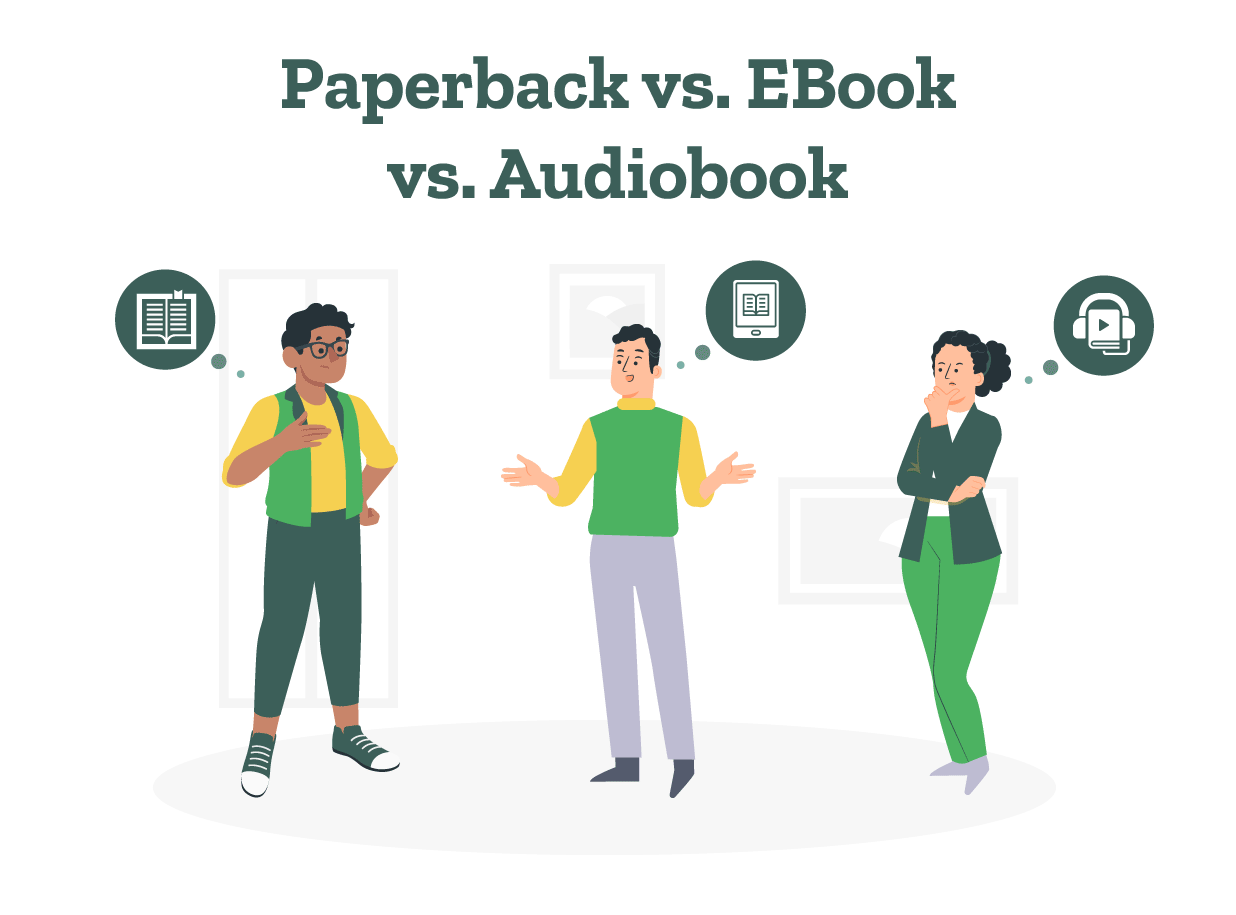
Audiobook vs. EBook vs. Paperback in 2024: (Pros & Cons)

Books never go out of demand. Sure, the form in which they are distributed keeps changing, which brings the matter to the present burning question. Which is better for reading, eBooks, paperbacks, or audiobooks? To answer this question, we’ve listed down the pros and cons of paperback vs. eBook vs. audiobooks.

The winner between audiobooks vs. eBooks vs. paperbacks depends on more than just reading preferences. Whether it be paperback vs. audiobook or paperback book vs. eBook, each one offers its conveniences. For this reason, let’s explore how each kind of experience can add value to your life: reading books vs. audiobooks and paperback vs. eBooks.

Self-publish your audiobook, eBook, or paperback now!

The pros and cons of paper books

Did you know that paperbacks still account for 37.6% of trade sales? Needless to say, they are still the most favored way of reading. When weighing the choice between eBooks vs. paperback editions, it’s essential to consider the advantages and disadvantages of paper books. 

Pros

  • Paperbacks stay with you for generations. Priceless information and insight can be passed down from generation to generation, preserving precious culture in a timeless, printed form. 
  • Paperbacks carry no risk of blue light exposure to the eyes. You can keep reading for hours on end without risking your eyesight as much. 
  • Paperbacks make excellent gifts. The fact that there is a book available for every topic under the sun makes your gifting dilemmas go away. 

Now let’s understand the disadvantages of paperback vs. eBook vs. audiobooks. 

Cons

  • Paperbacks may not be the most economical choice out of the three forms of books. Some people may not want to spend that much on a book.
  • Paperbacks can get lost easily or forgotten after purchase. You may lend a paperback to a friend only to never see it again in your life.
  • Paperbacks are meant to be light to carry. The longer stories (like Atlas Shrugged) or stories with multiple parts can become a bother during travels where you need to put up with their weight and bulk.

Now let’s see the advantages of eBooks vs. audiobooks vs. paperbacks. 

The pros and cons of eBooks

With the increasing popularity of online platforms like Kindle, Apple Books, and Kobo, eBooks and audiobooks are rapidly becoming popular with readers.

Pros

  • EBooks are electronic. Using eReaders or mobile phones, you can get access to thousands of books at the same time. You can also use eBook creators to convert books into eBooks. 
  • EBooks are lightweight; you don’t need to carry any volumes physically, only a single device.
  • EBooks are customizable, interactive, and adjustable to your reading preferences. You can pinch-zoom the text size, check word meanings, and do so much more right there. 

Now let’s see the disadvantages of eBooks vs. audiobooks vs. paperbacks. 

Cons

  • EBooks contain advertisements and distractions to the reading experience. Since there is a device in your hands, you may be tempted to open other apps.
  • Mobile devices need power to run. For someone who is busy, it isn’t always possible to keep the devices charged. This makes eBook reading problematic for battery life.
  • EBooks may glitch or render text or images incorrectly sometimes because of technical issues. For example, for eBook readers not compatible with PNG-type media files, the eBook may show loading errors and take away from the experience of reading.

What is the difference between an eBook and an audiobook? 

An audiobook is a recorded version of a book. It is narrated and users listen to the story via headphones or speakers. An eBook is a book’s digital version that can be read on tablets, eReaders, or computers. 

After understanding the difference between an audiobook and an eBook, let’s explore audiobooks in detail. 

The pros and cons of audiobooks

Audiobooks are a form of extreme convenience—media that frees up your hands and eyes while you still enjoy the experience of a book. You can also multitask while reading audiobooks which isn’t possible while reading eBooks. This is a key difference between an audiobook and an eBook. Let’s now understand the advantages of audiobook vs. eBook vs. paperbacks in detail. 

Pros

  • Audiobooks are vivid and bring a story to life by using diction, emotion, and sound effects in the narration of stories. This is a massive advantage of audiobooks vs. books. 
  • Audiobooks are a more economical option than paperbacks and can be accessed and read anywhere. All you need is your mobile phone and an internet connection. This is another important advantage of audiobooks vs. books that are printed and distributed. 
  • Audiobooks also help improve your literacy skills by assisting with pronunciations and improving overall language fluency.

Now let’s see the disadvantages of audiobook vs. eBook vs. paperback. 

Cons

  • While audiobooks narrate stories for you, there is a chance that you get distracted and lose track. Going back a few sentences for playback numerous times may make you lose interest altogether.
  • Audiobooks may not be ideal for long books. It can take forever for you to finish the book if you have an active mind looking for engagements.
  • Discharging may be an issue when using so many electronic devices.

We hope this article has resolved any doubts about what is the difference between an eBook and an audiobook. For those who like the smell of new pages, eBook vs. paperback is a no-brainer. For those who don’t prefer to hear stories being narrated, eBook vs. audiobook has a clear winner. For those who love to experience stories through a soulful voice, audiobooks vs. eBooks isn’t even a question.

At PaperTrue, we offer expert services for all three book formats. For paperbacks, we offer printing services, and for eBooks, we offer eBook conversion and online distribution. With this, we also offer audiobook creation services. Our self-publishing services also include editing and proofreading, securing an ISBN, creating a copyright page, and book cover design. 

Here are some other articles you might find interesting: 

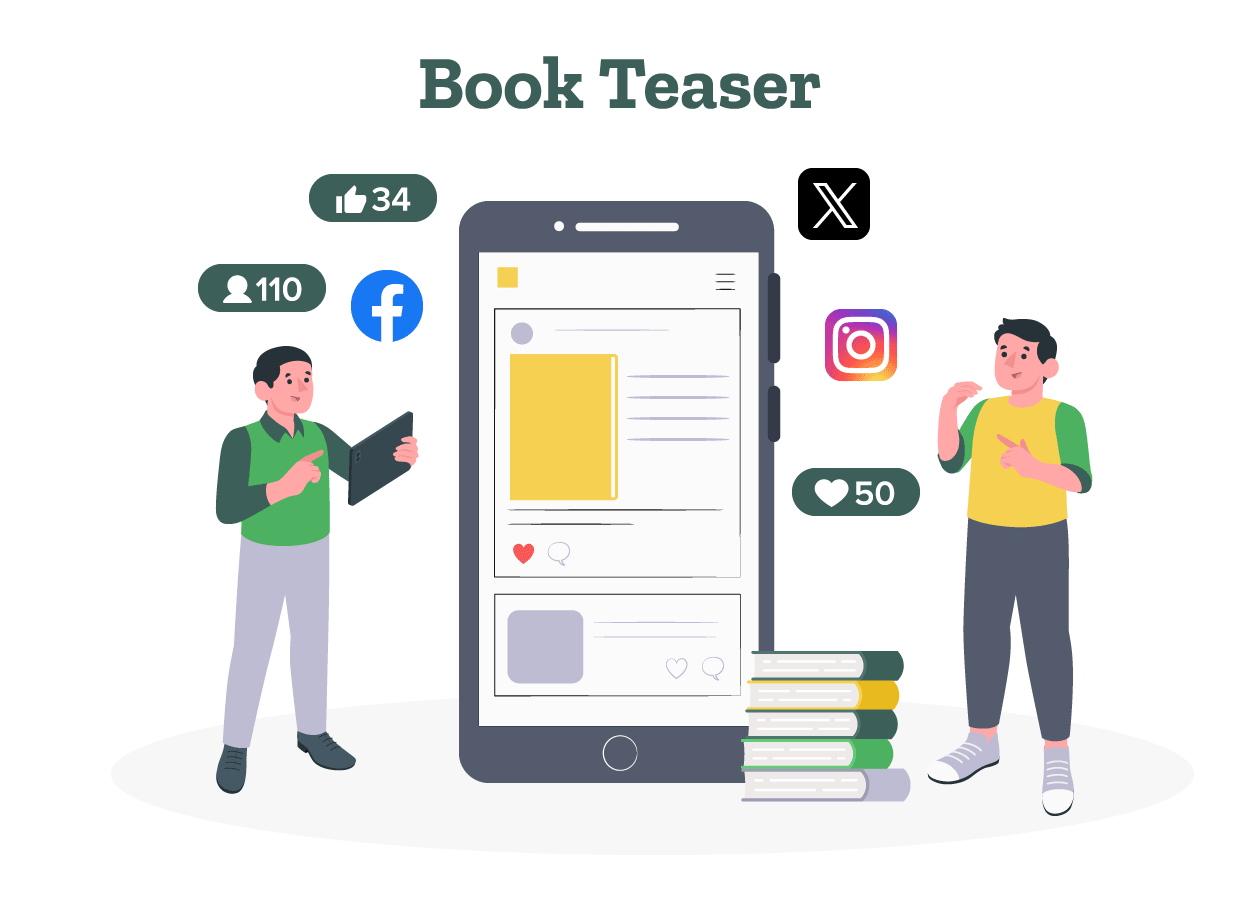
What Is a Book Teaser and How to Write It: Tips and Examples

As an author of a published book, grabbing a reader’s attention quickly is essential. That’s where book teasers come into play – they’re a fantastic tool in a marketer’s toolkit. These brief, intriguing previews are designed to draw in potential readers, giving them a sneak peek of the book without giving everything away. Crafting an effective book teaser is a valuable skill for both authors and publishers, as it can have a significant impact on how a book is received and its overall success.

In this article, we’ll explore the world of book teasers, their key elements, the art of creating them, and understanding what is a teaser for a book. Whether you’re just starting as a writer or have plenty of experience, you’ll find insights and examples to help you along the way!

Create a buzz with an unforgettable book teaser!

What is a book teaser?

A book teaser is a brief, engaging blurb designed to hook potential readers and ignite their interest in a book. It is like an exciting peek into the world of a book, crafted to grab the attention of potential readers and ignite their curiosity. A book teaser should typically be brief, ideally around 100 to 150 words. The importance of a book teaser cannot be overstated in the current fast-paced digital era. 

With readers often making quick decisions on whether a book piques their interest, a teaser serves as the perfect bait. It’s a delicate balance between giving just enough information to entice readers and withholding enough to keep them yearning for more. 

Book teaser vs. book trailer vs. book summary

Unlike a summary, which aims to give an overview of the story, a book teaser is all about creating intrigue and anticipation. While a book trailer uses multimedia elements to convey a similar message, a book teaser relies solely on the power of words and the imagination they spark.

While a summary might lay out the plot, a book teaser is more like a movie trailer, a series of tempting glimpses meant to leave you hungry for the whole story. Its ultimate goal is to form an emotional connection, whether it’s curiosity, excitement, or suspense, driving you to pick up the book for the complete experience.

After getting to know what is a book teaser and how it’s different from other promotional forms, let’s examine what needs to be included in book teasers.

What to include in a book teaser?

Creating a book teaser is a creative process that demands a thoughtful selection of elements to guarantee its appeal and efficacy. The key components of a book teaser include:

  1. The hook: This is the opening sentence or question designed to grab the reader’s attention immediately. It should be captivating, thought-provoking, or emotionally stirring.
  2. Atmosphere and emotion: The teaser should express the theme of a story, and its overarching atmosphere, whether it’s tinged with suspense, romance, humor, or mystique. This establishes reader expectations regarding the genre and ambiance.
  3. Story setting and characters: Introduce the story setting and the main characters and character development subtly. Give a sense of where and when the story takes place and who the central figures are, but keep the details sparse and impactful.
  4. Conflict or premise: Present the central conflict of the story or premise of the book in a way that entices the reader. This should be a natural extension of the hook, elaborating slightly on the challenges or mysteries the characters face.
  5. Brevity and clarity: A book teaser should be short, ideally not more than a few sentences. Every word must count, contributing to the overall effect without overwhelming the reader with information.
  6. Cliffhanger or question: End the teaser with something that leaves the reader wanting more. This could be a cliffhanger, a rhetorical question, or a statement that hints at hidden depths and secrets to be uncovered in the book.

Keep in mind that the aim of a book teaser isn’t to provide a summary of the book but to allure the reader, compelling them to delve deeper into the story. Its purpose lies in igniting curiosity and sowing the seeds of questions that can solely be satisfied by reading the book.

Now let’s understand how to write a teaser for a book in detail!

How to write a book teaser?

Knowing how to write a book teaser is a unique challenge. It’s about capturing the essence of your book in a few compelling lines. Here are practical tips to help you create engaging book teasers:

  1. Identify your book’s unique selling point (USP): What makes your book stand out? It could be an unusual setting, a unique character, or a novel plot twist. Highlight this aspect in your teaser.
  2. Write in the book’s voice: The teaser should reflect the style and voice of your book. If your book is humorous, infuse the teaser with a light, witty tone. If it’s a thriller, keep the teaser tense and fast-paced.
  3. Use active voice and strong verbs: Active voice makes your teaser more dynamic and engaging. Use strong, vivid verbs to create a sense of action and immediacy.
  4. Incorporate a memorable quote or dialogue: If there’s a line from your book that is particularly striking or encapsulates the theme, consider using it in your teaser.
  5. Limit character introductions: Introduce only one or two main characters in the teaser. Too many names and details can be overwhelming and confusing in a short teaser.
  6. End with a question or provocative statement: This could be a rhetorical question or a statement that leaves the reader pondering. It’s a classic way to create a cliffhanger effect.
  7. Get a second opinion: Once you’ve written your teaser, get feedback from beta readers, friends, or writing groups. Fresh eyes can offer valuable insights into how your teaser is perceived.
  8. Optimize for online platforms: If your book teaser will be used online, ensure it’s optimized for web readers. This means keeping it concise, breaking up text into easily digestible chunks, and using keywords for SEO if applicable.

Book teaser examples

To better understand how an effective book teaser functions, it’s important to examine a book teaser example. The following book teaser examples will showcase different genres and styles, demonstrating the versatility and impact a well-crafted teaser can have.

Fantasy book teaser example:

In the realm of Eldoria, magic is fading. As the last dragon rider, young Kyra embarks on a quest to find the ancient Dragon Stone and restore balance. But dark forces are at play, and the price of success may be more than she’s willing to pay.

The book teaser presents a high-stakes quest in a fantastical setting. It hints at a larger conflict and personal sacrifice, intriguing readers with its promise of adventure and danger.

Mystery/thriller book teaser example:

In the sleepy town of Willow Creek, a letter arrives, postmarked 30 years ago. Sarah, a local librarian, finds her world upended as the letter hints at a decades-old crime that hits too close to home. Who sent this cryptic message, and why now?

This teaser sets the stage with a compelling setting and introduces a mystery involving a time-delayed letter. It raises questions about the crime and the sender, enticing readers to uncover the truth.

Science fiction book teaser example:

Aboard the starship Nova, Captain Lyra discovers an alien artifact that challenges everything humanity knows about the universe. As she delves deeper, she must confront not only alien truths but the secrets within her crew.

This teaser introduces a sci-fi setting with an intriguing discovery. It promises a story of exploration and internal conflict, appealing to readers’ curiosity about the unknown.

Mastering the art of the book teaser is an invaluable skill for authors and book publishing companies. Whether you are promoting a mystery, romance, fantasy, or science fiction novel, a well-crafted teaser can be the difference between a potential reader passing by or being drawn into the world you’ve created. For those looking for a starting point, a book teaser template can be helpful.

As self-publishing service experts, we have witnessed the transformative power of a well-executed book teaser. We hope you employ the tips and strategies outlined in our article and effectively set the stage for your stories!

Continue reading to discover additional valuable resources:

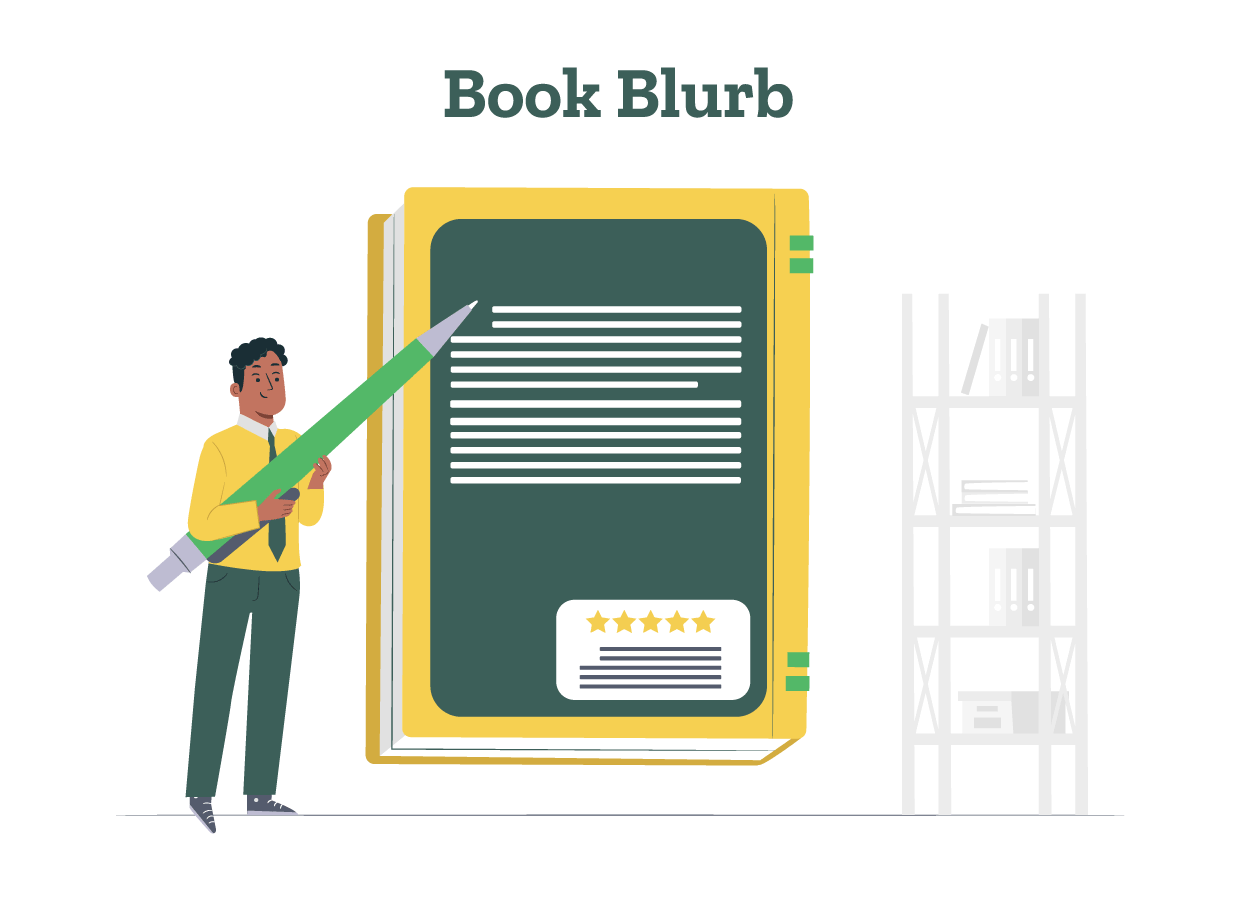
What Is a Blurb? Meaning, Examples & 10 Expert Tips

Do you want more readers to buy your book?  Creating a powerful blurb can attract more readers to purchase your book. In this article, discover how to write a blurb for a book to increase sales! We’ve also given amazing examples of blurbs from famous novels. 

So what does a blurb mean? To grasp the basics, let’s first quickly define blurbs. 

Get an attention-grabbing book blurb now!

What is a blurb in a book? 

A blurb is a brief, compelling book description designed to arouse the curiosity of potential readers. The blurb is printed on the back cover of the book, giving readers a short glimpse of the story. It introduces the main characters, offers a brief plot outline, and highlights unique story themes. It can also consist of intriguing quotes from the book. 

A blurb aims to create suspense among readers. However, this is done without revealing the entire story and the main climax. 

To define blurbs isn’t enough. It’s also important to know what is a blurb’s length. Let’s find out! 

How long is a blurb? 

A blurb is typically between 100 to 200 words. Blurbs are usually concise and do not offer a detailed summary of the book’s contents. Instead, they provide just enough detail to arouse the reader’s curiosity.

After learning about a blurb’s length, let’s understand how to write a book blurb in detail. 

10 Tips to create a compelling blurb 

1. Create an attractive hook 

Ideally, the hook must feature within the first line of the blurb, nudging the audience to read more. It can be an intriguing question, a shocking statement, or a life-changing moment faced by the protagonist. 

2. Introduce mystery elements 

If your book centers around an element of mystery and intrigue, you can spotlight these elements upfront in the blurb. For instance, if the story is a whodunit, your book blurb can build suspense about which characters might have done it.

3. Use powerful adjectives 

The use of powerful adjectives can lead to more credibility and excitement in your narrative. Adjectives should be specific rather than generic. Here’s an example: Isabel, a young ambitious archaeologist, stumbles upon a hidden manuscript that reveals a tale of painful betrayal. 

4. Include an exciting plot twist 

Introduce a specific turning point where the plot thickens, and a regular story gets more interesting. For instance, it could be an unexpected incident that triggers a life-altering challenge for the protagonist. 

5. Highlight unique story elements 

Providing specific details on the characters and storyline makes your book stand out from others with similar plots or within the same genre. Focus on distinctive characters, situational, and circumstantial details such as unique choices made by characters, a shocking plot twist, or an unexplored theme that instantly generates interest. 

6. Briefly describe the setting 

Provide a brief description of the setting of the story details such as the historical time and backdrop. For instance, which place and culture is the story set in, or the profession and age groups of the main characters.

7. Avoid giving spoilers

Disclosing the ending might influence the reader not to buy the book. Hence, be cautious not to reveal the outcomes of key plot twists. Also, avoid providing so much detail that readers can predict the outcomes.

8. Highlight difficult choices made by characters

Readers often connect to characters that they relate to, and they see themselves in their actions and outcomes. Introducing a subtle detail of a turning point where a character is confronted with two difficult choices can arouse interest in the characters and their narratives.

9. Touch upon the themes explored

If your blurb highlights multiple interwoven themes of a story, this approach can help build appeal amongst a wider audience. It also strengthens the narrative. For instance, a blurb can spotlight the challenges faced by a single woman who adopts a baby. 

10. End with an intriguing question

A strong way to end a blurb is to pose a question that seeds anticipation in the reader’s mind. The question can offer a hint, seed curiosity in a reader’s mind, and trigger a sense of urgency as to why the book must be read. 

Now that we know how to write a book blurb, let’s see some amazing examples of novel blurbs. 

Best book blurb examples 

Here are 2 amazing examples of novel blurbs that demonstrate the blurb definition: 

1) The Girl On The Train by Paula Hawkins

Genre: Mystery 

EVERY DAY THE SAME

Rachel takes the same commuter train every morning and night. Every day, she rattles the track, flashes past a stretch of cozy suburban homes, and stops at the signal that allows her to watch the same couple breakfasting on their deck daily. She’s even started to feel like she knows them. Jess and Jason, she calls them. Their life—as she sees it—is perfect. Not unlike the life she recently lost.

UNTIL TODAY

And then she sees something shocking. It’s only a minute until the train moves on, but it’s enough. Now everything’s changed. Unable to keep it to herself, Rachel goes to the police. But is she as unreliable as they say? Soon, she is deeply entangled not only in the investigation but in the lives of everyone involved. Has she done more harm than good?

2) Outlander By Diane Gabaldon 

Genre: Fantasy 

Scottish Highlands, 1945. Claire Randall, a former British combat nurse, is just back from the war and reunited with her husband on a second honeymoon when she walks through a standing stone in one of the ancient circles that dot the British Isles. Suddenly she is a Sassenach — an “outlander”— in a Scotland torn by war and raiding clans in the year of Our Lord…1743.

Claire is catapulted into the intrigues of a world that threatens her life and may shatter her heart. Marooned amid danger, passion, and violence, Claire learns her only chance of safety lies in Jamie Fraser, a gallant young Scots warrior. What begins in compulsion becomes urgent need, and Claire finds herself torn between two very different men in two irreconcilable lives.

We hope the blurb definition, examples, and practical tips have inspired you to brainstorm for your book blurb.  You can also bookmark this article for future reference about what is a book blurb. If you want to create a professional blurb, you can seek help from the best self-publishing companies that offer blurb writing services.

At PaperTrue, we craft compelling blurbs for authors along with providing a wide range of self-publishing services. These include editing, creating a book cover design, online distribution, eBook conversion, getting an ISBN, and creating a copyright page. 

Here are some other articles you might find interesting: 
How to Copyright Your Book?

If you’ve thought about copyrighting your book, you’re on the right path.

Explore more