Newsletter Sign Up

Third-person Point of View: Definition, Types, Examples

Do you want to make your writing expansive and engaging? Use the third-person point of view to achieve this by stepping outside a character’s head. Include as many viewpoints, angles, and plots as possible to offer readers a riveting narrative. 

In this article, we will discuss the concept of writing in the third person. This perspective allows you to enjoy creative liberties when writing about varied emotions, events, motives, plots, scenes, and characters. Read on as we explore how to write in the third-person point of view with examples. 

Working on your book? Get professional editing support today!

What is the third-person point of view? 

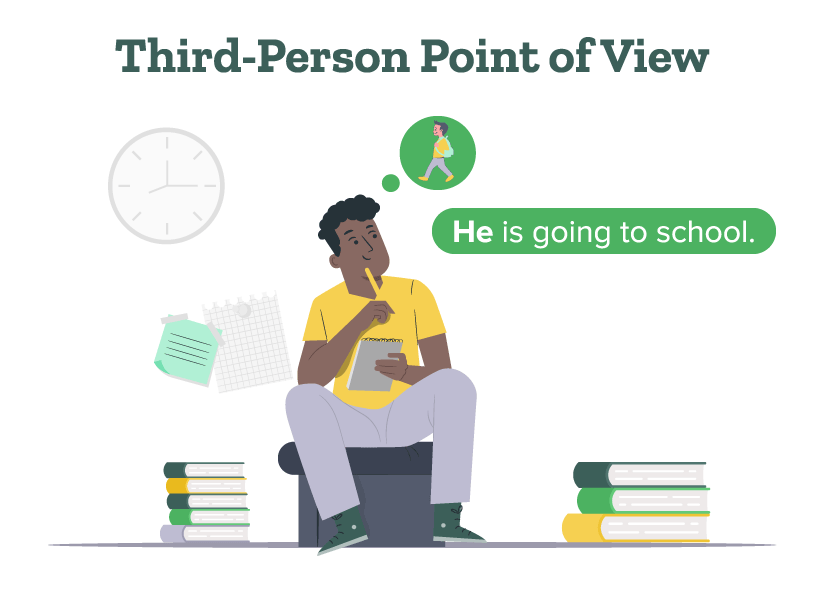
The third-person point of view is a storytelling method where the narrator steps outside a story to narrate from various angles and perspectives. The purpose is to cover several relevant aspects of the story to spin a gripping tale. Instead of narrating the story through the eyes of a single character, the narrator relays events using third-person pronouns like “he”, “she”, and “they”. 

For readers, stories written in the third person bring anticipation, emotion, fear, agitation, excitement, and intrigue, among other simple and complex feelings. This perspective opens up a range of possibilities for writers, too. If you are keen on exploring different writing approaches to suit your story as a writer, this is the POV to choose. 

Here are some examples of writing in the third-person point of view:

        • Mariah walked down the path, feeling the warmth of the sun on her face.
        • The researchers conducted a study on the effects of climate change on coastal communities.
        • He gazed out the window, wondering if she would ever return.

Types of third-person point of view

Selecting a suitable point of view significantly impacts how your story is perceived and understood by readers. In the third-person POV, the narrator looks at a story from the outside. The third-person point of view definition says that this approach offers readers a highly versatile and comprehensive perspective. 

There are three primary types of third-person point of view: third-person limited, third-person omniscient, and third-person objective. Understanding these types can help you decide how best to present your plot and portray your characters to engage your audience effectively.

1. Third-person limited point of view

The third-person limited POV talks about the experiences, emotions, and thoughts of a single character, or a few characters, while still narrating the story from an external standpoint. It gives the narrator the freedom to take the story in different directions.

The narrator does not know about the inner thoughts and motivations of all the characters in the story. So, it is a restricted but flexible viewpoint because a perspective shift is possible. Here is an example: 

“David stood at the edge of the cliff, his heart pounding as he stared down at the churning sea below. Fear gripped him, but he knew he had to jump. The memories of his father’s daring adventures flooded his mind. With a deep breath, he closed his eyes and stepped off the edge.”

2. Third-person omniscient point of view

In the third-person omniscient POV, the narrator knows everything about all the characters and events in a story. This narrator can access the experiences and emotions of every character in the story. 

This perspective provides an all-round view, where the entire story comes alive as a cohesive piece. Here is an example:

“Across the busy city, Anna hurried through the crowded streets, clutching a letter in her hand. Little did she know, just a block away, Daniel waited anxiously at a café, hoping she would arrive soon. Meanwhile, unbeknownst to both of them, a storm was brewing on the horizon, threatening to disrupt their carefully laid plans.”

3. Third-person objective point of view

In the third-person objective POV, the narrator reports events with an impersonal approach. They do not dive deep into the inner thoughts or feelings of the characters while narrating the story. 

This perspective provides an unbiased and detached view, where happenings or ongoings are only recorded from the outside. Here is an example:

“The town square buzzed with activity. Vendors called out to passersby, showing them their colorful wares. Children chased each other around the fountain, their laughter echoing through the air. A dog sniffed at scraps of food left behind on a bench, its tail wagging eagerly.”

How to write in the third-person point of view?

Writing in the third-person point of view involves narrating the story from an external perspective. Character names and their respective pronouns are used in such a narration. The narrator describes the events, feelings, and emotions without being on the scene to experience them. Also, the narrator describes the characters, or looks at them, without being one of them. 

Depending on the chosen type—limited, omniscient, or objective—the narrator typically provides varying levels of insight into the characters’ lives and the events surrounding them. Consistency is key here, as is providing rich descriptions through dialogue

Adequate, timely, and effective character development is crucial to offer readers an immersive reading experience. For example, in the Harry Potter series, JK Rowling built an intricate world of magic, friendship, and thrill by writing in the third-person limited point of view. She revealed plot twists and secrets gradually, and as Harry gathered more information about his life, so did the readers. 

Tips for writing effectively using the third-person point of view

Here are some tips to help you write in the third-person point of view: 

                • Choose the POV: Select the right POV type based on your storytelling needs. Depending on what and how much information you wish to reveal at different points, select a narration style: third-person limited, third-person omniscient, or third-person objective. 
                • Use third-person point-of-view pronouns: Use “he”, “she”, “they”, “him”, “her”, “them”, etc., along with character names to maintain the third-person perspective and establish a strong narrative. 
                • Stay consistent: Stick to the chosen perspective throughout the narrative. Avoid switching between characters’ thoughts abruptly.
                • Focus on character development: Use actions, dialogues, and conversations to reveal information about the characters in your story.
                • Show, don’t tell: Describe events and actions to show how characters feel, emote, and think instead of directly stating how a character feels. “Show, don’t tell” is a powerful way to achieve this. 
                • Transition wisely: If you need to transition from one perspective to another, ensure it is done smoothly to avoid confusion and disconnect. Scene breaks are a good way to do this.

Third-person point of view in fiction and nonfiction 

In fiction, the third-person point of view can be used to weave a story that creates fascination, mystery, intrigue, excitement, fear, and suspense, among other things. While the first-person point of view and second-person point of view are popular forms of writing, the third-person POV appeals to many old and contemporary fiction writers. 

Let us see some examples of the third-person point of view in this section. 

                • Third-person limited:

Stacy walked through the bustling market, her thoughts drifting to the conversation she had overheard earlier.

Readers only have information about Stacy. They will not know what she overheard unless the narrator chooses to divulge. 

                • Third-person omniscient: 

Across town, Shaun was preparing for the meeting, unaware that Mylee had already made up her mind about confronting him.

Readers become aware of Shaun and Mylee’s movements and actions in one go.

                • Third-person objective: 

The clock struck midnight as the car screeched to a halt outside the mansion. Lights flickered on in the windows on the upper floors.

The above sentence has a matter-of-fact tone; it does not evoke any emotions. Even if a dead body were to be dropped out of this car later, the narration does not build any suspense or anticipation at this point. 

In nonfiction, this POV is used to detach from events, emotions, and opinions. It is commonly seen in news pieces, reports, academic writing, biographies, etc. Some examples of such writing are: 

                • News report:

The CEO announced plans to expand operations into Asia next quarter.

                • Academic report: 

The study examined the correlation between exercise, diet, and cardiovascular health in the nation’s youth.

                • Biography: 

He was born in a small town in 1948 and grew up dreaming of becoming a musician.

Popular instances of third-person point-of-view writing

In this section, we have listed some well-known examples of writing in the third person in the form of excerpts from novels. Let us know in the comments which one is your favorite! 

Isn’t it interesting that the third-person POV can drastically change how you communicate with your audience? 

Try writing your next book, blog, or article in the third person and see if this strategy works for you. If you need professional assistance, we can help! Explore PaperTrue’s editing and proofreading services for more information on what our editors can do for you. 

You might also find the following articles useful and interesting: 
Know Everything About How to Make an Audiobook

Creating an audiobook is a great way to bring stories to life. It offers authors and narrators the chance to share compelling tales. Audiobooks help listeners connect with the story and feel involved in storytelling. If you are looking for instructions on how to make an audiobook, this detailed guide will walk you through the process.

From equipment selection and recording space setup to post-production task handling, we’ll help you transform your words into a captivating auditory experience. 

Get editing and proofreading services for your manuscript.

What is an audiobook?

An audiobook is a recorded version of a book’s text, read aloud by a human narrator or a text-to-speech voice. A narrator lends their voice to record a book in an enthralling manner, engaging readers listening to stories on smartphones, tablets, or e-readers.

As they bring literature to life, audiobooks interest nearly everyone. They offer convenience, particularly to those who prefer listening over reading. Listening to audiobooks while commuting to work, traveling, or working is appealing to many. Even daily chores might become more enjoyable with them. Also, people with visual impairments can benefit from such creations.

You can cover many genres and storytelling styles with audiobooks. Skilled narrators use varied vocal expressions and sounds to make the story come alive. Listeners can almost feel themselves standing beside the book’s characters and experiencing the same emotions as the protagonist, the antagonist, or other characters

Audiobooks can be recorded by professional narrators, actors, celebrities, or authors. People interested in creating an audiobook can self-record a book following the steps required to create an audiobook for free. 

What are the advantages of creating an audiobook? 

The advantages of creating an audiobook cannot be ignored in today’s digital age. In this section, let us discuss some pertinent advantages of creating an audiobook. 

      • Cater to consumers of digital entertainment: We know people like to consume digital content, and literature is no exception to this ever-growing trend. Audiobooks help authors and book enthusiasts boost the reach of written content. Book clubs can increase their readership numbers by introducing audiobooks. 
      • Achieve global readership: Making an audiobook might help you secure global readership. Creators can record audiobooks and distribute them through varied online platforms to achieve this goal.
      • Accomplish storytelling finesse: It enhances a story as narrators employ effective storytelling methods. They focus on vocal expressions and engaging narration techniques. They gently entice readers into relating and bonding with a story’s characters. 
      • Enjoy creative autonomy: Creating audiobooks allows for greater creative control as you can choose a voice and style for narration, set the tone for your book, and follow suitable recording practices based on individual preferences. 
      • Leverage digital publishing: The digital publishing industry is growing rapidly, as is the audiobook market. You can capitalize upon lucrative opportunities in this industry and increase your income. Through audiobook sales and subscriptions, creators can enjoy significant earnings. 

What will I need to create an audiobook?

The resources needed to create an audiobook will determine its production cost. 

Audiobooks offer listeners a wonderful opportunity to enjoy an interesting story while relaxing in a spa, lounging on a beach chair, or commuting to work every day. However, would anyone be interested in listening to an audiobook that sounds unrefined and ill-organized? 

Audiobook creators must focus on production quality once they have a compelling story to narrate. This will help avoid adverse reactions from prospective listeners. 

Let us see the resources a creator needs to record an audiobook. 

1. Recording space: A quiet recording space is necessary to ensure your recording is flawless. Such premises need to be soundproof to ensure high-quality output. 

2. Recording unit and equipment: A modern recording unit and other equipment are crucial for a good recording. You will need top-grade microphones, headphones, speakers, cables, stands, etc. The effectiveness of a recording increases with adequate practice. Also, vocal exercises help improve the quality of delivery. 

3. Editing software: Advanced audio editing software is essential. Audacity (free) and Adobe Audition (paid) are some powerful tools for editing, trimming, and enhancing audio tracks.

4. Post-production tools: A polished recording is the result of using good software for noise reduction, equalization, and mastering. Several tools can be used to clean up audio, balance sound levels, and ensure professional quality.

5. Online distribution support: Seeking sales, marketing, and distribution support from professionals is recommended to reach a wider audience than otherwise.  

10 quick steps on how to make an audiobook

Here are 10 quick steps on how to make an audiobook: 

Step 1 – Select a story you think will be well-received: Select a book or create a story that you believe will resonate with your audience and get ready to work on it. 

Step 2 – Choose a narrator and practice reading the book: Find and approach a skilled narrator, or you could consider reading the book. Rehearse the reading well for a smooth and expression-rich delivery.

Step 3 – Arrange the equipment and set up a room for recording: Set up the equipment in a quiet recording room for professional-quality recording. 

Step 4 – Record the audiobook: Start recording the book. Focus on articulation, tone, and diction. Consistent pacing is key to making the audio sound pleasant.

Step 5 – Use editing software to edit the recording: Edit the audio to remove mistakes, long or unnecessary pauses, and background noise.

Step 6 – Listen to the final recording: Listen to the recording to check for any errors inadvertently made during the recording process.

Step 7 – Make the necessary changes and adjust audio settings: Correct any mistakes identified in the previous step. Fine-tune the audio levels and quality. If you select copyrighted background music or other content, ensure you have the right to use it.

Step 8 – Select the cover art: Choose compelling cover art that represents your audiobook and attracts listeners. 

Step 9 – Publish the audiobook: Select a platform to publish your audiobook and track its performance. 

Step 10 – Market the audiobook: Develop a strategy to promote your audiobook. Social media can be an effective medium for this, in addition to online and offline book clubs, forums, and groups. 

Listeners can enjoy an immersive experience with audiobooks. They can bring significant revenue for authors. So, why not learn how to make an audiobook for free? 

Create an audiobook with AI

To create an audiobook with AI, consider following the steps given below:

Step 1 – Prepare the text for AI: Ensure the required text is well-edited and formatted. Check for typos, grammatical errors, and content that does not add value. Next, divide it into sections or chapters to facilitate recording.

Step 2 – Select an AI Text-to-Speech tool: These powerful tools help convert text into voice. Some popular ones include Google Text-to-Speech, Amazon Polly, Microsoft Azure Text-to-Speech, etc. Select a tool that best suits your language, features, and customization needs. 

Step 3 – Synthesize the audio: Upload your text segments to the chosen tool and select a voice that suits your content. Also, check whether content delivery sounds pleasant. Save the audio files generated during this process. 

Step 4 – Review and edit the audio: Listen to the audio files and make the necessary edits. Depending on the language, check for pronunciation errors, clarity, and flow. 

Step 5: Select sound effects and music: Add background music and make other edits to refine the audiobook using audio editing software. Remove pauses and adjust volume levels as required.

Step 6 – Compile and export the audiobook: Use audio editing software to compile individual audio segments and make an audiobook. Export it in the format you need (MP3, WAV, etc.). Include metadata to simplify web searches. The book title, author, and chapter titles are required.

Step 7 – Publish the audiobook: Select a platform to upload and publish your audiobook. Audible, Apple Books, GooglePlay, Storytel, Kobo, etc., are some popular publishing platform options. 

This article sheds light on how to create an audiobook for free. If you are thinking about audiobook creation, talk to us to learn more about PaperTrue’s professional self-publishing services.

Here are a few other relevant articles you might find useful:

10 Best AI Essay Outline Generators of 2024

Artificial intelligence (AI) has simplified the creation of engaging, information-rich content today. Not only can users create content, images, software code, and the like but also generate ideas about how this content should look and read. 

One particular area of writing where outline generators can work wonders is essays. Though AI outline generators are used for different content forms today, we will focus on essay outline generators in this article. Let us begin by discussing what outline generators for essays can do for you. 

Editing your essay feels like a challenge? Talk to us!

What is an essay outline generator?

An essay outline generator is an AI tool designed to help users create a structure and strategy for their essays. Many consider essay writing an uphill task, and AI essay outline generators can help streamline the planning process—the writing approach, style, and structure. 

As most websites offer comprehensive content creation services, an essay outline generator is one of the features available to users. These free essay outline generators can help you brainstorm and organize your content. 

Using free AI essay outline generators, you can form logically sound and cogent points about the topic you write. If you have an argumentative essay to write, an argumentative essay outline generator will do the trick quite nicely when you give it the right prompt or input.

Ten popular essay outline generators today

Here is a list of some well-known content and outline generators available online:

1. Copylime

This versatile writing tool offers extensive content generation support, covering blogs, articles, essays, cold emails, newsletters, listicles, headlines, conclusions, etc. The essay outline writer asks for the theme or subject, tone, and language. 

While the platform offers free writing tools, the paid version costs $29 a month. 

2. Perfect Essay Writer

Perfect Essay Writer is another website that provides a host of writing, grammar, plagiarism checking, citations, paragraphs, and other tools. It also offers professional essay writing services tailored to individual needs. 

The free plan gives users access to all the tools but with certain word count limitations. The paid versions, Basic, Pro, and Advanced, cost $9.99/month, $14.99/month, and $99.99/year. The Basic plan includes access to “AI Essay Writer” and “AI Essay Outliner”. 

3. Ahrefs

Ahrefs is a widely used search engine optimization (SEO) toolset, with multiple features and services being made available to users. While the outline generator looks like it is built for blogs, it can generate outlines for all kinds of content, including academic papers, presentations, etc. 

The company focuses on content creation and has 4 different plans—Lite, Standard, Advanced, and Enterprise costing $129/month, $249/month, $449/month, and $14,999/year, respectively. 

4. MyEssayWriter.ai

This is an AI-powered essay writing assistant that offers essay outlines tailored to specific topics. The platform offers an artificial intelligence-based essay outline generator. 

It is a focused essay outline writing tool that generates essay outlines in minutes. This free outline generator for essays is easy to use. 

5. Custom-Writing.org

Custom-Writing.org provides personalized writing services for academic needs, comprising essays, term papers, research papers, reports, letters, etc. You can also get custom essays written on this platform. Their 24/7 customer support makes getting queries resolved easy. 

Pricing is based on the complexity and assignment deadline, with rates starting at approximately $12 per page.

6. EssayService.ai

This is a user-friendly platform that offers various tools to improve essay quality. It offers grammar feedback and input on tone and style. It gives multiple essay generation options, with a free essay outline generator for users.

The platform also offers a paid essay writing service. 

7. Rytr

This is an AI writing tool offering multiple options for content generation, including essay generation. It allows you to create essay outlines and AI-generated essays in no time. Rytr has a paragraph generator, too, which can help with essay outlines. 

The free version allows you to generate 10K characters per month. To access advanced features, users will be required to opt for paid services. 

8. Writesonic

This is a content-creation tool, but it offers essay-writing features as well. It can generate essay outlines based on your input. The platform assures users that the content it generates is plagiarism-free. 

The free version is quite effective as it offers all the features of Writesonic.

9. Writing Lab

Writing Lab’s essay outline generator is a useful essay outline generator. When you input your essay topic, it suggests ideas and creates an organized outline. This is a great tool to brainstorm, structure your thoughts, and save time while submitting time-sensitive assignments. 

This essay outline generator also gives you grammar suggestions. The only drawback of using this tool is that it offers limited free services. 

10. Akkio

This AI outline generator is a user-friendly tool that can help you quickly draft great essays. It can create structured outlines for various content forms, including essays. It is ideal for those struggling with organizing the content in their essays and maintaining consistency in writing. 

The “Basic” user plan starts at $49 per user per month, but the free version might just be sufficient if you are a student. 

How to use an essay outline generator

Learning how to use an essay outline generator can come in handy, particularly when you need to create a well-thought-out outline and save time while writing. 

So here’s a quick step-by-step guide on how to use an essay outline generator: 

      • Identify the requirements: Outline the requirements to determine the nature and content of your prompt for the tool. Identify the essay type, length, word count, tone, title options, and other topic-specific requirements. 
      • Choose an AI tool: Now, select an AI essay outline generator. Consider reviews while making this decision. You can select multiple free tools to get essay outline options. Some platforms offer subscription-based services, but free tools will get the job done. 
      • Input the relevant information: Most platforms ask to input information like essay type, length, purpose, academic level, word count, etc.
      • Adjust, modify, or refine the input: Once you generate an outline, check if it meets your needs. If not, change or adjust the input details to create suitable outline ideas. 
      • Finalize an outline: Study the outline/s and finalize one that incorporates the best ideas. From here, you are all set to start drafting your essay. 

Benefits of using an essay outline generator

Essay outline generators familiarize people at various proficiency levels with different essay structures and writing styles. Let us go a little deeper keeping this thought in sight and understand the benefits of using an essay generator.

          • New idea generation or incorporation: Using an essay outline generator, you can develop new ideas and make your essay insightful.
          • Idea development and review: With a meticulously designed outline and quick reviews, incorporating ideas, research points, facts, and other relevant information is easy. 
          • Strong premise creation: These tools help you create logical arguments and include well-founded statements, giving your essay a solid body and direction. 
          • Efficiency: Essay writing becomes efficient with a structure in place. 
          • Free templates: Essay writing can be simplified further using free templates. You can save the time and effort required to format your document well. 

Also read: Compare and Contrast Essay | Quick Guide with Examples

So, these are some reasons why you should consider using an AI essay outline generator online. 

There is no doubt that this tool helps write impressive essays. However, it is advisable to use these tools as a writing aid rather than a crutch. We recommend the use of free essay outline generators and essay writers to spruce up the content of your essay that might just help you get that otherwise elusive grade A. 

If you think your essay needs a professional review, explore PaperTrue’s essay editing and proofreading services

You might find the following articles helpful:

Manuscript Editing in 2024: Elevating Your Writing for Success

Do you dream of making your book a bestseller? Manuscript editing is the first step to achieving this dream. In this article, we’ve explained all the costs and steps associated with manuscript editing. 

From manuscript editing tips to how long editing a manuscript takes, we’ve covered everything! We’ve also answered the common question: How to select the perfect manuscript editing service for your book?  

So let’s start by quickly understanding what editing manuscripts means!

What is manuscript editing?

Manuscript editing is a detailed process to enhance the text’s structure, readability, and formatting. It includes rectifying any spelling, grammar, and punctuation errors. 

Manuscript editors work with writers to enhance pacing, character development, plot, conflict, and dialogues. For academic writing, manuscript editors ensure the text follows the required style guide (APA, MLA, Chicago, or others).

There are usually 2-5 rounds of editing to ensure the manuscript is ready for publication. However, the actual number can vary, depending on the manuscript’s length and complexity. 

Now let us understand the stages of manuscript editing! 

4 key stages of manuscript editing

1. Developmental editing

Developmental editing is the first step of the manuscript editing process. Developmental editors address issues related to clarity, coherence, and logical flow of ideas.

They also assist authors in removing plot inconsistencies, improving pacing, and developing well-rounded, believable characters

With this, they focus on improving the manuscript’s overall structure, content, and quality. They provide detailed feedback for revisions. This can include eliminating content, adding text, and reorganizing chapters. Let’s see a brief example of this! 

Before developmental editing: John killed a man. The police soon realized that John was the murderer and tried to catch him. However, he disappeared. 

After developmental editing: John killed a man. The police investigated the man’s death and realized that John was the murderer. They issued a warrant for his arrest. However, John escaped to France. 

2. Line editing

Line editors pay close attention to the word choice and overall readability of every line. They may suggest rephrasing awkward sentences and replacing repetitive words. 

With this, line editors also remove any vague words and redundancies, enhancing sentence structures. They also suggest improvements to enhance the writing’s clarity and flow. The goal of line editing is to make the text impactful and enjoyable for the reader. Let’s see a quick example: 

Before line editing: The girl was very scared and did not know anything about the truth. 

After line editing: The girl was terrified and unaware of the truth. 

3. Copy editing

Copyeditors focus on correcting any spelling, grammar, terminology, syntax, and punctuation errors.  They also check for consistency in formatting, such as the use of italics, boldface, and capitalization. 

Furthermore, they also review the text for unclear passages or potential factual inaccuracies. They provide in-depth feedback, ensuring a polished, error-free manuscript that meets professional standards. Let’s see a simple example! 

Before copy editing: He realizes what has happened. 

After copy editing: He realized what had happened.

4. Proofreading

Proofreading is the final stage of the editing process. Proofreaders meticulously review the manuscript to catch any remaining errors or inconsistencies. Here is a quick example: 

Before proofreading: He traveled to Venice, France, Japan, and China.

After proofreading: He traveled to Venice, France, Japan, and China. 

They look for typographical errors, misspellings, punctuation mistakes, and formatting issues. With this, they may also check for consistency in design elements, such as page numbers, headers, and footers. 

Now let us see what authors should look for while selecting professional manuscript editing services. (If you already know this, you can skip this and explore the next section where we’ve mentioned manuscript editing pricing.)

Importance of manuscript editing 

1. Enhanced clarity

Manuscript editors improve your text’s word choice, and sentence structures, making your writing more engaging. This reduces the chances of readers abandoning the text due to confusion or boredom.

2. Improves reader experience

A well-edited manuscript without complex, wordy, and technical phrases enhances a reader’s experience. This increases the chances of positive reviews and recommendations.

3. Elimination of all errors 

Editors correct grammar errors, capitalization mistakes, factual errors, and inconsistencies in tone, formatting, and writing style. This improves the reader’s trust in the content and the author’s credibility. 

4. Maximizes chances for publication Many publishers and literary agents prioritize manuscripts that have been professionally edited, potentially increasing your chances of acceptance and success. It also demonstrates the author’s attention to detail and professionalism.

How can authors select the best manuscript editing services? 

Consider the following aspects while selecting the best services: 

1. Look for editors with degrees, certifications, and experience in your genre.

2. Make sure the service offers the types of editing you need (developmental, line, copy, or proofreading).

3. Check for positive reviews from previous clients on social media.

4. Ask for a sample edit of your first few pages to see if the editor’s style works for you.

5. Choose an editor who communicates clearly and promptly.

6. Compare prices and services from different editors to find the best value.

7. Ensure the editor can meet your deadline without sacrificing quality.

Now let’s understand manuscript editing rates for a 70,000-word book.

What is the cost of editing a manuscript?

The following table explains the manuscript editing fees for a 70,000-word manuscript: 

Note: The prices may vary, depending on the editor’s experience, turnaround time, country, volume of work, and manuscript complexity. 

How long does it take to edit a manuscript? 

The time taken for editing a 50,000-word manuscript can take 1-5 months. Developmental editing usually takes more time compared to line editing, copyediting, and proofreading. 

However, the time taken varies, depending on the manuscript length, type of editing, editors’ availability, and workflow. Additionally, the manuscript’s complexity can also affect the editing time required. It’s essential to discuss timelines with your editor and keep buffer time for unexpected delays or additional rounds of revisions.

Self-editing the manuscript is a crucial step before hiring manuscript editing services. The next section explores manuscript editing tips for the first draft. 

Manuscript editing tips for beginners 

Following are some tips for beginners: 

1. Analyze and rectify any inconsistencies in your story, such as unexplained changes in character appearance, timeline discrepancies, or contradictory plot points.

2. Focus on one aspect of your manuscript at a time, such as dialogue, pacing, or character development while editing a book manuscript. You can create a self-editing checklist and mark every aspect after you finish checking it. 

3. Alternate between short and long sentences, and use different sentence types (simple, compound, and complex sentences). 

4. Identify and remove unnecessary filler words and phrases, such as “just,” “really,” or “in order to,” to make your writing more concise and impactful. (To identify such filler words, analyze if the sentence’s meaning will change without those words. If the meaning doesn’t change, remove them!) 

5. Keep track of your manuscript’s specific style, formatting, and language choices in a style sheet to maintain consistency throughout the editing process. You can use Google Docs, MS Word, or Editpad to do so. This is also an important aspect of scientific manuscript editing. 

6. Proofread your manuscript multiple times to catch any lingering errors in grammar, punctuation, or spelling. You can use grammar checkers, spell checkers, and punctuation checkers to do so. 

This concludes our guide about editing a manuscript! Now you can compare the best manuscript editing services to select one. You can also request a sample edit to assess their credibility. If you require high-quality manuscript editing services, you can rely on PaperTrue’s expertise! 

We provide both, non-fiction and fiction manuscript editing services. Our dedicated team can eliminate all language errors and give in-depth feedback to polish your manuscript. 

Here are some useful resources for you: 

What Is Amazon Self-Publishing? Pros, Cons & Key Insights

Amazon self-publishing has revolutionized the publishing industry, empowering authors to take control of their literary works. Several popular writers like Amanda Hocking and Andy Weir have also pursued their love for writing through Amazon self-publishing! 

If you’re also wondering what is self-publishing on Amazon, you’ve come to the right place. By bypassing traditional publishing houses, writers can now independently publish, distribute, and market their books through platforms like Amazon Kindle Direct Publishing (KDP). 

In this guide, we’ll delve into the world of Amazon self-publishing, exploring its advantages and challenges so that you can make the right decision for your book.

Take the first step towards becoming a published author.

What is Amazon self-publishing?

Amazon self-publishing, also called Kindle Direct Publishing (KDP), is a platform that allows authors to independently publish and distribute their books directly to readers through Amazon. Unlike traditional publishing, where authors submit their manuscripts to publishing houses for consideration, self-publishing gives authors complete control over their work.

With KDP, authors can publish their books in both digital (e-book) and print formats. This means you can offer your book on Kindle devices and Kindle apps, or consider publishing in the physical paperback format. Amazon handles the printing, distribution, and sales of your physical books, while you retain the rights to your content.

Essentially, self-publishing on Amazon empowers authors to be their own publishers, enabling them to reach a global audience without the gatekeepers of the traditional publishing industry. The platform’s tagline, “Be your publisher,” aptly describes the journey of this growing breed of authors.

What is Amazon Kindle self-publishing?

Amazon Kindle Self-Publishing is specifically about creating, publishing, and marketing ebooks through Amazon’s Kindle Direct Publishing (KDP) platform. It’s a subset of Amazon self-publishing, focusing solely on the digital format. 

It was launched in 2007 to enable the self-publishing of ebooks with speed and scale and bring a more diverse voice to the world of ebooks. The platform was the first of its kind to enable self-publishing in a simple, cost-effective, and user-friendly manner. Authors could have their books displayed in Kindle bookstores, making their work accessible to audiences around the world.

Using Amazon Author Central, they could display their profiles and update them as their journey progressed. Their readers could easily find them and follow their journey. These features collectively encouraged aspiring authors to take the leap of faith and get their books published through this innovative mode. 

In 2016, the platform introduced the “Print” option. Today, you can also sell print copies of your book (paperbacks or hard copies). When you self-publish on Kindle, you retain full copyright ownership of your book. You also have complete control over the book’s pricing, formatting, and publishing schedule. KDP handles the distribution of your ebook to millions of Kindle devices and reading apps worldwide.

How much does Amazon self-publishing cost?

The best part about Amazon book’s self-publishing is that there are no upfront costs. You also do not need to have any pre-placed inventory orders to get started with the process.

Now, say you decide to offer print copies of your book. You may be wondering – how much do I need to pay for print copies?

The answer – nothing. 

Say a reader orders a print copy. Besides allowing you to upload your book and distribute your eBook to Kindle stores, Amazon’s self-publishing Kindle platform also allows you to print your book on demand. The platform then subtracts print costs from your royalties.

So, once again, you do not pay any upfront costs. The print costs are mentioned on the platform, and the process is transparent and cost-effective.  

How does Amazon self-publishing work for audiobooks?

Amazon offers two primary avenues for self-publishing audiobooks:

1. Audiobook Creation Exchange (ACX) by Audible Inc., an Amazon company:

  • Narrator and production: You can hire a professional narrator or choose to narrate your book yourself. ACX connects authors with narrators, allowing you to negotiate payment terms (royalty share or pay per finished hour).
  • Distribution: Once the audiobook is produced, you can distribute it through Audible, Amazon.com, and iTunes.
  • Royalties: You earn royalties based on the chosen payment structure.   

2. Kindle Direct Publishing (KDP) Audiobook Beta Program:

  • AI narration: Amazon offers an AI-powered narration service for your book.
  • Distribution: Your audiobook will be available on Amazon and Audible.
  • Royalties: KDP handles the distribution and royalty payments. 

The KDP Audiobook Beta Program is a relatively new offering, and its availability and features might gradually evolve to include other options or services.

Both options provide authors with the opportunity to reach a wide audience through Amazon. Consider factors such as your budget, desired level of control, and the quality of narration you seek while choosing one for your book.

Amazon self-publishing tax information

Amazon requires all publishers to provide valid taxpayer identification to comply with tax regulations. The specific requirements depend on whether you’re a US or non-US person.

Key considerations:

  • Taxpayer identification: You’ll need to provide your Social Security Number (SSN) or Tax Identification Number (TIN) to Amazon.
  • Withholding tax: Amazon may withhold a percentage of your earnings for tax purposes, especially if you’re a non-US resident.
  • Income reporting: Your self-publishing income is generally considered self-employment income and should be reported on your tax return accordingly.
  • Deductions: You might be able to deduct certain expenses related to your self-publishing business, such as editing, cover design, and marketing costs. However, it is best to check with a tax professional before committing to this endeavor. 
  • Sales tax: If you sell physical books, you might be responsible for collecting and remitting sales tax based on your location and the sales tax laws of different jurisdictions.

We strongly recommend you to consult with a tax professional for personalized advice based on your specific circumstances.

Pros of self-publishing on Amazon

There are several advantages to self-publishing a book on Amazon, as follows:

1. Skip the pitching process

You can altogether skip the stressful process of pitching your book to multiple publishers. The platform has democratized publishing by making it an even playing field for all. Thus, anyone has the potential to become a successful author.  

2. Complete autonomy

You have complete autonomy over the messaging, content, and marketing of your book. There is no editor or publisher discouraging you from getting your voice out there or demanding that you keep making changes. You can get your book published without diluting its message and impact. 

3. Cost advantage

Self-publishing with Amazon is a great way to generate revenue from your writing and expertise. You can earn up to 70% royalties every time a book is sold, unlike traditional publishing, where authors earn lower royalties. Once your book is up, your earnings are transferred to you every month. You can also publish your book for free. 

4. Streamlined self-publishing process

The entire process of creating the book, publishing, and marketing is simple and streamlined on the platform. There are lots of free tools, such as the cover creator, to help you bring out a well-designed and presented book. You can use the platform’s free formatting tool to format every page as per your requirements.

For instance, you can leverage Amazon Author Central to create your Author Page with the latest information about your books and author journey. 

5. Massive reach

Amazon’s reach is massive, and your book gets access to a worldwide audience spanning multiple platforms and countries. For instance, you can take advantage of Amazon advertising’s extensive outreach and create customized ads, invite readers to post reviews, and access cost-effective print-on-demand services.  

Cons of self-publishing on Amazon

The following are the disadvantages, when it comes to self-publishing on the Amazon platform: 

1. Lack of editing support

One of the top disadvantages is that you do not have access to any editing or proofreading services. Thus, you need to play this role yourself.

However, your book can hire a professional editing and proofreading company to perfect your book. They can make sure that it is free from errors, has uniform language, and is punctuated properly. 

2. No ghostwriting opportunities

Amazon does not provide any professional ghostwriting services. So, if you do not have the professional writing skills to pen a book end-to-end, you’ll have to find and hire a ghostwriter. 

3. Amazon owns the rights for 90 days

Even though you have self-published, Amazon owns the rights to your book for 90 days. If you shift to another publisher after this time frame, then you lose all the book reviews published on Amazon. 

If you’ve been thinking of publishing a book for some time, there is no better time than now to present it to the world. Amazon self-publishing is an ideal platform to create, publish, and market your book, as the entire process is seamless and free of cost.

You can also consider leveraging a platform like PaperTrue, which offers end-to-end self-publishing services, which include pre-publication author services, printing, and distribution. You can have your book polished, published, printed, and distributed worldwide! 

Here are some other resources you might find useful: 

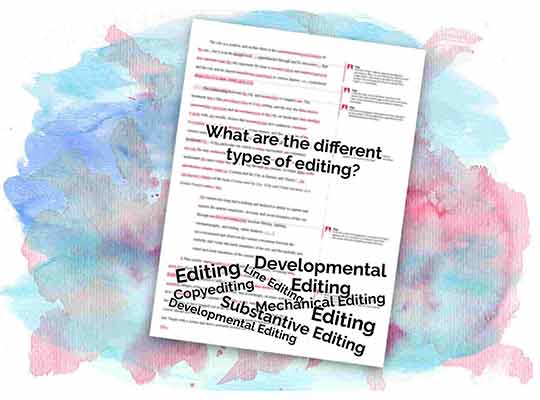
Developmental Editing vs. Copyediting: Key Differences Explained

Enough has been said and written about the importance, struggles, and triumphs of editing a document.

But how many people actually know and can tell the differences between various kinds of editing? Editing is a far more intricate process than simply correcting surface-level grammar errors. There are different categories, as well as levels of editing, all slightly varying from one another.

Why should this matter to you though? If you have a document that needs to be edited and proofread, all you have to do is hire an editor right?

No, your job isn’t just to drop your manuscript on an editor’s desk – because not all editors offer the services you’re looking for, and you run the risk of overpaying.

So it’s important to understand the differences in levels of editing and ensure that you’re crystal clear about what you need for your document. Before you dive into that, make sure you know the differences between copyediting and developmental editing first.

Get top-notch editing and proofreading services for your content.

What is editing? 

Editing is a really broad umbrella term used to describe the process of refining any text for grammar and language errors. An editor usually checks any given document for punctuation errors, spelling mistakes, redundancies, and run-on sentences, among other things grammar and language.  

However, as is the case with most large documents (such as dissertations, books, etc.), one can’t simply perform a cursory edit. Therefore, the editing process is divided into several steps (or levels) in order to simplify the process while also ticking off all the boxes.

For the purpose of clarity, let us assume that the first level of editing is known as copyediting or line editing.

Copyediting or line editing

These terms, often used interchangeably, refer to fixing any mechanical errors in spelling, grammar, and punctuation. It’s essentially an overall review of your document and is the least expensive form of editing.

Some editors do tend to divide copyediting and line editing into 2 processes for the sake of convenience or more accuracy. In such cases, copyediting suggests checking the document for

  • Wrong grammar
  • Inconsistencies (both factual and grammar-related)
  • Adherence to style and structure.

Most copy editors tend to maintain style sheets, and this often overlaps with the process of proofreading anyway. Therefore, it’s better to simply opt for proofreading at the end and line editing in the middle.

Line editing is the bridge between copyediting and developmental editing. It is a line-by-line intensive look at the entire document for language and structure. It seeks to improve the readability of the document by checking the writing style, creativity, and content. Line editing usually checks for

  • Run-on lines
  • Any overused words and sentences.
  • Redundancies
  • Unnatural jumps in tone and voice (includes plot for works of fiction). 
  • Bland language

The final step of editing right before proofreading is known as developmental editing.  

What does copyediting involve?

Here’s a breakdown of what copyediting typically involves:

  • Grammar and spelling correction
  • Consistent style and tone
  • Clarity and readability enhancement
  • Formatting uniformity
  • Fact-checking for accuracy
  • Proper punctuation use
  • Smooth flow and transitions
  • Redundancy elimination
  • Legal and ethical compliance

Examples of copyediting

Here are some examples of copyediting

Example 1

Before:
The company have announced there new product line which includes inovative features. The team is excited to share there creation with the market.

After:
The company has announced their new product line, which includes innovative features. The team is excited to share their creation with the market.

Example 2

Before:
The financial report which was created by the analysts was really comprehensive and it included a lot of data and numbers which were difficult to understand for the stakeholders who were not well-versed in finance.

After:
The analysts’ financial report was comprehensive, but it contained too much complex data for stakeholders unfamiliar with finance to understand easily.

Developmental Editing

As the name of the category suggests, developmental editing is a more in-depth look at the document as a whole. Although editors do check for clarity and structure at this stage as well, they also analyze the content.

Therefore, what separates this from copyediting or line editing is the fact that editors may also suggest that you rework certain sections or choose to completely omit them. This, of course, is subject to the policies of every individual editor or editing service. However, they do provide valuable feedback for your content, and the editors at this stage are usually experts and knowledgeable in the field.

Developmental or substantive editing is rather expensive, and must only be considered by people keen to have content-level feedback (such as authors and students preparing their thesis.)

What does developmental editing involve?

Developmental editing focuses on a manuscript’s overall structure, content, and organization. It goes beyond grammar and punctuation to examine the core elements of the work. This type of editing is crucial in the early stages of manuscript development and helps refine ideas, improve flow, and enhance the overall impact.

Developmental editors provide feedback on plot structure, character development, pacing, theme, and audience engagement. They may suggest significant revisions, reordering of content, and expansion or reduction of sections to strengthen the manuscript. Here’s a closer look at what developmental editing involves:

  • Structure and organization
  • Content development
  • Plot and characterization (for fiction)
  • Theme and message
  • Voice and style
  • Pacing and flow
  • Audience engagement
  • Dialogue and interaction (for fiction)
  • Consistency and coherence
  • Marketability

Examples of developmental editing

Example 1:

Before:
The report starts with an overview of the company’s history, then moves on to detailed financial data from the past decade, and concludes with a discussion of future goals and strategies.

After:
The report starts with a discussion of future goals and strategies, providing context for the detailed financial data from the past decade, and concludes with an overview of the company’s history to highlight its growth and evolution.

Example 2

Before:
The article briefly mentions the impact of climate change on agriculture but doesn’t provide detailed examples or data to support this point.

After:
The article includes specific examples and data, such as the reduction in crop yields in California due to prolonged droughts and the increase in pests in the Midwest, to illustrate the impact of climate change on agriculture.

Examples of developmental editing vs. copyediting

Now that we have seen the differences between developmental editing and copyediting, let us see some examples of how different the text reads in each case.

Here is the paragraph that we will analyze and edit:

Original paragraph:

The weather was extremely bad that day. The storm was powerful, and it caused a lot of damage. Many people were stuck in their homes, and they couldn’t go outside. The rain was coming down heavily, and the wind was blowing very hard. It was a terrible day for everyone who was affected by the storm.

How to choose between developmental editing vs. copyediting

Developmental editing vs. copyediting is a potent debate that often arises in the writing and publishing process, as choosing the right approach can greatly impact the quality and success of a manuscript.

When to choose copyediting

  • Polishing language and grammar: If your manuscript is structurally sound and you’re confident in the overall content, but you need help with grammar, punctuation, spelling, and syntax, copyediting is appropriate.
  • Ensuring consistency: When you need to ensure consistency in style, tone, terminology, and formatting throughout the manuscript.
  • Preparing for publication: If your manuscript is in the final stages and you need a thorough review to catch any remaining errors before submission or publication.
  • Improving readability: When the focus is on enhancing readability by refining sentences and improving flow without making significant changes to the content.

When to choose developmental editing

  • Structuring and organizing content: If your manuscript needs significant changes in structure and organization, such as rearranging sections, chapters, or scenes to improve flow and coherence.
  • Developing ideas and themes: When you need help developing ideas, themes, and messages, ensuring they are clearly conveyed and effectively explored throughout the manuscript.
  • Enhancing plot and characterization (for fiction): If your story requires development in plot, pacing, character arcs, and dialogue to create a more compelling narrative.
  • Deepening content: When your manuscript could benefit from adding more detailed examples, explanations, or research to fully develop the content and support your arguments or storytelling.
  • Improving voice and style: If you need to refine the voice and style to ensure it aligns with your intended audience and enhances the overall impact of your writing.
  • Aligning with market expectations: When you want to ensure your manuscript meets market expectations and enhances its potential for publication, including addressing genre conventions and audience preferences.

Now that you’ve come to understand the different levels of editing, you can begin to imagine the kind of skill, time, and effort it’s going to take you to perfect your document. And then there’s proofreading to be done after that, which is a whole different area.

So what do you do? Send in your document to PaperTrue, of course! Our editors would be happy to help you. We provide copyediting and line editing, as well as a version of developmental editing suited to your needs.

P.S – The terms may vary slightly in publishing, and the above is just a general understanding of the same. You can always check with your editor beforehand.

Want to read more about editing. Here’s a list of articles you might find interesting:

Second-person Point of View: What Is It and Examples

The right point of view (POV) is crucial for developing an effective narrative while writing a short story, a book, a social media post, a blog, or any other content piece. While the first-person POV works well for various content types where the narrator is the hero, the second-person point of view is necessary in many cases. In fact, it is often used in different types of writing, both fiction and nonfiction. 

In this article, let us see when it is appropriate to use the second-person POV with examples.

Improve your content with professional editing and proofreading services.

What is the second-person point of view?

Good writing involves employing different writing styles, tones, and perspectives. Points of view play a key role in communicating your intent and purpose. While it is advisable to maintain a consistent POV in a content piece, you may be required to switch from one perspective to another at times. Let us understand the definition of the second-person point of view

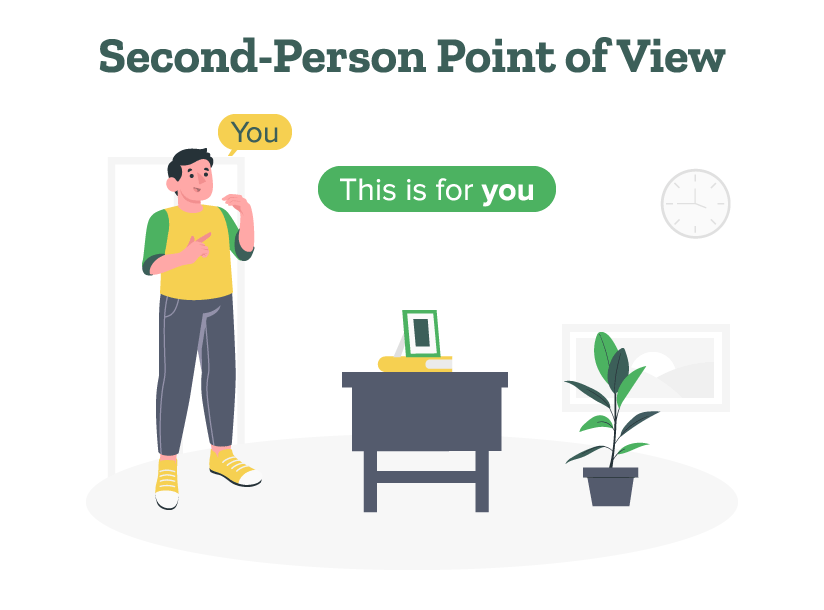
The second-person point of view directly addresses or talks to the reader. The pronoun “you” (along with “your” and “yours”) is used to address the readers. It makes readers associate themselves with the ideas, thoughts, and emotions a writer expresses. In literature, the second-person POV invites readers to the plot and makes them actively contribute to storytelling

As the reader is the intended recipient of all communication in second-person writing, you can forge a connection with them and make them feel “involved”, “responsible”, or even “answerable”. This approach is useful specifically for articles where you want readers to take action.  

When should I write in the second-person point of view? 

The purpose, intent, target audience, message, and length of your story should be considered to decide if it should be written in the second person. At times, a combination of all three perspectives might be required to keep the readers interested. 

Writing in the second-person point of view takes your ideas directly to the reader and makes them occupy the center stage. Here are some content types where using the second-person POV creates an impact. 

  • Self-help books: Self-help books are written to help readers overcome specific problems and achieve related goals. The second-person POV is perfect for this! It helps maintain a motivational and encouraging tone while making readers feel responsible for taking action. An example of the second-person point of view in self-help books is:

You have the power to transform your life! Do not allow yourself to be defeated. 

  • Instruction manuals and how-to content: These content types benefit from the second-person point of view because they usually instruct the reader on how to do something. Since the reader is the one who needs to take action, this POV makes the communication effective. An example of the second-person point of view in instruction manuals or how-to content is:

When you see the green light on the upper panel blinking rapidly, the machine will be ready for use. 

  • Marketing brochures: Since the primary objective of marketing brochures is to generate interest, inquiries, and sales, directly addressing the prospective customers makes sense. The second-person POV works well in such cases, making prospective buyers want the product or service through direct, persuasive writing. An example of the second-person point of view in marketing brochures is:

Click here to learn more about how you can save money on your future energy bills! 

  • Fiction: In fiction writing, the second-person address places the reader under a spotlight. It enhances the narrative by making the story seem incredibly personal. An example of the second-person point of view in fiction writing is:

As you step inside the room and look around, a chill runs down your spine. 

  • Blogs: The second-person POV can help bloggers connect with their readers to increase engagement. Writing in the second person helps them communicate with the readers without a veil. An example of the second-person point of view in blogs is:

Do you want to make more money? If yes, you must invest! How else will your money grow? 

  • Social media posts: Social media posts regularly use the second-person POV, particularly through quizzes, games, and polls, where users or followers engage with the content generator. It is also used in posts that share tips, humor, advice, etc. When people want to share messages that resonate with the audience, they write in the second-person point of view. An example of the second-person point of view in social media posts is:

Which of these describes your weekend the best?

How to write in the second-person point of view? 

Writing in the second-person POV is like holding the reader’s hand and guiding them to the destination of your choice. This approach makes the reader the protagonist, where the author’s emotions and feelings become theirs. Here are some tips to write in the second-person point of view: 

  • Consistently use “you,” “your,” and “yours” to address the reader directly and maintain the second-person perspective.
  • Start the narration with engaging hooks in second-person POV that pull the reader into the scene or situation.
  • Frame the narrative around what the reader is doing, seeing, or planning, and make them feel important to the plot
  • Use the second-person perspective to create a sense of immediacy and ongoing action.
  • Consider the reader’s response and incorporate those potential reactions in your writing.

Reasons to write using the second-person point of view

Many works of literature have been written in the second person. For instance, several parts of “The Night Circus” by Erin Morgenstern have been written in the second person, and the book received rave reviews. Some readers even said they were transported to where it all takes place. 

Typically, the second-person POV introduces an unconventional approach and style that can distinguish your writing from other content in the genre or category. For instance, fiction writers and poets can use their imagination to express their ideas and opinions freely. So, for which other reasons should you use the second-person POV? Here are some primary reasons: 

  • When your reader is the hero of your story, the second-person POV can amplify emotional responses and create a sense of involvement. As a writer aiming to create a compelling story, gather your thoughts and arrange them to determine the POV for each part of your book. 
  • If you wish to not only communicate but also transfer your emotions to the reader, writing in the second person can be highly effective. You can create anticipation and intrigue with your story!
  • The second-person narrative makes the reader think and reflect upon the events in your story. So, for a direct impact, this narration approach may be unavoidable. 

What are the disadvantages of writing in the second-person point of view?

Writing in the second person point of view may prove challenging as it can introduce complexities in writing. It is an uncommon writing strategy, which brings some disadvantages. Let us discuss them. 

  • Low reader engagement: The direct address “You” may not always be welcome. Readers may be unable to relate to the story or the writer, or they may not want to feel connected. In such cases, second-person POV may sound invasive. For instance, a reader might not want to feel the emotions expressed by a writer in the following: 

You stand at the edge of the cliff, the wind whipping your hair, and wonder if you have the courage to jump. 

  • Lack of clarity: Maintaining content clarity might be tough. Distinguishing between the narrator and the character being addressed can confuse or bore the readers. In the example below, it is unclear to whom the pronoun “You” refers to. 

You walk into the room and see yourself sitting at the desk. You wonder what you’re doing there and why you look so anxious. You approach the desk slowly, and you begin to speak, but your voice echoes.

  • Tense consistency issues: Consistent tense usage can be tricky in the second person. As the story progresses, revealing the necessary details can seem murky, disjointed, or uninteresting to the readers. In the following example, the lack of uniformity in tense can frustrate readers. 

You see the mess scattered everywhere in the hall. You picked up a broken vase, wondering how it got there. Suddenly, you hear a noise and turn around. 

  • Limited narration scope: Readers might be confined to fixed experiences and thoughts. For example, in the sentence below, the reader may want to find out more about the surrounding people. However, the writer may limit the descriptions to whatever is relevant to the story. 

You walk down the crowded street, taking in the surroundings. The faces around you have a story of their own. 

  • Overuse of “you”: The continuous use of “You” can feel repetitive and monotonous to readers. Refer to the sentence below to see how the frequent use of “you” might frustrate readers. 

You wake up early and you stare at the ceiling for a while. You head to the kitchen where you make yourself a cup of coffee. You drink it slowly as you think about your day ahead. 

  • Writing style problems: For certain genres, the second person might not be common, making the narration sound odd. For instance, fantasy tales are told best in the third person point of view. Refer to the story below to see an example of how the second-person narrative might be effective. 

In the depths of the ancient dungeon, you wield your sword with determination. The dark sorcerer chants a spell, and you feel the ground tremble. You confront the sorcerer, but your courage falters.

Whether you should write in the second person is a question worth pondering before you begin working on your content piece. As important as the structure of your story is, the point of view you adopt to narrate it is equally critical. 

Wondering how to go about this process? Explore PaperTrue’s self-publishing services and exploit the opportunities available to you in the publishing world. 

You might also find the following articles useful:

What Is First-Person Point of View? Tips & Practical Examples

Have you ever felt like you’re an intimate part of a story and that everything in the story is happening from a personal perspective? That’s the magic a writer adopting the first-person point of view can create! Authors writing in the first-person take their readers through the experiences of interesting characters in engaging stories. 

From thrillers, horror stories, and drama to heart-pounding mysteries, the first-person perspective brings a story intimately close to the readers. Dive into the world of first-person writing and learn how to write in the first person with this article!

Refine your content with editing and proofreading services.

The three points of view in writing

While stories usually unfold through different lenses, the first-person point of view wields immense power in writing! Let us learn more about the various points of view (POVs) writers can use when they know how to start a story in the first person. 

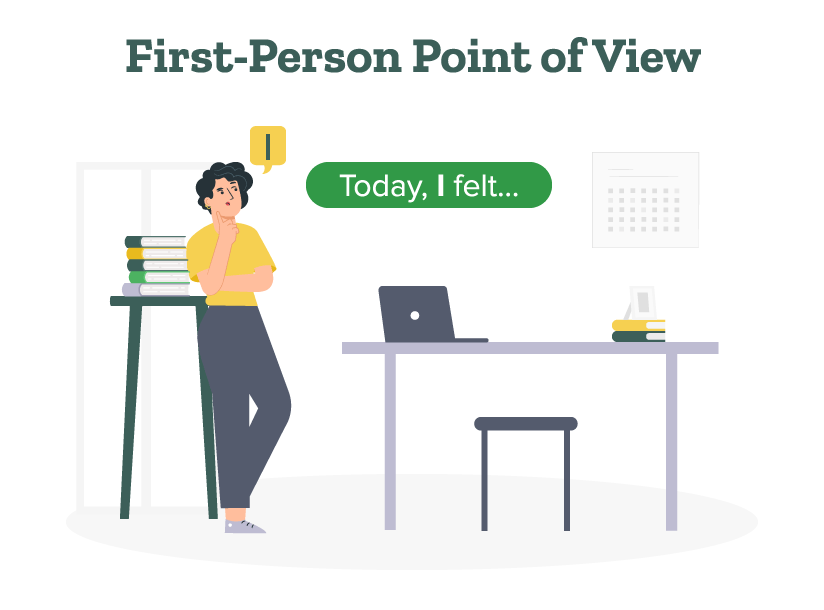
  • First-person point of view: The first person puts you in the narrator’s shoes, with “I” and “we” used to develop a story. It tells readers the story from the narrator or author’s standpoint. 
  • Second-person point of view: The second person point of view puts the reader in the driver’s seat, where the second-person subject pronoun “you” makes you the protagonist.
  • Third-person point of view: The third-person POV is entirely an outsider’s view. The words “he”, “she”, or “they” are used to signify the third-person point of view

Each POV offers a unique lens and builds a picture in the readers’ minds. It talks about characters, their motivations, and the world in which they operate.

Top 3 reasons to write using the first-person point of view

The top 3 reasons to use the first-person in writing originate from the fact that the first-person POV can considerably impact how your readers perceive your content. Let us discuss these reasons and decode what is the first-person point of view further.

  • Makes content sound unique and authentic: The definition of the first-person point of view establishes that this POV underscores the importance of sounding genuine while writing in the first person. It also lends a sense of immediacy, and readers feel connected with the narrator’s experiences and emotions. The biggest advantage of this POV lies in its ability to make any story relatable.
  • Supports the narrator’s personal opinions: Narrators who know how to write a book in the first person can beautifully express their ideas, thoughts, and feelings through their content. It enables them to share their stories in a way that feels natural. This style is commonly seen in opinion pieces, memoirs, blogs, social media posts, and personal essays, where the writer’s voice is central to the content.
  • Creates mystery and enhances drama: Using the first-person point of view can add suspense, mystery, drama, and intrigue to a story. Since readers only see the world the narrator shows them, plot twists and secrets are gradually revealed amidst quivering excitement. This is what makes books, short stories, and thrillers unputdownable!

How to write using the first-person point of view?

Learning how to write a story in the first person can go a long way in strengthening your skills as a fiction writer. It is useful even for writing social media posts. Here are some steps to help you write effectively in the first-person point of view:

  • Choose a narrator: When you have an interesting story, determine the narrator. Who will be the best character to tell readers the story—the protagonist or some other character? 
  • Stick to the narrative: Upon adopting a narrative, keep the voice consistent with the character’s personality, background, and experiences. This ensures credibility.
  • Share thoughts and feelings: Share the character’s thoughts, fears, emotions, and reactions to enable readers to connect deeply with them.
  • Describe events: Write about events that the character experiences. This includes describing what they see, hear, and feel.
  • Employ effective dialogue: By learning how to write dialogue in the first person, you can create an environment where readers know how their narrator speaks. They can identify the narrator’s style through vocabulary, tone, and speech patterns.
  • Share knowledge in installments: When you adopt a first-person perspective, logically reveal information based on the narrator’s current experiences and knowledge. Be careful about inadvertently revealing information the narrator would likely find out later in the story.
  • Build personal connections: To effectively use the first-person POV in writing, include anecdotes, memories, and reflections. This helps build a connection between the character and the reader.
  • Engage the senses: Describe sights, sounds, smells, and tastes to make the narrative vivid and immersive. This weaves a detailed picture in the readers’ minds and prompts them to read till the end. 
  • Ensure consistency: You can tell your story in the present, or narrate it as a flashback. Whatever you decide based on your writing style, stick with it till the end.
  • Edit and modify: Make an editing checklist and review your work to ensure the first-person POV is evident consistently in your writing. Also, verify if the language suits the narrator’s moods, dialogue, thoughts, and feelings throughout the story. 

Here are some examples of writing in the first person, each conveying different emotions:

Things to avoid while writing in the first-person point of view

It is possible to make mistakes while writing in the first person, especially if you are writing for the first time. Here are some guidelines on how not to write in the first person:

  • Avoid overusing “I”: Using “I” at all times can make the writing dull and monotonous. Instead of starting every sentence with “I”, vary your sentence structures to communicate actions, thoughts, and experiences differently each time.
  • Prioritize subtlety: First-person writing can sometimes lead to excessive telling instead of subtly showing a story’s many aspects. So, show, don’t tell! Instead of frequently describing a narrator’s feelings, talk about actions, dialogue, and body language that vividly depict emotions.
  • Plan your reveals: A first-person narrator only knows what they have directly experienced or learned. Avoid including information that they do not know or cannot know. Such gaps can disrupt the story and make readers question its credibility.
  • Limit inner monologue: Though a narrator’s inner thoughts and reflections are important for an effective first-person narrative, excessive introspection or inner monologue can lower readers’ interest.
  • Acknowledge other characters: While the first-person POV is about the narrator, neglecting the overall setting can be risky. Describing different character types and environments enriches the narrative and helps readers visualize the story.

Which point of view should I choose?

Whether you should choose writing in the first person depends on several factors. Let us discuss them. 

  • Story type: The nature of your story can help determine whether you will benefit from first-person writing. The first-person POV may not be suitable for complex stories and diverse narratives. 
  • Intimacy and proximity: If you want your readers to be close to the narrator or protagonist’s thoughts and feelings, the first-person POV might be the way to go. If not, a mix of perspectives will serve you better.
  • Narrative limitations: While the first-person narrative can effectively cover a single character’s journey, this POV may not be suitable when sharing multiple perspectives.
  • Reader experience: Consider the experience you want your readers to enjoy. For an immersive and personal touch where you want to talk to your readers directly, adopt the first-person POV.
  • Story-level complexities: Intricate stories with multiple subplots may require a combination of POVs instead of just the first-person perspective.

The first-person point of view enhances the reading experience in many ways. Whatever genre you wish to explore as a writer, understand the nuances of first-person writing before you begin working on your manuscript. 

For professional assistance, explore PaperTrue’s story editing and proofreading services

Here are some other articles you might find interesting: 

Object of a Sentence: Your Comprehensive Guide

Mastery of written and verbal English demands knowledge of grammar. Being a good writer, a skilled orator, a focused researcher, or a student training for higher studies calls for significant English proficiency. If you have come online seeking an answer to the question, “What is an object of a sentence”, you are in the right place. It is a key aspect of the clause structures that make up sentences. This article discusses the importance of the object of a sentence and explains how it is used in writing.

Want to enhance your content? Try our professional editing services.

What is an object in a sentence? 

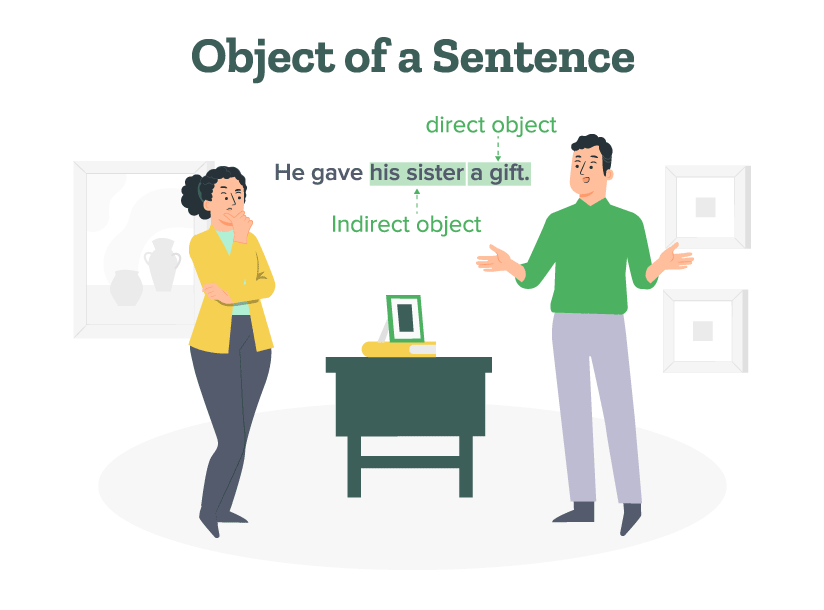
An object is the recipient of an action. The object in a sentence may be a person, an animal, or a thing. So, how do we then determine the object of a sentence? Here’s a simple way of accurately doing that! 

  • First, identify the verb in the sentence. You must look for a transitive verb in the sentence. A transitive verb requires an object, while sentences with intransitive verbs do not need objects to complete or communicate their meaning. 
    • An example of a transitive verb where an object is needed to complete the sentence: Please pass the salt. 
    • An example of an intransitive verb where an object is not needed to complete the sentence: Jacob slept.
  • Ask “what” or “whom” to understand what or who is the receiver of the action (verb) taken. A noun or pronoun will answer the what/whom question asked above. 

Let us understand this using some examples.

Mariah reads novels.

  • Verb: reads
  • What/whom question: reads what?; reads novels
  • Object: novels

They invited her to the game.

  • Verb: invited
  • What/whom question: invited whom?; invited her
  • Object: her 

The examples above define the direct object, which we will study in detail in the section below. 

Types of objects in English

There are two types of objects in English:

Direct object

A direct object receives the action directly. Hence, “what” or “whom” is asked in such cases. 

  • She called her friend. (called “whom”)
  • They purchased a house. (purchased “what”)
Attributes of direct objects in sentences:

Receives the Action:

  • Example: “She reads a book.”

Answers “What?” or “Whom?”:

  • Example: “He kicked the ball.”

Can Be a Noun, Pronoun, Phrase, or Clause:

  • Example: “She found a coin.” (Noun)
  • Example: “She found it.” (Pronoun)
  • Example: “She found a shiny, old coin.” (Noun Phrase)
  • Example: “She found what she was looking for.” (Noun Clause)

Placement:

  • Example: “They built a house.”

Not Present in Passive Voice:

  • Example:
    • Active: “She baked a cake.”
    • Passive: “A cake was baked by her.”

Can Have Multiple Direct Objects:

  • Example: “She bought apples and oranges.”

Transitive Verbs:

  • Example: “She reads a book.”

We hope this answers your question: What is a direct object in a sentence? 

Indirect Object

An indirect object shows or describes who is the entity benefitting from the action of a verb in the context of a direct object. 

Let’s simplify it using some examples of what is the object in a sentence and understand the concept in more detail. 

He gave his sister a gift.

  • “His sister” is the indirect object because it answers the question about the direct object, giving us more information about the gift’s recipient. 

She baked a cake for the celebration

  • “For the celebration” is the indirect object because it answers the question about the direct object, indicating the reason for baking the cake.

To elaborate further, it answers questions about the direct object by indicating who or what is the recipient of the action directed toward. So, the questions asked to identify indirect objects are “to whom” or “for what”. 

Attributes of indirect objects in sentences:

Receives the Benefit or Result of the Action:

  • Example: “She gave him a gift.” (“him” is the indirect object receiving the benefit of the action “gave”)

Answers “To Whom?” or “For Whom?”:

  • Example: “She made her friend noodles.” (Answers “For whom did she make noodles?”)

Placed Between the Verb and the Direct Object:

  • Example: “He told her a story.”

Can Be a Noun or Pronoun:

  • Example: “He sent his parents a letter.” (Noun)
  • Example: “He sent them a letter.” (Pronoun)

Can Be Replaced with a Prepositional Phrase:

  • Example: “She gave him a book.” (Indirect object as a pronoun)
    • “She gave a book to him.” (Prepositional phrase)

Typically Used with Verbs of Giving or Communicating:

  • Example: “She wrote her friend a letter.”

Not Always Present: Some sentences may not have an indirect object.

  • Example: “She reads a book.” (No indirect object)

What is the importance of an object in a sentence?

A direct object in a sentence plays a key role in giving a sentence meaning. It provides readers with vital information about who is the recipient of the action (verb). In the absence of a direct object, verbs might look incomplete or may provide inadequate information to the readers about the idea shared in a given sentence.  

Similarly, whenever required, an indirect object in a sentence signifies the action directed toward the direct object. 

Together, they ensure that your sentences are complete, clear, and easy to understand. 

How to use an object in a sentence?

To use an object in a sentence, place the object after the verb. This shows what or who is the recipient of the action. You can follow the steps below to ascertain whether your sentence is correct.

  • Locate the subject: This refers to a person, place, thing, or idea that is “performing the action”.
  • Outline the verb: The action being performed will be the verb in that sentence. 
  • Identify the object: The person, place, thing, or idea that is receiving the action of the verb is the object that you need. 
  • Check if there’s an indirect object: If another person, place, thing, or idea gives more information about the direct object, answering questions like “to what” or “for whom”, you have an indirect object in the sentence. 

Here are some direct object sentence examples: 

The words in bold are the subject and the object in these sentences. 

  • The chef prepared a meal. (Chef – subject, meal – object)
  • She wrote a letter. (She – subject, letter – object)
  • He kicked the ball. (He – subject, ball – object)
  • She painted a picture. (She – subject, picture – object)
  • They bought a new car. (They – subject, car – object)
  • The cat chased the mouse. (Cat – subject, mouse – object)
  • We visited the museum. (We – subject, museum – object)
  • She read the book. (She – subject, book – object)
  • He fixed the bike. (He – subject, bike – object)
  • They watched a movie. (They – subject, movie – object)

Here are some indirect object sentence examples: 

  • The coach showed the team a new strategy. (Coach – subject, team – indirect object, strategy – direct object)
  • The team leader gave the members a bonus. (Team leader – subject, members – indirect object, bonus – direct object)
  • She wrote her pen pal a long email. (She – subject, pen pal – indirect object, long email – direct object)
  • He mailed his sister a gift. (He – subject, sister – indirect object, gift – direct object)
  • She offered her friend a ride home. (She – subject, friend – indirect object, ride home – direct object)
  • The author dedicated the book to her mentor. (Author – subject, book – direct object, mentor – indirect object)
  • She cooked her family a hearty breakfast. (She – subject, family – indirect object, hearty breakfast – direct object)
  • He played the children a song on the violin. (He – subject, children – indirect object, song on the violin – direct object)
  • They sent their grandparents a letter. (They – subject, grandparents – indirect object, letter – direct object)
  • The professor gave the students extra credit. (Professor – subject, students – indirect object, extra credit – direct object)

Subject and object pronouns 

It is easy to confuse a subject and an object while writing a sentence, particularly when your sentence is complex. The subject of a sentence is who or what (person, place, thing, or animal) initiates and completes the action. The object of a sentence determines the recipient of this action. 

Given this distinction, let us understand subject and object pronouns and their differences. They are used to replace nouns in sentences, making the content interesting by reducing repetition and monotonous language. Below is a table showing subject and object pronouns. 

Subject and object pronouns.


How not to use an object in a sentence? 

We have seen how objects are used in sentences to make them meaningful and clear. In this section, let us see some instances of how objects must not be used while constructing sentences. 

  • Do not use an object without a verb. 

For example, study the following sentence:

She gave the key to him. 

The verb “gave” is critical. If it is removed, the sentence is incomplete and meaningless. 

  • Do not use the wrong object pronoun. 

For example, study the following sentence:

She gave I the key 

It is incorrect because the pronoun “I” is wrong. The correct sentence is “She gave me the key”. 

  • Do not place an object in the wrong position in a sentence. 

For example, study the following sentence:

She gave the book to her friend

It is correct as the object has been placed after the verb in this sentence. If this were written as “To her friend, she gave the book”, it would be incorrect.

  • Do not use an object with an intransitive verb. 

Intransitive verbs do not need objects for sentence completion. 

For example, study the following sentence:

Anthony walked.

It does not require a direct object. The sentence is complete even without it. 

  • Do not use an object with unclear antecedents. 

For example, the sentence, “Jenny told Anna that she would help her” does not indicate who “she” is. The correct sentence is Sarah told Anna, “I will help you”. 

We hope we have been able to simplify the process of identifying the object of a sentence with this article. You can make your content grammatically sound by correctly using objects in a sentence. Do not allow grammar errors to affect the quality of your social media posts, articles, blogs, research papers, and other documents. 

If you need professional help editing your content, explore our editing and proofreading services

Here are some other relevant articles for you:

How to Copyright Your Book?

If you’ve thought about copyrighting your book, you’re on the right path.

Explore more