Newsletter Sign Up

100+ Creative Writing Prompts for Masterful Storytelling

Do you wish to write but don’t know how to start? If you have writer’s block, this article is for you! This article includes 100 plus creative writing prompts across all genres to kickstart your writing journey. 

From horror writing prompts to fantasy writing prompts, we’ve covered everything for you! Before we see examples of writing prompts, let’s quickly understand the meaning of writing prompts. 

Ready to take your writing to the next level?

What are writing prompts? 

A writing prompt is a simple topic idea to inspire the writer to get the first words on the page. It can be a picture, a line from a poem, or an imaginary scenario. Writing prompts can be abstract, realistic, evocative, thought-provoking, insightful, or descriptive. 

Dive in to see exciting writing prompts from various genres! These also include many creative writing prompts for adults.

1. Horror writing prompts 

1) A man inside the coffin breaks the coffin and starts walking. 

2) A demonic spirit has entered your friend’s body and she is moving closer to attack you. 

3) You wake up in an empty house and see a ghost. 

4) A doll you brought for a friend suddenly starts speaking. 

5)  You suddenly see a man who was supposed to have died in 1900. 

6) A vampire you saw in your dream kidnaps you in real life. 

7) You are awakened by drops of blood falling on your face. 

8) You have an accident and suddenly see a centaur who has a half-human, half-animal face. 

9)  You are walking in the forest and witness a shocking ritual where people are drinking blood. 

10) You wear an old ring you found after which something terrible keeps happening to you. 

11) An excavator finds an old mummy while digging which tries to grab him. 

Now let’s see some of the best creative writing prompts for adults and kids for journaling, 

2. Journal writing prompts 

1) Describe a childhood memory that always makes you smile. 

2) Write about a dream you had that you can never forget. 

3) Recount your biggest challenge and what you learned from it. 

4) Name three people who inspire you the most and why. 

5) Pen a letter to yourself and describe your accomplishments and future goals. 

6) Explain what would you like to change if you had a chance to go back in time. 

7) Narrate an incident where the kindness of strangers moved you. 

8) Express in detail some of your best memories with school friends. 

9) List five activities you love to do and your efforts to perform those activities. 

10) Tell in detail about your favorite travel destination. 

11) Describe your most challenging times and how you overcame them. 

If you wish to explore writing about mysteries, the following are some creative prompts about mysteries. 

3. Mystery writing prompts 

1) Ten scientists die on the same day and a Scotland Yard detective is assigned to find out why. 

2) A top bureaucrat starts getting anonymous threatening notes and decides to investigate. 

3) A retired police officer decides to play detective and solve the case of his granddaughter’s death. 
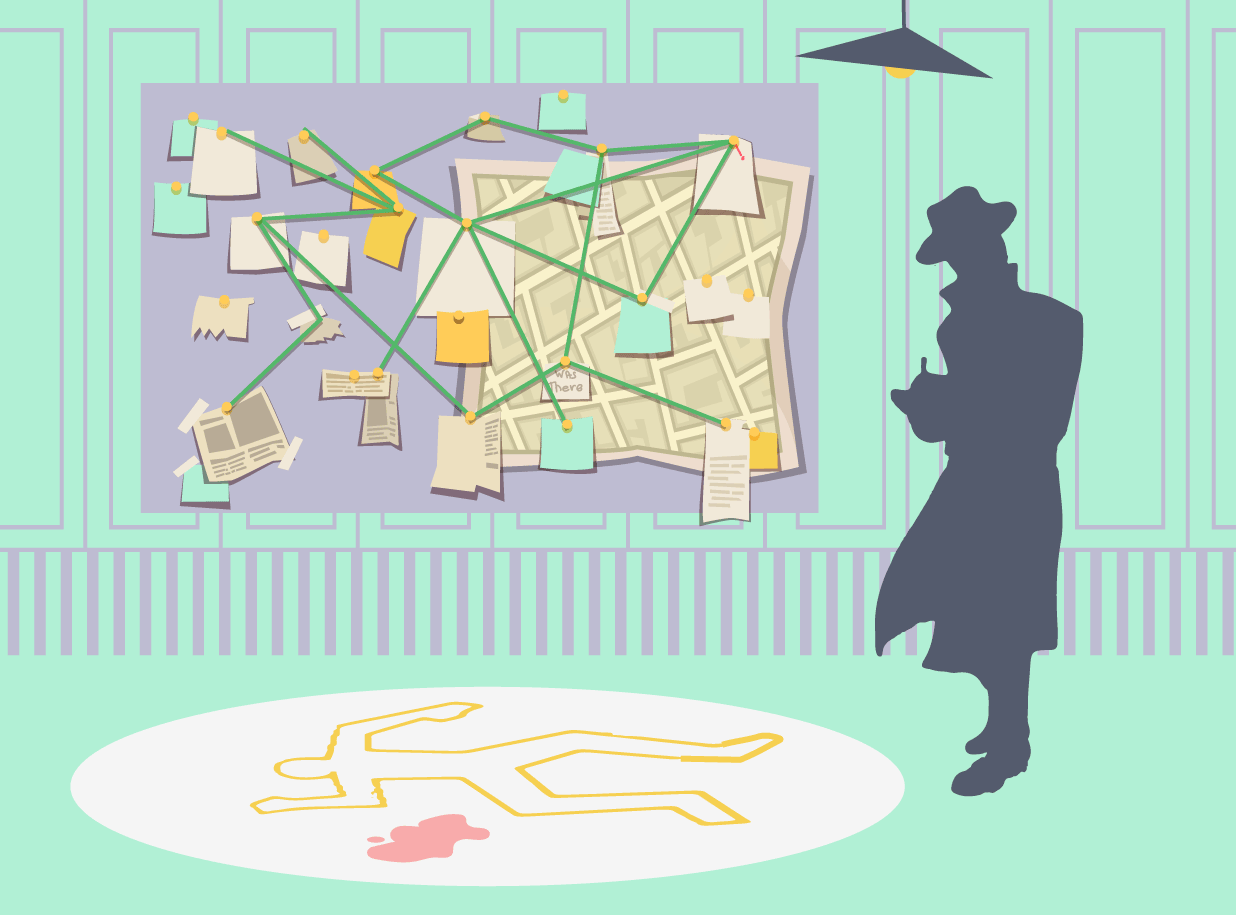
 picture writing prompt shows a detective trying to solve the case of a dead man.

4) A private investigator is assigned to find the truth about a journalist who went missing.

5)  A meteor strikes a village after which people start falling sick. 

6) An archaeologist finds a document about a cursed treasure and decides to find out the truth. 

7) A young boy hears screams from a tower and sees torch lights flashing in the dark. 

8) A factory burns and an investigator finds out whether the fire was caused naturally or intentionally. 

9) A girl inquires to understand why her dog was shot and discovers a shocking truth. 

10) A son promises his mother to uncover the reason behind his sister’s suicide. 

11) A police inspector has to solve the murder case of an orphan who was earlier arrested in a drug case. 

4. Romance writing prompts 

1) A girl falls in love with a video gamer she met in college.  

2) A 70-year-old realizes that he has fallen in love with a woman he met at an old age home. 

3) A man meets his childhood crush after years and tries to woo her once more. 

4)  Two best friends decide to experiment and set up a double date. 

5) Give a love story to a person whom everyone assumes to be a villain. 

A picture writing prompt displays an image of a couple walking on the road.

6) Pen a romance story with the words affair, flirting, infatuation, and fling. 

7) A man who has a phobia of getting married meets a girl with a similar fear. 

8) Write a love story of two people staying in two different countries. 

9) Two employees from rival companies fall in love. 

10) A paramedic falls in love with a spy whose life she saves. She later realizes that he will soon embark on a dangerous mission. 

11) Write a love story of a librarian and a time-traveler. 

Instead of writing about romance, you might be interested in the science fiction genre. Given below are some creative prompts related to science fiction. 

5. Science fiction writing prompts 

1) Two scientists invent a machine that can control and manipulate weather. 

2) An astronaut flies to the planet Jupiter and discovers alien life. 

3) An archaeologist finds an old book about a magical time travel ritual and uses that ritual to go back in time. 

4) A young boy finds a hidden library of science books and is trapped inside the library. 

5) A science teacher decides to take revenge against the government by performing a dangerous science experiment. 

6) A jailed scientist uses science to escape and prove his innocence. 

7) A science geek creates an AI program that can hack the data of government and private organizations without leaving a trace. 

8) A spaceship is pulled into another universe by an unknown force and aliens are planning to invade the Earth. 

9) A scientist designs a robot that looks and talks exactly like the country’s President and plans to kill the real President. 

10) To reduce population, a crazy scientist makes a deadly plan to release a virus into the air. 

11) A chemistry professor creates a dangerous solution that can massively change the genes of animals and humans. 

If science fiction is not your cup of tea and you love fantasy, here are some creative writing prompts about fantasy. 

6. Fantasy writing prompts 

1) An archaeologist enters a magical world of dragons and is unable to return to Earth. 

2) A tribal girl develops fairy wings and she is later assigned the task to save the fairy race from extinction. 

3) A man discovers a magical dream shop where dreams are sold to change reality. 

4) A musician visits a hidden world and finds a magical flute that can hypnotize people and make them stand still. 

5) A boy finds a small dwarf in his garden who shows him the train to travel to parallel universes. 

6) A woman finds the feather of a rare bird, using which she enters the world of lost secrets. 

7) A college student falls in love with a cursed mermaid and travels to her land to free her from the curse. 

8) An excavator opens a door and arrives in the land where destinies are written. 

9) A man unintentionally awakens a sleeping devil who creates a new world and new citizens to destroy the earth. 

10) A girl realizes that she has the power to control stars and is pulled into a world of demons and monsters. 

11) A fairy falls in love with a human and must convince Fairyland to accept her love and let her go. 
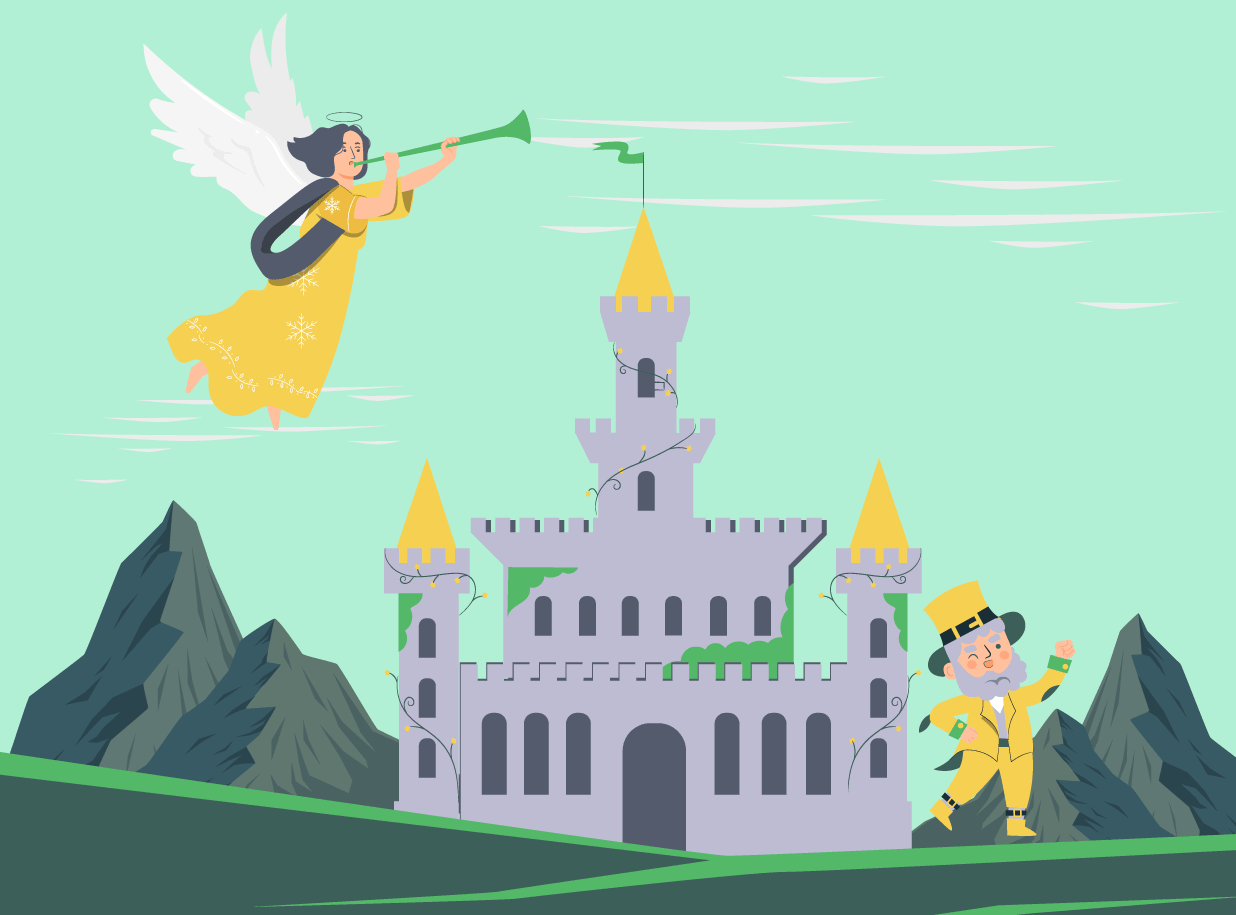
A picture writing prompt shows a fairy flying near a castle.

You might also have an interest in writing poems about various topics. For poetry lovers, the following are some of the best creative writing prompts. 

7. Poetry writing prompts 

1) Write a poem about your favorite fairy tale as a child. 

2) Describe an unforgettable memory with your first crush in a poem. 

3) Pen a poem about a stray dog who became your best friend. 

4) Craft a poem about the beauty of witnessing fireflies in the dark. 

5) Explore the sadness of losing touch with school classmates in a poem. 

6) Narrate an incident about a memorable dance you saw in a poem. 

7) Write a poem that has the quote “Tough times never last but tough people do”. 

8) Compose a poem on a special gift you received and its importance. 

9) Pen a poem about your favorite cartoon character. 

10) Write a poem about how a person who passed away inspired you in life. 

11) Compose a poem about a magical land where you wish to go. 

If you love to write on light-hearted, funny topics, given below are some of the best writing prompts for you! 

8. Funny writing prompts 

1) Jot down a hilarious conversation between a madman and a witty parrot. 

2) Create a funny story about how a person is forced to communicate with a stranger who doesn’t understand English. 

3) Write a funny dialogue about a person who says something wrong at the most inappropriate time. 

4) Describe a prank where you created a savory dish that looked like chocolate and made your friend taste it. 

5) Write a humorous conversation between a standup comedian and an angry spectator. 

6) Pen a story about a disaster that takes place because a scientist forgot to add a valuable component to an experiment. 

7) Craft a funny story about a brother who takes revenge on his sister for revealing his girlfriend to his parents. 

8) Imagine a funny situation where a friend tries to copy everything you do to irritate you and write about it. 

9) Write about a funny incident when you received a parcel you hadn’t ordered.

10) Narrate an incident about a funny costume party where everyone was dressed up as different animals.  

11) Write about a comic incident where an aunt asked you to take responsibility for her son while she was away. However, the son ends up in prison. 

9. Short story writing prompts 

1) Write a short story about a ship that mysteriously sank in the ocean. 

2) Pen a short story about a girl who has synesthesia and sees colors around people. 

3) Craft a short story about a mountaineer who decides to climb Mount Everest. 

4) Develop a short story about a road trip gone wrong. 

5) Write a short story about what happens when a government official finds out about a dangerous secret. 

6) Create a short story about a detective who disguises himself and is discovered. 

7) Pen a short story about a businessman with a big scar and a twisted lip. 

8) Write a short story about how a boy discovers a magical wishing feather after which his every wish comes true. 

9) Develop a short story about a blind man who takes revenge for an insult. 

10) Craft a short story about an eagle who saves a jungle from being destroyed. 

11) Write a short story about the last living princess who makes a mark on the world. 

If you wish to explore historical fiction instead, here are some of the best writing prompts for you! 

10. Historical fiction writing prompts 

1) A librarian discovers a shocking secret about the Second World War which can change the future of the USA and Russia. 

2) Write a story about a mirror that talks about an ancient era and reveals a secret about that era. 

3) Craft a tale about a poet who wrote about the Red Indians. 

4) A political leader begins a movement to get recognition for a lesser-known historical figure, resulting in controversy. 

5) An excavator finds a valuable artifact from the Mayan civilization that could affect the world’s future. 

6) A girl realizes that she is the last living descendant of a French queen and must protect a family secret at all costs. 

7) A bureaucrat finds a diary about a man who suffered during the Great Depression and resolves to make amends. 

8) A boy has dreams about the First World War and decides to solve the mystery of his dreams. 

9) A tribe decides to get back a valuable historical artifact stolen from them. 

10) A historian finds out about the most dangerous escape of an American soldier. 

11) A girl discovers a magical portal that transports her to the 18th century.  

Now that you’ve understood what are writing prompts, you can use one prompt daily and start writing. The next step after writing is editing. As providers of editing and proofreading services, we’d love to help you edit and perfect your writing! 

We realize how writing and editing can be challenging tasks. Here are some resources to enhance your writing: 
Top 10 Must-Try Writing Prompt Generators in 2024

If you’re looking for a prompt generator for writing, your search ends here! In this article, we’ve listed down the top 10 creative writing prompt generators. We’ve also included the benefits and features of every writing prompt generator. 

From prompt generators that give random writing prompts to genre-specific prompts, we’ve covered everything. So without further delay, let’s get started! 

Unlock your writing’s full potential. Get expert help!

1. Servicescape 

Servicescape provides prompts for a variety of genres such as gothic, historical, comedy, dark fantasy, heroic, paranormal, and time travel. All you need to do is choose the genre and click on the Submit icon. Servicescape will then generate a creative writing prompt for you. Here is an example: 

The son of a wealthy industrialist is in the midst of a very public and nasty divorce from his notoriously dreadful wife. You are a reporter hired to find dirt on him for a story. You are surprised to discover that he is actually a wonderful man, and you begin to fall in love with him.

2. Seventh Sanctum 

Seventh Sanctum generates 1-line creative writing prompts. It also gives users an option to determine how many writing prompts they wish to see. Users can choose an option to generate 1–10 prompts. Seventh Sanctum also has other generators like Quick Story Ideas, Punk Genre Generator, plot twists, What-if inator, and Writing Challenges. It also has a writing prompt generator for romance. This gives users a wide variety of prompts to choose from. 

Following are some writing prompt examples from Seventh Sanctum: 

I was very sure that calm man was crying all day.

          She lived for evil.

The sky is the love of my life and my worst enemy. 

3. Reedsy’s Plot Generator 

Reedsy claims to have 1 million plot ideas to inspire writers. This book prompt generator gives options to generate plots about romance, drama, mystery, sci-fi, and fantasy. A writing prompt includes information about the protagonist, secondary character, plot, and plot twist. Here is an example of Reedy’s prompt from the genre drama:

Protagonist- A businesswoman, who tends to be cynical. 

Secondary Character- A banker who is quiet. 

Plot- It’s a satirical story about mortality. It kicks off at a McDonald’s drive-through with the death of someone important. (Note: Someone in the story has just moved to a new country.) 

Plot Twist- Midway through the plot, the story will turn into a ghost story. 

4. Springhole 

Springhole provides a wide variety of genre, plot, and story prompt generators. If you are confused about which genre to write about, you can select their Genre Blender generator which will choose the genre for you. It also has fantasy writing prompt generators. Following are some examples of other fiction writing prompt generators they provide: 

Character Bonding Moment Generator 

Dramatic Curse Generator 

Fairytale Plot Generator 

Mysterious Findings Generator 

Story Prompt Generator

Springhole also offers writing tips for writers to perfect their craft. Here are some examples of writing prompts from Springhole: 

A minor protagonist is re-imagined as a vampire in a magical girl universe.

A vengeful priest chanted in an unknown language and said, ”The one you love most will disappear into the woods hereafter!”

A story told from the perspective of someone who thinks the villain is a great person.

5. Random Words Generator 

Random Words Generator motivates writers to step out of their comfort zone with intriguing writing prompts. The prompts consist of a word or phrase and a topic idea related to that word/phrase. From fantasy writing prompts to simple journal writing prompts, this random writing prompt generator has a huge collection of ideas. It also gives users an option to determine the number of prompts to be generated. 

Here are some examples of creative writing prompts from Random Words Generator: 

Natural Wonders– Something that is naturally wonderful. 

Frame it– Write about a painting that speaks to you. 

Missing Connections– Write about two people who keep crossing paths but miss actually meeting. 

6. Squibler  

Squibler is a random writing prompt generator that provides 1-line writing prompts. Many times, Squibler gives incomplete sentences as writing prompts to stimulate the writer’s imagination. Here are some examples: 

The first Christmas she could remember was also her best Christmas ever. 

Most vivid among the memories of his hometown.  

As the dream faded, she chased it forlorn. 

After selecting the prompt, you can choose the option of Start Writing and begin your first draft. 

7. The Story Shack 

Story Shack provides out-of-the-box writing prompts related to adventure, drama, fantasy, and romance genres. Every writing prompt also includes a word limit and a sentence which the writer must add while writing. Along with this, Story Shack also offers a bonus prompt to help the writer imagine and write about the given scenario. Here is an example: 

Write a 650-word story in the adventure genre. It’s about a programmer and should include a desk. Also, use the sentence ‘Don’t trust everything you see.’ Bonus prompt: Your character is hated by everyone.

With this, Story Shack also provides name generators, a fantasy map generator, and a Taleforge exercise to encourage writers’ creativity. 

8. Story Starters 

Story Starters is a writing prompt generator by Scholastic. This writing prompt generator provides thousands of creative writing prompts for kids. All you need to do is select a category from adventure, fantasy, sci-fi, and scramble options. The generator will then ask you to type your name and select a grade. Once you do that, the story starters generator will take you to a page where you have to spin the wheel to generate a prompt. 

Here are some intriguing examples of prompts from this story starter generator: 

Describe a very unusual day for a scatterbrained magician who parachutes off skyscrapers. 

Write a detective story about a confused detective who gets caught in quicksand. 

Write about a thrilling experience for an independent actor who catches a thief. 

9. Capitalize My Title 

Capitalize My Title has a creative writing prompt generator for kids. It generates 1 line of random prompts on a wide variety of topics. With this, it also offers 365 writing prompts for every day, writing prompts for middle school, and journal writing prompts. The prompts are very simple and related to daily life. Here are some interesting examples of Capitalize My Title’s writing prompts: 

Life among the cloud people

Meeting myself in the future

Traveling west in a wagon train 

10. DIYFMA Writer Igniter 

DIYFMA Writer Igniter is a creative writing prompt generator for adults and kids. It includes the four categories of character, situation, prop, and setting. Users can click the shuffle option to generate prompts for all four categories. The prompt for the category named setting consists of a picture to help readers visualize the setting. Here is an example of a unique DIYFMA writing prompt: 

Character– The Runner-up 

Situation– gets stranded 

Prop– A surprise 

Setting– The picture of a tree 

You can use any prompt generator for writing to unlock your creative genius. As providers of editing and proofreading services, we know how writing can be a challenging task. Here are some useful resources to simplify and enhance your writing: 

APA Website Citation (7th Edition) Guide | Format & Examples

While citing websites might seem complicated, we’ve made it easier for you! In this article, we’ve explained everything about APA website citations in the 7th edition. From how to cite websites with no author to how to cite social media sites, we’ve covered everything for you! 

We’ve also given specific examples to clarify all your doubts about citing websites. With this, we’ve also provided practical tips to ensure that you cite websites correctly. So without delaying further, let’s begin with the basics. 

How to cite a website in APA 

A simple APA 7 website citation includes the author’s last name, first and middle initials along with the website’s URL. The in-text citation in APA for a website consists of the author’s surname and publication year. Following is the basic APA citation format for a website: 

Author’s surname, first & middle initials, publishing date, article title, website name, and URL. 

Here is an example of how to cite a website in APA: 

Cherry, K. (2023, March 11). What are the big 5 personality traits? Verywell Mind. https://www.verywellmind.com/the-big-five-personality-dimensions-2795422 

      Parenthetical in-text citation: (Cherry, 2023) 

      Narrative in-text citation: Cherry (2023) 

Here is an example of how to cite a magazine article from a website in APA: 

Daughtry, D. (2023, June 3). Overcoming Imposter Syndrome. Personal Growth Magazine. https://www.personalgrowthmagazine.com/overcoming-imposter-syndrome/ 

    Parenthetical in-text citation: (Daughtry, 2023) 

    Narrative in-text citation: Daughtry (2023) 

Citing newspaper articles on websites 

The APA formatting guidelines to cite a newspaper article from a website is similar to that of a magazine. Only, instead of the magazine’s name, the newspaper’s name must be written. Let’s see an APA website citation example of this type: 

Grabmeier , J. (2023, January 24). How the last 12,000 years have shaped what humans are today. https://news.osu.edu/how-the-last-12000-years-have-shaped-what-humans-are-today/

Parenthetical in-text citation: (Grabmeier, 2023)

Narrative in-text citation: Grabmeier (2023) 

Note: If the newspaper article is only available online and not in print format, put the article’s name in italics.

Citing blogs from websites

Format: Author’s surname, initials, publication date, blog title, blog name, and the URL. 

Here is an example: 

King, C. R., Martinez-Cola, M., Scherer, M. L., Francis, R., & Strong, M. T. (2023, October 2). Creating a Class of Our Own: Reflections on First-Generation and Working-Class People in Sociology. EVERYDAY SOCIOLOGY BLOG. https://www.everydaysociologyblog.com/2023/10/creating-a-class-of-our-own-reflections-on-first-generation-and-working-class-people-in-sociology.html

Parenthetical in-text citation: (King et al., 2023) 

Narrative intext citation: King et al. (2023) 

Citing a report from a website 

Various details such as the author’s name, the report’s publication date, title, subtitle, report number, publisher, and URL are mentioned to cite a report. The government, organization, or group’s name can be cited as the author of the report. The APA citation format to reference a report from a website is:

Author’s name, publication year, report title & subtitle, report number (if available), publisher’s name, and URL. 

U.S. Department of State. (2022, September 21). Food security action report – united states department of state. https://www.state.gov/food-security-action-report/

Parenthetical in-text citation: (U.S. Department of State, 2022) 

Narrative in-text citation: (U.S. Department of State) 2022

Note: If the author and publisher’s name are the same, don’t include the publisher’s name in the citation.

Citing websites with no author

Websites that do not have any author are generally associated with some organization or government. Hence, instead of the author’s name, the APA citation for a website includes the relevant organization or government’s name. To create an APA in-text citation for a website with no author, add the organization or government agency’s name along with the year the source was published in parentheses. 

 Following is the format to cite websites with no author: 

Organization/ Government’s name, publication year, Title of the page, Website name, URL 

Here is an APA website citation example to understand better: 

United States Institute of Peace. (2010, January 18). Macroeconomic Stabilization. United States Institute of Peace. https://www.usip.org/guiding-principles-stabilization-and-reconstruction-the-web-version/sustainable-economy/macroeconomi

Parenthetical in-text citation: (United States Institute of Peace, 2010) 

Narrative in-text citation: United States Institute of Peace (2010) 

If the organization/government/author’s name is not given, you can directly begin the citation with the article title. The in-text citations for such sources will consist of the article title and the year of publication in parentheses. 

Note: When the article title is mentioned in plain text in the reference entry, it is written with quotation marks in the in-text citation. However, if the article title is italicized in the reference entry, it’s in italics in the in-text citation.

Now that we’ve understood how to create an APA citation for a website with no author, let’s understand how to reference websites with no date in APA. 

Citing websites with no date in APA 

If the date isn’t mentioned on the website, simply write (n.d) after the author’s name in parentheses. The short form n.d stands for no date. Since websites are updated, it’s suggested to mention the date you accessed the website. The APA in-text citation for a website with no date will only include the author’s last name and the short form n.d.

Format: Author’s name, (n.d.). Title of the Page, Site name, Date when you accessed the website, URL. 

Here is an APA website citation example to clarify further: 

Appleby, D. (n.d.). 10 tips for achieving financial security. Investopedia. Retrieved on October 7, 2023, from https://www.investopedia.com/articles/retirement/06/10secureretirementtips.asp 

        Parenthetical In-text citation: (Appleby, n.d.) 

        Narrative In-text citation: Appleby (n.d) 

The above example clearly demonstrated how to cite a website in APA in the text and on the  APA reference page. Let us now understand the reference sources from Wikipedia. 

Citing Wikipedia as a source 

Instead of beginning the article with the author’s name, the citation directly begins with the title of the article. This is followed by various details such as the publishing date, the website’s name, and the URL. It is recommended to select the URL from the archived page from Wikipedia. To access the archived page from Wikipedia, you can select the option “View History” and choose the page date you wish to cite. 

Format: Article title, publishing date. In Wikipedia. URL of the page’s archived version. 

For example: 

Behavioural Sciences. (2023, September 22).In Wikipedia https://en.wikipedia.org/w/index.php?title=Behavioural_sciences&oldid=1176554197

 Parenthetical In-text citation: (“Behavioral Sciences”, 2023) 

 Narrative in-text citation: “Behavioral Sciences” (2023) 

Citing visual graphics from websites in APA 

If you wish to cite infographics, maps, or any images of data statistics, you’ll need to write the website name/ organization name from where you’ve taken the source image. For images with no title, briefly describe the data in the image after citing the date the post was published. 

Format: Website/organization/author name, (published date), title, image type, website name, URL. 

Here is an APA 7th edition website citation to clarify further: 

Statista (2022, October 5). Anthropology museums in Latin America 2022. [Statistics] Statista https://www.statista.com/statistics/1062997/latin-america-caribbean-anthropology-museums-by-country/

Parenthetical citation: (Statista, 2022)

Narrative citation: Statista (2022)

Note: If there is no publication date, mention the date you accessed the visual graphic from the website.

Citing interviews from websites 

If the interview cannot be retrieved in audio or print format, only include an in-text citation of that interview. However, if the interview has been published on an online medium such as a magazine or a newspaper website, cite the interview using the following format: 

Format: Author’s surname and initials, interview title, website name, URL 

For example: 

Jeffries, S. (2015, March 21). David Graeber interview: “so many people spend their working lives doing jobs they think are unnecessary.” The Guardian. https://www.theguardian.com/books/2015/mar/21/books-interview-david-graeber-the-utopia-of-rules 

Parenthetical in-text citation: (Jeffries, 2015)

Narrative in-text citation: Jeffries (2015) 

Citing online forum websites 

Various details such as the author’s name, publishing date, post title, publisher and URL are mentioned in the citation. 

Format: Author’s surname and initials, [username]. (Publishing date). Post title [Online forum post]. Publisher. URL. 

Machado, A. [r/sociology] (2023, June 11). Peter Berger: Accidental sociologist. [Online forum post] Reddit. https://www.reddit.com/r/sociology/comments/1g2xdc/peter_berger_accidental_sociologist/              

Parenthetical in-text citation: (Machado, 2023) 

Narrative in-text citation: Machado (2023)

While the above examples explain how to cite websites in APA, you may also have queries about citing sources from popular social media platforms like Facebook, Twitter, Instagram and more. Keep reading to understand the basics of referencing sources from social media platforms! 

How to cite sources from social media in APA 

Since social media posts usually don’t have a title, you can include their first 20 words in italics instead of the title. You’ll also need to add other important information such as the author’s surname, first initial, publication year, website name, and URL. If the author’s name isn’t mentioned, you can cite the page name in the beginning of the citation. 

Format: Author’s last name and initials [username] publication date, post’s first 20 words, post type, site name & URL. 

APA website citation for a Twitter post

Adzema, M. [@sillymickel]. (2023, October 2). We find another rich representation of our prenatal patterns — one marvelously developed and intricately detailed — in “Cinderella,” another [Tweet]. Twitter. https://twitter.com/sillymickel/status/1708555863651434662

       Parenthetical in-text citation: (Adzema, 2023) 

       Narrative in-text citation: Adzema, 2023)

If you wish to include the Twitter profile, add it after the date when the post was published while referencing the source. For example: 

Koe, D ( [@thedankoe] (2023, October 7). Tweet [Twitter profile] Retrieved on October 10, 2023, from https://x.com/thedankoe/status/1710673593074401299?s=20

Parenthetical in-text citation: (Koe, 2023)

Narrative in-text citation: Koe (2023)

APA website citation for a Facebook post

Format: Surname and initials or page name. (Publishing date) Post content up to the post’s 20 words [Post type] Website name and URL. 

Notes of an Observant Detective. (2020, April 2). BANDWAGON EFFECT. The bandwagon effect refers to the tendency people have to adopt a certain behavior, style, or attitude simply. [Text] Facebook.    https://m.facebook.com/permalink.php?id=514241535982663&story_fbid=704339306972884

Parenthetical in-text citation: (Notes of an Observant Detective, 2020) 

Narrative in-text citation: Notes of an Observant Detective (2020)

APA website citation for an Instagram post 

Format: Surname and initials or page name. [@username]. (Publishing date). Post content up to the post’s first 20 words. [Post type]. Website name. URL

Psychologs [@psychologsmagazine]. (2023, October 4) Psychology is defined as the study of mind and behavior. The concept of psychology was first introduced by the German.. [Text]. Instagram. https://www.instagram.com/p/Cx-NSDQsxaY/?utm_source=ig_web_copy_link

Parenthetical in-text  citation: (Psychologs, 2023) 

Narrative in-text citation: Psychologs (2023) 

The format to cite an Instagram highlight or Instagram post, the format remains the same. Only, the post type changes. If you’re citing an Instagram highlight, write [Highlight] for the post type. In contrast, if you wish to reference an Instagram photograph, include [Photograph] for the post type. 

Following is the format to cite an Instagram Story: 

Author/page name. [username]. (n.d). Post Title [Post type]. Website name. Date when the post was accessed, URL. 

For example: 

LePera, N. [the.holistic.psychologist]. (n.d). If you push people away or leave before you’re left, watch this [Highlight] Instagram. Retrieved on October 9, 2023, from https://instagram.com/stories/the.holistic.psychologist/3209241141912104683?utm_source=ig_story_item_share&igshid=MTc4MmM1YmI2Ng==

Parenthetical in-text citation: (LePera, n.d) 

Narrative in-text citation: LePera (n.d.) 

Other pointers while citing social media posts 

  • Include any additional information about any audio, video, or images associated with the post in square brackets. 
  • Try to replicate any emoji used in the Twitter post if possible. For example, you can write [smiling face emoji] if an emoji with a smiling face is used. 

Ensure perfectly formatted and correct APA website citations. 

Citing YouTube videos as sources 

To cite YouTube videos as sources, the following is the format: 

Surname and initials, [username], Video Title [Video]. Streaming medium. URL 

Welsh, M. [Michael Wesch] (2007, February 1). Web 2.0 … The Machine is Us/ing Us  [Video]. YouTube. https://www.youtube.com/watch?v=6gmP4nk0EOE

Parenthetical in-text citation: (Welsh, 2007) 

Narrative in-text citation: Welsh (2007)

Now that you have gained knowledge about APA website citations, you can use this information to create your website citations. Bookmark this article and revisit it in case of any doubts in the future! 

After citing the sources for your paper, you’ll also have to edit your paper. If you find editing a challenging task, you can consider taking our editing and proofreading services

To help you submit well-written and structured papers, we’ve created several useful resources on APA and other style guides. Continue reading to enhance your knowledge and write high-quality research papers! 

Top 10 Assignment Editing Services of 2024

If editing is not your strong point, an assignment editing service can be a blessing. But how to choose among so many assignment editing services? To assist you in making the right choice, we have compiled a list of the top ten assignment editing services. 

We have also included the benefits of every assignment editing service. So let’s get started! 

1. PaperTrue 

From correcting grammar mistakes to ensuring proper formatting and referencing, PaperTrue does it all. They have a team of editors trained to edit assignments with precision. With this, they also give detailed feedback to ensure your assignment has a logical flow and structure. 

PaperTrue also offers a 5% discount to first-time users along with 24/7 support. The organization has a rating of 4.8 out of 5 on Google which shows how it is a trusted brand. 

2. Editage

Editage provides assignment editing services for various domains like life sciences, medical sciences, physical engineering, social sciences, business, and economics. They edit research papers, journal articles, abstracts, theses, case reports, books, and abstracts. 

With this, they also offer additional services like statistical review, journal recommendation, peer review, literature search, and checking plagiarism. However, they focus more on providing publication support services to users who want to publish their work. 

3. Kibin

Having edited more than 500,000 essays, Kibin is one of the leaders in perfecting essay writing assignments. Along with editing essays, Kibin also provides other services like editing book reports, lab reports, discussion posts, and term papers. They also give customers an option to request an editor from Kibin’s editorial team to edit their document. 

Other than checking the document for word choice, and grammatical and punctuation errors, Kibin also gives customers personalized feedback to enhance the document. They also check the citations and references used and have a vast repository of resources to help students stuck while writing their essays. 

4. Scribendi 

Scribendi not only provides assignment editing services for students but also offers editorial assistance for corporates and authors. Their expertise is in the speedy delivery of assignments which can have an attractive appeal for students who want their assignments edited urgently. 

Scribendi corrects grammar, spelling, and typo errors and ensures appropriate formatting and referencing. Along with editing assignments, Scribendi also edits papers, journal articles, research projects, brevia, conference proceedings, presentations, and posters. They also include comments about any problems with the document and solutions to solve them. 

Want to enhance your assignment and score high?

5. Enago 

Enago is one of the popular global brands with expertise in publication support and language services. They provide various assignment editing services such as thesis editing services, checking plagiarism, and formatting references. Enago also offers top-impact scientific editing, substantive editing, and copy editing services. 

Along with checking the document’s structure, Enago also ensures stylistic consistency and offers valuable inputs to perfect the document. If your assignment is rejected for any reason, Enago also helps you prepare the document for resubmission based on the feedback received. 

6. Editor World 

Editor World hires native English editors from Canada, the USA, and the UK to help customers perfect their documents. They edit various academic documents like research papers, journal articles, dissertations, master’s or doctoral theses, conference papers, and class assignments. 

Along with providing academic editing services, they also offer rewriting and paraphrasing services. They help to improve the document’s readability by ensuring consistency in style and rectifying grammatical and word choice errors. 

7. Cambridge Proofreading & Editing 

Cambridge Proofreading & Editing provides comprehensive edits for documents in the UK,  US, and Australian English. They perform proofreading and editing services for various streams such as behavioral sciences, humanities, social sciences, medical sciences, and life sciences. They edit and proofread essays, theses, dissertations, and journals. 

Their editors focus on improving diction, tone, and grammar, along with rectifying wordiness, awkward phrasing, and issues in sentence construction. If the document consists of more than 3000 words, they also provide an Editor’s Summary Report that includes brief feedback about the document. 

8. EditMyEnglish 

EditMyEnglish is one of the well-known brands with headquarters in Seattle. They perform various services such as editing papers, essays, and research projects along with reports, application essays, theses, and dissertations. 

The brand also has a premium package using which customers can get their documents edited faster by paying more. Their premium plus package includes additional features such as an option to select the editor, re-edit the paper at no extra cost, and provide a summary report of the editor’s impressions of the document. 

9. Wordvice 

Wordvice is an international brand with a presence in the U.S., Turkey, Korea, Japan Taiwan, and China. Their assignment editing services include editing high school & college term papers, personal essays, homework assignments, class essays, and course research projects.

They assign editors with expertise in your subject area. The editor fixes any spelling, grammar, and word choice errors and revises the document as per the required style guide (APA, MLA, Chicago, Harvard, Oxford, etc.). 

 10. Proofed

Proofed offers editing and assignment proofreading services for various streams such as law, education, psychology, accounts, marketing, and finance. They revise the text and ensure that it has clarity and consistency in style and tone. 

Their turnaround time ranges from 3 hours up to 24 hours for a document consisting of 8000 words or less. The cost to edit a 1000-word document starts from $30. 

Have you used any of these assignment editing services in the past? Which of these services do you trust the most? Share your thoughts in the comments section! 

Want to read more about editing and proofreading services? Here are some useful resources that you might like: 

What Is a Verb? | Meaning, Usage & Examples

Do you wish to form sentences and communicate easily using verbs? While talking to our friends, family, strangers, or colleagues, we need verbs to communicate. In this article, we have given a simple explanation of what is a verb. 

We have also described various categories of verbs and their forms. With this, we have also demonstrated how to use verbs with specific examples. So without delaying further, let’s start with a basic verb definition.  

Eliminate errors and enhance your writing!

What is a verb? 

A verb is a word that shows the action performed in the sentence. Verbs also describe the condition or the state of being. Several verbs can also be used to show ownership or opinion. Verbs are one of the eight parts of speech that help to show the time the action is happening. Let us see some examples of verbs for more clarity: 

I ate a sandwich. (Action verb) 

She became a scientist. (Stative verb) 

The book belongs to me. (Action verb, ownership) 

He transformed into a dog. (Stative verb)

They disagreed with her. (Stative verb, opinion)

Now that we’ve understood the meaning of a verb, let’s understand various types of verbs in detail. 

Types of verbs 

Regular verbs

If the verb’s past tense form is created by adding ed or d to the verb, it’s considered a regular verb. Several times, extra letter/ letters are added to verbs before adding “ed” or “d” to convert them to their past tense form. For example, the past tense of the verb “cry” is “cried”, and that of the verb “prefer” is “preferred”. Here are some other regular verb examples:

The girl completed her homework. 

They laughed at her. 

She smiled at the stranger. 

They banned the discriminatory custom. 

Irregular verbs 

If a verb’s past tense form is created without adding ed to the words, the verb is known as an irregular verb. For example: 

He knew my father. 

Tina sold her car. 

I went to school. 

Stative verbs 

Verbs that describe the condition and state of a person, object, or event are known as stative verbs. For example: 

Akim doubted the doctor’s word.

Mia was astonished to hear the news.  

She realized the truth. 

Dynamic verbs 

The verbs that express an action that is visible or can be heard are known as dynamic verbs. For example: 

Viola walked on the street. 

We were sweeping the rooms. 

She rose from her chair. 

Auxiliary verbs 

Auxiliary verbs are those verbs that support the main verb in the sentence. They are usually included before the main verb in the sentence. 

There are two types of auxiliary verbs: primary and modal auxiliary verbs. Primary auxiliary verbs include be, have, do, and their past, present, and future tense forms. Modal auxiliary verbs include can, could, shall, should, may, might, must, will, ought, and must.  Following are some auxiliary verb examples: 

I had borrowed a guitar. 

Michel is an expert in cooking. 

They could leave the house if they wanted. 

Phrasal verbs 

Verbs that are formed by combining a verb with a preposition or an adverb are known as phrasal verbs. Let us see some examples of phrasal verbs: 

She looked forward to welcoming her niece. 

He couldn’t get over her betrayal. 

They told everyone to calm down

Transitive verbs 

Transitive verbs are those verbs that directly impact someone or something. They are usually followed by a direct object that receives the action. Let us see some examples of transitive verbs: 

She took an apple. 

He wears a watch. 

They swam in the pool. 

Intransitive verbs 

Intransitive verbs are those verbs that are not necessarily followed by a direct object. They show a complete action and can be used without using direct objects. Here are some examples of intransitive verbs: 

Go fast! 

Why are you talking now? 

He went to sleep

Ditransitive verbs 

Verbs followed by a direct object and an indirect object are known as di-transitive verbs. For example: 

He gave me a chocolate. 

She wished me on my birthday. 

They tell me to quit my job. 

Linking verbs 

Verbs that don’t describe an action and instead give more information about the subject are known as linking verbs. These verbs establish a connection between the subject of the sentence and the object. For example: 

She felt happy after receiving the gift. 

Those farmers grow cash crops. 

I feel glad to meet my parents after a year. 

Now that we’ve gained clarity about the various verb types, let’s understand verb forms in detail. 

Verb forms 

The form of the verb changes, depending on whether the verb is regular or irregular. 

Following are some of the other factors that affect verb forms: 

Tense 

The form of the verb changes, depending on the tense. Tense is a reference to time. Following are the three basic types of tense: 

Past Tense: (an action that has already happened) 

Present Tense: (an action that is currently happening) 

Future Tense: (an action that will happen in the future) 

All these three tenses have a simple, continuous, perfect, and perfect continuous form. While the simple form is the verb’s most basic form, the continuous form shows an ongoing action. In contrast, the perfect form shows that the action has taken place in the near past, present, or will take place in the near future. Let us see an example of how the verb forms for the regular verb jump will change, depending on the tense. 

While the verb forms for irregular and regular verbs differ in many ways, they have some common aspects. The main verb for the Simple Present and Simple Future tense remains the same. Also, the suffix “ing” is added to the verbs to express that the action is ongoing.  

Now that we’ve seen how verb forms can be changed to show time, let’s understand the second factor that affects the verb form. 

Subject

The subject of the sentence also plays a role in determining the verb form. Pronouns are frequently used as the subject of the sentence, instead of nouns. Following are the eight basic personal pronouns that affect the verb form. 

I  ( First Person) 

You (Second Person) 

He (Third Person) 

She (Third Person) 

It (Third Person) 

We (First Person) 

You (Second Person) 

They (Third Person) 

The following table illustrates how the verb changes due to the subject of the sentence: 

There is also a subject-verb agreement rule that every verb follows. This means that the verb and the noun’s quantity must show a similarity. If the noun is singular and shows one aspect, the verb form used must also be singular. However, if the noun form used is plural, the verb form used must also be a plural form. Here are some examples of this rule: 

There are eight boxes. (“Are” is a verb used to give information about the plural noun “boxes”.) 

She is my friend. (“Is” is a verb used to show give more information about the singular noun “friend”.)  

The mood of the sentence 

The mood of the sentence can be seen by the tone and intent of the communicator. Verbs can be used to express various moods such as questioning, commanding, requesting, stating, or indicating a condition. For example: 

Did you sleep late at night? (Question) 

Come here!  (Command) 

Could you please open the door? (Request) 

The earth revolves around the sun. (Fact) 

If you listen to me, I’ll accept your terms. (Condition) 

Active or passive voice 

When the subject is shown to be forming an action, the sentence is in an active voice. In contrast, if the verb affects the subject and is the main focus of the sentence, the sentence is in passive voice. The preposition “by” followed by a pronoun indicates passive voice. Here are some examples for clarity: 

I sold a car. (Active voice) 

A car was sold by me. (Passive voice) 

He opened a window. (Active voice) 

A window was opened by him. (Passive voice) 

The above examples clearly illustrate how verb forms change due to the subject, mood, voice, and tense of the sentence. However, besides these aspects, gerunds and infinitives are two verb forms commonly used. Let’s understand these verb forms in detail. 

Gerunds 

When the suffix “ing” is added to a verb and it functions as a noun, it is known as a gerund. A simple trick to identify a gerund is to ask a question beginning with ‘What’ about the subject.  For example: 

Swimming is a great hobby. (What is a great hobby? Answer- swimming) 

Designing was my passion. (What was my passion? Answer- designing)

Infinitives 

When the preposition “to” is added to the root form of the verb, it is called an infinitive. For example: 

I wanted to go to the movie. 

He was not in a mood to sleep

Now that you’ve learned so much about verbs, you can use this information to express yourself better. You may also have various other doubts related to grammar. If your grammar and editing aren’t strong enough, you can consider choosing our professional editing service

To help you communicate with clarity, we’ve created useful resources for you. Go through these resources and further enhance your communication skills! 

Character Development: 7-Step Guide for Writers

Have you ever read a book containing such believable characters that they etched a permanent place in your heart? You may have laughed with them, cried with them, and rooted for them while reading the story. Even now, when anyone mentions the book, the first thing that comes to your mind are the endearing characters. That, my friend, is the strength of character development!

If you are wondering how to develop your characters with an irresistible appeal, we’ve got you covered. In this guide, we have shared seven essential steps that can help you to create vivid and memorable characters. Let’s start with a simple character development definition. 

Want an error-free novel to engage your readers?

What is character development?

Character development refers to creating fictional characters with their personalities, backstories, and motivations. It involves adding details such as traits, and goals and bringing depth to the characters. When you develop a character, you need to ensure that your readers can observe its growth as the story progresses.  

The key to building a character is to add attributes that can make it feel real and relatable. Ideally, these attributes should go beyond defining the character’s physical appearance. You must define your character in terms of strengths, weaknesses, skills, emotions, motivations, and more.  

If you explore good examples of character development and different types of characters, you will notice a common quality. Most stories offer a vivid idea of the character at the beginning.

Consider the example of Aslan’s character from the series The Chronicles of Narnia. The story starts with Aslan being portrayed as a powerful talking lion. His name invokes both wonder and terror in those who hear it. Later in the story, Aslan is shown to be a kind and helpful personality. The readers see him as someone always ready to help others.  

So, as the story progresses, you get to know about the character’s actions, struggles, experiences, aspirations, and other aspects.

When you create a character, you need to focus on the details. By fleshing out well-rounded characters, you provide readers with a compelling reason to remain invested in your story.

Now that we’ve answered the question of what is character development, let’s take a look at how to make a character come alive using the steps mentioned below:

1. Determine your character’s roles and goals 

Before exploring how to develop a character, determine your character’s role in your story. It will help you to create a character arc that hits the right notes with your readers. When it comes to etching out a character’s role, think about how it’s going to impact the plot.

Having a clear idea about the role serves another purpose as well. You can set a goal for your character, which is an important aspect of character development. It paves the way for the story to move forward.

Example: The character of Hamlet from The Tragedy of Hamlet, Prince of Denmark by William Shakespeare

This is one of the classic examples of character development. Hamlet’s goal is to avenge his father’s murder. His attempt to achieve this goal is what drives the entire story forward.

When you miss out on linking your character’s goal to a motive, you risk your character arc falling flat. If you are wondering how to write your protagonist or an antagonist, first, outline realistic goals for them. Further, provide a solid reason to propel your character to chase the goal.

2. Allow your characters to be unique and memorable

While creating characters for your story, begin by giving them interesting names. Ask yourself whether you want a character’s name to be realistic, original, intentional, or simply whimsical. This will help you to make a choice. Ensure that the name you select resonates with the genre of your story.

Example: The antagonist Malvolio from Shakespeare’s play Twelfth Night, 

Shakespeare portrays Malvolio as a pompous character with a disagreeable nature. What’s interesting to note is that in Italian, the name Malvolio means ill will. So, the writer suggests the true nature of the character through his name. 

When you want to make a character unique and memorable, don’t forget to focus on the physical characteristics part as well. Early on, spend some time sketching the physical features of your characters. Think in terms of skin color, hair style, eye color, body shape, mannerisms, and more. Here is a character development example to illustrate this point: 

Example: The Artful Dodger’s description in Oliver Twist

“He was a snub-nosed, flat-browed, common-faced boy enough; and as dirty a juvenile as one would wish to see; but he had about him all the airs and manners of a man. He was short of his age: with rather bow legs, and little, sharp, ugly eyes”.

Through his descriptions, the author sets the stage for the character’s development in the story. If you are dealing with a main character, introduce a distinctive mannerism or character quirk. This will serve as a unique identity trait for your character.    

3. Develop your characters with strengths and weaknesses

Giving your characters human qualities, like strengths and weaknesses, should be a part of your character development strategy.

Your protagonist may have certain flaws and may appear vulnerable. However, it’s important to bring out his/her heroic qualities through well-constructed situations or incidents in the story. The idea is to make sure that regardless of the flaws, your protagonist appears as warm and endearing.       

If you’re wondering how to write a character with flaws and strengths, note that there’s no set formula. Having said that here are a couple of tips that can help you in creating characters with strengths and weaknesses:

  • Once you outline a character, figure out whether the strengths and weaknesses are acquired or inherited. If inherited, you can trace them back to your character’s family background. If acquired, you can show how the character came to possess them. 
  • Use both strengths and weaknesses to create tension in your plot. But ensure that your readers feel for the character and root for them.  

4. Create a strong and compelling backstory

A backstory helps to encapsulate the journey of your character before your story begins. When you create a character, use a strong backstory to etch out its past. This will help you to explain the way your character behaves in your story.

It’s a good idea to create backstories for all those characters who play important roles in your narrative. Once you do that, it’s up to you whether you share these backstories with your readers or not. But by establishing their backgrounds, you can add depth to the characters.      

An effective way to create a compelling backstory is to give your character a timeline. You can fill the timeline by adding the main events of your character’s life.  

Here are a few points that can help you when developing backstories for your characters:

  • Keep the details of your character’s backstory relevant to the main story. They should make sense to the reader.
  • Avoid revealing the past in one go. Otherwise, your readers may become bored. Rather, reveal the backstory gradually to keep the interest alive.
  • You can reveal the backstory using different techniques, like vivid recollections, dialogues, and parallel time frames.  Decide which one works best for your story.

5. Introduce internal and external conflicts

Conflicts can easily spice up a narrative, and that’s exactly why they are added. In essence, a conflict means a disagreement. You need to know how to create powerful conflict to steer your story forward.

You can categorize a conflict into two types: external and internal.

  • External Conflict: It is the conflict that your character has with an outside force, such as another character or nature. Use this conflict to express tension between your characters.
  • Internal Conflict: It is the conflict that your character faces internally. Apply this conflict to make a character fight against their principles or desires.

Here are some character development examples of internal and external conflicts: 

Example: Robinson’s character In the novel Robinson Crusoe by Daniel Defoe

In this novel, the character of Robinson struggles against nature. Shipwrecked on an island during an expedition, Crusoe grapples with difficulties to survive with minimum resources. This is a prominent example of external conflict. 

Example: Mowgli’s character in The Jungle Book by Rudyard Kipling

In this book,  the character Mowgli struggles to understand where he belongs. He is confused between the jungle and the human world. It is an example of internal conflict.  

While narrating your story, infuse both internal and external conflicts in it to make it a compelling read.

So, how to build a character using internal and external conflicts? Check out the tips given below:

  • Use both types of conflicts as obstacles for your characters in reaching their goals.
  • Ensure that the conflicts are appropriate for your characters.
  • Link external conflicts to internal conflicts to heighten the tension in your tale.

In this context, consider The Old Man and the Sea as an example. In this story, Ernest Hemingway describes the aging fisherman Santiago’s conflict with nature as well as his inner self. He uses the conflicts to take the story forward. 

To understand how to create a character better, it’s important to know more about developing character arcs. Let’s learn more about this concept in detail. 

6. Develop a satisfying character arc

As you proceed on your character development journey, don’t forget to develop a satisfying character arc.

This arc expresses the growth of your character as your story evolves. It defines the mental, physical, and emotional growth of your character in your narrative.

  • To create a fascinating character arc, introduce a trigger event at the beginning of the story. This event should ideally act as the starting point of your character arc.
  • For building a character, create a scope for your character as the story progresses. For instance, you can allow your character an emotional reaction after an action. It will help your readers to know how your character reacts to changes.
  • As your story heads towards a climax, draw attention to the evolution of your character. By this time, your character should have come a long way from the starting point. Make sure that this journey seems real.  

Example: Cinderella 

In this fairytale, the protagonist Cinderella initially faces a lot of struggles and hardships. Her character arc starts developing when she decides to go to the ball. After going through ups and downs, the story ends on a happy note for her. The prince of the land finds her and takes her as his bride. Her character grows from being lonely and helpless to finding love and happiness. This completes her character arc.

A complete character arc enables you to see how your character has evolved from beginning to end. So, make it a point to create interesting character arcs for your main characters.

7. Steer clear of lengthy descriptions

An unsaid rule of character development is to keep lengthy descriptions out of your narrative. When you have to describe something while writing characters, make it crisp and concise.

Here are a few tips to help you out:

  • Always use those features that tell the most about a character.
  • Focus on the unique details of a character.
  • Use adjectives and metaphors to describe a character.

With too much description, you risk hampering the flow of your story. This can distract your readers.

Example: The description of Peter Pan in The Complete Adventures of Peter Pan.

“He was a lovely boy, clad in skeleton leaves and the juices that ooze out of trees; but the most entrancing thing about him was that he had all his first teeth.”

This short description helps the readers to form a nice idea about the character.

Now that you’ve learned how to build a character, you can use the given tips to create memorable characters. If you require any assistance, you can take the help of our professional novel editing services to get the best results. This will help you write a compelling and engaging narrative that resonates with your readers. 

Here are some other useful resources you might be interested in:

How to Start a Research Paper | Step-by-step Guide

Learning how to start a research paper is the first checklist item of your academic writing journey. A compelling research paper introduction sets the stage for everything that follows. It clearly defines your argument and gives readers a roadmap for what’s in store.

But why is a strong introduction to a research paper so important? Simple. It grabs attention and lays the foundation stone of your argument. Through this practical guide, we’ll explore the various elements to include in your introduction for a research paper. We’ll try to shed light through practical tips and examples. So let’s dive in! 

Want to elevate the quality of your research paper?

How to write a research paper introduction?

First impressions always matter, and this is why adding a strong introduction to a research paper is so important. But what does it constitute? There are 3 main parts broadly – The hook, the background information, and the thesis statement. 

Let’s look at each one in detail:

The hook

The first sentence is your hook, designed to capture the reader’s attention. It can be a provocative question, a surprising fact, or a bold statement. The aim is to pique interest and pose the overarching question that your research seeks to answer. A well-crafted hook is like a magnet—it draws the reader into your intellectual arena.

Example: Did you know chocolate was once used as currency in ancient civilizations?

Background information

When it comes to writing a research paper introduction, your reader needs context but not information overload. Here, you set the stage by providing just enough background information on the topic at hand.

It can include previous studies on the same topic, the scope, and some context. Consider this your chance to orient your audience before delving into the complexities of your argument. 

Example: “There has been a significant increase in the incidence of diabetes in recent years. This has led to an increased demand for effective diabetes management strategies. The purpose of this study is to evaluate the effectiveness of a new diabetes management program in improving patient outcomes.”

The thesis statement

This is the core of your research paper introduction paragraph. It succinctly outlines the aim and focus of your paper. This is usually the first sentence in the introductory paragraph of a research paper.

Example: This paper reviews the recent research in cultural psychology and how culture is the byproduct of interpersonal relations and evolution. 

Some practical tips:

  • Keep your thesis statement specific.
  • Express a single main idea in your statement.
  • Make your thesis statement invite the main discussion.

In Summary:

  • A compelling hook grabs attention.
  • Just enough background sets the stage and orients the reader.
  • A clear thesis statement should warrant discussion and take some sort of a stand.

Armed with these three pillars, you’re well on your way to crafting an introduction paragraph of a research paper that captivates and informs.

In the following sections, we’ll dive deeper into how to start a research paper, offering tailored advice for various types of research undertakings.

How to Start A Research Paper: Actionable Tips

So you’re staring at that blinking cursor, feeling the weight of a thousand academic journals on your shoulders. The task: figure out how to start a research paper. Let’s ditch the anxiety and get right to the point!

Understand your audience

First and foremost, know who you’re talking to. Is your audience a group of academics or a more general readership? Understanding your audience is like knowing your stage and adjusting your tone and language accordingly.

To define your audience, try to create a persona – age, sex, economic level, social status, and so on. You can do this by:

  1. Conducting an online survey
  2. Organizing focus groups
  3. Talking to your audience directly via phone calls

Research beforehand

Before you even type the first word, dig deep into your topic. Consult sources, both primary and secondary, to have a well-rounded understanding of the issue.

Check the following aspects before moving to the next step:

  1. Identify Keywords: Find relevant keywords that are related to your topic.
  2. Database Diving: Utilize academic databases like PubMed for medical research or JSTOR for humanities.
  3. Cross-Reference: Always double-check facts from multiple sources.

You can rely on two kinds of sources for your research, as mentioned below:

Primary Sources: These are your firsthand accounts or direct evidence. If you’re tackling a historical topic, primary sources could be letters, diaries, or newspaper articles from the time. In scientific research, it might be the raw data from experiments.

Secondary Sources: These are interpretations or analyses of primary sources. Academic articles, reviews, and most books fall under this category. 

Craft a strong thesis statement

A thesis statement focuses on a specific topic. So make your thesis statement is clear and concise.

Follow the steps mentioned below to craft a strong thesis statement:

  • Be specific: Aim for specificity. Instead of saying, “Social media affects mental health,” say, “Excessive use of social media contributes to increased levels of anxiety among teenagers.”
  • Keep an arguable point: Your thesis should make a claim that can be debated. If it’s a universally accepted fact, there’s no point in arguing.
  • Be focused: Keep it tight and focused. Your thesis statement should be one to two sentences max. It’s the tagline of your paper; it should be concise and to the point.
  • Position it well: Generally, your thesis should appear towards the end of your introduction. It’s like the crescendo in a musical piece, building up to the main event.
  • Revise: Don’t be afraid to go back and tweak it as your paper evolves.

Example: An analysis of the college admission process reveals one challenge facing counselors: accepting students with high test scores or students with strong extracurricular backgrounds.

Outline your points

Before diving into the writing, sketch out an outline. This serves as your roadmap, outlining the key points and sub-points you’ll tackle. In essence, it’s the blueprint of your academic paper.

Follow these points to create an outline of the research:

  • Identify the main points: These are the arguments or topics that are crucial to your research. List them in the order you plan to address them.
  • Keep solid sub-points and supporting evidence: For each main point, jot down sub-points or examples that support it.
  • Maintain a logical flow: Make sure your points follow a logical sequence. Your arguments should build upon each other.
  • Use transitional phrases: Consider how you’ll transition from one point to the next.
  • Maintain flexibility: Your outline isn’t set in stone. As you dig deeper into your research, you may discover new points that fit better.

Start writing

Once you outline your points, it’s time to venture forth. A strong start incorporates the hook, background, and thesis statement, as we’ve discussed. But don’t get stuck striving for perfection; you can always revisit and refine.

Key Takeaways:

  • Know your audience.
  • Pre-research is your scouting phase.
  • Your thesis is your anchor.
  • Outlining sets the stage.
  • Just start—perfection comes later.

By following these tips, you’ll be well-equipped to begin your research paper. In the sections that follow, we’ll explore how to write an introduction for a research paper, focusing on specific types for a more targeted approach.

How to Write a Research Paper Introduction for Different Types of Papers?

Research papers come in various types – argumentative, empirical, and review papers. Writing an introduction for a research paper of each type comes with its own specific nuances. 

Below are distinctive elements for crafting introductions across various research paper types:

Argumentative paper

An argumentative paper aims to persuade. Your introduction here should not only present your thesis but also hint at the counterarguments you’ll dismantle. Think of it as a debate stage; you’re not just stating your case but also preempting the opposing views.

Example: “School uniforms: they’re a subject of constant debate in the field of education. Supporters argue they create a sense of unity and reduce distractions, leading to better academic performance. Critics claim they stifle individuality and have no real impact on learning. This paper will argue that implementing school uniforms in public schools leads to improved academic performance by fostering a focused learning environment.”

Empirical paper

Here, you’re the scientist, the explorer. Your introduction should outline the research question and the methods you’ll use to answer it. If a specific hypothesis needs testing, it should be mentioned in the research question. 

Topic – Empirical Studies on Product-Service Systems – A Systematic Literature Review

Introduction Example – The rising global population, accelerating technological development, increasing resource usage, and intensifying environmental impacts make sustainability the key issue for the entire society. This has resulted in the growing importance of product-service systems (PSS) in academics and industrial fields. 

As an ‘integrated bundle of products and services which aims at creating customer utility and generating value’ [1], PSS is one of the most effective instruments that move society towards sustainability [2]. According to its evolution, the classical categorization of PSS includes product-oriented PSS, user-oriented PSS, and result-oriented PSS [3]

Review paper

In a review paper, you summarize existing studies on a topic. Your introduction should highlight the main findings so far and where your paper fits into the dialogue.

Example: “Over the past decade, remote work has transitioned from a corporate perk to a standard practice, especially in tech industries. While some argue that remote work increases productivity and employee satisfaction, others point to challenges like communication breakdowns and feelings of isolation. This paper will review existing literature on the effectiveness of remote work, examining its impact on employee productivity, mental health, and organizational cohesion.”

Remember the following points:

  • Argumentative papers need a persuasive touch.
  • Empirical papers require a hint of methodology.
  • Review papers demand an overview of existing research.

Tips for All Types:

  1. Be concise: Whether you’re persuading, exploring, or reviewing, get to the point.
  2. Be focused: Keep your thesis statement tight and direct.
  3. Be engaging: Use your hook to draw readers in, no matter the type of paper.

By tailoring your introduction to the type of paper you’re writing, you’ll align your research with the expectations of your audience. Each type has its nuances, but the core principles of how to write an introduction for a research paper across these diverse types—capturing attention, providing context, and stating your thesis—remain constant. In the end, it’s all about setting the stage for the research that follows.

Research paper introduction example

Imagine you’re crafting an empirical research paper on the impact of social media on mental health. How would a compelling introduction of a research paper look?

Let’s break it down via a concrete research paper introduction example:

“In today’s digital age, social media platforms have become ubiquitous, shaping our interactions and emotional landscapes. While these platforms promise connectivity, emerging research suggests a darker narrative: a potential link between social media usage and declining mental health. This study aims to explore this complex relationship through a comprehensive analysis of survey data and psychological assessments. Employing both qualitative and quantitative methods, we endeavor to answer the pressing question: Does social media negatively impact mental health?”

In this example, the hook points out how common social media use is. The background information provides context by acknowledging both the positive and negative aspects of social media. Finally, the thesis statement outlines the research question and the methodology.

Key Elements:

  • A relatable hook draws the reader in.
  • Contextual background sets the stage.
  • A clear thesis statement outlines the research aim and method.

In a nutshell, the introduction of a research paper serves as a mini-blueprint for the paper. It sets the stage, intrigues the reader, and outlines the research scope—all in a concise manner.

This guide should serve as a useful starting point in understanding how to start an introduction for a research paper. Explore research paper editing services to structure and articulate your ideas in a polished manner effectively. This can ensure you write your research paper with no typos and in refined academic language.

Keep reading to further enhance your knowledge of writing research papers! 

Anthropomorphism vs. Personification | Meaning & Uses

From the cat speaking in Puss in Boots to thinking that the sun is smiling, personification, and anthropomorphism are commonly used literary devices. While both these devices involve giving human qualities to non-human entities, there is a difference between the two. In this article, we have explained the difference between anthropomorphism vs. personification with specific examples. 

We have also described when to use these devices in daily life. So without wasting time, let’s delve right into it! 

Upgrade your writing to perfection today! 

What is the difference between personification and anthropomorphism? 

Anthropomorphism means giving human traits to plants, animals, objects, and gods. The entity is shown to act and behave like humans. 

While personification also involves giving human qualities to non-human entities, there is a difference. In personification, the non-human entity doesn’t act like humans. Ascribing human tendencies to non-human entities is more figurative. Let us see some examples to understand the difference between anthropomorphism and personification: 

Anthropomorphism vs. personification examples 

Example: Pinocchio by Carlo Collodo 

The character of Pinocchio in the popular short story of Pinocchio is an example of anthropomorphism. The reason is that Pinocchio is a wooden puppet who speaks, walks, and acts like a child. He also expresses a desire to go to school and lies like humans.

Example: Animal Farm by George Orwell 

In this novel, various animals such as pigs, and horses are given human qualities and these animals behave like humans. For example, the pigs named Squealer, Napoleon, and Snowball formulate principles like humans.

Now let us see an example of personification. 

Example: Daffodils by William Wordsworth

Personification can be seen in William Wordsworth’s poem Daffodils. In this poem, the daffodils are described as “dancing in the breeze”, and “tossing their heads in sprightly dance”. Here, the human quality of dancing and tossing their head which is given to daffodils is figurative. The daffodils aren’t actually dancing like humans. 

Here is another example of personification to clearly explain the difference: 

Example:  To Kill a Mockingbird by Harper Lee 

In this book, there is a line: “Maycomb was an old town but it was a tired, old town when I first knew it.” Here the human qualities of being old and tired are ascribed to the town. However, the town is not behaving like an old and tired human. This makes it an example of personification. 

These personification vs. anthropomorphism examples clearly demonstrate what is the difference between anthropomorphism and personification. Both these literary devices are commonly used in literature to create entertaining and delightful characters. Dive in to understand how to when to use anthropomorphism and personification. 

When to use anthropomorphism and personification?  

Anthropomorphism and personification can be used while writing fiction. These literary devices can also be utilized in poems. Both these literary techniques can also be applied while writing non-fiction works like self-help books, biographies, and autobiographies. These devices can also be used to create analogies and explain complex topics related to politics, religion, etc. 

Anthropomorphism or personification is not used in formal and official communication. They are also not used while communicating technical information where literal language is required. 

We hope the given explanation and examples have clarified all your doubts about personification vs. anthropomorphism. Since we provide editing and proofreading services, we realize the importance of using language creatively to engage the audience. 

To help you use language creatively without making errors, we have created detailed resources for you. Bookmark these resources and kickstart your writing journey! 

How to Cite a Book in APA Style | Format & Examples

If you need a simple explanation about citing books using the APA format, this article is for you! Accurately referenced APA book citations give clarity to readers about the sources used. In this article, we’ll explain the guidelines for APA 7 book citation in detail. 

We’ve also included specific examples to help you understand how to cite a book in the APA format. From explaining how to write in-text citations to how to cite multivolume books, we’ve covered everything for you. Dive in to understand how to cite ebooks, online books, chapters from edited books, and much more! 

Ensure flawless APA book citations! 

How to cite a book in APA 7th edition 

An APA book citation usually begins with the author’s surname and first and middle name initials. If the middle initials aren’t mentioned, only the first and last names are cited. The book title is italicized whereas the publication year is written in parentheses (). An in-text citation for the book is also included where the author’s surname and the book’s publication year are cited. 

Following is the format for a simple APA 7th edition book citation: 

Author’s name, (year of publication), book title, (book edition), publisher, DOI (if available). 

Here’s an example of how to cite a book in an APA reference page: 

Chadee, D. (2022). Theories in social psychology (2nd ed.). John Wiley & Sons. 

         Parenthetical in-text citation: (Chadee, 2022) 

          Narrative in-text citation: Chadee (2022)

The APA book citation format to reference a direct quotation from a book is completely different from the above example. Given below is an example of how to cite a quotation in APA from a book. 

Reactance theory was developed by Jack W. Brehm and articulated in his Theory of  Psychological Reactance. (Chadee, D, 2022, p.15) 

        Parenthetical citation: (Chadee, 2022, p.15)

        Narrative citation: Chadee (2022, p.15) 

While the above examples show how to cite books with a single author, the APA format to cite books with multiple authors varies. If the book has two authors, their names are separated by an ampersand in the APA book citation. For example: 

Giddens, A., & Sutton, P. (2021). Essential concepts in sociology. Polity Press. 

Parenthetical citation: (Giddens & Sutton, 2021)

Narrative citation: Giddens & Sutton, (2021) 

If there are more than two authors, the last names and initials of all authors are cited in the APA reference page. In the in-text citation, only the first author’s name is mentioned followed by the words et al and the publication year in parentheses. For example: 

Tomley, S., Hobbs, M., Todd, M., Weeks, M. (2015). The sociology book: big ideas simply explained. Doring Kindersley Limited. 

Parenthetical citation: (Tomley et al., 2015) 

Narrative citation: Tomley et al. (2015) 

These examples accurately exhibit how to cite a book in APA in the text and reference page: Let us now see how to cite a book chapter in the APA format. 

Citing a book chapter in APA 

The APA citation for a chapter in a book includes the following details: : 

Author’s name, publication year, chapter title, editor/ editors names, book title, page range, publisher and DOI (if available). 

For example: 

Reed, I & Lamb-Books, B. (2011). Hermeneutics and Sociology: Deepening the Interpretive Perspective. In I. Zake & M. DeCesare (Eds.), New Directions in Sociology: Essays on Theory and Methodology in the 21st Century (pp. 13-30) McFarland & Company 

Parenthetical In-text citation: (Reed & Lamb-Books, 2011, p. 51) 

Narrative in-text citation: Reed & Lamb-Books (2011, p. 51) 

The above APA citation examples clearly demonstrate how to cite a chapter in a book. This format differs from how online books and ebooks are cited according to the APA style guide. Let’s now understand the APA book format for ebooks and online books in detail. 

Citing online books and ebooks in APA  

Following is the format to cite online books and ebooks in APA: 

Author’s Name, Publication Date, Book Title, Publisher, DOI (if available) 

Note: If the DOI is not available, you can link the URL where you viewed the book or the site from where the book can be purchased or accessed. 

Here is an APA citation example of an online book without DOI: 

Korgen, K. O., & Atkinson, M. P. (Eds.). (2020). Sociology in action. SAGE  Publications. https://www.amazon.com/Sociology-Action-Kathleen-Odell-Korgen/dp/1071802283

         Parenthetical citation: (Korgen & Atkinson, 2020) 

         Narrative citation: Korgen & Atkinson (2020) 

Citing Single-volume Books in APA 

There are two ways to cite single-volume books. If the volume’s title is given, the APA format to cite the source is: 

Author’s name, publication year, volume number and title, publisher, and DOI (if available).  

The title and volume number are then italicized in the citation entry. For example: 

Kelly, G. (2005). The psychology of personal constructs. Vol. 1, A theory of personality. Routledge 

Parenthetical citation: (Kelly, 2005) 

Narrative citation: Kelly (2005) 

However, if the volume has no title, instead, it only has a number, then this number is written after the title and is not italicized. Here’s an example: 

‌Roth, I. (Ed). (2021). Introduction to psychology (Vol 1). Psychology Press

Parenthetical citation: (Roth, 2021) 

Narrative citation: Roth, (2021) 

Citing multi-volume books in APA 

The volumes need to be mentioned after the title in parentheses to cite a book with multiple volumes. The volume titles aren’t included in the citation entry for multiple volumes. The format to cite a multi-volume book is: 

Author’s name, first and middle initials, publication year, book title, volume number, publisher, DOI (if available).   

Graceffo, R. A. (2022). A Humane Vision of Clinical Psychology, (Volume 2). Taylor &  Francis 

If you wish to cite the entire multi-volume book, you need to cite the volumes in parentheses after the book title. For example: 

James, W. (2021). The principles of psychology, (Vols. 1–2) Henry Holt & Company (Originally published 1890) 

Citing edited books with no authors in APA 

To cite edited books with no authors, the editors’ surnames and first name initials are written followed by an abbreviation for editors. If there is one editor, the word “Ed.” is written in parentheses. However, if there are two or more editors, the word “Eds.” is written in parentheses. Following is the format to cite edited books in APA format: 

Editors’ last names, first and middle initials, publication year, book title, publisher, and DOI (if available). 

Lamont, M. & Thevenot, L. (Eds.). (2000). Rethinking comparative cultural sociology. Cambridge University Press. doi:10.1017/CBO9780511628108

Note: If you wish to cite an edition other than the first, you need to mention the edition number in the citation entry. Here is an APA book citation example for a book with an edition: 

Janoro, R. & Altshuler, T. (2016). The art of being human (11thed.). Pearson. 

Citing a textbook in APA format 

Since a textbook has more than one author, the citation for a textbook is different from that of a book with a single author. Let’s see the following format to understand how to cite a textbook according to APA’s style guide: 

Authors’ name, publication year, textbook title, edition, publisher, and DOI (if available). 

Dealey, J. Q., & Ward, L. F. (1905). A text-book of sociology. MacMillan Co. https://doi.org/10.1037/13855-000

The in-text citations in APA format are written differently, depending on the number of authors to cite. If the textbook has only two authors, the surnames of both authors are written along with the year of publication. For example:

Parenthetical citation: (Dealey & Ward, 1905)

Narrative citation: Dealey & Ward. (1905) 

If the textbook has more than two authors, in the in-text citation, only the first author’s name is written, followed by the words “et al” and the publication date. For example: 

Parenthetical citation: (Brock et al. 2004) 

Narrative citation: Brock et al. (2004) 

Citing a book with a new foreword in APA 

The format for an APA citation for a book with a new foreword is: 

Original Author’s Name, Author of the New Foreword, the Publication Year of the Book with the New Foreword, book title, edition number, publisher, and the year the book was first published. 

Varisco, D. (with Majid, A.). (2018). Culture Still Matters: Notes From the Field. (121st ed.) BRILL. (Original work published 2001)

For the in-text citation, you only need to mention the original author who wrote the book, the year the book was originally published and the year the book with the new foreword was published. For example: 

Parenthetical citation: (Varisco, 2001, 2018)

Narrative citation: Varisco (2001, 2018) 

Citing a translated book 

Following is the format to cite a translated book in APA style: 

Author’s last name, first initials, the year the translated book was published, name of the translator, publisher, the year when the book was first published. For example: 

Öcalan, A., (2020). The sociology of freedom. (Havin Guneser, Trans.). PM Press. (Original work published 2019) 

Parenthetical citation: (Öcalan, 2019/2020) 

Narrative citation: Öcalan (2019/2020) 

Here is an example of an APA citation for a chapter of a book, republished in translation: 

Freud, S. (2022). Group psychology and the analysis of the ego. (J. Strachey Trans.) In E. Jones (Ed.), Le Bon’s description of the group mind (pp 5–23) Lector House (Original work published 1921). 

Parenthetical citation: (Freud, 1921/2022) 

Narrative citation: Freud (1921/2022) 

We hope these APA book citation examples have cleared all your doubts about how to reference books. As editing and proofreading experts, we realize how citing sources in APA, MLA, Chicago, Harvard, and Oxford formats can seem tricky. 

To help you understand how to effectively cite sources, we have created a useful list of resources. Continue reading to brush up on your knowledge of various style guides! 

How to Copyright Your Book?

If you’ve thought about copyrighting your book, you’re on the right path.

Explore more