Newsletter Sign Up

Worldbuilding Questions and Templates (Free)

Whether you’re building a fantasy, sci-fi, or dystopian world, building a compelling and believable world is of the essence. With various categories such as geography, politics, society, power structure(s), climate, culture, language(s), and many more, your world is your playground, and your word is law! 

Our specially curated guide offers 100 questions across categories to help you build an immersive world for readers to lose themselves in.

Got Your Fantasy Manuscript Ready? Get It Published Today! Learn More

100 category-wise worldbuilding questions

Here are some questions you should be asking to build the different parts of your fantasy world:

Geography 

1. What is the geographical layout of your world, and what are the major landforms?

2. How do the different climate zones affect the seasons and cultures of your world?

3. Are any landforms sacred or forbidden to certain cultures? Explain why, and any religious beliefs/superstitions surrounding these.

Politics 

4. Is your world an autocracy, a democracy, or a dictatorship? Who forms the government?

5. What are the major laws and taboos that govern your world?

6. Are any laws controversial or likely to cause rebellion?

Flora and fauna

7. What are the different species that exist in your world, and how are they unique/different from real life?

8. What are their lifespans?

9. What are their diets/restrictions, if any?

Culture 

10. What are the defining features of your world’s culture(s)?

11. How many different cultures are there, and how do they interact with each other?

12. Do they have any specific beliefs/myths/holidays/practices?

Language 

13. Is there a common tongue used by the inhabitants of your world, or are there languages specific to various regions?

14. What are their writing styles?

15. What are their cultural values, and how do they differ from region to region?

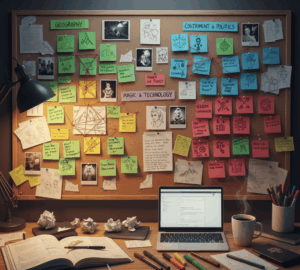
Magic or technology

Magic or technology worldbuilding template

16. What kind of magic/technology is used on a daily basis?

17. Is any kind of magic/advanced technology regulated or feared?

18. Do types of magic/technology vary from region to region?

Economy 

19. Does your world have a currency, or does it function on the barter system?

20. What are the most/least valuable resources?

21. Does your world have more capitalist or socialist leanings?

Arts

22. What are the major art forms in your world, and how are they viewed/valued by society?

23. Who are the performers, and how are they perceived by society?

24. How do the performers and art forms interact with structures of power? For example, are there court poets or jesters?

25. What are the musical traditions of your world?

26. What are the dance traditions of your world?

27. What are the fine arts traditions of your world?

28. Are any art forms prized over others?

Knowledge and education

29. Who in your world has access to education?

30. How do they acquire their training/education? Do they go to an institution of learning, or are there apprenticeships?

31. What are the disciplines they are educated in, and how does this affect or influence their career options?

32. Are there particular examinations/tests that they have to take to be considered masters/experts?

33. What are the various levels of expertise (eg, apprentice, master, etc.) that exist? How do they attain these levels?

34. What does the typical student–teacher relationship look like?

35. Are there any customs surrounding initiation into (a particular branch of) learning?

36. Do education opportunities differ for males and females?

37. What are some skills/knowledge that every adult is expected to have?

38. Does your world have libraries? If so, what are they like?

Daily life 

39. What does a typical home in your world look like?

40. What are the different strata of society?

41. What does a day in their life look like?

42. What is the cuisine like, and what are the food habits of the inhabitants of your world?

43. How do they acquire basic necessities like bread, water, etc.?

Worldbuilding templates

Here are some templates you can use to guide your worldbuilding process and help you gain clarity with regard to the kind of questions you should be asking:

One‑page pitch

Here are some questions you should ask to summarize your world at a glance:

44. Where is your world located, and who are its inhabitants?

45. How is your world different from the real world? What sets it apart?

46. What are the defining conflicts/crises of your world, and how do the main characters intend to solve them?

47. What are the rules and regulations of your world, and do your characters follow or break them?

48. What does your world’s system of government look like?

Event timeline 

Your world’s history plays a major role in its present events. It could also affect the background of your characters, the factions they belong to, and their motivations. Here’s a brief template to map the history and plot-relevant events of your world: 

49. Define the major eras of your world, their pivotal features, and the outcomes of major events that occurred during these eras. 

50. Plot major keystones or turning points that shaped the history of your world.

51. Elaborate on recent upheavals that played a role in disrupting your world and directly influenced the events of your story (eg, revolution, war, plague, etc.)

Magic/technology rules 

Magic or technology rules worldbuilding template

Not sure how to go about building the magic or advanced tech that forms a major part of your fantasy world? Here is a template to help you form a logical basis for your world’s systems:

52. What are the rules and limitations that govern the use of magic/tech?

53. What are the costs of crossing certain limits/using forbidden magic/tech?

54. How does one acquire skills and knowledge?

55. Who has access to this magic/tech?

56. How does this affect society at large?

Factions

Most fantasy worlds consist of rival factions, often with different agendas and political goals. Here are some questions to ask yourself to comprehensively outline each faction:

57. What are their goals? What do they stand for?

58. Who is their leader? What is his/her/their history and motivation?

59. Where are they based, and where do they operate out of?

60. What are the resources at their disposal?

61. Who are their allies and rivals?

62. What led to the founding of this faction, and how long has it been since then? Have their goals/mode of operation changed or evolved since then?

63. What would it take to start an uprising?

64. How are uprisings planned and executed?

Map-based template

A good strategy to follow when building the geography of your fictional world is to go from the ground up. 

Map worldbuilding template

Here is a template to follow to ensure you get your geographical features right:

65. Where are your continents positioned, and how many are there?

66. Where do your mountain ranges lie? Tip: They can form natural barriers against invasions.

67. Where do your major wind routes come from, and how do they affect the climate of the areas they flow into?

68. What are the major ocean currents, and how do they influence trade and migration?

69. Where do the rivers and wetlands lie, and how do they influence agriculture, food habits, and settlements?

Society

70. What does it mean to be a child in your world?

71. What does a typical childhood look like?

72. Are there any rites of passage to transitioning into adulthood?

73. How large is the typical family in your world?

74. Is marriage the norm, and if so, what are some marriage traditions?

75. Is your world patriarchal, matriarchal, or equal?

76. Are there any rites/customs surrounding the birth of a child?

77. What are some commonly used first names, and how are they derived?

78. What are some commonly used last names, and how are they derived?

79. What is the typical family set-up like in your world?

80. How are elders addressed?

81. What are any rituals/practices surrounding death?

82. Does your world have hospitals/a healthcare system?

83. How is the life of the nobility?

84. How is the life of the upper class?

85. How is the life of the middle class?

86. How is the life of the lower class?

87. What does it mean to be homeless in your world?

88. What are some commonly pursued hobbies?

89. What is the dressing style of the nobility?

90. What is the dressing style of the upper class?

91. What is the dressing style of the middle class?

92. What is the dressing style of the lower class?

93. Is it possible to transcend class boundaries?

Infrastructure

Infrastructure worldbuilding template

94. What does your world’s transportation system look like?

95. What do the houses/palaces/castles of the nobility look like?

96. What do the houses of the upper class look like?

97. What do the houses of the middle class look like?

98. What do the houses of the lower class look like?

99. Does your world have a military/guards/a security system?

100. What are some public facilities available?

Worldbuilding plays a major role in crafting the universe you set your story in. They influence the characters, their backgrounds, and their journeys, and create a stunning visual backdrop in the mind’s eye—a well-described fictional world can provide an almost cinematic experience for the reader. We hope our template helps you create the fantasy world of your dreams!

PaperTrue offers expert, hassle-free self-publishing services that allow you to get your manuscript edited and published by professionals. Check them out!

Here are some more resources:

Top 101 Bone-Chilling Horror Writing Prompts

A good horror story often includes elements of surprise, psychological depth, and diverse influences from both classic and modern works, making it truly chilling. If you love writing scary stories, this article is for you! Dive in to discover the best 101  horror writing prompts for your next masterpiece. From creepy ghost story ideas to supernatural horror, we’ve covered everything for you. 

For Halloween enthusiasts, we have also added a special section of horror story prompts. The horror genre is a rich field for creativity, offering various storytelling techniques that invoke strong emotions and shock. You can use these prompts for Halloween to craft suspenseful and engaging stories. So let’s get started! 

Perfect your spine-chilling tale!

Horror writing prompts 

1) A sleep tracker app reveals you’ve been leaving your house every night at 2 AM and walking exactly 2.7 miles, but you have no memory of it. When you check security footage, the person leaving isn’t quite walking—they’re gliding an inch above the ground.

2) A psychologist suggests a new therapy to a patient, after which the patient starts getting scary nightmares.

3) A marine biologist discovers that whales aren’t singing to communicate—they’re chanting a warning. When she decodes the message, it’s a countdown in an ancient human language that predates civilization, and it reaches zero in three days. 

4) A hunter sees a blood-sucking vampire in Albanian forests and flees to save his life. 

5) You inherit your grandmother’s recipe box and decide to bake her famous cookies. Each person who eats one becomes obsessed with finding her grave—and when they do, they start digging with their bare hands, whispering “She’s not finished yet.”

6) A girl finds an ancient key and unlocks a box, releasing 20 monsters who had been imprisoned for 500 years. 

7) A mother purchases an antique dollhouse with Chinese dolls for her daughter and realizes that the dolls are haunted by cursed spirits. 

8) A strong current pulls a fisherman into the ocean’s deep waters. The fisherman sees a ship and manages to climb onto it, only to realize that it is a phantom ship. 

9) A boy is followed by the shadow of death everywhere, leading to death wherever he goes. 

10) A gardener finds an ancient telephone while digging in the garden and accidentally contacts aliens using that telephone. 

11) A tattoo artist notices that a particular design keeps being requested by different clients who’ve never met. Each person who gets the tattoo disappears within a week, and the artist discovers the same symbol carved into trees surrounding an abandoned psychiatric hospital.

12) A child breaks a magical snow globe and hears screams. Suddenly, there is heavy snowfall, and hailstones begin falling hard from the sky. 

13) A priest opens a locked room in a church and releases the ghosts of dead scientists who want revenge. 

14) A thick fog suddenly envelops a tiny village, and a wicked witch who feeds on sorrow enters the village. She enchants dead bodies and makes them obey her commands. 

15) A girl starts having dreams of what will happen in her future. To her horror, every dream comes true, and she must act before the dream of her death becomes a reality. 

16) During a DNA ancestry test, you discover you’re a 100% match to a body found in a peat bog that’s been dead for 3,000 years. Archaeologists are baffled, but you start having memories that aren’t yours—and a growing hunger for something raw and ancient. 

17) A poacher is haunted by the spirits of animals whose skin he has sold. 

18) A woman takes a free lift from a man who is a demon in disguise. Attracted to her, the demon takes her to the land of demons. 

19) A museum adds a new artifact to its collection without realizing that the object is cursed and belongs to an ancient tribe. Angry, the tribe performs black magic on all the museum’s employees, who must face torture till the artifact is returned to its rightful owners. 

20) A crime scene cleaner finds the same child’s handprint at every unrelated job site across the city. The print is always in blood, always in impossible locations, and it’s getting fresher each time. 
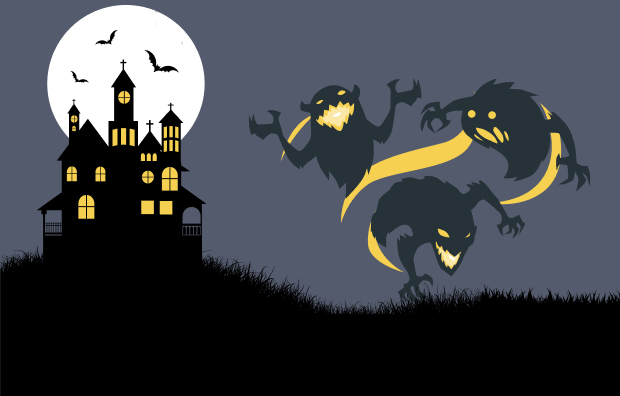
Three ghosts are near a spooky castle on the outskirts of a forest.

21) A librarian sees a young girl who was supposed to have died in 1913. The young girl asks for the librarian’s help to take revenge against a powerful man. When the librarian refuses, the angry girl unleashes horror into the librarian’s life. The librarian begins seeing blood on the walls and hears creaking sounds, scary footsteps, and a hand that reaches out to kill her. 

22) A businessman doesn’t honor the promise he made to a poor man. He suddenly realizes that all the bad incidents that the poor man experienced are now happening to him. 

23) You move into a new apartment where the previous tenant left all their belongings, including a journal. The entries describe your life with perfect accuracy—but they were written five years ago and end abruptly with tomorrow’s date.

24) A government employee visits an orphanage for a survey and finds out how every child is controlled by a satanic cult. 

25) A crazy and gifted musician creates an eerie tune that enchants and forces people to kill other people. 

26) Every mirror in a newly renovated hotel shows the room as it was during a fire that killed twelve people in 1968. Guests can see themselves in the present, but also their burning reflections screaming silently from the past.

27) You enter an abandoned house, and the door slams shut on its own. You realize that you are trapped in that house and see a strange yellow light. 

28) You find a key to a magical land of history, and a dragon follows you from the historical land to the earth. 

29) An actress is kidnapped by a witch who wishes to manipulate her and control the world. 

30) An investigator who tries to find out the truth behind a college student’s murder realizes that the boy invoked supernatural forces before dying. Now, the investigator must stop the supernatural forces from killing him and other humans. 

31) A scientist discovers a door to the land of memories and accidentally damages the memory of his identity, forgetting everything he knows about himself. 

32) A neurologist develops a procedure to delete traumatic memories. Her patients report success, but she starts seeing the deleted memories—literal shadowy figures that act out the traumas, growing more solid and violent with each procedure performed.

33) You work the night shift at a 24-hour convenience store where the same customer comes in at exactly 3:47 AM every night, buys the same items, and leaves. One night, you follow them outside—but there’s no one there, and the purchased items are back on the shelves.

34) A magician has the rare gift of bringing dead people in paintings to life. Chaos spreads after the magician brings Hitler to life by working magic on a painting. 

35) A horrible black monster steps out of the Atlantic Ocean and begins eating everything it sees. 

36) A teacher finds an old coat that belonged to a demon in the past. Every time he checks the coat pocket, he reads news of people dying. Hours after he reads the notes, the people mentioned in the notes die, and blood spots keep appearing on the coat. 

37) A beggar walking close to a forest finds a trail of notes and happily picks them up. Later, he realizes that the notes belonged to wedding guests who died in an accident. The ghosts of the wedding guests notice that he has picked up the notes and haunt him. 

39) A sorceress trapped in an enchanted mirror manages to control a young girl who pulls her out of the mirror. 

40) A team of psychic youths is hired to find and fight a ruthless demon who feeds on despair. They must make a terrible sacrifice to prevent the demon from knowing their darkest secrets. 

41) A lady discovers an old well near the flat she is renting. She peeps to see what is inside the well, and a half-human, half-animal hand grasps her neck. 

42) A journalist arrives at her flat and finds a scary message written in red ink on her mirror. The message reads,”‘I’m coming for you!” and somebody has drawn a smiling face with red ink on the mirror. 

43) An angel is given the task of saving the world from a deadly plague. An army of tiny demon bacteria fights the angel and tries to force him to go back. 

44) A man desperately tries to remove his car, which is stuck in a swamp. Suddenly, he sees a muddy, ugly, hairy creature raise its head from the swamp. 

45) A camper suddenly sees a little girl sleepwalking with an evil smile on her face and blue sparks flying from her hands. 

47) Imagine that Pandora has a human heir called Nymphadora who opens a box she discovers. Tiny creatures that have feelers like needles step out of the box and make an attempt to stop time and the wheel of destiny. 

48) You wake up and discover that you are 40 years old, whereas the day before, you were just 19. 

49) A couple who are hiking enter a village where no one speaks and everyone has pale yellow eyes. 

50) A traveler accepts a drink from a tribal an,d after drinking it, falls into a deep sleep. The next day, he realizes that he is in a large cage with animals, and the tribals are dancing around the cage. 

51) You’re attending a masquerade party in a snowy area where everyone is dressed as animals. You see a large, hairy, ape-like animal and recognize that it’s a real Yeti. The Yeti, realizing that you know his true identity, wants to kill you. 

52) A wicked group of vampires lands on Earth with a mission to kill all humans and settle on Earth. They enter your house and want to kill you and your family. 

53) A couple has rented a room in a palace to spend the night. While using the elevator, the elevator suddenly stops midway, the light starts flickering, and the couple hears screams. 

54) An archaeologist discovers a document about cursed gold and becomes obsessed with finding the gold. His quest leads him to the cave where a wicked witch lives. 

55) You discover an ancient diary that contains strange incantations. When you read them aloud, Satan appears. 

56) An antique typewriter types messages on its own, but only during thunderstorms. The messages are pleas for help from people who will go missing in the coming week. You can save them, but the typewriter demands a replacement name for each one you rescue.

57) An injured man finds an old, abandoned clinic and enters the clinic, hoping for treatment. He is confronted by a zombie that has made the clinic its home. 

58) A boy presses a magical button that makes him travel in time. Unfortunately, he chooses the wrong time portal and lands in an insane asylum. 

59) You see the face of a werewolf at your window’s glass. The werewolf breaks the glass, and you have a few seconds to escape. 

60) A boy finds a strange red device with a black button in the mud. The boy presses the button, upon which the people who are alive die immediately, and dead people start coming to life. 

Continue reading to get inspired by our special section of scary story prompts. Browse exciting prompts for horror stories from various genres like dark fantasy, psychological horror, and more! 

Scary story prompts 

61) Strange things happened to a teenager after he performed a planchette with a group of friends for fun. His car stops working, the bus he travels on gets punctured, and he is unable to return home. 

62) A scientist invents a potion to restore his youth. However, he makes a mistake while adding an ingredient to the potion. Hence, when he drinks the potion, his skin grows deformed, with white patches and thick fur. 

63) A horse rider discovers bones in an old stable. When he tries to burn the bones, the bones surprisingly do not burn. Instead, a thick white fog suddenly envelops the stable, and evil spirits emerge from the bones. 

64) A plastic surgeon becomes famous for making people look exactly like their “ideal selves.” But patients start noticing their old faces walking around the city, living better lives, and the faces are hunting down their original owners. 

65) A woman opens the door and finds a woman claiming to be her aunt. She also shows photographs as proof, and the woman allows her ‘aunt’ to enter the house. The aunt then gives the woman a strong potion, and the woman falls into a deep sleep. When the woman wakes up, she realizes that she is in the netherworld and sees beings with no light in their eyes. 
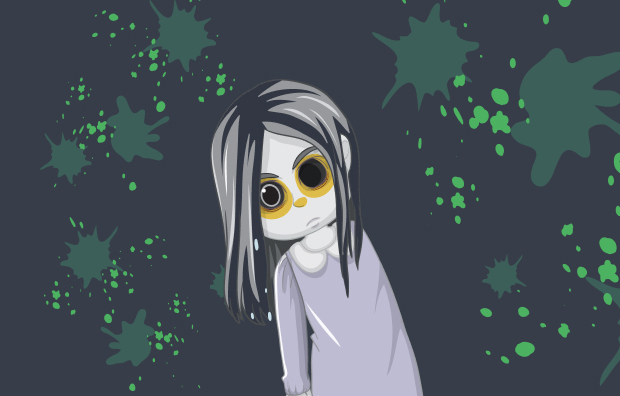
 A scary airborne doll is staring eerily.

66) An alpine skier has a terrible fall from a mountain. A group of nomads sees her and forcibly takes her to an old temple. They slit her leg with a knife and perform a strange ritual. 

67) You discover your childhood imaginary friend left a time capsule for you to open on your 30th birthday. Inside are photographs of you at places you’ve never been, with people you’ve never met—but you’re smiling in every single one, and there’s something wrong with your eyes. 

68) A researcher finds out about a rare tribe that can make themselves invisible and travel with lightning speed. While trying to find the tribe’s descendants, she suddenly finds herself face-to-face with their guardian, who tries to kill her. 

69) You enter a house where a psychic man has been staying in secret. When you confront the man, he uses his mind power to enchant all metallic objects, make them airborne, and position them to attack you. 

70) You come across a rare animal that can change its shape at will. To your horror, it suddenly changes its shape to look like you and tries to kill you. 

71) A boy returns to his remote village after a long time and realizes that all the villagers are hypnotized and have black marks on their hands. 

72) A lady never invites guests to her house and rarely ventures out of her house. A detective realizes that the lady’s life is manipulated by a cat who is a witch in disguise. The detective must save himself and the lady from the wicked cat. 

73) A man finds tapes that his girlfriend gave him before she died. He hears an eerie screeching sound in the background when he plays the tapes. To his horror, he hears the same screeching sound and scary footsteps after he stops playing the tapes. 

74) A student finds a hit list of people who will soon be killed. The list was created by a demon in disguise. The demon kidnaps the student to prevent him from telling anyone the truth. 

75) A girl hires a tutor to learn Japanese. One day, she realizes that her Japanese teacher transforms into a werewolf every full moon. 

76) A cave diving team discovers an underground lake where every sound they make echoes back as screaming. When they surface, they realize six months have passed topside, and their families have been receiving phone calls from them the entire time. 

77) A 12-year-old child sees a mysterious violet light streak across the sky. Whenever the light shines, somebody dies. 

78) An intruder touches an electric fence and is jolted by a strong current. Before his eyes close, he sees an ugly ghoul looking at him. 

79) A historian finds out about a rare voodoo practitioner who is the last of an ancient, mystic tribe. He arrives at the voodoo practitioner’s hut only to find the place ransacked and the voodoo practitioner gone. He suddenly sees ghosts floating in the air and hears a grandfather clock laugh menacingly. 

80) A food delivery driver keeps getting orders to the same address, but each time the house number changes street. They finally deliver in person and discover it’s their own childhood home—where a family who looks exactly like theirs did 20 years ago is eating dinner. 

Now, let’s see some scary story writing prompts about Halloween! 

Halloween horror prompts 

81) Vampires gatecrash a Halloween party, and terrified guests are unable to escape. 

82) A group of friends decided to have a scavenger hunt on Halloween. Suddenly, all the friends disappear one by one. 

83) A giant wakes up from a deep sleep on Halloween and stamps his foot in rage. This leads to an earthquake, and all guests at the Halloween party are in danger. 

84) An audiobook narrator records a horror novel, and strange things start happening during playback. Listeners report hearing extra voices whispering their names, and the narrator discovers they’re actually channeling the book’s villain, who’s been waiting decades for someone to give them a voice.

85) You hear an eerie tune on Halloween night and wake up in fright. Suddenly, you see the face of a big black bear outside your window. 

86) You accept a dare to visit a haunted house on Halloween. Suddenly, you hear screams and utensils falling in the haunted house. 

87) A family decides to punish their extremely naughty son and not celebrate Halloween. On Halloween night, the parents leave home due to an emergency, leaving their naughty son alone at home. 

88) A group of friends decides to sleep at a graveyard for fun on Halloween. Suddenly, they see ghosts emerging from the tombstones. 

89) You start receiving voicemails from your own phone number. The voice is yours, but older and terrified, warning you about specific choices you’re about to make. When you ignore one warning, you watch the consequences unfold exactly as described—and the calls start coming from your children’s numbers.

90) Write a short story on Halloween using the words phantom, nightmare, banshee, and voodoo. 
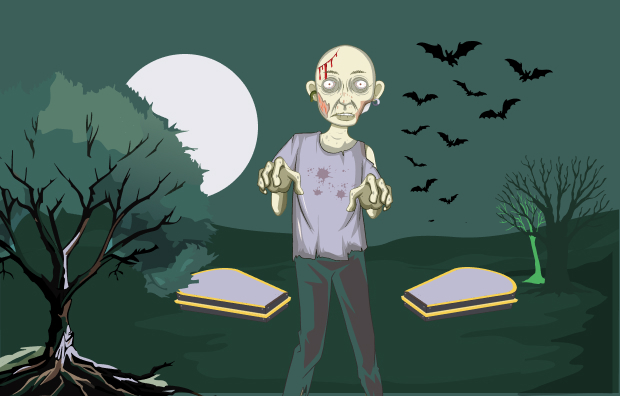
An angry zombie is preparing to attack a man.

91) A crazy scientist challenges a colleague on Halloween to drink a potion that he has created for an experiment. The colleague drinks the potion and starts shrinking. 

92) A meteorologist notices a storm system that appears on satellite but not on radar. It’s been following the same family for three generations, moving whenever they move, and it’s finally about to make landfall where they’ve settled.

93) A boy befriends an alien who wants to celebrate Halloween. When the alien arrives at the Halloween horror costume party, it gets scared and starts attacking everyone. 

94) A girl insults a tarot reader who makes a terrible prediction about her on Halloween. She continuously experiences bad luck, has an accident, and wakes up in the hospital. She realizes that she has forgotten her identity. 

95) A man befriends a she-banshee on Halloween, who grows extremely possessive about the man. Whenever anyone touches the man, the banshee kills him. 

96) A serial killer enters a Halloween party, and his next target is you. 

97) A group of friends enters a horror maze to celebrate Halloween and is trapped inside the maze. Suddenly, they are confronted by a real ghost who grins wickedly at them. 

98) An archaeologist unearths a fossilized human handprint pressed into 200-million-year-old rock—impossible, since humans didn’t exist then. When they touch it, their hand fits perfectly, and they begin remembering the asteroid impact that killed the dinosaurs from a perspective that shouldn’t exist.

99) You are a part of a ghostbuster team. You are given the secret task of capturing a dangerous ghost at a Halloween party. The dangerous ghost recognizes you, tries to kill you, and gets very violent. 

100) You meet a stranger at a costume party at a neighbor’s house for Halloween. Suddenly, the stranger touches you and whispers strange words in an unknown language. You are transported to an eerie land of spirits, ghouls, trolls, banshees, and zombies. 

101) You are hiking with a group of friends on Halloween. You see a black castle floating in the air. A ladder on the ground is positioned, leading to the door of the castle. You and your friend climb the castle, and the door slams shut. A wicked dwarf who is the castle’s caretaker tells you that you are trapped forever. 

We hope these horror story prompts inspire you to write your next masterpiece. Once you complete working on your scary writing prompts, the next step is to edit your stories. As providers of editing and proofreading services, we’d love to enhance your horror novel! 

Here are some other resources that you might find useful: 
What Is an Essay? A Comprehensive Guide to Structure and Types

Effective essay writing is crucial to your academic or professional success. Whether it’s getting into the college of your dreams or scoring high on a major assignment, writing a well-structured essay will help you achieve it all. But before you learn how to write an essay, you need to know its basic components.

In this article, we will understand what an essay is, how long it should be, and its different parts and types. We will also take a detailed look at relevant examples to better understand the essay structure.

Get an A+ with our essay editing and proofreading services!

What is an essay?

An essay is a concise piece of nonfiction writing that aims to either inform the reader about a topic or argue a particular perspective. Essays are a form of written work that can range from formal academic papers to informal blog posts. It can either be formal or informal in nature. Most academic essays are highly formal, whereas informal essays are commonly found in journal entries, social media, or even blog posts. One of the key frames that characterizes effective essays is the abstract universal, which allows writers to transition from detailed observations to broader, universal themes.

As we can see from this definition of an essay, the beauty of essays lies in their versatility. From the exploration of complex scientific concepts to the history and evolution of everyday objects, they can cover a vast range of topics. The versatility of essays is further illustrated by collected essays from notable authors like Aldous Huxley, who explore a wide range of topics through this literary device.

How long is an essay?

The length of an essay can vary from a few hundred to several thousand words, but typically falls between 500–5,000 words. However, there are exceptions to this norm, such as Joan Didion and David Sedaris, who have written entire books of essays. In longer essays, it is beneficial to include a brief overview in the introduction that outlines what will be covered in each part, helping to orient the reader and preview the development of the argument.

If you need to increase the word count to meet a specific requirement, you might consider using AI tools such as the essay extender tool, Chat GPT, or Gemini. These tools expand your essay while maintaining its quality. They help by adding more points or expanding existing ideas and refining your essay further.

Let’s take a look at the different types of essays and their lengths with the help of the following table:

How many paragraphs are in an essay?

Typically, an essay has five paragraphs: an introduction, a conclusion, and three body paragraphs. However, there is no set rule about the number of paragraphs in an essay.

Each body paragraph should focus on a single main idea that strengthens the overall argument of the essay.

The number of paragraphs can vary depending on the type and scope of your essay. An expository or argumentative essay may require more body paragraphs to include all the necessary information, whereas a narrative essay may need fewer.

Structure of an essay

To enhance the coherence and readability of your essay, it’s important to follow certain rules regarding the structure and ensure that you present clear points. Take a look:

1. Arrange your information from the most simple to the most complex bits, ensuring that each section is focused and coherent. You can start the body paragraph off with a general statement and then move on to specifics.

2. Provide the necessary background information at the beginning of your essay to give the reader the context behind your thesis statement and clearly define your central argument.

3. Select topic statements that provide value, more information, or evidence for your thesis statement.

Formal essays are characterized by their serious purpose, aiming to present arguments and ideas with a strong, structured approach.

There are also various essay structures, such as the compare and contrast structure, chronological structure, problem method solution structure, and signposting structure, that you can follow to create an organized and impactful essay.

If you are a student and find it challenging to organize your essay, you can rely on PaperTrue and Edubirdie for guidance. Their experts can help you structure your paper, refine your thesis statement, improve your grammar, and ensure your arguments are clear and logically connected.

Parts of an essay

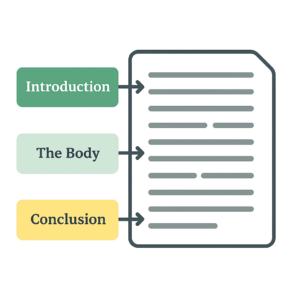
An impactful, well-structured essay comes down to three important parts: the introduction, body, and conclusion.

parts of an essay

1. The introduction sets the stage for your essay and is typically a paragraph long. It should grab the reader’s attention and give them a clear idea of what your essay will be about. The introduction sets the tone and structure of the essay, forming a foundational component of the overall essay structure.

2. The body is where you dive deeper into your topic and present your arguments and evidence. Each body paragraph should focus on a single key idea that strengthens the overall argument of the essay. It usually consists of two paragraphs, but this can vary depending on the type of essay you’re writing.

3. The conclusion brings your essay to a close and is typically one paragraph long. It should summarize the main points of the essay and leave the reader with something to think about.

The length of your paragraphs can vary depending on the type of essay you’re writing. So, make sure you take the time to plan out your essay structure so each section flows smoothly into the next.

Introduction

When it comes to writing an essay, the introduction is a critical component that sets the tone for the entire piece. A well-crafted introduction not only grabs the reader’s attention but also provides them with a clear understanding of what the essay is all about. An essay editor can help you achieve this, but it’s best to know the brief yourself!

Using a literary device such as a metaphor or anecdote can also help to engage the reader and set the tone for your essay.

Let’s take a look at how to write an attractive and informative introductory paragraph.

1. Construct an attractive hook

To grab the reader’s attention, an opening statement or hook is crucial. This can be achieved by incorporating a surprising statistic, a shocking fact, or an interesting anecdote into the beginning of your piece.

For example, if you’re writing an essay about water conservation, you can begin your essay with, “Clean drinking water, a fundamental human need, remains out of reach for more than one billion people worldwide. It deprives them of a basic human right and jeopardizes their health and well-being.”

2. Provide sufficient context or background information

An effective introduction should begin with a brief description or background of your topic. This will help provide context and set the stage for your discussion.

For example, if you’re writing an essay about climate change, you start by describing the current state of the planet and the impact that human activity is having on it.

3. Construct a well-rounded and comprehensive thesis statement

A good introduction should also include the main message or thesis statement of your essay. This is the central argument that you’ll be making throughout the piece. It should be clear, concise, and ideally placed toward the end of the introduction.

By including these elements in your introduction, you’ll be setting yourself up for success in the rest of your essay.

Let’s take a look at an example.

Essay introduction example

  • Hook
  • Background information
  • Thesis statement

The Wright Brothers’ invention of the airplane in 1903 revolutionized the way humans travel and explore the world. Prior to this invention, transportation relied on trains, boats, and cars, which limited the distance and speed of travel. However, the airplane made air travel a reality, allowing people to reach far-off destinations in mere hours. This breakthrough paved the way for modern-day air travel, transforming the world into a smaller, more connected place. In this essay, we will explore the impact of the Wright Brothers’ invention on modern-day travel, including the growth of the aviation industry, increased accessibility of air travel to the general public, and the economic and cultural benefits of air travel.

Body paragraphs

You can persuade your readers and make your thesis statement compelling by providing evidence, examples, and logical reasoning. To write a fool-proof and authoritative essay, you need to provide multiple well-structured, substantial arguments.

Let’s take a look at how this can be done:

1. Write a topic sentence for each paragraph

The beginning of each of your body paragraphs should contain the main arguments that you’d like to address. They should provide ground for your thesis statement and make it well-rounded. You can arrange these arguments in several formats depending on the type of essay you’re writing.

2. Provide the supporting information

The next point of your body paragraph should provide supporting information to back up your main argument. Depending on the type of essay, you can elaborate on your main argument with the help of relevant statistics, key information, examples, or even personal anecdotes.

3. Analyze the supporting information

After providing relevant details and supporting information, it is important to analyze it and link it back to your main argument.

4. Create a smooth transition to the next paragraph

End one body paragraph with a smooth transition to the next. There are many ways in which this can be done, but the most common way is to give a gist of your main argument along with the supporting information with transitory words such as “however,” “in addition to,” “therefore”. You can arrange these transitions in several formats depending on the essay type you’re writing.

Here’s an example of a body paragraph.

Essay body paragraph example

  • Topic sentence
  • Supporting information
  • Analysis of the information
  • Smooth transition to the next paragraph

The Wright Brothers’ invention of the airplane revolutionized air travel. They achieved the first-ever successful powered flight with the Wright Flyer in 1903, after years of conducting experiments and studying flight principles. Despite their first flight lasting only 12 seconds, it was a significant milestone that paved the way for modern aviation. The Wright Brothers’ success can be attributed to their systematic approach to problem-solving, which included numerous experiments with gliders, the development of a wind tunnel to test their designs, and meticulous analysis and recording of their results. Their dedication and ingenuity forever changed the way we travel, making modern aviation possible.

Conclusion

A powerful concluding statement separates a good essay from a brilliant one, especially in critical essays. To create a powerful conclusion, you need to start with a strong foundation.

Let’s take a look at how to construct an impactful concluding statement.

1. Restructure your thesis statement

To conclude your essay effectively, don’t just restate your thesis statement. Instead, use what you’ve learned throughout your essay and modify your thesis statement accordingly. This will help you create a conclusion that ties together all of the arguments you’ve presented.

2. Summarize the main points of your essay

The next point of your conclusion consists of a summary of the main arguments of your essay. It is crucial to effectively summarize the gist of your essay into one, well-structured paragraph.

3. Create a lasting impression with your concluding statement

Conclude your essay by including a key takeaway or a powerful statement that creates a lasting impression on the reader. This can include the broader implications or consequences of your essay topic.

Here’s an example of a concluding paragraph.

Essay conclusion example

  • Restated thesis statement
  • Summary of the main points
  • Broader implications of the thesis statement

The Wright Brothers’ invention of the airplane forever changed history by paving the way for modern aviation and countless aerospace advancements. Their persistence, innovation, and dedication to problem-solving led to the first successful powered flight in 1903, sparking a revolution in transportation that transformed the world. Today, air travel remains an integral part of our globalized society, highlighting the undeniable impact of the Wright Brothers’ contribution to human civilization.

Types of essays

Most essays are derived from the combination or variation of these four main types of essays. Let’s take a closer look at these types.

1. Narrative essay

A narrative essay is a type of writing that involves telling a story, often based on personal experiences. The personal element in narrative essays allows writers to connect with readers on a deeper level through self-revelation and individual experiences. It is a form of creative nonfiction that allows you to use storytelling techniques to convey a message or a theme.

2. Descriptive essay

A descriptive essay aims to provide an immersive experience for the reader by using sensory descriptors. Unlike a narrative essay, which tells a story, a descriptive essay has a narrower scope and focuses on one particular aspect of a story.

3. Argumentative essays

An argumentative essay is a type of essay that aims to persuade the reader to adopt a particular stance based on factual evidence and is one of the most common forms of college essays.

4. Expository essays

An expository essay is a common format used in school and college exams to assess your understanding of a specific topic. The purpose of an expository essay is to present and explore a topic thoroughly without taking any particular stance or expressing personal opinions.

Structured essay formats are often taught to students to enhance their writing skills and prepare them for academic success. At the university level, understanding different types of essays and their requirements is crucial for academic achievement.

While this article demonstrates what an essay is and describes its types, you may also have other doubts. As experts who provide essay editing and proofreading services, we’re here to help. 

Our team has created a list of resources to clarify any doubts about writing essays. Keep reading to write engaging and well-organized essays!

How to Write a Research Proposal (Step-by-Step)

Writing a research proposal is a fundamental part of the journey of any student who is serious about pursuing research in an area of their interest. While some begin their research journey with their master’s thesis, others take the first step into the world of research when applying for a PhD.

Whether you are writing a research proposal for a conference or seminar or to submit to a prospective supervisor, it is essential to lay out a clear road map of your envisioned research objectives.

Here is a step-by-step guide to writing and structuring a research proposal that is bound to impress!

Get Your Research Proposal Professionally Edited Today! Learn More

What is a research proposal

To put it very simply, a research proposal is a preview of your proposed area of research. It is important to highlight an existing research gap in your area of interest and elaborate on how you intend to bridge it with your research. It must present your work as new and path-breaking—the more unique it is, the greater the chance of acceptance.

Research proposals are usually written by students and academics applying for research degrees or submitting papers to journals or conferences, and grant applicants who hope to receive financial aid for their research.

Either way, there is a panel of experts to impress, and so it is important that your research proposal is clear, well thought-out, and coherently structured.

How to choose and refine a research topic

Choosing a suitable research topic depends on a variety of factors. Firstly, if you already have a few colleges/universities narrowed down, it would be a good idea to check out the resources and priorities of the department that most closely aligns with your area of interest.

Most university websites also provide a list of their faculty with a record of their areas of interest and publications—if you find one who seems aligned to your area of interest, it would be a good idea to get in touch via email and inquire if they are open to accepting candidates as potential research scholars. 

Once you have selected your general area of interest, here are some steps you can follow to refine your research topic:

  1. Read existing literature and research and identify a research gap.
  2. Identify broad themes within your topic and shape them into answerable questions—what is it that you seek to find/solve/prove through your research?
  3. Given your/the university’s location, amount of time available, accessibility and availability of data, and current skillset, would this topic be a feasible one?

Suppose you are able to find satisfactory answers to all these questions, well done! You are ready to begin writing your research proposal.

Writing tips for a strong proposal

When writing a research proposal, it is important to follow certain writing guidelines to ensure the best possible impact.

  1. Check out the website/brochure of the funder or department you are applying to—usually, a certain format or style guide is mentioned. Following their guidelines would increase the chances of their viewing your application.
  2. Be specific, measurable, and feasible. It is important to communicate clearly and succinctly what your research goals are, the time and logistics involved, and their feasibility.
  3. Use active voice and clear signposting. Provide a route map to your research and the ways in which you intend to achieve your goals.
  4. Elucidate the aims of your research and identify corresponding methods and expected outcomes in a clear and accessible manner.

How to write a research proposal

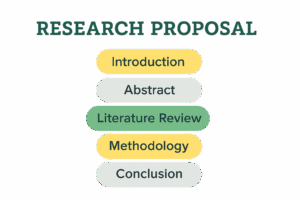
Research Proposal Outline

1. How to write an introduction for a research proposal

  •  Your introduction must provide a brief insight into your research topic.
  • Mention the identified research gap and why this particular area of study is important.
  • Briefly outline your research objectives and how you intend to achieve them.

2. How to write an abstract for a research proposal

  • The abstract functions as a preview of the research paper.
  • It must contain the research question you have identified and examine why you have chosen it, citing the research gap in this field.
  • You must briefly highlight the methodologies you intend to use.
  • Finally, cite the keywords that appear in the abstract that will provide a quick understanding of its major themes.

3. How to write a literature review for a research proposal

  • The literature review involves a detailed survey of existing research in the area you have chosen. 
  • This literature could serve as a potential reference in your research.
  • It could also help you identify a research gap that you can fill.
  • You can arrange it either thematically or chronologically. 
  • You must explain how this existing literature ties in with your own research and will help you.

4. How to write a methodology section for a research proposal

  • Clearly identify and outline the methods you intend to use that align with your study and how they will help you to achieve your goals in an attainable manner.
  • Elaborate on existing methodologies (eg, ethnographic study) and explain how you intend to use them in your study.
  • Identify existing theories that can be applied to your study and how you can analyse your research through this theoretical framework.

5. How to write a conclusion for a research proposal

  • Sum up by reinforcing the purpose of your study and how your research will be a valuable contribution to this field.
  • Reinforce your research gap and explain how your research has adequately filled it.
  • Consider mentioning some areas with scope for future researchers could work on.

Common mistakes to avoid

Here are some common mistakes that could take away from the credibility of your proposal:

1. Lack of clarity: A vague research question, weak methodology, and overambitious scope will make your proposal seem flimsy and impractical.

2. Outdated or thin literature review: Having an outdated or inadequate literature review would present you in a negative light, as it would seem as if you have not done your research adequately.

3. Ignoring ethics or feasibility: This could be a major concern when it comes to the practical aspects of your research, especially when a lack of resources and plagiarism are major issues in the academic domain.

Formatting and submission checklist

Before you submit your research proposal, here are some final points to keep in mind:

1. Ensure you have an adequate word count. On average, research proposals are a minimum of 3000–4000 words long.

2. Whether MLA, Chicago, APA, etc., ensure you have followed the style guide specified by the institution.

3. Ensure that your table/figures, if any, are all properly numbered, captioned, and accounted for.

4. Ensure your file is saved under a clear and professional-sounding name. ‘Title_Author Name’ is the recommended format. 

5. Get your work proofread to ensure you catch any errors before you hit ‘submit’.

6. Run your proposal through a plagiarism checking software such as Grammarly, GPTzero, or Copyscape to ensure your document comes within the required frame of originality. 

7. If possible, ask your supervisor for feedback before submitting your work—an expert opinion always helps.

Examples and mini-templates

Sample Research Question

Your research question should clearly state what you intend to examine and prove over the course of your study. It should be clear, to the point, and not unnecessarily wordy.

Example: How does remote work affect team creativity in SMEs?

Sample Abstract (Short)

An abstract should ideally state your title, outline your aim, analysis, and goals in not more than 200 words, and should also include appropriate keywords.

Title: The Role of Social Media in Shaping Political Opinions Among Young Adults

Abstract:

This research investigates the influence of social media platforms on the political opinions of young adults aged 18–30. Using a mixed-methods approach, we conducted surveys (n = 500) and in-depth interviews (n = 20) to explore participants’ exposure to political content online. Findings revealed that 62% of respondents reported significant shifts in their political views due to social media interactions. Qualitative analysis highlighted the role of algorithm-driven content in reinforcing political biases. The study underscores the importance of critical digital literacy in mitigating the impact of social media on political polarization.

Keywords: social media, political opinions, young adults, politics, and social media

Credits: ResearchMethod.net https://researchmethod.net/research-paper-abstract/#google_vignette

One-Page Proposal Outline Template

Now that you know how to write a research question and abstract, here is a one-page proposal outline that will help you get started on your research proposal:

1. Title page: This should have your topic title, name, roll number, name of the university and department, and name of the supervisor.

2. Introduction: Ideally, not more than one page long, your introduction should provide a bird’s-eye view of your research paper, elaborating on the research question, briefly touching upon existing studies in this area, and how yours can fill in an existing gap, what methods you intend to use, and the expected outcome.

3. Research gap and objectives: This section should elaborate on the existing gap in your field, how your research will be a valuable contribution towards filling this gap, and what your objectives are in conducting this research.

4. Literature review: This should provide a list of existing research pertinent to your topic, arranged either chronologically or thematically, along with an explanation of how each paper/book ties in with your own research and will help you.

5. Methodology: This section should elaborate on the research methods you will use, for example, an ethnographic study of a particular community, and the existing theories through which you will analyse your findings.

6. Theoretical framework: Here, you will outline important concepts and variables and propose a defined structure to study and analyse them. This section serves as a blueprint for your research.

7. Hypothesis: This section contains your suppositions regarding your research based on the results of existing findings in the area.

8. Expected Outcome: As the name suggests, this section elaborates on what you expect will be the result of your research. You can support these claims by citing findings from similar/parallel research and stating how present conditions lean towards supporting a particular outcome.

9. Ethical Considerations: The ethics statement provides a detailed account of the ethical considerations and principles that will guide your study. When engaging in research methods, such as interviewing a group of people, it is always important to follow a code of conduct, including maintaining their privacy by changing their names. Identify the principles that will guide your work based on the nature of your research and clearly elucidate the code of conduct you intend to follow.

10. Conclusion: This section is to sum up everything that you have stated in your proposal and reinforce how your research will be an important contribution to this field.

Once you have got all the necessary data in place, it is time to begin writing a research proposal that will come across as clear and organised, and will impress your supervisor. We wish you the best with your academic journey!

PaperTrue offers expert, hassle-free paper editing services that allow you to get your manuscript edited and published by professionals. Check them out!

Here are some more resources:

ISBN Guide 2025: What Is an ISBN and How to Get an ISBN

Have you ever seen the back of a book and wondered what the numbers on its barcode are? Those numbers are a code that forms the ISBN. So what does ISBN stand for? It stands for International Standard Book Number. Every book has an ISBN number from which you can identify its registrant and the specific title, edition, and format. 

Getting a book ISBN is a crucial step in every published writer’s journey—regardless of whether they’re opting for self-publishing companies or going through a traditional publishing house. In this article, we deconstruct what is an ISBN, why you should get one for your book, and at what point of the book publishing process you need to do this. 

Increase your book’s global visibility. Get your unique ISBN today!

What is an ISBN? 

The International Standard Book Number (ISBN) is a uniquely generated number assigned to a published book that acts as a unique identifying number for it.

The ISBN is often used by entities that manage, publish, and distribute books for listing and other logistical purposes. It enables booksellers, publishers, and even readers to find a book with ease. 

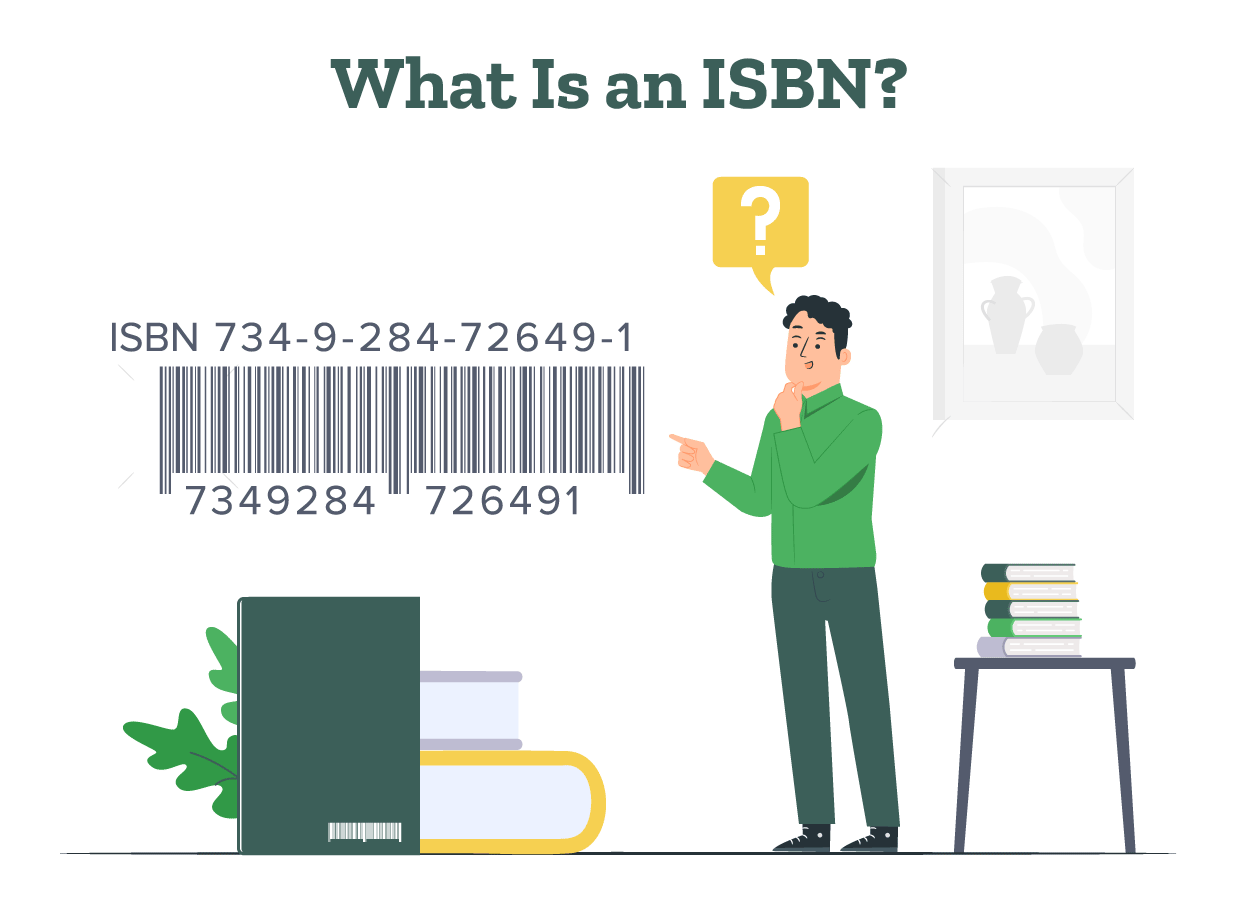
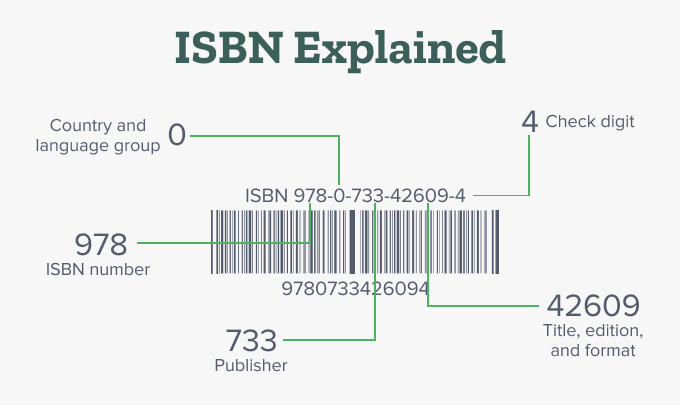
After learning about the ISBN meaning, let’s have a look at the parts of an ISBN example:

An infographic titled ISBN showing a sample of ISBN number.

Looking at the components of ISBN barcode, you can understand what is an ISBN on a book and what it looks like. As far as the question of where to find ISBN on book goes, you can typically find the ISBN of a book on the back cover or the copyright page inside the book.

Note: “ISBN number” is commonly used for the International Standard Book Number, but it’s redundant as ISBN already includes “number.” This is like “PIN number” and “ATM machine.” Despite the redundancy, “ISBN number” is well-recognized in publishing.

How to read an ISBN 

An ISBN has 13 digits (since 2007) and has five distinct parts that reveal a key piece of information about the published piece. Every code begins with the letters “ISBN”.

  1. Prefix: The code begins with either the numbers 978 or 979, indicating that the published piece you’re looking at is a book. 
  2. Group identifier: A group or country identifier tells you which country or geographical region of the world the book has been published in. 
  3. Publisher identifier: This section identifies the publisher of the book based on the geographical location and language of the book.
  4. Title identifier: This is a unique code given to identify the title, format, and edition of a book.
  5. Check digit: The final digit is a single number that validates the entire ISBN. 

So cutting a long story short, the first three parts of the ISBN depend on where you are, who is publishing the book, and what language it is in. What truly makes the ISBN unique is the title identifier. Now, keep that in mind, because we’ll come back to this again soon.

ISBN format: 10 digits or 13?

The ISBN code is a 10-digit code developed by the International Organization for Standardization (ISO) and was used for the first time in 1970. Since 2007, ISBN codes have had 13 digits. 

Right below is the break-up of a 10-digit and a 13-digit ISBN code. 

From 1970 to 2007:

Group identifier: Up to five digits long, the group identifier demarcates the geographical location in which the book was published.

Publisher identifier: The publisher identifier identifies the publisher of the book based on the geographical location and language of the book. Up to seven digits long.

Title identifier: The title identifier identifies the book and its edition. Up to six digits long.

Check digit: The final digit of the ISBN code is a calculation of the previous nine digits. The check digit is the last step in providing the book with a unique identification code.  

Since 2007:

Registration group: Identifies the particular country, geographic region, or language area in the ISBN; 1-5 digits.

Registrant element: Identifies the particular publisher or imprint; up to 7 digits.

Publication element: Denotes the particular edition and format of a specific title; up to 6 digits.

Check digit: The final digit that validates the rest of the number.

Every new edition of a book is issued a new ISBN. (Note that reprints of an edition have the same code as the first print.) Translations of a book are also issued new ISBN codes. 

ISBN number example

JK Rowling’s book Harry Potter and the Philosopher’s Stone was first published in 1997. It was published in the US as Harry Potter and the Sorcerer’s Stone. These two books, despite being essentially the same, do not share the same book ISBN number. 

The 10-digit code of The Philosopher’s Stone is 0-7475-3269-9, whereas the 13-digit code of The Sorcerer’s Stone is 059035342X.

Should you get an ISBN for your book?

You know what is an ISBN for books, but are you sure whether you need it or not? The first question, before you say when, is to determine whether you want an ISBN for your book at all. The obvious answer is yes since ISBNs help you track the sales of your book, and even boost it. But like any other step of the publishing process, there are many factors to be considered. If your budget allows you to get an ISBN, and you envision your book dominating best-selling lists, we say go for it! 

Once you’ve decided that you do, think about which editions and formats you need to get an ISBN for. Remember when we said earlier that each format has a different number? Now is the time to take that into consideration, because a print edition and audiobook version of the same book will have different ISBNs. The same goes for translations and editions of books as well.

How to get an ISBN for your book 

As for how to get an ISBN number, there are a few options you can consider. The options differ across countries, since, as you’ve already noticed, the number is specific to the territory. 

  • Local governments have agencies that issue ISBNs. Countries like Canada and Belgium have specific public entities responsible for distributing them. (These are generally free of charge!) The official ISBN International website has a database that tells you whether your country has such an agency. 
  • In some countries, private entities distribute ISBNs, usually for a cost that means you can purchase an ISBN. We can do this for you at PaperTrue
  • You can also get an ISBN from your publisher or your chosen publishing platform. Platforms like Amazon Self-Publishing and IngramSpark, if you have cut a deal with them, can get you an ISBN at a discounted rate or even free of charge! 
  • ISBN price will differ depending on the path you choose.

Where to Buy ISBN Numbers

In the United States:

  • Bowker (myidentifiers.com) – The only official ISBN agency in the US
  • Your publisher – Traditional publishers provide ISBNs at no charge
  • Self-publishing platforms – Amazon KDP and IngramSpark offer free or discounted ISBNs

In Other Countries:

  • Canada – Library and Archives Canada (free)
  • UK – Nielsen ISBN Agency
  • Australia – Thorpe-Bowker
  • India – Raja Rammohun Roy National Agency

How Much Does an ISBN Cost in 2025?

United States (Bowker) Pricing:

  • 1 ISBN: $125
  • 10 ISBNs: $295 ($29.50 each)
  • 100 ISBNs: $575 ($5.75 each)
  • 1000 ISBNs: $1,500 ($1.50 each)

Other Countries:

  • Canada: Free through Library and Archives Canada
  • UK: £89 for single ISBN, £164 for 10
  • Australia: AUD $44 for a single ISBN, AUD $88 for 10
  • Many European countries: Free through national libraries

How Long Does It Take to Get an ISBN?

  • Instant delivery: When purchasing online from Bowker (US) with expedited service
  • Standard processing: 24-72 hours for most online purchases
  • Free ISBNs: 5-10 business days in countries offering free ISBNs
  • Through publishers: Immediate if they have pre-purchased blocks

How Many ISBNs Do I Need?

Each format requires a separate ISBN:

  • Hardcover edition
  • Paperback edition
  • eBook (ePub format)
  • Audiobook
  • Large print edition
  • Different language translations

Example: If you’re publishing a paperback, hardcover, and eBook version, you’ll need 3 different ISBNs.

Common ISBN Mistakes to Avoid

  1. Using one ISBN for multiple formats – Each format needs its own
  2. Buying from unauthorized resellers – Only use official agencies
  3. Not updating metadata – Keep your book information current
  4. Forgetting ISBN for audiobooks – They need ISBNs too
  5. Reusing ISBNs – Never reassign an ISBN to a different book

The ISBN plays a pivotal role in the modern publishing world, serving as a unique fingerprint for each book. It simplifies the distribution, purchasing, and cataloging of titles, connecting authors, publishers, and readers globally. 

We hope that this article has shed light on what ISBNs are and made your book publishing journey easier. As self-publishing experts, we have compiled some more resources on the topic:

Generative AI: Types, Impact, Advantages, Disadvantages

Content creators across various industries have traditionally dedicated countless hours to crafting captivating content that appeals to their audience. This made the content creation process not only time-consuming but also exhausting. Today, generative AI has streamlined this process of creating interesting and engaging material. 

With its ability to generate text, images, videos, and even solve tough homework questions based on specific prompts, this technology can significantly reduce the time and effort required to produce high-quality content. It empowers creators to explore new ideas, experiment with different formats, and deliver more impactful work than before.

In this article, we will explore the definition of generative AI and its uses, advantages, and disadvantages. 

What can AI do for you? Check out our AI-assisted editing and proofreading.

What is generative AI?

Generative Artificial Intelligence, commonly referred to as Generative AI, is a type or category of artificial intelligence that can generate new content, images, and videos when given specific AI prompts. 

While artificial intelligence tools can analyze existing content, generative AI can create new content based on the models it has been trained on and the patterns seen in existing data. These models can learn patterns and structures from existing training sets and produce outputs that replicate, mimic, or build upon existing patterns. 

Natural Language Processing (NLP) and machine learning are the foundational pillars of generative AI. NLP is the logic behind machines being able to understand, interpret, and produce human-like language. Generative AI cannot produce text, translate languages, write creative content, and answer your questions well unless it has a strong NLP base and support. 

Machine learning, the other key component of generative AI, provides the algorithms and patterns that enable generative AI models to learn from vast datasets and improve their performance over time. Without it, we would never have realistic and relevant content that resolves our queries and meets our content creation requirements.

Types of generative AI

With artificial intelligence becoming all-pervasive in today’s times, various types of AI, including multiple generative AI types, are in use. 

Due to its expansive nature and high utility, generative AI is a rapidly growing branch of AI. To understand how it works and what it offers users, let us study some commonly seen types: 

1. Generative Adversarial Networks (GANs)

Generative Adversarial Networks (GANs), a deep learning model type, can generate exceptionally realistic and diverse content. They are made of two neural networks: a generator and a discriminator. 

A generator creates new data samples, which are evaluated by a discriminator. It distinguishes between actual data and generated samples. 

Let us study a simple example to understand this. Suppose a counterfeiter creates fake money, and a detective wants to thwart the creation of fake money. 

        • Counterfeiter (Generator): The counterfeiter is trying to make fake money that resembles real money in every way.
        • Detective (Discriminator): The discriminator attempts to identify which money is real.

The counterfeiter starts making fake money, and the detective tries to spot it. If the detective catches the fakes, the counterfeiter learns from their mistakes and tries to make better fake money. If the detective is fooled, they need to learn to be more alert than before. 

This process continues until both get better at their jobs.

2. Diffusion Models

Diffusion models help generate top-notch text, audio, and video through two separate processes called diffusion and denoising. 

Diffusion, which is called the forward process, adds noise to the image, text, or audio until it is completely noisy and random. The denoising process reverses this phenomenon and identifies the real image, text, or audio by removing these multiple layers of noise. 

To explain simply, Assume that a child is playing with a ball of clay.

        • Diffusion (adding noise): The child begins to knead and shape the clay, and the clay gradually becomes uniform. So, this is equivalent to adding noise to the original shape.
        • Denoising (removing noise): Now, imagine the child trying to reshape the clay to get it back to its original form. This is the equivalent of removing the noise. It means the child will carefully knead and shape it to get it back to its original shape.

3. Variational Autoencoders (VAEs)

Variational Autoencoders (VAEs) are a type of generative model that produce variations corresponding to the data they have been trained on. VAEs use deep learning and probabilistic modeling to arrive at the required results. 

It involves encoding, which represents the input data. Next is sampling, which shows the data being studied to draw new conclusions or patterns. This data undergoes decoding, which means new data is generated at this stage.

A simple example: Suppose you want to create new faces. Here’s what will happen: 

        • Encoding: You feed a picture of a person’s face. The AI system outlines its essential features (like eyes, nose, mouth, etc.) and saves this information in a specific form.
        • Sampling: The AI system randomly picks a combination of these features from its stored information to create a new set of features for a potential new face.
        • Decoding: It then uses these new features to create an entirely new face. For this, the AI model can use a combination of features. For instance, eyes from one person, a nose from another, and a mouth from a third, picture altogether.

4. Transformer Models

Transfer models, a type of neural network architecture, support natural language processing tasks. The most popular application is the answers that a user receives from artificial intelligence when AI prompts are given. Many Large Language Models (LLMs) are based on transformer architectures. 

AI-generated content typically uses transformer models to generate human-like text or responses. Let us see a simple example of this. 

Imagine you want to teach a child to read. You start by teaching them basic words and sentence structures. Once a solid foundation is built, you can start teaching them more complex concepts like grammar and vocabulary. Similarly, the model learns basic concepts first, moving to other complex parts of the data on which it is trained. 

How does generative AI work?

Generative AI uses machine learning techniques to generate new content (images, text, audio, etc.) and respond to user queries. 

This complex process has been explained simply in the figure below. 

 The image shows how generative AI works and explains the steps and impact of generative AI.


        • Data ingestion: Vast amounts of data, like text, images, and audio, are input into the AI model.
        • Pattern recognition: The model identifies patterns, structures, and relationships within the data to process it and deliver results.
        • Learning and interpreting: The AI model learns how to interpret related or underlying concepts and rules governing the data.
        • Content generation: When an AI prompt is given, it uses the knowledge it has acquired or learned to create new, original content that aligns with the patterns it has recognized.

Applications of generative AI

Academics, writing, education, and publishing have all seen the revolution brought about by generative AI. We also know that generative AI has multiple applications in various domains. From text to images and code, it can handle several user queries of varying scope and magnitude. 

In this section, let us see some applications of generative AI in these as well as certain other fields. We will also study some artificial intelligence examples. 

          • Text generation: Generative AI can help you write articles, essays, stories, poems, scripts, dialogues, etc.
          • Image creation: Paintings and drawings can be created with this technology.
          • Code writing: Software programs (both full and partial) can be written using artificial intelligence.
          • Product design: Designing products is possible with artificial intelligence, particularly generative AI. 
          • Game creation: Developing games, with specific backgrounds and environments, and allowing multiple users to play at the same time is possible with generative AI. 
          • Animation: Generative AI has simplified animation, both for characters and objects. 
          • Video generation: Creating videos, especially for social media, is easy with generative AI. 
          • Music composition: You can compose music by giving the AI model the right AI prompts. 

Some of the best generative AI tools available today for text are ChatGPT (OpenAI), Jasper AI, Sudowrite, Quillbot, Writesonic, Notion AI, Copy.ai, HyperWrite, Rytr, and many others. These are among the best tools for content creation, particularly for academic writing.

Some of the best generative AI tools available today for images are Midjourney, Stable Diffusion, Adobe Firefly, NightCafe Studio, DeepArt.io, etc. 

Advantages and disadvantages of generative AI

Generative AI, a powerful technology, offers both benefits and risks. While generative AI allows you to brainstorm, imagine, and create like never before, it also brings certain pertinent causes for concerns. These majorly revolve around content credibility and content creation ethics. 

As generative AI continues to evolve, learning how to use it effectively and ethically is important. Let us discuss the advantages and disadvantages of this technology in this part of the blog.

Advantages 

        • Accessibility: With artificial intelligence tools, everyone can create content. You do not need specific knowledge or skills to do so, as AI can carry out the majority of the most difficult tasks. 
        • Creativity: It can help you generate unique content, including text, images, and music. It can give a boost to all your creative works.
        • Low-cost solutions: Businesses can save significant financial resources by generating content using the best AI tools available today.
        • Personalization: Content personalization has never been this easy. With the right AI prompt, you can customize your content to suit your audience. Even user experiences can be tailored to the tastes and preferences of your audience. This is useful to people in academics, marketing, entertainment, and many others.
        • Efficiency: By automating content creation, you can save time and effort, particularly if you are a student, writer, designer, or marketing professional.

Disadvantages

        • Quality control: AI-generated content may lack accuracy or relevance. Hence, human intervention and oversight are needed to ensure quality.
        • Bias and ethical concerns: If an AI model is incorrectly or inadequately trained, it can generate unfair, unreasonable, or harmful output. 
        • Plagiarism and copyright: Artificial intelligence may copy or replicate content from existing data sources. This can expose users to plagiarism, legal, and ethical issues. 
        • Misinformation or fake information: Trust and security are two major concerns. AI tools can be misused to create deepfakes, fake news, or misleading content. They can be misused for criminal activity as well.   

Future trends in generative AI

There is no doubt that artificial intelligence and generative AI will only grow in the coming years. It is already changing how companies operate, how students write, and how executives deliver results in professional settings. And these are not the only changes! Many other key developments are likely to happen in the future. 

Some upcoming trends include multimodality, which means text, images, audio, and video will all be handled in an integrated manner. In healthcare, AI is expected to revolutionize how patient care and treatment plans are administered. 

Conversational AI, another exciting development, will give generative AI new wings. This is among the most awaited AI-driven transformations! Also, the Bring Your Own AI (BYOAI) concept will allow enterprises to integrate artificial intelligence with their processes and systems—customization at its best! 

As many new and powerful AI capabilities come to the forefront, the impact of generative AI will be far-reaching and likely all-inclusive. It will simplify writing, editing, and publishing, too. To check if AI can edit your documents, talk to our team at PaperTrue. 

A recent addition to our basket of services is AI-assisted editing. Our Essential package starts at $8 for 1000 words.

Interested in reading more about artificial intelligence tools and platforms? Here are some other articles for your reference: 

15 Powerful Writing Techniques for Authors in 2025

Want to take your writing to the next level? Explore 15 amazing writing techniques! From persuasive writing techniques to storytelling techniques, we’ve covered everything! With this, we’ve also included examples of all types of writing techniques. 

Through this blog, we’ve also answered questions like “What are writing techniques to create a better rhythm, flow, and pacing”, “What are writing techniques that help enhance the climax”, and “What are writing techniques that can help create vivid descriptions”. So without any delay, let’s understand creative writing techniques together! 

Now let’s understand these different writing techniques in detail! 

Elevate your writing with professional editing services!

1. Stream of consciousness 

In stream-of-consciousness writing, the narrator’s thoughts are presented in a continuous flow. This technique often doesn’t include logical transitions between concepts and ideas. The writer may jump from one idea or memory to another, incorporating sensory impressions, half-formed thoughts, and internal monologues.

Example: Mrs Dalloway by Virginia Woolf 

“How fresh, how calm, stiller than this of course, the air was in the early morning; like the flap of a wave; the kiss of a wave; chill and sharp and yet (for a girl of eighteen as she then was) solemn, feeling as she did, standing there at the open window, that something awful was about to happen…”

Use it for: Literary fiction, interior monologues, emotionally charged scenes.

Pro tip: Use sparingly around plot-critical beats to avoid obscuring key information.

2. Zeugma

Zeugma is a writing technique where a single word is used to change or describe two or more things in different ways. Usually, this word is a verb or an adjective. This is one of the writing methods used to create emphasis, humor, or a poetic effect. 

Example: One Hundred Years of Solitude by Gabriel García Márquez

She had lost her parents, her husband, and any desire to keep on counting. 

In this example, “lost” applies to both her parents, husband, and desire.

Use it for: Hooks, chapter openings, memorable lines.

Pro tip: Ensure the double application is clear to prevent reader confusion.

3. Allegory 

An allegory is a literary device in which abstract ideas, principles, or moral truths are represented through characters, events, or story settings. Allegories make complex ideas more engaging by presenting them in the form of a relatable narrative.

Example: Animal Farm by George Orwell 

This book’s story about talking animals on a farm represents the Russian Revolution’s complex historical events and the rise of the Soviet Union. The characters, events, and setting directly correspond to real-life figures and events: the pigs represent the Bolshevik leaders, the rebellion symbolizes the overthrow of the Tsar, and the farm itself stands for Russia. Through this allegorical framework, Orwell critiques totalitarianism. 

Use it for: Political, moral, or philosophical commentary.

Pro tip: Keep primary story stakes compelling; the symbolism should enrich, not replace, narrative momentum.

4. Analogy 

An analogy is a literary device that compares two unrelated things to explain a concept, idea, or situation. This is one of the techniques in writing that makes writing easier to understand. For writers crafting essays, self-help books, or creative fiction, this is one of the best persuasive writing techniques. 

Example: The Joy Luck Club by Amy Tan 

“Memories are strange things. They are not like photographs, to be looked at and put away. They are more like a kaleidoscope, with the same pieces of colored glass shifting into an endless variety of patterns.”

Use it for: Essays, self-help, explanatory passages, worldbuilding.

Pro tip: Choose comparisons your readers know well.

5. Fragmentation 

Fragmentation is a writing technique where sentences are broken down into smaller, incomplete, or disconnected parts. This helps to highlight important themes and reflect the character’s scattered thoughts, emotional state, or chaos. 

Example: The Book Thief by Markus Zusak 

Rudy Steiner. The Jesse Owens of Himmel Street. The boy with hair the color of lemons. The boy who was her best friend. 

Use it for: Action, stress, or key reveals.

Pro tip: Mix fragments with full sentences for smooth flow.

6. Vignettes 

A vignette is a short, descriptive scene or account that focuses on a specific moment, character, or setting. Vignettes are often used to capture a particular mood, theme, or impression. They can be used to provide a brief glimpse into a larger story or to explore a character’s emotions, thoughts, or experiences.

Example: The House on Mango Street by Sandra Cisneros 

“The monkey doesn’t live there anymore. The monkey moved away after the rain started. The rain stung his eyes, and the ground was slippery under his feet, and the branches were slick with water. The monkey went looking for a new home, a dry, warm place. I don’t know where he went. Probably north. Monkeys like to be warm.” 

Use it for: Character studies or scene breaks.

Pro tip: Use strong sensory details (sight, sound, smell).

7. Rashomon 

Rashomon is a storytelling technique that presents a single event from multiple, often contradictory perspectives. Each character provides their own subjective interpretation of the event. The reader or viewer has to piece together the truth from the conflicting accounts. 

Example: The Sound and the Fury by William Faulkner 

“In ‘The Sound and the Fury,’ William Faulkner presents the decline of the Compson family through the varying perspectives of Benjamin ‘Benjy’ Compson, Quentin Compson, Jason Compson, and Dilsey Gibson. 

Use it for: Crime, drama, family stories.

Pro tip: Give each character a distinct voice.

8. Parallelism 

Parallelism is a writing technique where words, phrases, or clauses that are similar in structure or meaning are used together. This helps to create flow and rhythm. 

Example: A Tale of Two Cities by Charles Dickens 

“It was the best of times, it was the worst of times, it was the age of wisdom, it was the age of foolishness, it was the epoch of belief, it was the epoch of incredulity, it was the season of Light, it was the season of Darkness, it was the spring of hope, it was the winter of despair.” 

Use it for: Openings, conclusions, and persuasive lines.

Pro tip: Keep the grammar truly parallel.

9. Defamiliarization 

Defamiliarization is a writing technique that presents familiar things, concepts, or experiences in a strange or unfamiliar way. This is done to encourage readers to think from a fresh perspective. 

Example: Gone Girl by Gillian Flynn 

“The day I met my husband, I was a freshly scrubbed blank slate. It was a bright new notebook, and he promised to fill its pages.”

In the above example, the concept of identity is presented in an unfamiliar way. 

Use it for: Themes, emotions, and imagery.

Pro tip: Be clear enough that readers still understand the point.

10. Rhetorical questions 

Rhetorical questions are a writing technique in which a question is asked without the expectation of an answer. Instead, rhetorical questions encourage the reader to consider the implied answer or emphasize a point. Rhetorical questions are also one of the persuasive techniques in writing that challenge the readers’ assumptions. 

Example: Jane Eyre by Charlotte Brontë

“Do you think I am an automaton? —a machine without feelings? and can bear to have my morsel of bread snatched from my lips, and my drop of living water dashed from my cup? Do you think, because I am poor, obscure, plain, and little, I am soulless and heartless? 

Through these questions, Jane strongly challenges any assumptions that she doesn’t care and is unemotional. 

Use it for: Persuasive writing and turning points.

Pro tip: Follow with an insight or action so it pays off.

Now, let’s understand one of the lesser-known descriptive writing techniques in detail! 

11. Polysyndeton 

Polysyndeton is a literary device in which coordinating conjunctions (such as “and,” “but,” “or,” “nor,” “for,” “yet,” and “so”) are used repeatedly. This creates a rhythmic, repetitive, and emphatic effect. 

Example: Anxious People by Fredrik Backman 

“And Zara wanted to scream and she wanted to cry and she wanted to hit something, but most of all she wanted someone to tell her what to do.”

Use it for: Big moments and rising tension.

Pro tip: Use it rarely so it stays powerful.

Now, let’s understand one of the best writing techniques and strategies to create memorable characters and settings! 

12. Periphrasis 

Periphrasis is a literary device in which a simple, direct concept or idea is expressed in a more complex, roundabout way using more words. It is often used to add descriptive detail, create a specific tone, or avoid using a common or straightforward term. 

Example: Pride and Prejudice by Jane Austen 

“Mr. Collins was not a sensible man, and the deficiency of nature had been but little assisted by education or society.”

Use it for: Character voice and satire.

Pro tip: Avoid padding; add purpose.

13. Second-person point of view 

The second-person point of view is a technique in which the narrator addresses the reader directly, using pronouns such as “you,” “your,” and “yours.” This is one of the popular methods of writing where the reader becomes a character in the story. The narrator speaks to the reader as if they are experiencing the events firsthand.

Example: The Catcher in the Rye by J.D. Salinger 

“If you really want to hear about it, the first thing you’ll probably want to know is where I was born, and what my lousy childhood was like, and how my parents were occupied and all before they had me, and all that David Copperfield kind of crap, but I don’t feel like going into it, if you want to know the truth.”

Use it for: Experimental fiction and guides.

Pro tip: Keep the “you” consistent and clear.

14. Third-person point of view 

The third-person point of view is a writing method in which the narrator is not a character within the story. Instead, the narrator is an outside observer who refers to characters using pronouns such as “he,” “she,” “they,” or “it.” This is also one of the common narrative writing techniques used in Young Adult fiction. 

Example: The Great Gatsby by F. Scott Fitzgerald 

He paced back and forth, his shadow a restless phantom against the wall. Gatsby, his mind awhirl with anticipation and dread, checked the clock for the hundredth time. Daisy’s arrival was imminent, and with it, the potential resurrection of a love long lost.

Use it for: Most fiction, including YA and genre fiction.

Pro tip: Choose limited for closeness; omniscient for breadth. 

Now let’s explore one of the best techniques of writing to enhance pacing, show conflict, and build an engaging climax! 

15. Asyndeton 

Asyndeton is a literary device in which conjunctions (such as “and,” “but,” “or,” “for,” “nor,” “so,” and “yet”) are deliberately not mentioned. This technique creates a more rapid, rhythmic, and emphatic effect. 

Example: The Tell-Tale Heart by Edgar Allan Poe 

“The fever took him quickly, a searing heat that swept through his body and consumed him. Delirious, he saw faces swirling above him, heard whispers turning to screams, and felt the icy grip of fear. He was lost, adrift, sinking into the abyss.” 

Use it for: Action, climax, and fast scenes.

Pro tip: Pair with longer sentences elsewhere for contrast.

How to select the best writing techniques? 

The following are important factors to consider while selecting the best writing techniques: 

        • Purpose: Determine whether your purpose is to inform, describe, entertain, promote something, persuade someone, or give information. The writing techniques will change, depending on the purpose. For example, periphrasis can be used if you want to describe something.
        • Audience: Identify the age, geographical location, gender, and interests of the target audience. This will help to determine the writing techniques you should use. 
        • Context: Select the writing style based on whether the context is academic, professional, creative, online, or offline. For academic writing, use techniques that ensure formal language; for professional writing, use techniques that ensure conciseness and clarity. 
        • Consider your strengths: Determine your writing style and choose techniques that align with your strengths. For example, if your writing style is creative, you can experiment with literary devices like Simile, Metaphor, etc. 
        • Experiment and revise: You can also research and experiment with other writing techniques like Onomatopoeia, Satire, Symbolism, Pathetic Fallacy, and Juxtaposition. Dramatic Irony, Soliloquy, Interior Monologue, and Ekphrasis are some other techniques you can experiment with. 

This concludes our writing techniques list! By exploring and mastering these top 15 writing techniques, you can elevate your work. You can also research more examples of writing techniques to enhance your writing. 

After you finish writing, the next step is editing. As experts in editing and proofreading services, we can easily refine and polish your text! 

What did you think about these writing techniques and examples? Which technique and writing technique examples did you find most useful? Share your thoughts in the comments section! 

Here are some other useful resources for you: 

How to Write a Book Press Release that Grabs Attention

Don’t let your hard work go unnoticed! A well-written press release can increase your chances of securing media coverage and reaching a wider audience. 

This guide will walk you through the essential steps and tools for crafting book press releases. Let’s start by learning about the key components of an impactful press release.

Market Your Book Globally To Maximize Sales! Get Started

What is a book press release? 

A book press release is a short announcement to the media about a new book. It includes the book’s title, author, genre, date of publication, and an engaging book summary. Many book press releases also include the author’s background. Additionally, a photo of the author is uploaded to give a personal touch.

Several press releases also include a quote by the author or an engaging book review. They are written in simple language to help readers easily understand the text. 

Press releases are usually short and to the point. They typically follow an inverted pyramid structure, starting with the most important information (the “who, what, when, where, why, and how”) and then providing supporting details. 

The language used is clear and concise. Overly enthusiastic language, technical language, and jargon are avoided while writing a press release. 

How to write a book press release in six easy steps 

A good practice is to customize the press release for different media outlets. This includes modifying the headline and opening paragraph in line with the media outlet’s target audience. 

Read the following steps and strategies, and study some practical examples to write a press release!  

1. Start with an engaging headline

Your headline should be easy to understand and grab people’s attention. It should contain strong verbs, adjectives, and nouns

Some examples of attractive headlines are: 

    • Sarah Davis Shares Inspiring Journey from Adversity to Success in New Memoir
    • Emily Thompson: From Humble Beginnings to Successful Entrepreneur
    • Motivational Speaker Rachel Anderson Releases Debut Book on Overcoming Obstacles

You can use headline generators by Easy-Peasy.ai,  Free Title Generator by Semrush, etc., to brainstorm headlines. 

Start of book press release

Headline book press release

2. Craft a strong first paragraph 

You can use an intriguing question, an impactful quote, or a useful statistic to hook readers. Alternatively, you can also describe what the book is about in one engaging line.  The following are some examples: 

Example 1 

Have you ever wondered what it takes to become a successful entrepreneur in today’s fast-paced world? In her groundbreaking new book, “The Entrepreneurial Edge,” renowned business coach and author Sarah Thompson reveals the secrets that have helped countless entrepreneurs. 

Example 2 

“In a world where technology is advancing, it’s more important than ever to understand how it shapes our future.” This powerful statement by futurist and author Dr. Michael Chen sets the stage for his latest book, “The Tech Revolution”. 

Example 3 

A recent study by the American Psychological Association found that nearly 60% of employees experience work-related stress. In his new book, “The Zen of Work: Finding Balance in the Modern Workplace,” renowned psychologist Dr. Michael Lee offers practical strategies for reducing stress. 

Example 4 

“Thriving in Chaos: Finding Calm in the Storm” is the groundbreaking debut book by renowned psychologist Dr. Michael Chen. In this essential guide, Dr. Chen shares his pioneering research and proven strategies for developing mental and emotional strength. 

First Paragraph book press release

3. Give more details to create an attractive middle section 

In this section, mention the themes and unique elements of the book. Also, describe why the reader must read the book. You can also add bullet points to describe unique features. 

A good practice is to add quotes by the author to enrich the middle section. If the publishing house is very popular, you can also add quotes from the Vice President, CEO, or Senior Vice President of the book publishing company. 

Example 1 

In “Unbound,” Turner fearlessly explores the universal struggles of self-doubt, fear, and limiting beliefs that hold us back from reaching our full potential. Through a blend of personal anecdotes, scientific research, and practical exercises, she guides readers on a transformative journey of self-discovery. 

“Emily Turner’s ‘Unbound’ is a powerful and transformative book that will inspire readers to break through their limitations and achieve their wildest dreams,” says HarperCollins CEO Brian Murray. “We are thrilled to be publishing this remarkable debut and can’t wait for readers to discover the life-changing wisdom within its pages.”

Example 2 

“The Creativity Code” dives deep into the mysteries of the creative process, exploring: 

    • The neuroscience behind creativity and how to optimize your brain for innovation. 
    • Proven techniques for overcoming creative blocks and generating fresh ideas.
    • Inspiring case studies of successful innovators and their unconventional approaches. 

“Creativity is not just a gift reserved for a select few,” Davis says. “It’s a skill that can be cultivated and strengthened, and ‘The Creativity Code’ provides readers with the tools they need to tap into their inner genius.”

Middle section book press release

4. Include an author bio 

An author bio must be concise, ideally not more than 100-150 words. Some strategies to write an author bio are: 

  • Begin your author bio with an interesting fact or achievement that immediately grabs attention. This could be a notable award, a previous bestseller, or an interesting personal detail that relates to the book’s theme.
  • Focus on the author’s background and expertise that directly relate to the book’s subject matter. 
  • If the author has published other books or articles, briefly mention the most notable ones. This helps establish the author as a credible and experienced writer in their field.

Here is an example: 

Winner of the Resilience Research Award from the American Psychological Association, Dr. Michael Chen has revolutionized the field of mental health with his groundbreaking research. A pioneering psychologist, Dr. Chen has shared proven strategies for developing mental and emotional strength in his debut book, “Thriving in Chaos”. His work has been published in leading scientific journals, including Psychological Science and the Journal of Positive Psychology

Author bio book press release

5. Give details about the publishing house (optional) 

If you’re signing a book publishing deal with a popular publishing house, you can give details of the publishing house. This can include details about what types of books the company publishes, any famous authors they’ve worked with, any awards the published authors have won, etc. 

Here is an example: 

About Harper Collins 

HarperCollins is one of the world’s largest and most respected publishing houses. It has a rich history of publishing influential books by renowned authors such as Brené Brown, Yuval Noah Harari, and Malcolm Gladwell. Many of these authors have been recognized with prestigious awards, including the Pulitzer Prize, the National Book Award, and the Nobel Prize.

6. Add contact information and a clear call to action 

This includes important information like the phone number and a contact number. You can mention these details towards the end of the press release. To make them stand out, you can make the details bold, using a different font size or separating them from the rest of the text with a line. 

To create a CTA, use strong action verbs like “pre-order,” “visit,” “request,” or “contact”. Also, ensure that your CTA includes all the links to take action. Also, consider providing a direct link to a pre-order page, your website, or contact details to enhance your CTA.

Here is an example: 

To book Sarah Davis for your next conference, meeting, or corporate engagement, visit  [email protected]

Media Contact:  [email protected] or 212-207-7100

Bonus tip: The CTA could also be about pre-ordering the book, visiting your website, requesting a review copy, or contacting you for an interview. If your book is published on Amazon, you can add a link to your book’s Amazon page as well. 

Call to action book press release ending

Author contact at the last section of the book press release

Need more help? You can also explore AI press release generators by Hypotenuse AI, Originality.ai, Muck Rack, and Newsmatics

After understanding these press release tips, let’s see the best free book press release sites! 

Free book press release sites 

Free book press release sites allow you to add images and videos to your book press release. Many sites also enable you to share your press release on social media platforms. Additionally, some sites provide analytics to track the performance of your press release.

Some of the popular free book press release sites are: 

  • PR.com 
  • PR Fire 
  • Free Press Release 
  • PR Zoom 
  • NewsWire Today 
  • PR Sync 
  • Free Press Release Center 
  • PR Urgent 
  • I-Newswire 
  • Easy Newswire 
  • PR Leap 
  • PRLog 
  • OpenPR 
  • 24-7 Press Release 
  • 1888 Press Release 

To select the best free book press release website, you need to consider many important factors. This includes the distribution reach, user-friendliness, additional features, and reputation. Plus, it’s essential to choose a user-friendly platform that distributes your press release to multiple outlets and offers features like SEO and analytics.

Note: While free sites are helpful, they might not provide as many features and distribution options as paid ones. Hence, you need to compare the features of free and paid sites to select the best options for your book. 

How long should a book press release be? 

While there’s no single “perfect” length, aiming for 300-500 words is generally a good length for book press releases. The exact length of the press release depends on the publication, the book’s complexity, and the author’s profile (whether the author is famous or not). 

It also depends on whether there is a newsworthy angle to the book’s release (e.g., a timely topic, a unique writing style, a significant award, or a tie-up with a famous book publisher).   

Book press release example 

NEW YORK, Sept. 18, 2024 /PRNewswire/ — Sarah Davis, a resilient entrepreneur and motivational speaker, has released her first book, “Overcoming Obstacles: A Story of Perseverance and Triumph.” The memoir, published by Blue Finch Press, shares Davis’s remarkable journey from humble beginnings to becoming a successful business owner.

In her debut book, Davis offers a candid look into her early life, the lessons learned from her supportive family, and the pivotal moments that shaped her path to success. She shares her experiences navigating challenges, setbacks, and ultimate triumphs. 

“Writing this book has been a cathartic experience for me,” Davis shares.” I hope that by sharing my story, I can inspire others to persevere through their own challenges and never give up on their dreams.”

Davis was recently honored with the prestigious “Entrepreneur of the Year” award at the Global Entrepreneurship Summit for her outstanding contributions to the business world. She currently serves as the President of the National Association of Women Business Owners and is a sought-after keynote speaker at conferences worldwide.

“Overcoming Obstacles” is divided into three parts, each focusing on a different stage of Davis’s life. The book is divided into three parts, chronicling Davis’s childhood challenges in a low-income family, her early adult struggles as a single mother and entrepreneur, and her journey to success and valuable lessons learned. The book is now available for purchase on Amazon and other major online retailers.

“Overcoming Obstacles: A Story of Perseverance and Triumph” is a powerful memoir that showcases the author’s extraordinary journey from adversity to success. It transcends personal challenges and societal barriers, making it a universal story of resilience and determination.

“Overcoming Obstacles: A Story of Perseverance and Triumph” is now available for pre-order on the Blue Finch Press website and will be officially released on November 21, 2024.

For more information about Sarah Davis and her debut book, please visit www.sarahdavisauthor.com.

To request a review copy or to schedule an interview with Sarah Davis, contact:

Emily Johnson

Publicity Manager

Blue Finch Press

Email: [email protected]

Phone: 555-123-4567

SOURCE Blue Finch Press

Book press release template 

Headline [Central-aligned] 

City, State, Date] – [A brief description of the book’s background, author’s name, publisher’s name, and book’s main theme in 1-2 sentences] 

[Describe the book’s key takeaways, unique elements, and lessons]: 

[Give quotes related to the book or publishing the book]: 

[Briefly explain what the book chapters include]: 

[Summarize the book’s key themes and what makes it special]: 

[Give contact details and a clear CTA]: 

[Include information about the publishing company- optional]: 

Mistakes to avoid while writing a book press release 

Typos and grammatical errors are some mistakes to avoid. Some other mistakes to avoid are vague and unclear language and forgetting to add contact information.  You must also avoid errors such as: 

  1. Press releases that are too long (more than 500 words)
  2. Boring, uninteresting headlines
  3. No clear call to action 
  4. Using complex, difficult language 
  5. Not writing as per your target audience 
  6. Forgetting important details like contact information. 
  7. Not following the press release website or publication’s guidelines
  8. Not providing interesting facts about your book
  9. Not proofreading for mistakes. 

Why do you need a book press release? 

A press release for a book helps to generate publicity and interest among readers. It can also lead to media coverage, interviews, and reviews, which can increase your book’s visibility and credibility.

Moreover, press releases are distributed to various media outlets, including newspapers, magazines, online publications, and blogs. Coverage on reputable sites often results in earned media links, which support discoverability and authority. This increases the chances of your book being noticed by journalists, reviewers, and other influencers.

The following are three other reasons why book releases are useful: 
  1. A press release can help establish your credibility as an author and show how your book is important. 
  2. It can help persuade various stores to stock your book or feature it in their promotions.
  3. Distributing press releases can help you gain a larger fan base. 

By effectively utilizing the tools and techniques in this guide, you can craft a compelling book press release. However, this can be a time-consuming task. To streamline the process, consider hiring a professional service to write your book press release.

At PaperTrue, we can help you craft the perfect press release for your book! With this, we also provide other self-publishing services like printing, creating a copyright page, and uploading your book to online distribution platforms. 

Interested in learning more about what we offer? Get in touch with us today! 

Here are some useful resources for you: 

Book Cover Types: Formats, Bindings & Styles

The art of producing a book is a layered process with several interesting steps, one of the most fascinating of which is the conceptualisation and creation of the book’s cover. 

While most people are familiar with paperbacks and hardcovers, there are actually several types of cover formats available in the market, each with their own positives and negatives. It is important to be aware of these benefits and limitations before choosing which cover type would be ideal for your book. It is also important to keep in mind factors such as durability, cost of production versus selling price, and potential marketing strategies before zeroing in on a particular type of cover.

Let us explore the different types of book covers and learn which ones are best suited to which genre.

Get a Professionally Designed Cover for Your Book Today! Get Started

Book cover formats at a glance

Softcover (paperback)

softcover book (paperback)

One of the most popular cover options in the market, the softcover or paperback, is widely used around the world. 

Benefits: Its laminated cover is flexible, the books are usually lightweight and portable, and paperbacks also have the lowest production cost per copy. It is suitable for trade books, novels, journals, and guides. 

Limitations: The cover is soft and bendable, and hence more susceptible to wear and tear. It lacks end sheets and flaps, which give a more polished look to the book, and is not suitable for large layflat books that are intended to last several years or even generations.

Hardcover (image wrap/case laminate)

hardcover book (image wrap case laminate)

Another supremely popular style, the hardcover is usually considered an upgrade to the paperback.

Benefits: The artwork is usually printed directly on the case, and it usually has a matte finish, giving it a smooth and classy appearance. It includes end sheets, which give it a finished look. It is suitable for children’s books, cookbooks, photo or design books, and keepsakes.

Limitations: This cover type is usually heavier, making the book difficult to carry around. It also lacks flaps.

Hardcover with dust jacket

Hardcover with dust jacket

Consider this cover type a premium hardcover with added space for promotional text. 

Benefits: With a glossy jacket and flaps that fold neatly over a linen case, this book has a premium appearance. The printable jacket also enables you to ensure all the ancillary information, such as the blurb, author bio, and author photo, is printed on the cover itself. This type of cover is best suited to first editions, prestige projects, and coffee table or art/photography books. 

Limitations: Due to its elaborate nature, the jacket is susceptible to wear and tear. Additionally, the case under the jacket is not printed or embossed by default, and can appear plain. 

Binding and construction options

Different types of covers are bound differently. Here is a glance at the binding and construction options of the different types of book covers and which types of books they are best suited to.

Perfect bound (paperback)

Perfect bound (paperback)

The softcover or paperback is bound with glue—it has a square spine, and is usually inexpensive to produce in bulk. This cost-effective option is best suited to magazines, catalogs, and mass-produced fiction and nonfiction. 

PUR perfect bound

PUR Binding book

The PUR perfect bound is another variant of the paperback—one that uses a stronger adhesive and has a higher pull strength. This makes it suitable for heavy use and harsh conditions, and it is perfect for books that are likely to go through rough use, such as manuals, brand guidelines, and commemoratives.

Spiral & wire-o

Wire O and Spiral Binding

The spiral and wire-o binding type is extremely versatile and is commonly used for notebooks. However, its lay-flat layout, frictionless page turns, and ability to accommodate thick pages also make it suitable for practical use books such as cookbooks, workbooks, directories, and maps.

Case-bound (hardcover basics)

Case binding books

The case-bound or basic hardcover is constructed using a combination of boards and cloth/paper, with endpapers attached. There might also be a dust jacket, depending on the genre of the book or the publisher’s vision. This book is on the heavier side, and while the binding is long-lasting, the dust jacket requires care to avoid wear and tear.

Dust jackets and flaps

Dust jacket and flaps

Dust jackets and flaps serve a dual purpose—they provide plenty of marketing space, and the thick flaps also protect the book from wear and tear. Variants such as the French or gatefold flaps—thick, broad flaps that are almost as wide as the cover itself—offer plenty of space for the printing of ancillary text.

Popular book cover design styles

Now that we have nailed down the different types of book covers and their binding styles, let us take a look at which genres they are best suited to and the pros and cons of the same. 

1. Typographic: The focus of this cover type is the title of the book—it has a strong, commanding appearance with a clean, attractive font, and is best suited to nonfiction, literary fiction, and darker fiction. Good examples are Yellowface by R.F. Kuang and Butter by Asako Yuzuki. 

Typographic book cover design


2. Minimalist: This cover type is clean and modern in appearance, with no unnecessary frills or clutter. It works well for business and self-help books, but runs the risk of being too plain and not adequately informing the reader about the contents of the book. Some great examples are Atomic Habits by James Clear and The Ethical Capitalist by Julian Richer. 

Minimalist book cover design style


3. Retro: This cover type tends to be more flowery and graphic-heavy, focusing on creating a strong, evocative visual for the reader. It could make use of nostalgic/art deco/pop-art elements, and is ideally suited to historical fiction. Strong examples are The Duke and I and Romancing Mr Bridgerton by Julia Quinn.

retro book cover design style


4. Scene-Setting: This type of cover relies heavily on the characters and plot of the book to instill curiosity in the reader. Another graphic-heavy cover type, it usually portrays a pivotal scene from the book on the cover. The cover of To Kill a Witch by Christopher Patterson is a great example.

Scene setting book cover design style


5. Portrait: This type of book cover usually has a strong, focused portrait on the cover—usually of the writer or the subject of the book. It is ideal for memoirs, biographies, and character-driven fiction. Great examples include Becoming by Michelle Obama and Spare by Prince Harry.

Portrait book cover design style


6. Illustrated: This type of cover is graphic-heavy, leaning on customised illustrations that capture the essence of the story. It is great for children’s literature, fantasy, sci-fi, romance, and adventure. Good examples include Luv Shuv in New York by N.M. Patel and Wild Honey from the Moon by Ken Kraegel. 

Illustrated book cover design


7. Object-based: As the name suggests, object-based book covers make a single object the focus of the cover to create intrigue without giving away the context of the story. Popular examples include the Twilight Saga by Stephenie Meyer and the Fifty Shades series by E.L. James.

object based book cover design style


8. Symbol-based: This kind of book cover narrows its focus to a single sigil or symbol that is integral to the plot. It is usually used in fantasy, thriller, or dystopian fiction. Great examples include the Hunger Games series by Suzanne Collins and the A Court of Thorns and Roses series by Sarah J. Maas.

symbol based book cover design style


9. Pattern-Based: These book covers are striking and are characterized by repetitive graphics and less plot detail. They are great for art or design books. Well-known examples include Pretty Much Everything by Aaron James Draplin. 

pattern based book cover design style


10. Photographic: These books, as the name suggests, have a single bold photograph as the cover focus. They focus on realism rather than imaginative power, and are ideally suited to modern fiction, nonfiction, and travel books. One should avoid using stock images as they can look generic. A great example of a photographic book cover is The Atlas of Beauty by Mihaela Noroc. 

Photographic book cover design style


11. Cityscapes: These book covers usually focus on liminal space and give off urban/city vibes. They are ideally suited to travel books, urban fiction, and dystopian or steampunk novels. A good example is The Big Book of Cyberpunk Vol. II by Jared Shurin.

cityscapes book cover design style


Choosing the right cover: audience, budget, durability

When it comes to choosing the right cover type for your book, there are some key points to keep in mind. 

1. Firstly, what is the intended use of your book? Is it intended for portable trade or as a keepsake to be kept on display? For the former, paperback is the best option, and for the latter, hardcover with flaps or a dust jacket works well.

2. What is the page count of your book? Saddle or spiral-bound works well for books with fewer than 100 pages, and perfect/PUR binding is well-suited to books over 100 pages long.

3. The durability of the book also needs to be kept in mind. PUR or hardcover works well for books intended for heavy or rough use, while dust jackets are best suited to debut or promo books that will be kept on display.

4. The transport profile of the target audience needs to be kept in mind. If the book is going to be read by commuters who need a more portable format, a softcover is a good option. On the other hand, hardcover works well for coffee table books that will largely be displayed at home.

5. It is important to ensure the genre matches the cover design style to avoid misleading or confusing the target audience. For example, a typography-heavy cover would be a mismatch in the fantasy genre.

Cost, weight, and printing considerations

It is important to keep certain logistical considerations in mind when choosing the cover type. 

1. The cost hierarchy: Softcovers are the most cost-effective cover type, followed by perfect/PUR binding, followed by hardcover with ImageWrap, followed by the most expensive—hardcover with a dust jacket. The type of cover and binding chosen will affect the cost of the book.

2. Weight/shipping: Softcovers are lightweight and easy to pack into cartons and transport, while hardcover tends to weigh more and thereby increase the shipping cost.

3. Lamination and finishes: While matte covers look attractive and classy, they are notorious for catching dust, while gloss laminations—though not as aesthetically pleasing—have greater dust and scuff resistance.

4. End sheets: End sheets are usually left blank, but it is also possible to make them printable. It is important to choose colors and designs that work harmoniously with the book’s main cover.

Practical examples and recommendations

Here are some practical examples of matching the cover and binding type to the genre of the book:

1. Children’s cookbook: This kind of book would have an ImageWrap hardcover. It should be able to function as a flat-lay, as it is likely to be photo- or illustration-heavy. 

2. Debut literary memoir: A hard-hitting piece of literary nonfiction, such as a debut memoir by a famous personality, is best suited to a hardcover with a dust jacket, along with a portrait on the cover with strong or minimalist typography. 

3. Indie fantasy novel: This kind of book would work best as a softcover for affordability. The cover graphics need to stand out to the reader and convey the atmosphere of the story, for which a symbol or illustration on the cover would work best. 
4. Corporate manual: A corporate manual is deally designed for functionality over aesthetics—it serves a specific, preordained purpose. The PUR perfect binding is ideally suited to this, along with a typographic/minimalist cover with clean lines and no clutter.
Common mistakes to avoid

There are some common errors to avoid in order to ensure that your book cover is perfect for the book it holds. 

1. Firstly, the cover design must represent the genre or contents of the book—a style–genre mismatch can be misleading to potential buyers. 

2. Overusing stock photos to create the cover graphics can come across as trite—it is important to follow the Goldilocks rule—neither too much nor too little, but just right. Choose a stock image that best suits the genre or content of the book and build the rest of the cover around it.

3. Illegible typography when the book cover is at thumbnail size, such as on an e-commerce site or a library catalog, can lead to readers skipping it over entirely and choosing another option. It’s important to ensure the text is always clear and legible, no matter the size of the image.

4. When designing and constructing a book cover, it is important to keep in mind the needs of the final user. Ignoring end-user handling—especially when it comes to flat-lays—can lead to damage to the book once it is used by the customer, or the customer choosing not to read it at all due to the uncomfortable handling process.

5. Dust jacket flaps provide an ideal space to include marketing copy that could boost the sales of the book. Not planning for marketing copy and underutilizing this space would be detrimental to the potential sales success of the book.

Formatting and file prep checklist

Once your cover design and binding type are finalised, here are some final points to keep in mind before sending the book to press:

1. Ensure you have calculated the spine width correctly to fit the necessary number of pages comfortably and accommodate the spine design of the cover. 

2. Printing always runs the risk of bleeding; hence, it is important to leave enough margin for the same to avoid ruining the quality of the book.

3. Ensure your images are high-resolution and do not get pixellated during the printing process.

4. Choosing the right CMYK profile is essential to ensure that matching colors are used across devices and printing platforms for uniformity.

5. The barcode is an essential part of the book cover—ensure it is modestly sized (neither too big nor too small) and placed on the lower part of the back cover for easy scanning and billing.

6. If multiple versions of the same book are being produced (e., Hardcover, softcover, etc.), it is important to ensure that there is a separate jacket template for each one. The front, back, spine, and flaps (if applicable) need to be designed and sized separately for each version to avoid sizing issues.

All in all, crafting a book cover is an intensive process that involves many factors—ideation, design, and logistics, to name a few. Choosing the right format and designing an appropriate cover will go a long way in getting your book the visibility it needs.

PaperTrue offers expert, hassle-free self-publishing services that allow you to get your manuscript edited and published by professionals. Check them out!

Here are some more resources:

How to Copyright Your Book?

If you’ve thought about copyrighting your book, you’re on the right path.

Explore more