AI writing tools have dramatically changed the way we create content, making it faster and more efficient. But with these advances come worries about authenticity and plagiarism.
As AI-generated text gets more advanced, detecting it becomes more important. This article offers 6 practical tips to help you avoid AI detection, so your content stays genuine and humanised!
Get high-quality editing services today!
How AI detection tools work
AI detection tools work by analyzing the patterns and characteristics of text and comparing them to a vast database of AI-generated content. They look for telltale signs like:
Repetitive sentence structures: AI often produces repetitive sentence structures and phrasing, lacking the natural variation found in human writing.
Lack of nuance and emotion: AI struggles to convey complex emotions or nuanced perspectives, often resulting in bland and generic AI-generated text.
Unnatural word choices: AI might use uncommon or awkward word choices, lacking the natural flow and vocabulary of human writers.
Predictable content: AI-generated content can be predictable and formulaic, lacking the originality and creativity of human thought.
So then how to avoid AI detection? Don’t worry! Using our practical tips will give you the best way to avoid AI detection.
6 Tips to avoid AI detection
Here are some tips to help you avoid AI detection in your writing:
1. Humanize your content
Embrace variation: Use a mix of sentence lengths, structures, and phrasing to avoid repetitive patterns.
For example, instead of writing “The dog ran. The dog barked. The dog chased the ball,” try “The dog, a blur of brown fur, sprinted across the lawn, a joyful bark escaping its throat as it chased after the bouncing ball.”
Incorporate personal experiences: Bring your writing to life by sharing your own stories and experiences. This adds authenticity and makes your message more relatable.
For example, instead of just stating a fact, tell a personal story to illustrate it.
Show emotion and passion: Let your feelings and opinions shine through in your writing. Use expressive adjectives and adverbs like eager, strongly, etc. They will convey your emotions and add a personal touch. Don’t hold back from showing how you feel about the topic.
2. Enhance your writing style
Use different sentence structures: Vary your sentences to show a good grasp of grammar and syntax.
For example, rather than writing, “The cat sat on the mat. The cat was fluffy,” try something more descriptive like, “The fluffy cat, with its emerald eyes, settled contentedly on the worn, striped mat.”
Employ a wide vocabulary: Use a diverse range of words, including synonyms, to avoid repetitive phrasing.
For example, instead of saying, “The man was happy,” you might say, “The man beamed with joy.”
Add figurative language: Use metaphors, similes, and other literary devices to make your writing more vivid and engaging.
For instance, rather than stating, “The sunset was beautiful,” you could write, “The sky blazed with fiery hues, painting the horizon with a breathtaking masterpiece.”
3. Focus on originality and creativity
Develop your own ideas: Don’t rely solely on AI for inspiration. Brainstorm your own ideas, research thoroughly, and develop unique perspectives.
Be original: Avoid copying or paraphrasing existing content, even if it’s AI-generated. Focus on creating something fresh and original.
Start with a human draft: Use AI to generate ideas and outlines, but always start with a human-written draft as the foundation.
Refine and edit: Don’t rely solely on AI-generated text. Refine and edit the content to reflect your voice and writing style. You can use AI writers, content editors, etc., to polish your text. If your goal is simply to avoid detection by AI content tools, use an authentic AI humanizer specifically designed for that purpose.
Focus on quality: Prioritize quality over quantity. Create well-written, engaging, and properly edited content that demonstrates your expertise and creativity.
5. Rewrite to avoid AI detection
Rephrase to avoid AI detection:AI detection tools often flag repetitive phrases and structures.
Use synonyms: Replace common words with synonyms to avoid predictable patterns.
For example, instead of writing “The dog was big,” try “The dog was massive.”
Add transitions: Use transition words and phrases to connect ideas and create a more natural flow.
For example, instead of writing “The cat was hungry. The cat ate the food,” try “The cat was feeling hungry, so it devoured the food with gusto.”
Understanding how to avoid AI detection is an ongoing process. As AI technology continues to evolve, so will the methods used to detect it. You can ensure your content remains original by staying informed about the latest advancements in AI and continuously refining your writing practices.
After writing your content, consider enlisting the help of expert editing and proofreading services like those at PaperTrue. Our team can help polish your work and ensure it passes any AI detection test with flying colors!
Explore our list of the 10 best AI rewriters! We’ve also included both paid and free AI rewriter tools. With this, we’ve also given the pros and cons of every rewriting tool.
Whether you’re searching for essay rewriters, article rewriters, sentence rewriters, or paragraph rewriters, this list will help. So without wasting time, let’s get started!
Enhance your AI-rewritten content with meticulous editing!
What Are AI Rewriters and Why Do You Need Them
AI rewriter tools, also known as paraphrasing tools or text spinners, use advanced natural language processing and machine learning algorithms to automatically rephrase sentences, paragraphs, or entire articles. These content rewriting tools analyze your input text, understand its context and meaning, then generate alternative versions using different words, sentence structures, and expressions while preserving the core message.
For students, professionals, content creators, and businesses, AI-powered rewriting software offers invaluable benefits: saving time on content creation, avoiding unintentional plagiarism, improving readability, and generating multiple variations of the same content for different platforms or audiences.
The top 10 AI rewriters of 2025 are:
1. Spin Rewriter
Spin Rewriter uses Large Language Models to understand your article’s meaning and rewrite it. Using Spin Rewriter, you can generate 1,000 variations of your original article. It is ideal for content marketers and SEO professionals who need bulk content variations.
Pros
Unlike many rewriters, it can modify entire sentence structures and create completely new paragraphs.
An option to insert relevant videos and images into your articles.
An advanced feature to reorder paragraphs, lists, and humanize the content, and enrich the article with headings, bullet points, etc.
Cons
This rewriting tool doesn’t have a customized option where you can specify the tone.
It doesn’t have options to specify the writing style like other rewriter tools.
It’s more expensive in the long term than other tools.
Price: Users can opt for a monthly package of $47 per month or make a lifetime purchase for $497.
2. QuillBot
QuillBot is an effective tool that can help you rewrite content in 20+ languages, including English, Danish, Dutch, Italian, etc. It gives synonyms and can change entire sentence structures to rewrite sentences and paragraphs. It creates natural-sounding paraphrases for academic papers, essays, and professional documents.
Pros
Various modes in AI humanizer to rewrite the content, such as Natural, Formal, Academic, Simple, Fluency, Natural, etc.
This rewriter tool has options to expand or shorten the rewritten text.
Detailed statistics of the word count, readability, character count, sentence count, etc.
Cons
No option to insert images and videos in the article.
You can rewrite only 125 words using the free plan.
Various modes, such as Formal, Academic, Simple, Creative, Custom, Expand, and Shorten, can only be accessed by upgrading paid premium packages.
Price: The paid version costs $4.17 per month.
3. WordAI
WordAI’s effective AI text rewriter can alter entire sentence structures and split sentences to change the meaning. This tool can also be used as an essay rewriter and a paper rewriter.
Pros
It can rewrite multiple articles at the same time.
It can create content that can easily pass detection by AI detectors.
It can give 1,000 variations of the same text and has the option to view and edit rewritten text in HTML.
Cons
The option to get customized rewrites as per requirements and instructions is only a part of the Enterprise package and not the Starter/Power packages.
It’s more expensive compared to many free rewriter tools.
The tool doesn’t have options to add relevant images and videos to the content like other available tools.
Price: Users can opt for a 3-day free trial, after which they need to select a paid package. The monthly package cost starts from $17 per month.
4. WriterBuddy
WriterBuddy’s powerful sentence rewriter can be used by students, marketers, and other professionals. It can generate unique content by spinning existing content at a fast pace. This efficient sentence rewriter supports multiple languages and delivers plagiarism-free results at impressive speeds.
Pros
This tool can rewrite content in 10+ languages, including English, German, Portuguese, Spanish, etc.
It provides plagiarism-free content.
You can generate 10 variations of the original text.
Cons
It has no options to select a tone (e.g., casual, friendly, or formal) or mention the desired tone for the text.
There are no features to add relevant images and videos to the text.
There is no option to shorten or expand the content for rewriting.
Using Ahrefs’ free AI paragraph rewriter, you can generate 1-5 samples of rewritten content or up to 500 words per session. This tool can also be used as a paper rewriter. This tool excels at maintaining context while offering multiple tone options for different writing purposes.
Pros
You can rewrite 500+ words at a time.
You can generate content in 10+ languages, including English, Spanish, French, German, Albanian, and more.
It offers various tone options, such as casual, friendly, professional, diplomatic, engaging, and persuasive. With this, it also has a custom option where you can specify the tone.
Cons
It can generate only 5 rewritten variations of the original content.
This AI paragraph writer doesn’t have a word changer like other AI rewriter tools.
Price: Ahrefs is a free AI rewriter tool
6. Smodin
Smodin is an advanced tool that can rewrite 1000 words at a time. It can also create high-quality SEO-focused content within seconds. This platform is perfect for digital marketing and web publishing content.
Pros
It has an option where the user can specify the writing style for writing content.
You can rewrite content in multiple languages, including English, Arabic, Chinese, Portuguese, Tamil, Telugu, etc.
It has a “Recreate” option that allows you to create completely new, rewritten articles that convey the same, original meaning.
Cons
You can use it only 3 times for free in a week.
The option to specify your writing style is not a part of the paid plan.
This AI text rewriter doesn’t have options like a word changer, adding related videos and images to the article, and detailed statistics like other tools.
Price: This tool has both a paid and a free version. The cost for the paid version starts from $15 per month.
7. Dupli Checker
DupliChecker, a versatile online platform, offers its exceptional AI-driven paraphrasing tool to help users precisely rephrase content in various languages. You can use it to make content written in languages like English, French, Spanish, German, Portuguese, and other languages clear and engaging. Its intuitive interface makes the process super easy and convenient for users belonging to any demographic. You only need to provide the text and let the tool do its job to get quality paraphrases.
If you’re dissatisfied, you can regenerate and get different variations of the same text.
Cons
Using the free version of this AI rewriting tool, you can only rewrite 2000 words at a time.
Features such as 3 modes to modify are not a part of the free version.
The paid version only allows you to rewrite 25,000 words and doesn’t have the option to rewrite unlimited words like other tools.
Price: It is a freemium tool offering both free and paid versions. The paid version starts at $10 per month.
8. Semrush
Using Semrush’s free AI rewriter, you can easily rewrite the content by pasting the text in the tool. You can also download a free extension of this tool to use it on Chrome. It provides instant paraphrasing with readability insights.
Pros
You get specific statistics about the readability, tone of voice, and word count.
You can easily copy and save the rewritten paragraph to the device.
It gives suggestions in different language tones, such as formal and casual.
Cons
You can only rewrite 200 words at a time.
This tool gives only 3 variations of rewritten content.
It doesn’t have options such as word changer and rewriting content in other languages like other rewriter tools.
Price: Semrush has a free AI rewriter
9. Article Rewriter Tool
This is a reliable tool for rewriting sentences, paragraphs, and whole articles. You can install its extension on Chrome to use it. This straightforward rewriting solution handles up to 10,000 words per session, making it ideal for long-form content like research papers and ebooks.
Pros
It has a simple, user-friendly interface where you can easily paste the text.
It can rewrite 10,000 words at a time. This can help rewrite content generated by AI essay writers.
It gives you an option to rewrite capitalized words if required.
Cons
The ‘Basic Rewrite’ option doesn’t include modes or other tone options like Friendly, Formal, Casual, etc, like other tools.
Article Rewriter Tool doesn’t have a word changer like other tools.
Article Rewriter includes a free AI sentence rewriter and an AI word rewriter. You can use this tool to create blog posts, academic writing, and marketing content.
Pros
It also has a plagiarism checker.
It generates the rewritten content at a fast pace.
This article rewriter has no word count limit, allowing you to paste unlimited content for rewriting.
Cons
The plagiarism remover, paragraph rewriter, and AI rewriter can only be used by upgrading to the pro version.
There are no options to change the tone to casual, friendly, formal, etc.
There is no option to rewrite content in languages other than English.
Price: It costs $5 per week for the paragraph rewriter, $5 per week for the plagiarism checker, and $5 per week for the AI rewriter.
Choosing the Right AI Rewriter for Your Needs
Selecting the best AI paraphrasing tool depends on your specific requirements. For academic writing and research papers, consider tools with formal and academic modes like QuillBot or WordAI. Content marketers needing bulk variations should explore Spin Rewriter or Smodin. Budget-conscious users can start with free options like WriterBuddy, Ahrefs, or the Article Rewriter Tool.
Remember that while AI rewriters excel at generating alternative text versions, human editing remains crucial for ensuring accuracy, maintaining voice consistency, and preserving nuanced meaning. These tools work best as writing assistants rather than complete replacements for human creativity and judgment.
Now that you know the best AI rewriters, you can select the best one to rewrite the content. Once you rewrite the text, the next step will be to edit it. As experts in editing and proofreading services, we’d love to help you perfect your text.
A major part of academic integrity is citing your sources correctly. Whether you have viewed a painting, sculpture, or digital image online, in a catalog, or in person at a museum, our go-to guide will help you cite these works of art efficiently in APA, MLA, and Chicago formats.
Have You Cited Your Artwork Correctly? Check With Experts! Get Started
Information you need before you cite artwork
Here is a checklist of the basic information you require before you cite an artwork. These parameters will help you put together a comprehensive and efficient citation:
Artist’s name
Title of the artwork
Year of creation
Medium (e.g., oil on canvas, marble, photograph)
Dimensions (optional)
Holding institution (museum, gallery, or private collection)
City
URL (if online)
Website name (for MLA)
Access date (Chicago only if no publication date is available)
Where to find these details
Now that you know what information you need to create your citation, here are some places where you can find the information you’re looking for:
Museum websites (e.g., The Met, MoMA)
Catalog records and exhibition labels
Art databases like Artstor, Oxford Art Online
If any of the required data is missing:
Use “n.d.” for no date
Use a brief description in quotes for any untitled works
In the digital era, the easiest and most common method to source an artwork is to look it up on the internet simply. Here is a quick and practical guide on how to cite a painting you have viewed online:
APA:
Leutze, E. (1851). Washington Crossing the Delaware [Painting]. Metropolitan Museum of Art, New York, NY, United States. https://www.metmuseum.org/art/collection/search/11417
MLA:
Leutze, Emmanuel. Washington Crossing the Delaware. 1851. The Met, www.metmuseum.org/art/collection/search/11417..
Chicago:
Leutze, Emmanuel. Washington Crossing the Delaware. 1851. Oil on canvas. 149 x 255 in. Metropolitan Museum of Art, New York. https://www.metmuseum.org/art/collection/search/11417
Common mistakes
Here are some common errors people make and points that are often forgotten when citing an artwork, and how to avoid them:
Remember that APA requires the medium in brackets (e.g., [Painting])
Remember that MLA italicizes website titles
Remember that Chicago includes the medium and dimensions
Remember not to add a period after URLs in APA
How to cite a painting you saw in person
If you saw a painting in person—say, at a museum—you would likely not have a URL to add to your citation. Here’s how to properly cite an artwork seen in person using APA, MLA, and Chicago styles:
APA:
Leutze, E. (1851). Washington Crossing the Delaware [Painting]. Metropolitan Museum of Art, New York, NY, United States.
If a stable museum page exists, you may include the URL. Otherwise, it is better to end after the location.
MLA:
Leutze, Emmanuel. Washington Crossing the Delaware. 1851, Metropolitan Museum of Art, New York.
Chicago:
Leutze, Emmanuel. Washington Crossing the Delaware. 1851. Oil on canvas. 149 x 255 in. Metropolitan Museum of Art, New York.
How to cite photographs, sculptures, and other artworks
Artworks are not limited to paintings—they also include other formats of artistic expression, such as photographs, sculptures, etc. Here’s how to cite them correctly in APA, MLA, and Chicago formats:
APA variations:
Adams, A. (1942). Moonrise over Hernandez [Photograph]. Museum of Modern Art, New York, NY, United States.
Rodin, A. (1904). The Thinker [Sculpture]. Musée Rodin, Paris, France.
MLA variations:
Adams, Ansel. Moonrise over Hernandez. 1942. MoMA, New York.
Rodin, Auguste. The Thinker. 1904. Musée Rodin, Paris.
For untitled works, it is advisable to use a brief description in place of the title (without italics):
“Portrait of a Woman.” ca. 1800 BCE. Terracotta, National Museum, New Delhi.
Chicago variations:
Adams, Ansel. Moonrise over Hernandez. 1942. Photograph. Museum of Modern Art, New York.
Rodin, Auguste. The Thinker. 1904. Bronze. Musée Rodin, Paris.
How to cite reproductions of artwork in books and journals
Artworks are often reproduced in books and journals for wider viewership. Here’s how to correctly cite an artwork you have viewed in a book or journal:
APA
Book:
Van Gogh, V. (1889). Starry Night [Oil on canvas]. In F. S. Kleiner (Ed.), Gardner’s Art Through the Ages (15th ed., p. 812). Cengage.
Journal:
Van Gogh, V. (1889). Starry Night [Oil on canvas]. In J. Smith, “The Symbolism of Night in Post-Impressionism,” Art History Quarterly, 22(3), 45–60.
MLA
Book:
Van Gogh, Vincent. Starry Night. 1889. Gardner’s Art Through the Ages, 15th ed., edited by Fred S. Kleiner, Cengage, 2016, p. 812.
Journal:
Van Gogh, Vincent. Starry Night. 1889. Art History Quarterly, vol. 22, no. 3, 2016, p. 45.
Chicago
Book
Footnote:
Vincent van Gogh, Starry Night, 1889, oil on canvas, in Fred S. Kleiner, ed., Gardner’s Art Through the Ages, 15th ed. (Boston: Cengage, 2016), 812.
Bibliography:
Van Gogh, Vincent. Starry Night. 1889. Oil on canvas. In Gardner’s Art Through the Ages, 15th ed., edited by Fred S. Kleiner, 812. Boston: Cengage, 2016.
Journal
Footnote:
Vincent van Gogh, Starry Night, 1889, oil on canvas, discussed in Jane Smith, “The Symbolism of Night in Post-Impressionism,” Art History Quarterly 22, no. 3 (2016): 45.
Bibliography:
Van Gogh, Vincent. Starry Night. 1889. Oil on canvas. Discussed in Smith, Jane. “The Symbolism of Night in Post-Impressionism.” Art History Quarterly 22, no. 3 (2016): 45–60.
In the Chicago style, it is recommended to use captions and figure labelings, like so:
Fig. 1. Vincent van Gogh, Starry Night, 1889, oil on canvas, Museum of Modern Art, New York.
In-text citations for artwork
An in-text citation is one that appears in the midst of a passage of text, not in the footnotes or bibliography. Here’s how to cite artwork in-text correctly in APA, MLA, and Chicago formats:
APA:
(Leutze, 1851) Or narrative: Leutze (1851) depicted…
If no artist: (“Portrait of a Woman,” n.d.)
MLA:
(Leutze) In prose: Emmanuel Leutze’s Washington Crossing the Delaware…
Chicago:
Use footnotes referencing your full entry. When referring to figures, cite as follows:
(fig. 1)
Captions and figures
Here’s how to cite and caption figures as per APA, MLA, and Chicago styles:
1. APA
Label the figure as Figure 1 and include the following details in the caption:
Artist
Title (italicized)
Medium
Date
Location
URL (if online)
Eg.,Figure 1 Vincent van Gogh, Starry Night, oil on canvas, 1889, Museum of Modern Art, New York, https://www.moma.org/collection/works/79802.
2. MLA
Label as Fig. 1. and include the following details in the caption:
Artist
Title (italicized)
Date
Medium
Holding institution
City
E.g.: Figure 1. Vincent van Gogh, Starry Night, 1889, oil on canvas, Museum of Modern Art, New York, USA. https://www.moma.org/collection/works/79802.
3. Chicago
Label the figure as Figure 1 or Fig. 1. and include the following details in the caption:
Artist
Title (italicized)
Medium
Date
Location
URL (if online)
E.g.:Figure 1. Vincent van Gogh, Starry Night, 1889, oil on canvas, Museum of Modern Art, New York, USA. https://www.moma.org/collection/works/79802.
Always remember to place the caption directly below the figure.
Common issues and how to troubleshoot them
Here are some common issues faced due to a lack of sufficient information about the artwork, and how to fix them:
1. Unknown artist or date:
Use “Anonymous” or omit the artist
Use “n.d.” for “no date”
2. Untitled works:
MLA: Use a brief description in quotes (e.g., “Portrait of a Woman”)
APA: Use a description in place of the title, let the medium remain in brackets
3. Multiple creators, series, or alternate titles:
List a primary creator
Include additional contributors if relevant (e.g., photographer, editor)
For series, cite individual works or the series title (as required)
How to cite a digital artwork
A digital artwork refers to a work of art produced using digital tools, usually accessed online. Here’s how to cite digital artworks correctly using APA, MLA, and Chicago formats:
APA
Format:Artist, A. A. (Year). Title of artwork [Digital artwork]. Website Name. URL
Example:Devi, A. (2023). Digital Bloom [Digital painting]. DeviArtStudio. https://www.deviartstudio.com/digital-bloom
MLA
Format:Artist Last, First. Title of Artwork. Date. Website Title, URL.
Example:Devi, Anjali. Digital Bloom. 2023. DeviArtStudio, www.deviartstudio.com/digital-bloom.
Chicago
Format:Artist Last, First. Title of Artwork. Year. Digital artwork. Website Name. URL.
Example:Devi, Anjali. Digital Bloom. 2023. Digital painting. DeviArtStudio. https://www.deviartstudio.com/digital-bloom
How to cite your own artwork
Here’s how to cite your own artwork in APA, MLA, and Chicago styles. Remember to use “author’s collection” if the work is not yet publicly displayed.
APA
Format:Last Name, Initial. (Year). Title of artwork [Medium]. Author’s collection.
Example:Patel, R. (2023). Whispering Monsoon [Digital painting]. Author’s collection.
MLA
Format:Last Name, First Name. Title of Artwork. Year, Medium, Author’s collection.
Example:Patel, Riya. Whispering Monsoon. 2023, Digital painting, Author’s collection.
Chicago
Format:Last Name, First Name. Title of Artwork. Year. Medium. Dimensions (if applicable). Author’s collection.
Example:Patel, Riya. Whispering Monsoon. 2023. Digital painting. 24 x 36 in. Author’s collection.
Copy-paste mini cheat sheet
Now that you have got the basics of citing different works of art in place, here is a copy-paste-ready cheat sheet of citation templates to help you out when you’re in a rush:
1. APA
Artist, A. A. (Year). Title [Medium]. Museum, City, State/Country. URL
2. MLA
Artist Last, First. Title. Year, Museum, City. Website Title, URL.
3. Chicago
Artist Last, First. Title. Year. Medium. Dimensions. Museum, City. URL.
Citing artwork correctly is a way to honor and give credit to the artists behind them while simultaneously making it easier for potential art enthusiasts to look up the masterpieces you have referenced. Mastering these citation techniques will help you bring more visibility to the works cited while also maintaining your academic integrity and respecting the artists who created them.
You can always take help from PaperTrue’s expert editing services for flawless citations. Our experienced editors will make your citations and formatting perfect!
Want to make your writing more exciting? Figures of speech are the answer! They transform ordinary sentences into memorable expressions.
This article dives into 25 commonly used figures of speech, offering clear explanations and practical examples. So, if you love playing with words, this article is for you!
Let’s first quickly understand the figure of speech meaning.
Give your text the professional touch it deserves!
What is a figure of speech?
Figures of speech, also known as figurative speech, are useful language techniques that convey ideas beyond the actual meaning of words. They make words more fun to read. Whether it is music, books, speaking, or poems, figures of speech are used everywhere!
Figures of speech vs. figurative language
Figures of speech and figurative language are often used interchangeably, but they have distinct meanings. Figurative language refers to the use of words or phrases that deviate from their literal meaning to convey a more complex or vivid idea. Figures of speech, on the other hand, are specific techniques used to create figurative language. Understanding these expressions becomes much easier when you practice learning English with AI, as it helps you grasp meanings through real-life examples and interactive explanations that make figurative language feel more natural. In other words, figurative language is the umbrella term that encompasses various figures of speech, such as metaphors, similes, personification, and hyperbole.
Now, let’s explore the types of figures of speech in detail!
1. Metaphor
A metaphor compares different ideas without using the words “like” and “as”. It shows a shared quality or feature between compared ideas. For example:
The classroom was a zoo.
In this example, a classroom full of noisy kids is compared to a zoo full of noisy wild animals.
2. Simile
A simile compares ideas using the words “like” and “as”. They help readers understand the thing described by relating it to something they already know. For example:
The runner was as fast as lightning, racing towards the finish line.
In this sentence, the runner’s speed is compared to lightning.
3. Alliteration
Alliteration is a writing technique where words starting with the same consonant sound are used in the same phrase or sentence together. It’s like a tongue twister that repeats the same letter or sound at the beginning of multiple words. For example:
The big blue balloon bounced off the boy.
In the above sentence, the “b” sound is repeated at the beginning of multiple words.
4. Personification
Personification is a figure of speech where human qualities, actions, or emotions are given to non-human things. It is different from anthropomorphismwhere non-human things are not only given human traits but also act like humans. Here are some examples of personification:
The sun smiled down on the children playing in the park.
In the above example, the sun is given the human quality of smiling.
Antithesis is a figure of speech where two opposite ideas are placed together in a sentence to create a contrast. Think of it like a seesaw, with one idea on one side and the opposite idea on the other side. For example:
It can be used to highlight a point, create a dramatic effect, or make a statement more memorable. For example:
My brother is tall, but I am short.
In this example, two opposite ideas of tall and short are placed in the same sentence to create a contrast.
6. Hyperbole
Hyperbole is a figure of speech that uses exaggeration to make a point. When you use hyperbole, you describe something as being much bigger, better, worse, or more intense than it really is. For example:
I’m so hungry, I could eat a horse!
Here, the level of hunger is exaggerated to emphasize it and make a point.
7. Onomatopoeia
Onomatopoeia is a figure of speech where sounds are described to create an effect. They help to make the description more engaging. For example:
The soda fizzed and hissed as it was poured into the glass.
In this sentence, the words “fizzed” and “hissed” describe the sound soda creates.
8. Anaphora
Anaphora is a writing technique where the same word or phrase is repeated at the beginning of multiple sentences. This helps to create an effect. For example:
He ran through the forest. He ran over the hills. He ran until he couldn’t run anymore.
In the above sentence, the phrase “He ran” is repeated to create an effect.
9. Allusion
An allusion is a brief, indirect reference to a famous person, place, event, literary work, or work of art. Allusions can add depth and meaning to a piece of writing. Let’s browse through an example to understand better!
He was as brave as Superman when he stood up to the bully.
Here, Superman is an allusion to the comic book superhero Superman.
10. Paradox
A paradox is a statement that seems contradictory or absurd but may be true in reality. It’s a situation or idea that appears illogical or self-contradictory. Here is an example:
Less is more.
This paradox suggests that having less of something can actually be better or more effective than having more.
11. Irony
Irony is a figure of speech where the words one expresses do not mean what their literal meaning indicates but mean the opposite. Often, irony refers to a situation or fact that is opposite to what you would expect, often in a funny or strange way. It’s like a twist or surprise that goes against what seems logical or normal. For example:
A dentist has bad teeth.
You would expect a dentist to have good teeth, so it’s ironic when a dentist has bad teeth.
12. Euphemism
A euphemism is a mild, indirect way of saying something that might be considered harsh, blunt, or offensive. It’s like using a softer or more pleasant word or phrase to talk about something unpleasant, embarrassing, or taboo. Here is an example of this:
He passed away on 9th November 2002.
Here, the word “passed away” is a gentler phrase for death, which can be a sensitive topic for many.
13. Synecdoche
Synecdoche is a figure of speech where a part of something is used to represent the whole, or the whole is used to represent a part. It helps to focus on a specific aspect of what is being described. For example:
The stage was filled with talented faces.
In the above sentence, the word “faces” (part) represents people (whole). Let’s see another example!
“England won the World Cup in 1966.”
In this sentence, England (whole) represents the English national football team (part) and not the whole country.
Litotes is a figure of speech where something bad/negative is said to highlight the positive/good. It is usually used in creative writing and in informal speech. For example:
The party was not bad.
This means the party was actually quite good or enjoyable, but the speaker is understating it.
15. Oxymoron
An oxymoron is a figure of speech where two contradictory or opposing words are used to create a new meaning. When put together, two contradictory ideas express a unique or paradoxical meaning. For example:
There was a deafening silence in the hall.
Silence is the absence of sound, so it cannot be deafening. Deafening indicates an extremely loud noise. Hence, this is an oxymoron highlighting pin-drop silence.
16. Apostrophe
An apostrophe is a literary device in which a person addresses an inanimate object, someone, or something that is not there. It could be a person, an object, an abstract idea, or even a deceased individual. This writing technique is often used in poetry and dramatic works to express strong emotions, show closeness, or personify non-living objects.
Here is an example:
“Oh, moon, why must you shine so brightly on this sad day?”
(In this example, the speaker is directly addressing the moon, even though the moon cannot respond.)
17. Transferred Epithet
A transferred epithet is a descriptive word or phrase that is used to describe a noun. However, it’s not a word or phrase that would be usually used to describe that specific noun. For example:
He walked on the lonely streets.
The phrase “lonely streets” is a transferred epithet as streets can’t be lonely. “Lonely” is a word used to describe people.
18. Metonymy
Metonymy is a figure of speech where a word or phrase is used to highlight or focus on something related to it. In other words, it’s when you replace the name of something with a word closely associated with it. For example:
I love reading Sidney Sheldon.
In this example, “Sidney Sheldon” is used to represent the books written by him, not the person himself.
19. Climax
A climax is a figure of speech where ideas are arranged in the increasing order of their importance (ascending order). This creates a strong impression on the reader. Let’s see an example of this!
The cricketer trained for months, overcame injuries, and finally performed well in the T20 Cricket World Cup.
In this example, the ideas of training, overcoming injuries, and performing well are in ascending order. They reflect the cricketer’s journey.
20. Tautology
Tautology is a figure of speech in which an idea is repeated using different words that essentially mean the same thing. It’s an unnecessary repetition of a word or a phrase using synonyms and similar words. For example:
She saw it with her own eyes.
This sentence is an example of tautology as the word “own” is unnecessary since a person sees with their eyes.
21. Circumlocution
Circumlocution is a figure of speech in which a person uses more words than necessary to express an idea. The speaker or writer often uses a longer, more complex phrase or description to convey the same meaning. For example:
“This particular area appears to be suffering from a notable lack of tidiness and organization.”
In the above example, the writer uses a verbose description instead of saying, “The area is messy”.
22. Understatement
An understatement is a figure of speech in which a person expresses an idea and makes it seem less important or serious. This is often done by using words or phrases that are mild, neutral, or positive. For example:
“It’s just a scratch”. (to describe a serious injury.)
23. Chiasmus
Chiasmus is a way of writing or speaking where you switch the order of words or phrases. It is often used to create a sense of balance or contrast and can make the sentence more memorable. For example:
“Ask not what your country can do for you; ask what you can do for your country.” – John F. Kennedy
In the above sentence, the order of the words “what your country can do for you” is changed.
24. Epigram
An epigram is a short, clever, and memorable statement that often expresses a general truth or observation. Epigrams are typically concise and thought-provoking. For example:
“Little strokes fell great oaks.” – Benjamin Franklin
This epigram suggests that small, consistent efforts can overcome even the greatest challenges.
The final technique in our figures of speech list is polysyndeton. Let’s explore this technique in detail!
25. Polysyndeton
Polysyndeton is a figure of speech in which a writer uses multiple coordinating conjunctions(such as “and,” “or,” “but,” or “nor”), even when they are not grammatically necessary. This creates a rhythmic effect. For example:
I searched high and low, near and far, over and under, but I still couldn’t find my keys.
In the above sentence the repetition of conjunctions like “and” creates a rhythmic effect.
Now let’s see some figures of speech examples from well-known books!
Nine amazing examples of figures of speech
1. Simile
“Loving someone is like moving into a house,” Sonja used to say. – A Man Called Ove by Fredrik Backman
Words are like tiny bombs, Liesel. – The Book Thief by Markus Zusak
“Her hair was like spun gold.” – Rapunzel by The Brothers Grimm
2. Personification
“The wind howled through the trees.” – The Wind in the Willows by Kenneth Grahame
“The flowers danced in the breeze.” – Alice’s Adventures in Wonderland by Lewis Carroll
“The waves crashed against the shore, as if angry at the land.” – The Old Man and the Sea by Ernest Hemingway
3. Paradox
“Some rules are made to be broken.” – The Outsiders by S.E. Hinton
“All animals are equal, but some animals are more equal than others.” – Animal Farm by George Orwell
“You need to spend money to make money.” – Rich Dad Poor Dad by Robert Kiyosaki
While these examples show how figures of speech can be used in creative writing, this is not all. Let’s understand how to use figures of speech to improve daily conversations!
How to use figures of speech to enhance everyday conversations?
The following figures of speech can be used to make daily conversations engaging:
Hyperbole: This figure of speech can be used to make conversations fun or convey distress.
For example, instead of saying: “I have a lot of work to do”, you could say: “I’m drowning in a sea of paperwork!” (conveying distress)
Another example is the sentence: “My internet is so slow, I could drive faster than it takes to load a webpage!”
Irony: This involves saying the opposite of what you mean to be witty. If it’s pouring rain and someone says, “Lovely weather we’re having,” the irony adds a touch of humor to the situation.
Rhetorical question: Asking a question you don’t expect an answer to can make people think. Instead of “This is important,” you could ask “Isn’t this something we should all care about?” You can use this literary device to discuss any sensitive, important issue that needs attention.
Allusion: Making a quick reference to a shared culture (a book, movie, song, etc.) can create a sense of connection and understanding. You can use this when you meet friends, family, and acquaintances with whom you share similarities. For example,
“This situation feels like something out of a Shakespearean tragedy.”
This allusion to Shakespeare can be used if you and the reader/writer are aware of Shakespearean tragedies.
The figure of speech in literature
Figures of speech have been used in literature for centuries to create powerful, evocative, and memorable works.
In literature, figures of speech can be used to:
Create vivid imagery: Figures of speech like similes, metaphors, and personification can help to create vivid and memorable images in the reader’s mind.
Convey complex ideas: Figures of speech like allegory, symbolism, and irony can help to convey complex ideas and themes in a way that is both subtle and powerful.
Evoke emotions: Figures of speech like hyperbole, understatement, and oxymoron can help to evoke emotions in the reader, from excitement and joy to sadness and empathy.
Create tone and atmosphere: Figures of speech like alliteration, assonance, and consonance can help to create a specific tone and atmosphere in a piece of writing, from playful and humorous to serious and somber.
To conclude, figures of speech are useful speaking and writing techniques for communication. By using figures of speech while writing, you can make your text more engaging. Save this guide for quick access to the figures of speech definition and examples!
Once you complete writing, editing the text is crucial. As a trusted provider of editing and proofreading services, PaperTrue can easily help you polish your text.
What did you think about this article on the different types of figures of speech? Share your thoughts in the comments section!
A header for an essay is an important part of APA or MLA formatting guidelines. In this article, we’ll find out the purpose of an essay header, how to format it, and the APA and MLA essay header variations.
A properly formatted header helps your professor quickly and easily identify your essay. In APA format, the essay header also carries a gist of your larger topic, providing the reader with basic information about your essay in one glance.
Let’s take a more detailed look at how to write a header for an essay.
Ensure top-notch essay formatting!
What is a header in an essay?
A header for an essay is a line of text typically included at the top of the page. The content of the header depends on your essay header format. The MLA essay header includes your last name, whereas the APA essay header includes a shortened title of your essay.
The use of a header is especially important in longer essays, as it helps professors navigate the document with ease. The page number helps them locate specific information quickly, and the author’s name helps them associate each essay with the student who wrote it. If you are still unsure how to structure your essay when writing an academic paper, consider reaching out to essay writers for assistance. Professionals from PapersOwl can help you craft a well-structured essay and ensure your work meets academic standards.
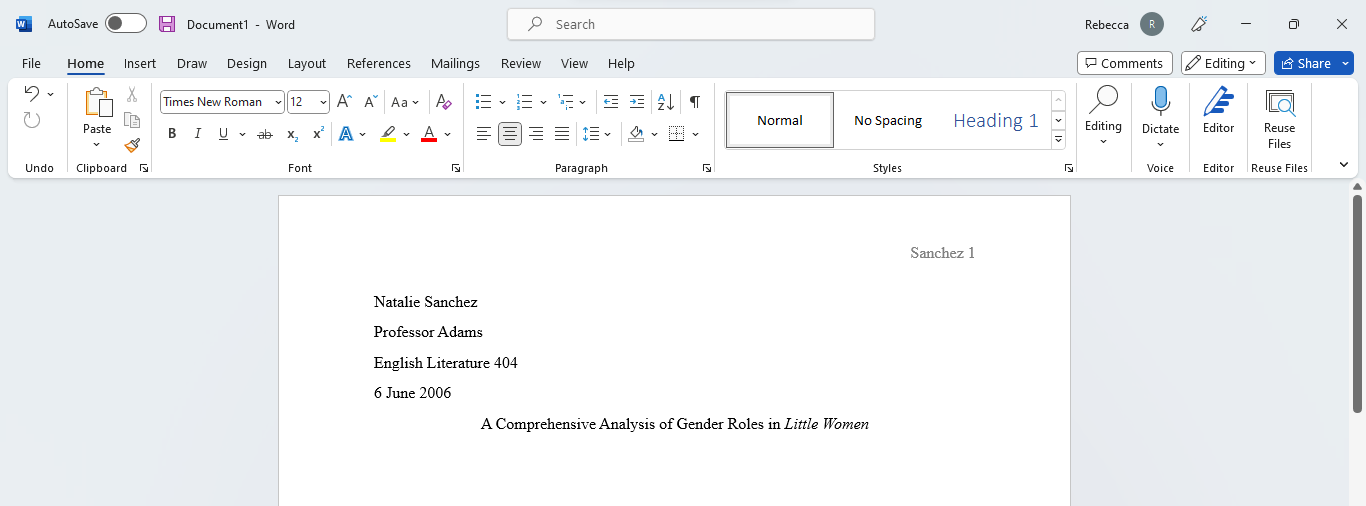
The Modern Language Association (MLA), often used in literature and humanities essays, requires a specific type of header. It consists of your last name, followed by a space and then the page number. Thus, the MLA essay header helps the instructor easily associate your work with you amidst a sea of other assignments.
The header for an MLA format essay is typically placed in the top right-hand corner of each page of the document. The information is right-aligned, double-spaced, and is usually preceded by a 0.5-inch margin.
Here’s an essay header example to help you understand:
It is important to note that the MLA essay header is not the same as a title page. The title page is a separate page that includes the essay title, your name, the course title, and the date of submission. The MLA format essay header is simply a standardized way to format page numbers and your personal information within the document itself.
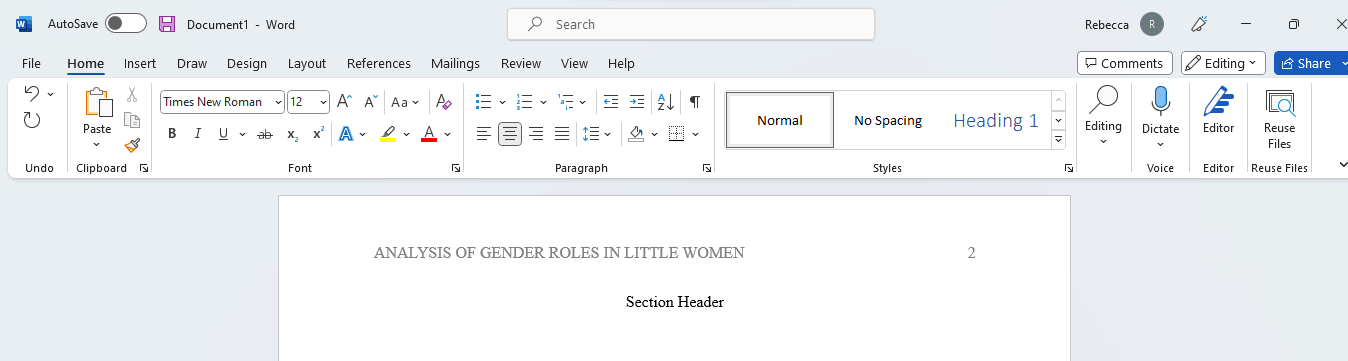
The American Psychological Association (APA) usually requires a header to be included in both student and professional essays. The APA essay header includes an abbreviated title of the essay along with the page number.
The title should be in all capital letters and should not be more than 50 characters long. It should be included on the top left corner of the page. The page number should be included opposite the title, in the top right corner of the page.
Take a look at this essay header example:
It is important to note that running head in an APA essay header is optional for students but compulsory for professionals. While the header must be present in both types of APA essays, the elements differ.
4. Hover over “Top of Page” and select “Plain Number 3”. 5. For the MLA header, enter your last name along with the page number, both right-aligned. For the APA header, input the abbreviated version of the title in all capital letters and press the “Tab” key.
MLA essay header example
APA essay header example
If you need additional help with headers and other formatting guidelines, you can also consider working with a professional essay editing service.
Want to keep reading? Here are the newest articles we’ve worked on:
Have you ever lost yourself in fantasy fiction, plunging into an alternate realm full of magic, advanced technology, and possibility—one with a unique culture and geography of its own?
Did you dream of writing a fantasy novel or series of your own and building a mystical world full of mystique and adventure?
Well, you’re in the right place—here is a complete guide to worldbuilding, along with steps, tips, and practical examples!
Have a Manuscript Ready? Begin Your Publishing Journey Today! Get Started
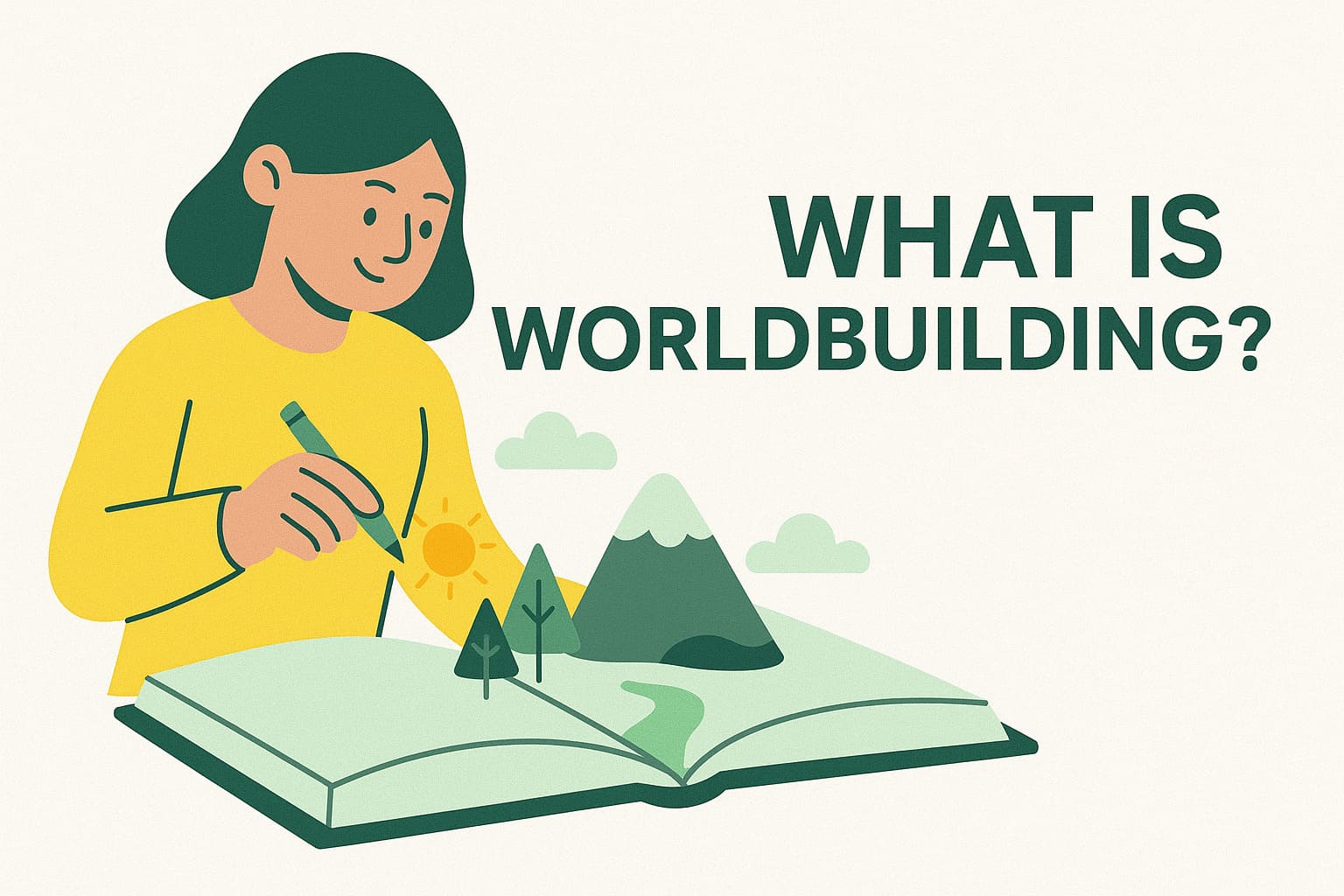
What is Worldbuilding?
Worldbuilding is the art of creating a fantasy world of your own, complete with its own history, geography, economy, culture, and system of government. Whether it is a magical world or a technologically advanced one, it is ultimately a fictional world that is unique and distinct in its own way, and forms the basis and environment for your fantasy novel or series.
The following is a set of step-by-step guidelines that will help you focus on the various aspects of worldbuilding to create a believable fantasy world of your own.
Decide on your world’s setting—do you want your story to be set in the real world (eg. the Outlander series by Diana Gabaldon), do you want to create an entirely new world (eg. Middle Earth in the Lord of the Rings series by J.R.R. Tolkien), or would you prefer to create a blended world (eg. the Harry Potter series by J.K. Rowling)?
If you find yourself getting stuck, consider using free online tools like Reedsy Plot Generator to help you combat writer’s block.
Maintaining a list of points on the notes app on your phone or in a notebook will help you plot the elements you want in your fictional world.
Name your world/region
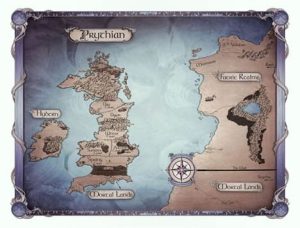
Next, it is important to give your world/region a catchy name and define its premise in one sentence. Some memorable examples from contemporary fantasy literature include Prythian (a land of fairies that exists north of the human world, from the A Court of Thorns and Roses series by Sarah J. Maas), Westeros, Essos, Sothoryos, and Ulthos (continents created by George R.R. Martin for A Song of Ice and Fire and its allied series), and Panem (a dystopian version of North America in the future created by Suzanne Collins for her Hunger Games trilogy and its prequels).
Draft a one‑page ‘world pitch’
Once you have the basics of your fantasy world nailed down, it is time to write a ‘world pitch’. Some points to focus on are where the world is situated, the characters who occupy this world and their positions within it, in what way it is different from reality as well as other fictional worlds, and why it matters to your characters situated within it.
A step‑by‑step worldbuilding guide
Once you are clear about the basics of your fantasy world, here are some prompts you can use to build in-depth detail to add more dimension to it.
Map and geography
When it comes to plotting the geography of your fictional world, it is always a good idea to begin by drawing a map. Plot various landmasses, rivers, mountains, and plains, and decide the climate of each region. It is a good idea to begin sketching the coastal outline first, then add mountains, and finally add rivers and seas. As a bonus, this map could even feature at the beginning of your book, as is often the case with fantasy novels!
Climate and ecology
The climate of your fantasy world is important as it affects and influences the stories of your characters. You can plot out the climate and ecology by planning out climate zones, prevailing winds, ocean currents, and how climate shapes biomes and travel. It is a good idea to place mountains in areas of higher latitude and use the formula latitude + mountains = rain shadows to place deserts.
People and cultures
Just like in the real world, not everybody speaks the same language or follows the same culture. It is important to create a diverse population that speaks different languages, has different naming styles and customs, values and taboos, festivals, food, and fashion. Great examples of the same can be found in the cultures of different courts in Sarah J. Maas’s A Court of Thorns and Roses series, and in the cultures of different regions in Westeros in the A Song of Ice and Fire series by George R. R. Martin. While it is perfectly fine to draw inspiration from real-life communities to build your fictional ones, it is important to avoid harmful stereotypes and prejudices.
History and timelines
Like the history of the real world, the history of your fantasy world must also consist of different eras, political rulers, and events, turning points that brought in major change, and so on. If you are confused as to where to start, it would be a good idea to build a 10-event timeline from past to present that directly impacts your plot. Make a list of defining historical incidents or famous personalities who directly affect your plot. It would also help to show how their actions have impacted your characters’ lives in the present day.
Magic systems and/or technology
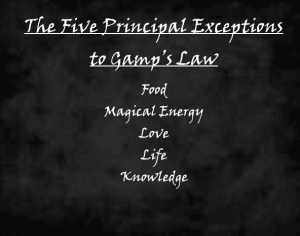
This is one of the most exciting parts of worldbuilding—showing how—through the existence of magic or advanced technology—your world is different from the real world. However, if magic or advanced tech were to exist and operate without any consequences or limits, there would be either a utopian world or complete anarchy. Hence, it is a good idea to show how magic/tech influences daily life, travel, war, medicine, etc., while also outlining five can/can’t rules and one meaningful cost. For example, in the Harry Potter series by J. K. Rowling, Gamp’s Law of Elemental Transfiguration states that something cannot be created from nothing; for example, while the quantity of food or beverage can be magically increased, it cannot be conjured from thin air.
Economy and resources
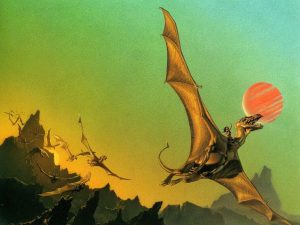
Like the real world, a fantasy world also has systems of trade, currency, and/or barter, and a variety of resources ranging from commonplace to valuable. It is important to outline a realistic economy and a list of resources with the relative value of each. It would also help to build a currency that can be used by your characters, for example, the ‘marks’ of Pern, a planet in Anne McCaffrey’s Dragonriders of Pern series. You can also outline methods by which the characters deal with scarcity caused by war/natural disasters/other conflicts to tie in with any potential conflict in your plot.
Power structures and religion
In most fantasy novels or series, a significant amount of conflict exists within structures of power—a despotic or corrupt government and an underground movement that seeks to topple it. Plot out a one-page ‘faction sheet’ listing goals, resources, allies, and conflicts, and outline government forms, factions, law or order, dominant religions, and their roles, as well as important ranks within the government or religious authorities.
Here are some tips to keep in mind when you get started on your worldbuilding journey:
1. Think of unique and memorable names for people, places, languages, religions, etc.
2. While your fantasy world has the right to follow its own rules, it helps to have some aspects mirror reality to serve as a sort of point of reference for your readers and to add relatability.
3. Keep a notebook to scribble down all your ideas related to your fantasy world and plot them out accordingly.
4. If you are not sure about how to arrange the geography of your world, draw a map and allow your imagination to guide you.
5. Consider incorporating magical beasts like dragons/chimeras to inhabit your world and play an important role in the protagonist’s story.
6. If you are not sure as to how to go about building your world’s history, consider taking cues from real history—for example, George R. R. Martin took inspiration from the War of the Roses between the houses of York and Lancaster to construct the conflict between the Starks and Lannisters in his Game of Thrones series.
Worldbuilding checklist
Examples and mini case studies
Now that you have understood how to build your own fantasy world, here are some examples you can study for greater understanding:
1. The wizarding world in the Harry Potter series and the Fantastic Beasts movies—both written by J.K. Rowling—which exists alongside the ‘muggle’ or ‘real’ world.
2. The fairy world of Prythian in Sarah J. Maas’s A Court of Thorns and Roses series is independent of the human world and has its own government, power, and social structures etc.
3. The world of Narnia in the books of C. S. Lewis, which can be accessed through the back of an old wardrobe, is in many ways different from the ‘regular’ world.
4. Panem in Suzanne Collins’s Hunger Games books—a dystopian version of North America set in the future.
5. The planet Pern in Anne McCaffrey’s Dragonriders of Pern series was originally colonized by humans from Earth who have since forgotten their roots.
Worldbuilding tools and resources
Templates & Bibles
If you’re not sure where to get started, consider using an existing fantasy world (or two, or three) as sites of inspiration. Study the way the author has constructed climates, regions, characters, cultures, languages, etc., and see if you can draw inspiration from the same. Of course, your own world must be unique and not copied from any author’s existing creation. The fantasy world of Westeros and Essos created in George R. R. Martin’s works is a good place to start, as it closely mirrors the medieval world while differing significantly in its own ways, weaving in magic, mystery, and mythical beasts to add to its grandeur.
Mapping and climate helpers
If you are planning to take inspiration from the earth’s own climate to create that of your fictional world, consider using websites like Techgeo, which can help you understand the different climate zones, their vulnerabilities, geography, topography, and nearby waterbodies.
Organization tips
It is a great idea to keep a notebook or a mindmap on software such as Spreadsheets or Google Sheets, where you can organize and plan your notes and story at large. Maintain information on people, places, things, and plotlines so you can connect them all together as you see fit.
Creating a fictional world is an exciting process, and we would love to help you get it right. The right kind of locale can inspire wonderful adventures for your characters, and perhaps provide the scope to enlarge a novel into a whole series.
PaperTrue offers expert, hassle-free self-publishing services that allow you to get your manuscript edited and published by professionals. Check them out!
Creating effective marketing material is vital for any business that wants to connect with its audience, convey a specific message, and achieve measurable results. It is one of the key pillars of business success. Marketing materials are the tools that brands use to communicate their value and invite customers to take action.
In this guide, we will explore what marketing material is, outline steps for creating it, and share tips for developing high-quality, impactful content that resonates with your audience.
Is ineffective marketing material killing your business? Let experts edit it. Learn more
What is marketing material?
Marketing materials are any content a business creates to promote its brand and drive engagement.
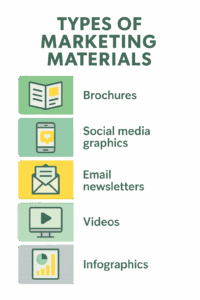
Through these materials, businesses keep customers informed about the latest offerings, promotions, and industry trends. Common examples include brochures, social media graphics, email newsletters, videos, and infographics, among other things.
Each type of marketing material serves a distinct marketing purpose, whether it is to build brand awareness, drive sales, educate potential customers, or reinforce customer loyalty. A successful piece of marketing material captures attention, delivers a compelling marketing message, and encourages action.
They not only enhance brand identity through consistent and high-quality content but also promote customer loyalty by communicating with the target audience and making them feel “seen”. Effective marketing materials can attract new customers, generate leads, and ultimately boost sales and revenue.
Before you finalize your marketing strategy, you should ask yourself an important question. What are the essential marketing materials that can help you reach your target audience and drive conversions?
Understanding the types of marketing materials available is crucial for selecting the right one for your marketing objectives.
Here are some common formats:
Brochures: They provide in-depth information and are ideal for events, trade shows, or leave-behind materials in sales contexts. Both print and digital brochures are popular for the unique benefits they offer.
Social media graphics: Used for quick engagement, brand awareness, and visual storytelling on platforms like Instagram, Facebook, and X, social media graphics can leave a lasting impression. However, it is important to be cautious about what is portrayed on social media platforms since the Internet can make or break the reputation of your business with just one post.
Email newsletters: Perfect for building ongoing relationships with customers and providing regular updates, promotions, or exclusive offers, email newsletters can boost revenue by accelerating sales.
Videos: Videos are excellent for demonstrations, tutorials, storytelling, or sharing customer testimonials, especially on visual platforms like YouTube.
Infographics: Great for presenting complex data in a visually engaging way, infographics simplify information for easy understanding and shareability.
Each format serves a unique purpose. By choosing the appropriate type, you can maximize the impact of your marketing material and cater to audience expectations effectively.
Building effective marketing material involves several key steps, each contributing to a seamless alignment between the brand’s goals, the customer’s needs, and the intended message.
Here’s how to create marketing material that stands out and drives results.
1. Define your marketing objective
The first step is understanding your marketing objective. What do you want to achieve with this material? Common goals include increasing brand awareness, driving sales, informing or educating customers, and building customer loyalty.
Defining the marketing purpose is essential because it shapes the content and tone of your material. Are you introducing a new product, encouraging sign-ups, or promoting a seasonal offer? Once you know the goal, you can tailor your content to deliver the desired outcome.
2. Understand your target audience
For marketing material to be effective, your intended audience must connect with it. Start by identifying who your audience is. What are their demographics, preferences, pain points, and motivations?
A well-defined customer persona helps ensure that the content you create addresses your audience’s needs and interests.
For instance, marketing to millennials might involve a vibrant, socially conscious approach, while targeting executives might require a professional, concise tone. Identifying and decoding the likes and dislikes of your audience allows you to create more relevant, engaging content that’s likely to inspire action.
3. Choose the right format
Selecting the format of your marketing material is a crucial decision. Each type of marketing material serves a unique purpose and has its strengths:
Brochures give detailed information.
Social media graphics boost engagement.
Email newsletters prompt relationship building.
Videos and infographics promote storytelling and concept or product simplification.
Consider where the material will be distributed—whether print, online, or in-person—and choose a format that aligns with your audience’s preferences and the distribution platform specifications.
4. Create a clear and compelling message
Your marketing message should focus on a single key point and be delivered in clear, persuasive language. Avoid jargon or highly complex language that could confuse your audience. Instead, aim for a message that’s easy to understand and engages the reader instantly.
These messages are the essence of your communication; they should resonate emotionally and align with your objective. Hence, keep the message clear, direct, and aligned with your brand’s voice across all marketing material types (promotional offers, informative pieces, videos, etc.).
5. Design with brand consistency
Consistency is key when it comes to building brand identity in marketing. Use your brand’s colors, fonts, logos, and other visual elements to reinforce your brand image. This consistency not only makes your marketing material recognizable but also helps establish trust and credibility with your audience.
For instance, a healthcare brand might use a clean, minimalist design to convey professionalism and safety, while a children’s brand might incorporate bright colors and playful fonts.
6. Include a strong Call-to-Action (CTA)
A CTA is a crucial component of effective marketing material. Without a clear CTA, your audience might not know what steps to take next. Your CTA should be direct, actionable, and aligned with your marketing objectives.
For example, if you are promoting a new product, your CTA could be “Shop Now.” If you’re building an email list, “Sign Up for Exclusive Offers” might be more appropriate.
In this way, you can guide your audience toward taking the next step that supports your marketing objectives.
7. Use high-quality visuals
Visuals play a significant role in making your marketing material engaging and memorable. High-quality visuals, whether photos, illustrations, or graphics, should support the message rather than clutter the design.
Images can evoke emotions, highlight product features, and make complex information easier to understand. When selecting visuals, ensure they are relevant to the content and maintain a high standard of quality.
8. Review and refine
Once your material is designed, it is essential to review and refine it. Proofread the text for any spelling or grammar errors and ensure it corresponds to your marketing purpose and brand voice.
A professional marketing copy editor can be invaluable at this stage. They can help you polish the language and maintain clarity. Consider getting feedback from colleagues or trusted customers, as fresh perspectives can reveal areas for improvement.
9. Test and measure performance
If you are creating digital marketing material, analytics are your best friend. Use tools like Google Analytics, social media insights, or email marketing platforms to track your material’s performance.
Key metrics to monitor include clicks, shares, conversions, and overall engagement rates. By measuring these metrics, you can identify what works and what needs improvement, allowing you to refine future campaigns and optimize results.
Additional tips for creating effective marketing material
Beyond the foundational elements of strong messaging, clear calls to action, and visually appealing design, here are some additional tips to improve the quality and presentability of your marketing materials:
Stay customer-centric: Always prioritize the needs and preferences of your target audience. When customers see that your material addresses their pain points, they are more likely to engage.
Use simple language: Even when marketing complex products or services, keep the language accessible. If possible, simplify technical jargon and present information in a way that’s easy to understand.
Consider timing: Certain types of marketing materials work best at specific times. For example, seasonal promotions can benefit from well-timed email newsletters, while social media posts may have optimal times based on your audience’s online activity.
A/B testing: For digital materials, consider creating variations of your content to see which performs better. A/B testing can help you refine elements such as headlines, CTAs, and visuals.
Build for mobile: Many customers access marketing materials on their smartphones. Ensure your materials are mobile-friendly to maximize accessibility and engagement.
Creating impactful marketing material requires careful planning, a deep understanding of your audience, and a commitment to quality. To enjoy the best possible results in a given situation, consider following these steps and focus on delivering a clear message with a strong call to action. Marketing materials created correctly can capture attention and build brand loyalty.
If you are a business in search of experts to polish your marketing materials, PaperTrue can help refine them. Our expert editors enhance clarity, maintain brand consistency, and give your content a professional edge. Explore PaperTrue’s editing and proofreading services and talk to us to know more.
Here are some articles that can help you create impactful marketing materials:
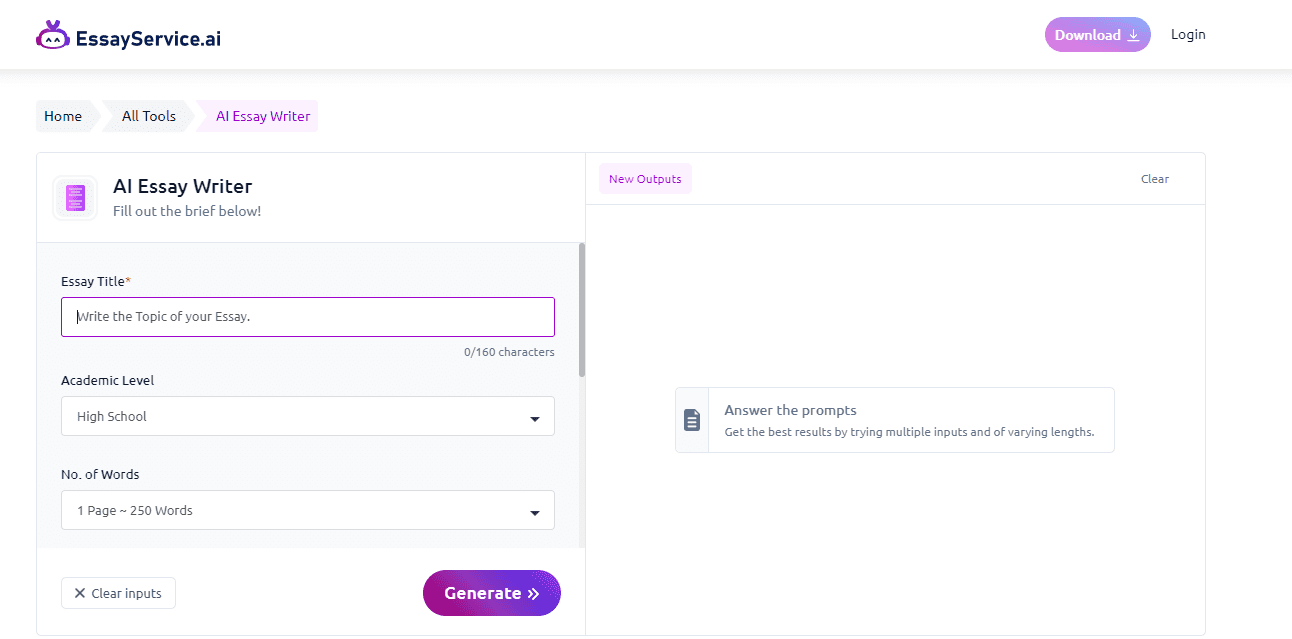
Writing an essay seems less challenging once all relevant sources and ideas are in place. Several essay writing apps can help you generate an outline for essays. Moreover, you can use these apps to write your essay. In this article, we have listed the top ten essay writing tools that can help you improve your essay and get good grades.
When discussing essay writing apps, we mean essay writing and editing tools that improve your work, not apps that provide readymade essays. Many of the free essay writing tools available online are powered by Artificial Intelligence (AI). We do not encourage copying essays as that can bring about unsavory results.
So, none of the tools that have made it to our list of top ten essay writing tools will help you cheat. They will, of course, help improve your essay to make it your best work. So, if you’re looking for a list of the best essay-writing tools, read on for detailed information.
Get an A+ with our essay editing services!
Top ten essay writing tools
Our top ten essay writing tools are a diverse list. They help you in various essay writing tasks such as planning your essay, writing it, improving it, and getting feedback when it’s complete. Here are the top 10 essay writing tools in 2024, including the best AI essay writing tools:
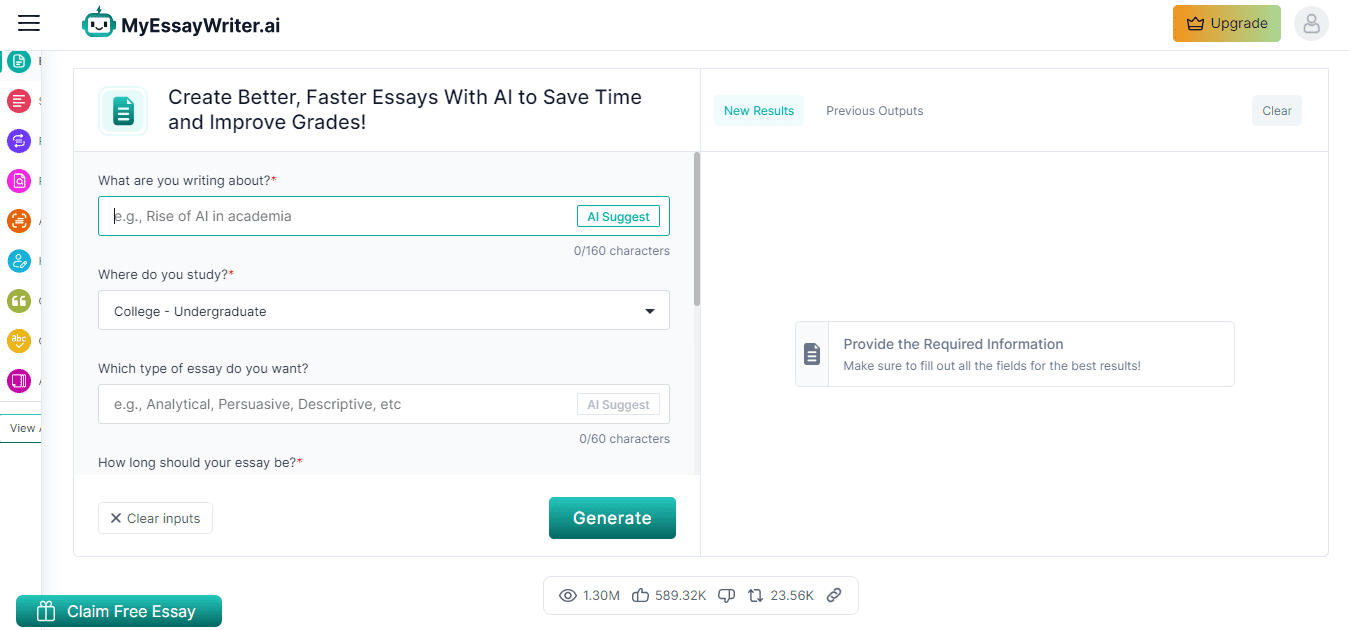
1. MyEssayWriter.ai
This is an AI-powered essay writing assistant designed for students. It provides personalized essays tailored to students’ specific topics and needs. As part of free services, the tool offers artificial intelligence-based essay outliners and writers.
If you want a custom essay, you can place an order, and an expert will draft your essay for a fee. The rates depend on the academic level, urgency, and word count a student requires.
A high-school-level essay of 300 words returned within 7 days costs around $22.
This is a user-friendly platform that offers various tools to improve essay quality. It includes real-time grammar and structure feedback and tone and style adjustments. It gives multiple essay generation options, with a free essay grader for students to have their essays checked.
The platform also offers a paid essay writing service, where you can calculate the charges by inputting information like essay type, number of words, and deadline, among others.
A high-school-level essay of 300 words returned within 7 days costs around $22.
3. Editpad
Editpad offers a freemium AI-powered essay writer that will not only help you craft well-written essays but also contribute to improving your overall skills. It allows you to select the academic level (high school, college, etc.) and type of essays (basic, descriptive, etc.).
To ensure maximum personalization, Editpad even gives the authority to select the length of the generated essay (Short, Medium, Long, and Extensive) as per your specific needs and preferences.
Additionally, it generates up to 3 versions of the essay against a single prompt. This provides users with the opportunity to go with the version that they think is the most suitable one.
The free version of EditPad has no usage limitation, but obviously, feature limitations are there. To unlock them, you will have to purchase the premium, costing $3.99 weekly.
Essayness is an advanced AI-powered essay writer that lets you generate a high-quality essay around any topic. You have the option to customize the word count and writing tone of essays as well. With these options, you can generate customized essays that are perfectly tailored to your needs.
Essayness allows you to specify the Reference style and number of citations to provide you with a more credible and authentic essay. Additionally, it offers the Humanize AI feature as well, which will generate more natural and human-like essays.
It is a freemium tool; available in both free as well as freemium versions. The free version of Essayness offers limited access to features. To unlock all the features, you need to subscribe to the premium plan that costs $12 /month.
5. Writesonic
This is a content-creation tool, but it offers essay-writing features as well. It can generate essay outlines, introductions, and body paragraphs based on your input. The platform states that it provides plagiarism-free content.
Writesonic can speed up the initial essay writing process and offer a basic structure for your essays. If you use this college essay writing tool judiciously, you can generate excellent essays that can get you the score you want.
Chatsonic, which costs $12 per month if billed annually, offers a chat option with features similar to ChatGPT.
A powerful AI language model, ChatGPT, can help you draft essays with a few clicks. It can generate essays based on prompts and instructions for various topics. ChatGPT can also help you create essay outlines and arguments.
This is an ideal tool for brainstorming and exploring different writing styles. However, it is crucial to verify the content it generates to ensure factual inaccuracies do not go unnoticed.
ChatGPT Plus costs $20 per month with access to multiple versions of the platform.
7. Jasper.ai
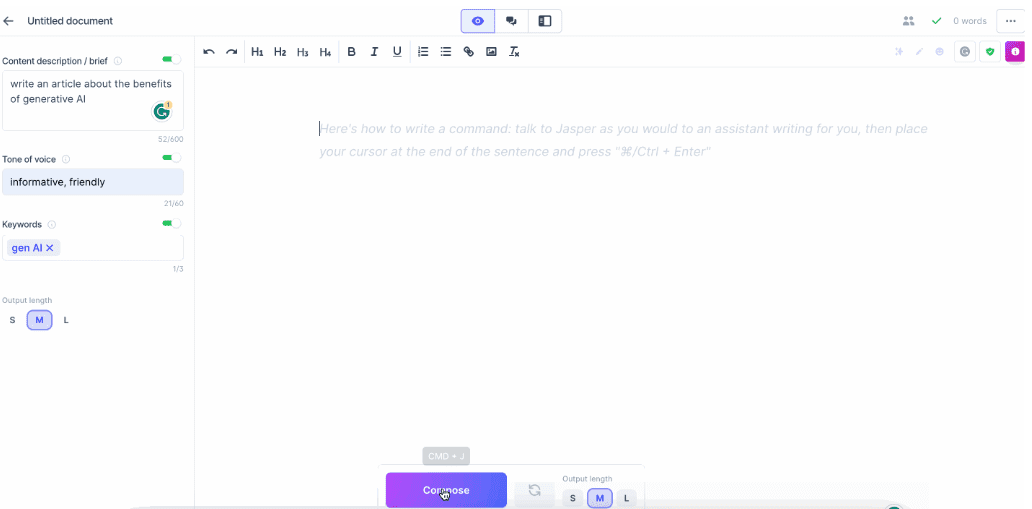
Jasper.ai is an AI writing assistant with features for creating various content formats, including essays. The copywriting tool allows users to write essays of all types, tailoring them to suit varied target audiences and writing tones.
Since it offers long-form content generation with plagiarism checks, you can generate content of a certain depth. However, we recommend essay checking and editing to ensure quality.
Jasper’s “Creator” plan costs $39 per month for one-person access.
CollegeEssay.org offers an AI-powered essay writing tool designed to simplify the essay writing process for students. This tool uses advanced AI algorithms to generate free essays. It also offers grammar and plagiarism checks, in addition to a content paraphrasing tool.
The platform also gives you the choice to order custom essays as part of paid essay writing services. However, free AI essay writing tools should do the job well if you are a student.
A high-school-level essay of 300 words (considered one page) costs $11.
9. MyPerfectWords
This is an essay writing service with grammar and plagiarism checks, where you need to key in the topic and the relevant prompt. The essay writer then refers to multiple resources to write an essay using AI.
Its citation tool can seamlessly integrate references relevant to your essay to ensure zero attribution issues.
A high-school-level essay of 300 words (considered one page) costs $11.
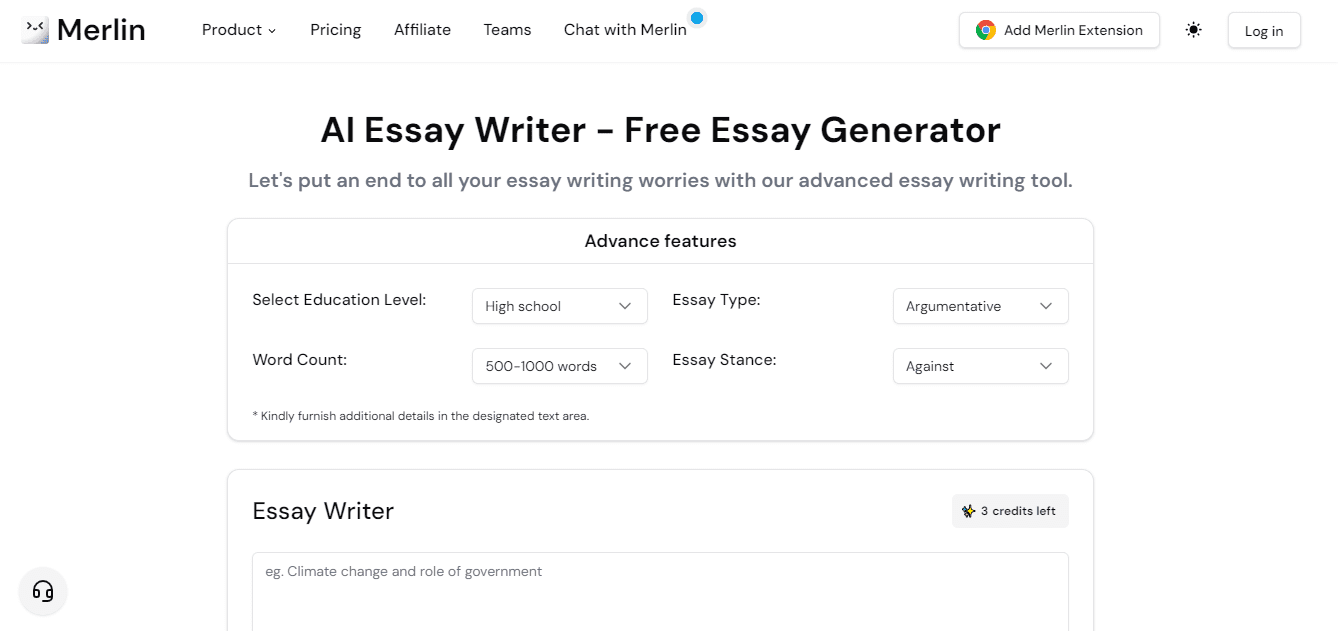
Merlin brings users a comprehensive suite of writing tools, including essay writing. The tool asks you to specify the word count and academic level of the topic at hand, along with the essay-writing approach you wish to take.
You can also review the generated content and modify the prompt/s to get different results. The platform shares pointers with users on how to ensure the integrity and accuracy of their content.
Merlin’s free plan is quite beneficial for students since they allow 102 queries per day, and this limit resets every 24 hours. If you are interested in a paid plan, they offer the “Pro (Unlimited)” at a discounted price of $19 per month. The standard price without discount is $29.
Can writing tools help improve your essay?
Well, the short answer is that these tools certainly help. However, automated software might not always understand writing like human beings do. Hence, a human editor overseeing the job AI tools do can introduce more reliability to the essay writing process. This is because there’s no replacement for thorough research, critical thinking, and effective essay editing.
While you can use free AI tools to write your essay, seek essay editing and proofreading services offered by a company like PaperTrue. Once you’re done with your essay, just send it over to us for feedback before your submission deadline.
Want to keep reading? Here are the newest articles we’ve worked on:
Plagiarism is the act of presenting someone else’s ideas or words as your own without giving proper credit. It’s a serious academic offense that can lead to severe consequences.
This comprehensive guide explores what plagiarism is, why avoiding it matters, and provides 10 actionable strategies to ensure your work remains original and properly attributed.
We’ve also included many free tools that can help you avoid plagiarism while writing!
For direct quotes, use quotation marks and provide page numbers when applicable. You can also use citation generators like Citation Machine, Zotero, and BibMe to generate accurate citations. However, always double-check automated citations against your style guide, as these tools occasionally make mistakes.
Paraphrasing doesn’t mean only using synonyms of some words to make the text different. It involves understanding the main idea and changing the entire sentence structure. For example, if the sentence in the source starts with, “The person is…”, ensure that the sentence you use does not begin with, “The person is…”
Start by reading the source material thoroughly, then set it aside and write your understanding from memory. This technique helps ensure you’re expressing concepts in your own words rather than unconsciously mimicking the original text.
The following are some ways to avoid plagiarism by paraphrasing:
Combine related ideas in a single sentence or split a long sentence into two parts.
Summarize important information and keep the most important idea.
Use alternative phrasing by referring to the One Look dictionary at https://www.onelook.com. This dictionary can give you alternative phrasing after you describe the phrase you’re looking for.
If you’re having difficulty paraphrasing, you can use advanced AI paraphrasing tools like QuillBot, Paraphrase.io, WordAI, and SpinBot.
3. Understand the types of plagiarism
Plagiarism involves not only using others’ ideas but also reusing your own work without citing the original source. If you’re rearranging the order of sentences from a source or combining ideas from multiple texts to create a new work, it can also constitute plagiarism.
Mosaic or patchwork plagiarism combines phrases from multiple sources without proper attribution, while accidental plagiarism results from poor note-taking or unfamiliarity with citation standards.
Knowing the various types of plagiarism helps you identify potential issues in your writing before they become problems.
4. Use plagiarism checkers
Plagiarism checkers serve as valuable safety nets, identifying potential issues before submission. Free tools like DupliChecker, Small SEO Tools, and Grammarly’s plagiarism detector can catch unintentional similarities. For more comprehensive checking, consider premium services like Turnitin or Copyleaks, which compare your work against extensive databases of academic papers, websites, and publications.
Run your work through these tools during the writing process, not just at the end. This allows you to address issues as they arise rather than facing major revisions later.
5. Give your unique perspective
Consider how your personal experiences or expertise can contribute to the topic. Another method is to use your research to develop your arguments and give new perspectives rather than simply summarizing others’ ideas. Though these steps to avoid plagiarism take research and reflection, they are useful in the long run!
Also, when illustrating your points, use original examples or case studies that you have developed yourself. This can help you avoid over-reliance on the examples provided in your sources.
6. Use library resources and online academic resources
Libraries subscribe to a wide range of online databases that provide access to scholarly articles, journals, and other credible sources. You can use these resources to recheck the original author of a source to avoid plagiarism. JSTOR Open Access, Project Gutenberg, and Directory of Open Access Journals are some popular online libraries you can use.
You can also use academic research resources like PubMed and Google Scholar that credit the original authors. This will help in avoiding plagiarism.
Now let’s understand how can you avoid plagiarism by tracking and organizing sources!
7. Track and organize all sources
Create a systematic approach to tracking sources from the beginning of your research.
You can use reference management tools like Zotero, Mendeley, and Citavi Free (Windows) to organize references. Alternatively, you can create a separate folder of your references on your computer that has a list of references, including the original author’s name, source name, date accessed, URL, and DOI (if any).
To avoid plagiarism, you should also take notes on key ideas and include specific page numbers for references. You can use writing tools like Evernote, Google Docs, OneNote, Simplenote, or Zoho Notebook to take notes.
Using different colors, fonts, or symbols in your notes can help prevent confusion later. This organization proves invaluable when you need to verify citations or locate specific information.
8. Recheck, proofread, and add/correct citations
To understand how you can prevent plagiarism, follow the steps given below:
Read through your work to make sure that your language is easy to understand.
Compare your in-text citations with your reference list to ensure that every source mentioned
Double-check that any direct quotations are enclosed in quotation marks and that the source is properly cited.
Now, let’s understand how to prevent plagiarism through effective communication with people belonging to the same field.
9. Engage in discussions
Participate in class discussions, online forums, or study groups to share your ideas and learn from others. Engaging in dialogue can help you refine your own perspective and generate new ideas for your writing.
Document these discussions in your notes, as they can become valuable sources of original thinking for your writing.
10. Take feedback
Consult with your instructor, supervisor, or librarian if you have any doubts or questions about avoiding plagiarism or citation practices. You can also ask students or experts in the same field to resolve your doubts.
This concludes our guide about the steps to prevent plagiarism! You can bookmark this article to revisit these 10 tips about how to avoid plagiarism.
Common plagiarism pitfalls and how to avoid them
Even conscientious writers can inadvertently plagiarize. Common mistakes include forgetting to cite common knowledge that’s actually field-specific, inadequately paraphrasing complex technical language, or assuming that citing once covers multiple uses of the same source. Stay vigilant about these potential issues and err on the side of over-citation when in doubt.
This concludes our guide about the steps to prevent plagiarism! Remember that academic integrity reflects your commitment to scholarly excellence and professional ethics. The effort you invest in avoiding plagiarism not only protects you from serious consequences but also strengthens your research skills.
After understanding the ways to avoid plagiarism, select the relevant steps to prevent plagiarism, or if you want to save time, you can use PaperTrue’s plagiarism-checking services. Along with checking plagiarism, we also provide expert editing and proofreading services.
Do you have any other tips for avoiding plagiarism? Share any other strategies to prevent plagiarism in the comments section!
Get carefully curated resources about writing, editing, and publishing in the comfort of your inbox.
[contact-form-7 id="12723" title="Subscribe Form"]
How to Copyright Your Book?
If you’ve thought about copyrighting your book, you’re on the right path.



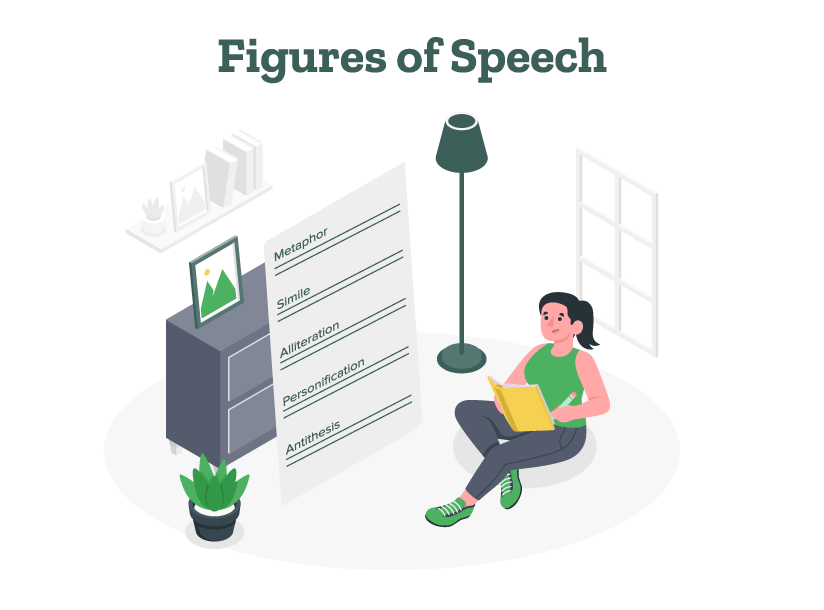
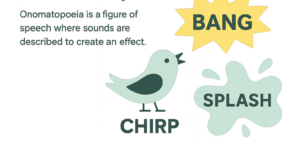
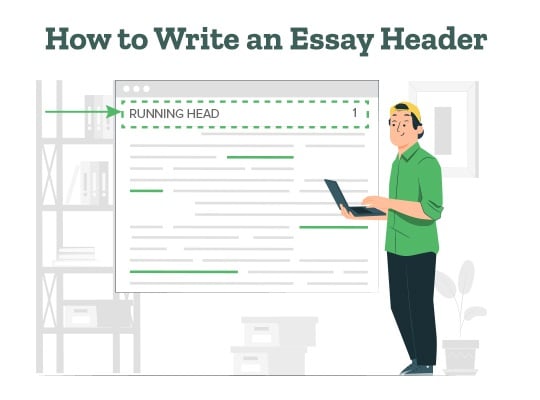
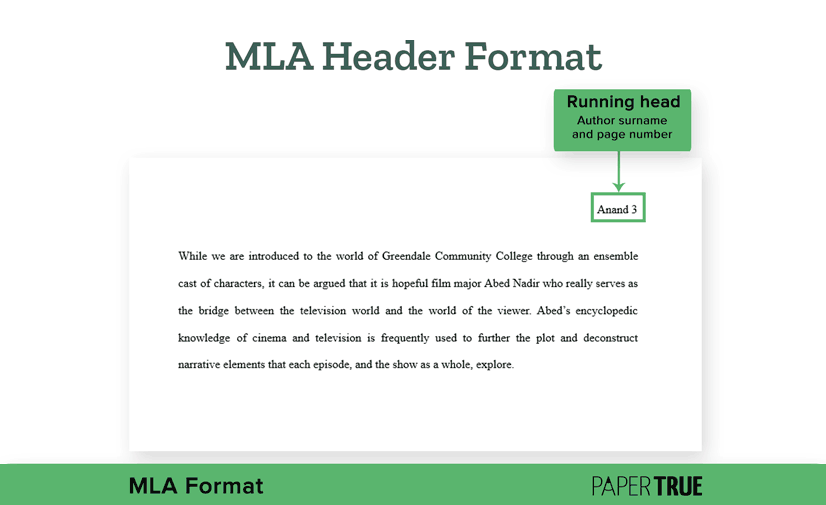
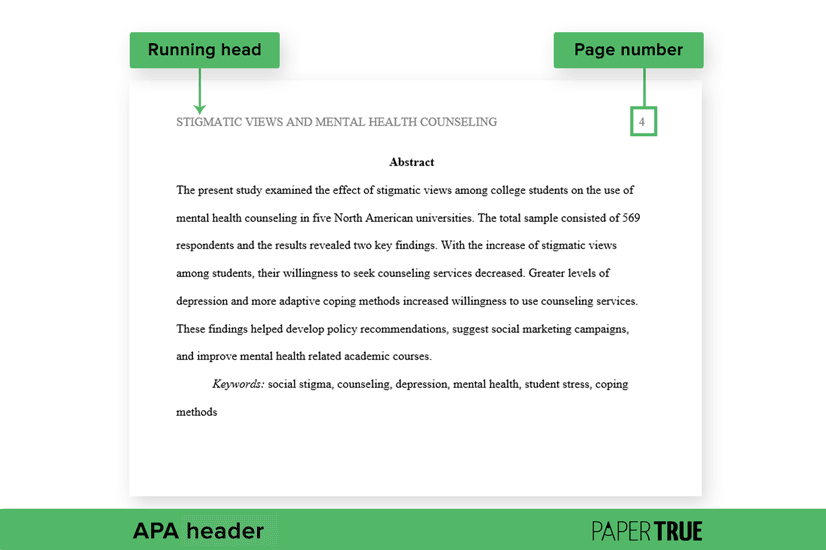
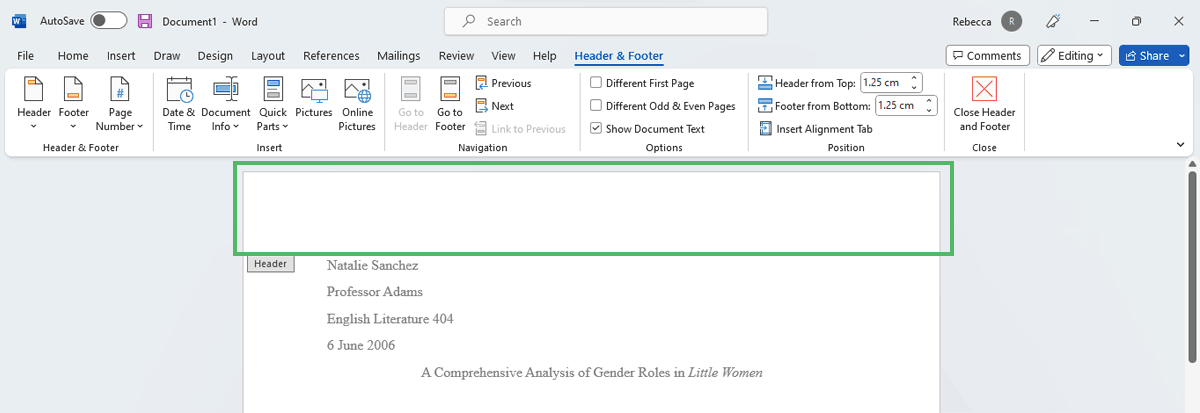 2. Select the “Insert” option at the top of your window.
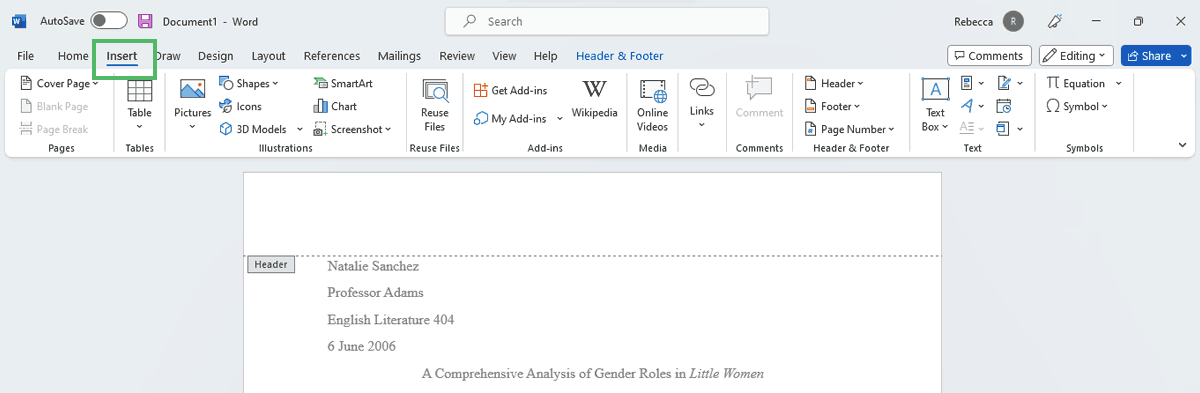 3. Click “Page Number”.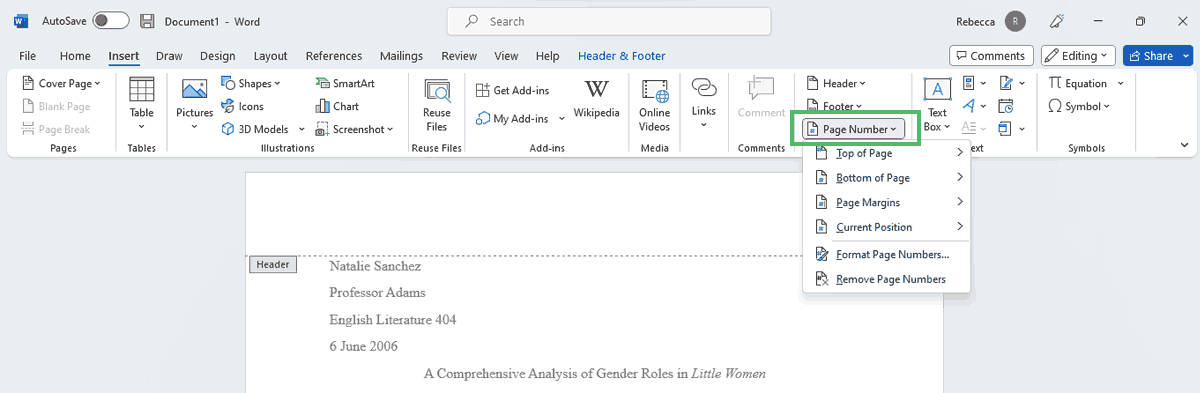
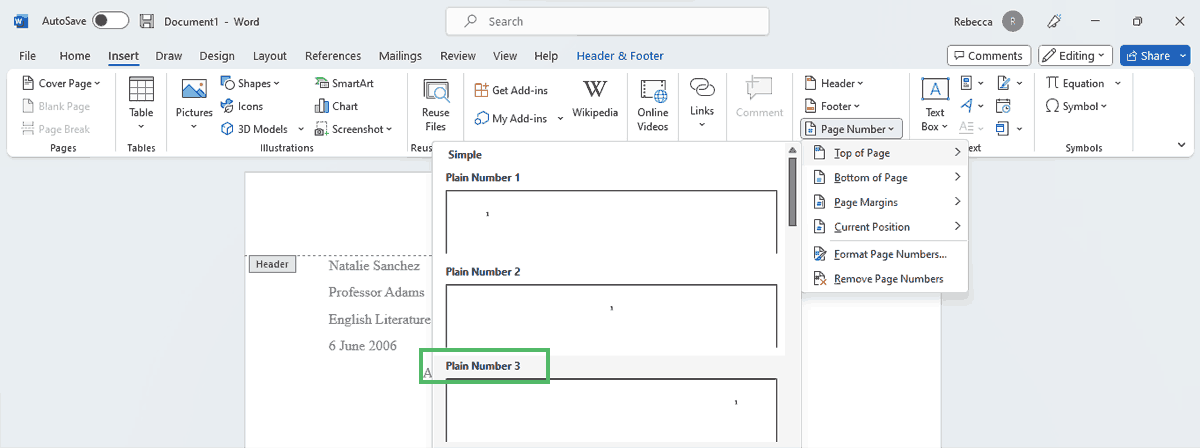 5. For the MLA header, enter your last name along with the page number, both right-aligned. For the