Newsletter Sign Up

What Is a Thesis: How to Write a Thesis with Examples

You will likely be required to write many compelling theses in your college years. A thesis is an essential part of your academic endeavors in your college years. It enables you to present your thoughts, opinions, and arguments and helps you get the grades you want. But what exactly is a thesis, and how do you write one effectively?

We will answer these questions in this article. Read on and let us know in the comments below if this guide will prove useful when you write your college thesis this academic year. 

Get your thesis edited by experts. Explore our services. Learn more

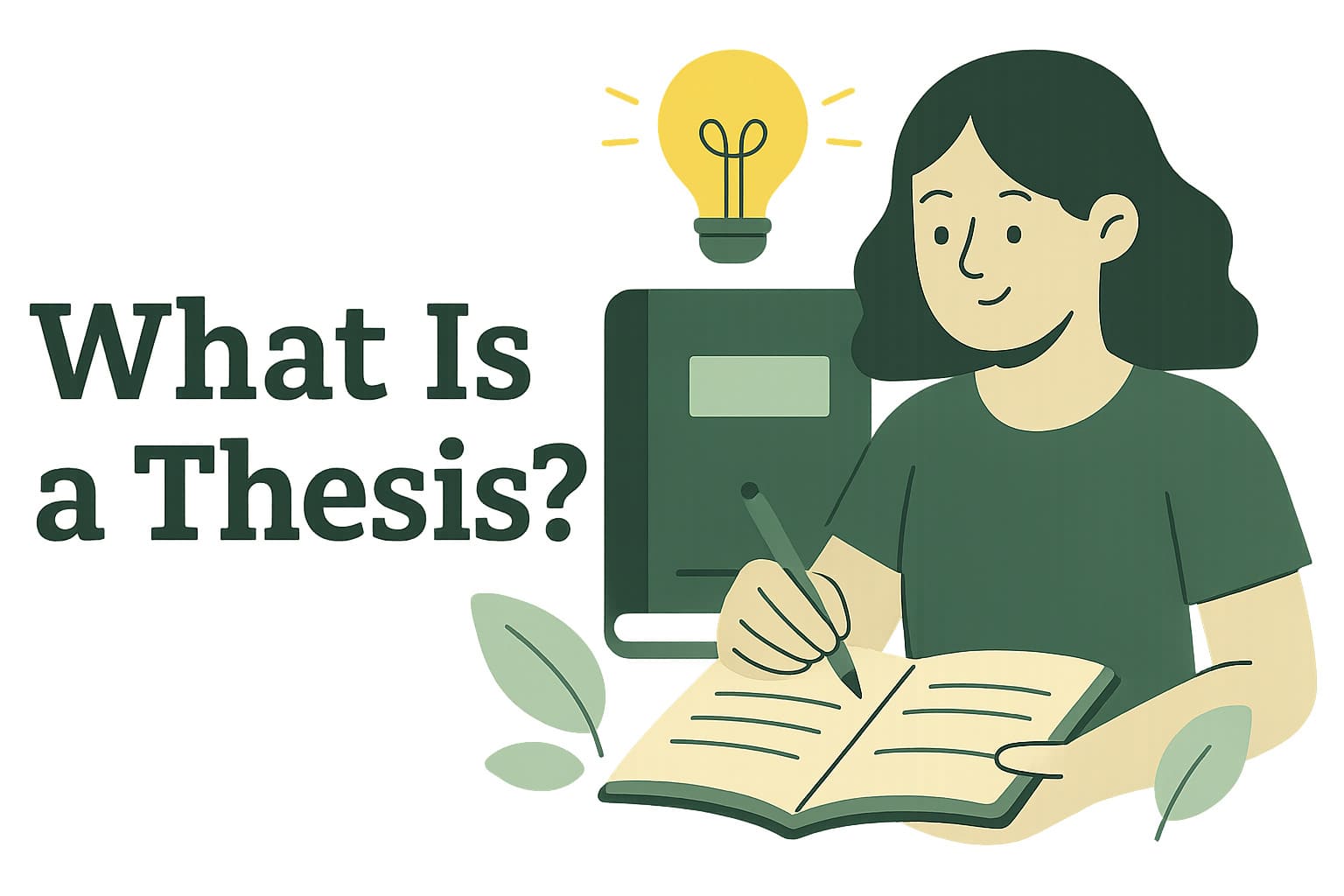
What is a thesis?

A thesis is a comprehensive statement that presents the main argument or claim of an academic paper, research project, or dissertation. It typically defines the purpose of the work, where readers learn about the researcher or writer’s reasoning. 

Research writers present their logic, explain their point of view based on evidence, and draw relevant conclusions accordingly. In academic writing, a thesis is essential because it provides a clear direction and focus for the entire document.

Types of thesis

There are various types of theses depending on the academic discipline or level of study. In undergraduate and graduate programs, you may encounter analytical, expository, and argumentative theses, each serving different purposes. 

For advanced research projects, doctoral and master’s theses are commonly required. They focus on original research and contribute new knowledge to the field.

  • Argumentative Thesis

This type of thesis takes a stand on a controversial issue and presents an argument that you will need to defend throughout your essay. For example:

“Government surveillance programs are necessary for national security, but they must be balanced with individual privacy rights.”

  • Analytical Thesis

An analytical thesis breaks down an idea or issue into its components, evaluating and analyzing each part. For example:

“The portrayal of women in 20th-century literature reflects the changing roles of women in society.”

  • Explanatory (Expository) Thesis

This type of thesis simply explains a topic to the reader. It does not take a stand or argue a point. For example:

“The process of photosynthesis is essential for plant life and involves several stages, including light absorption and the production of oxygen.”

How to write a thesis

Writing a thesis is a critical skill for any academic or research-oriented work. It involves distilling the essence of your research or argument into a single, clear statement that will guide the rest of your work. 
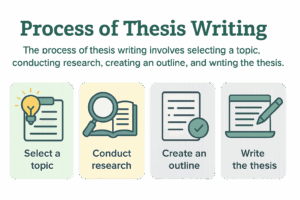
Thesis writing process

Here are the essential steps to writing an effective thesis:

1. Understand your topic

Before you can create a good thesis statement, you need to understand your topic well. So, when a topic is assigned, make sure you understand the requirements. 

If you are asked to choose a topic, choose one that interests you and is broad enough to allow for extensive research but focused enough to enable a clear evaluation. 

2. Craft a preliminary thesis

Once you have a topic in mind, draft a preliminary thesis. Start with a working statement that outlines your perspective, opinion, or argument. This initial thesis does not need to be perfect—it is only a starting point.

Tips for writing a preliminary thesis:

  • Make a claim that can be debated. For example, instead of stating a fact, express an opinion that can be argued.
  • Keep it concise but informative—aim for clarity without over-explaining.
  • Be open to revising your thesis and incorporating or deleting ideas as you continue researching and writing.

3. Make your thesis specific

A strong thesis must be clear, specific, and arguable. It is not enough to simply state your opinion; you need to back it up with a well-reasoned argument that is relevant and specific to your essay topic or the title of your academic paper.

How to refine your thesis:

  • Focus on a specific aspect. Define the scope to cover only relevant points.
  • Be clear and concise. Avoid vague language that confuses the readers or bores them.
  • Ensure all your points are arguable. A good thesis statement should not be a statement of fact. It should present a position that requires evidence and reasoning to support it.

What is a thesis statement?

Developing a relevant thesis statement is essential to writing a good thesis. Let us study the meaning of a thesis statement in this section. 

A thesis statement is a summary of the main point or claim of your essay or research paper. Typically, it appears at the end of the introduction and consists of one or two sentences. Its purpose is to inform the reader of the paper’s central argument. 

A thesis statement, when written well, sets the stage for the discussion that follows in the essay or academic paper. If you are unsure about how to begin, understanding how to write a thesis statement is a critical first step. So, let’s see how to do that.

Thesis statement examples

Understanding the difference between a weak and a strong thesis is essential for developing your own. Before we study some examples, let us understand what makes a strong thesis. 

A strong thesis is clear and specific and presents an arguable and assertive claim. It does not merely state a fact but expresses a position that requires evidence and analysis. It also outlines the key points that will be discussed in the essay or paper. A weak thesis, on the other hand, is vague, unnecessarily comprehensive, or lacks viable arguments. It takes a reader’s focus away. 

Here are some thesis examples:

  • Weak thesis:

“Social media is a popular way to communicate.”

Why it is weak: It is a fact, not an argument.

  • Strong thesis:

“Social media has transformed modern communication, creating both opportunities for global connections and challenges related to privacy.”

Why it is strong: It presents a specific point of view that can be supported with evidence and invites debate.

Popular AI tools like ChatGPT or thesis-specific generators are great for getting started. However, tailor the output to fit the specifics of your assignment to ensure your paper gets a good grade. You can find a list of 2025’s popular thesis statement generators here

Why is writing a thesis important?

Writing a thesis is a key aspect of academic development in your college years. As a student, it encourages you to engage in deep, critical thinking. Crafting a thesis requires you to analyze complex topics, formulate well-reasoned arguments, and present evidence-backed conclusions convincingly. Hence, it strengthens your research and analytical skills. Also, your ability to communicate ideas clearly and persuasively improves. 

A well-written thesis demonstrates mastery over the subject matter and contributes new insights or solutions to a field of study. Additionally, it serves as a benchmark for academic success, showcasing your ability to conduct independent research and engage with scholarly discourse. 

Most important of all, writing a thesis is an essential academic milestone that prompts intellectual growth and contributes to the body of knowledge in a given field.

Thesis writing tips and examples

To write a good thesis, you need a strong thesis statement. A good thesis statement makes for effective academic writing. Here are some concise tips to guide you:

1. Start with a question: Identify a research question to focus your thesis.

Example:

Question: How does remote work affect productivity in the tech industry?

Thesis: Remote work has improved productivity by allowing flexible hours, reducing commute times, and increasing job satisfaction.

2. Keep it specific: Ensure your thesis is narrow enough to explore thoroughly.

Example:

Focused thesis: Climate change is leading to more frequent flooding in coastal areas, threatening environments and human settlements.

3. Make it arguable: Present a claim that invites discussion and requires evidence.

Example:

Arguable thesis: Excessive use of social media among students leads to decreased academic performance due to distractions.

4. Revise as needed: Continuously refine your thesis to align with your evolving research and insights.

5. Support with evidence: Back your thesis with reliable data and examples throughout your paper.

By applying these tips, you’ll create a clear and compelling thesis that provides a solid foundation for your academic work.

AI thesis generators: Can they help? 

AI thesis generators have gained popularity as tools that assist students and researchers in formulating thesis statements quickly. These tools work by analyzing the topic, keywords, and prompts provided, generating potential thesis statements based on patterns and language models. 

While AI thesis generators can offer useful starting points, they are not foolproof. They help streamline the brainstorming process by suggesting concise and coherent ideas, but users should critically evaluate the generated thesis. 

The thesis may need refining to ensure specificity, relevance, and arguability. Overall, AI thesis generators can be helpful for inspiration but should not replace thoughtful analysis and critical thinking in academic writing.

Writing an effective thesis will get you the grades you desire. A strong thesis keeps your essay on track and boosts its engagement quotient. Use this guide to write analytical, argumentative, or explanatory papers and master the art of crafting a solid thesis. With practice, you will be able to create compelling, well-structured theses.

If you need a professional review, get in touch with PaperTrue. Our editors can edit your thesis statements and make sure your essays and academic papers convey the right message and get you top grades every academic year. 

Here are some articles you might want to check out: 

10 Best AI Detector Tools in 2025

If you’re looking for the best AI detectors, your search ends here! Discover all features, pros, cons, and pricing of the top AI detectors. This article will cover various AI writing detectors to help you make an informed decision. 

We’ve also included open AI checkers that provide additional services like humanizing the content. Assistive tools, such as AI writing software, have significantly influenced the content creation process, and our analysis will help you understand their impact. Whether you’re a student, writer, or business professional, this list will help. So, without wasting time, let’s begin! 

AI detection done? Edit and proofread your text today!

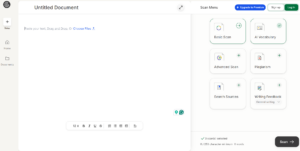
1. GptZero 

GptZero is a fast and effective AI content detector. It functions as a ChatGPT AI checker and can also identify AI content from Bard and LlaMa. 

GPTZero-AI-Detector-tool

Pros

  • It allows you to scan up to 5,000 characters at a time for AI-generated content. 
  • Its Deep Scan feature gives a statistical analysis of how every sentence has AI probability. 
  • Its free version allows you to scan 10, 000 words per month. 
  • You can upload 10 files at a time for scanning documents.
  • Additionally, GptZero can assist in the editing process by providing feedback on sections, helping users refine their content. 

Cons 

  • It doesn’t include additional options for humanizing and paraphrasing the content like other tools. 
  • The premium version doesn’t give the option to scan more than 10 files like other tools. 
  • The ‘Writing Feedback’ option is only included in the Premium version and not the free version. 
  • If there is a mix of human and AI content, it is unable to accurately identify how much content is AI-generated. 

Price: It offers 3 Packages for its AI detection service: Essential ($10 per month), Premium ($16 per month), and Professional ($23 per month). 

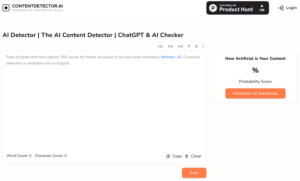
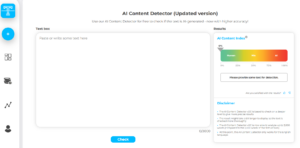
2. ContentDetector.AI

ContentDetector.AI is one of the top AI content checkers. Featured on Product Hunt, it’s a free AI detector. 

ContentDetector.ai-AI-detector-tool

Pros 

  • It functions as a ChatGPT AI detector (it can identify Gpt 3.5 and GpT 4 content). 
  • It gives a probability score showing the percentage of AI-generated content. 
  • It gives an option to humanize AI sentences. 
  • It provides statistics such as the word count and the character count. 

Cons 

  • It isn’t 100% accurate and sometimes fails to achieve complete accuracy, wrongly identifying human content as AI-written content. 
  • It doesn’t provide additional features to upload and scan files in bulk. It can, however, flag AI-generated content to help users identify it.
  • It doesn’t provide an extension to use it while editing docs on Word or Google Docs. 
  • Unlike other tools, to export the file, you need to sign in and create an account. 

Price: This is a free AI checker tool. 

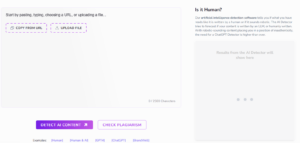
Now let’s understand how to detect AI writing using ZeroGPT.

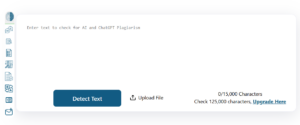
3. ZeroGpt 

ZeroGPT is a reliable AI checker. It’s a free tool where you just need to paste the text. ZeroGpt aims to minimize false accusations of human-written content being flagged as AI-generated.

ZeroGPT-AI-detector-tool

Pros

  • It gives a percentage of the AI content detected. 
  • It is more accurate as compared to free AI checkers like Writer. 
  • It functions as a ChatGPT checker and can detect AI content from ChatGPT. 
  • It checks AI content for 15,000 characters at a time. 

Cons 

  • It fails to identify some AI text accurately.
  • The free version doesn’t allow uploading more than 5 files at a time for an AI content check. 
  • The yearly plan is more costly as compared to other tools. 
  • The free version includes the option to paraphrase only 300 words at a time using an AI Paraphraser. 

Price: It has both a free and a paid version. The monthly package starts from $7.99 per month and the yearly package costs $18.99 per month. 

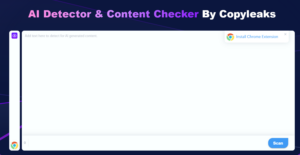
4. Copyleaks 

Copyleaks is one of the most popular plagiarism and AI checker tools. It can detect AI content in multiple languages in seconds. 

Copyleaks-AI-detector-tool

Pros

  • It detects AI content from various AI tools including ChatGPT and Gemini Plus, and can even differentiate AI refined content.
  • It allows you to scan multiple files simultaneously. 
  • It creates a similarity report which you can share (if required). 
  • You can easily integrate it with Chrome by installing its extension. 

Cons 

  • Sometimes, Copyleaks flags humanly written content as AI content. 
  • It ignores some AI content in the text sometimes. 
  • When the same text is analyzed more than once, it can give different results in a few cases. 
  • Scanning documents of greater word count can take more time. 

Price: The monthly package for Copyleaks AI detector starts from $9.99 per month.

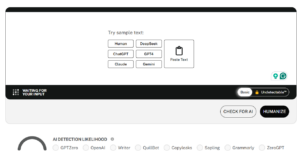
5. Undetectable AI 

Undetectable AI is one of the best AI detectors for analyzing academic writing and business papers. Rated as the best AI detector by Forbes, it has a simple interface where you just need to paste the text.

Undetectable.ai-AI-detector-tool

Pros 

  • It can accurately detect AI content from ChatGPT. 
  • It has a ‘HUMANIZE’ option to rephrase AI content. 
  • You can paste up to 10,000 characters at a time and check the text for AI content. 
  • It can identify AI content in various languages like English, German, and Portuguese. 

Cons 

  • It sometimes flags human text as AI content. 
  • It doesn’t identify the source of the AI content. 
  • It can give different results for the same text in a few cases. 
  • Some of its paid plans are expensive. 
  • Undetectable AI sometimes flags human writing as AI content.

Price: Its monthly package costs $9.99 per month. 

6. WinstonAI 

Winston AI is one of the most trusted AI detectors for writers, academics, and web publishers. It can detect AI-generated content from ChatGPT, Bard, and many other language models. It also has a fast and efficient plagiarism AI checker.  

WinstonAI-AI-detector-tool

Pros 

  • It supports various file formats like .docx, .png and .jpg. 
  • It gives scores of the human-written content, readability, and plagiarized content. 
  • It can generate a report analyzing the AI-written content within seconds. 
  • It also scans texts written by hand. 
  • It can detect AI-generated text from various language models.
  • WinstonAI keeps up with the latest models of language generation technology to ensure high accuracy in detection.

Cons

  • The option to generate shareable PDF versions is only a part of the paid packages. 
  • You can only scan up to 2,000 words using the free version. 
  • It doesn’t provide additional options to humanize, paraphrase, and summarize the AI-written content. 
  • The free version doesn’t include the advanced plagiarism-checking feature. 

Price: This tool has both, a free and a paid version. The paid version costs start from $12 per month. 

7. CrossPlag 

CrossPlag is one of the simple and effective AI detector tools. To use its AI checker, you need to create an account on their website.  It can also detect AI content created by AI resume builders using resume prompts. With this, CrossPlag also has a plagiarism checker. It’s plagiarism and AI checker can be used by students, teachers, and businesses worldwide. 

Crossplag-AI-detector-tool

Pros 

  • It provides an AI content index, identifying which content, human, AI, or a mix of both including AI refined content.
  • It doesn’t store your data, ensuring your data safety. 
  • It can detect AI-generated content within seconds. 
  • It gives a feedback option where you can mention whether you’re satisfied or not with the result.
  • CrossPlag can also assist in the editing process by providing feedback on AI-generated sections. 

Cons 

  • Currently, it supports and detects AI content in only English language documents. 
  • It can take a longer time to process and scan documents for AI-generated content sometimes. 
  • It doesn’t provide options to upload files in bulk like other AI detectors. 
  • It doesn’t offer options to humanize, summarize, or paraphrase content like other AI detectors.
  • It’s not 100% accurate and can fail to show AI-generated content at times. 

Price: This is a free AI detector.  

8. BrandWell (previously Content at Scale)

BrandWell is a widely used AI detector. It functions as a ChatGPT AI detector and can easily identify AI-generated content from GPT4. With this, it can also identify AI content from Bard, Claude, and Gemini. BrandWell can identify AI text from various language models, ensuring accurate detection and analysis.

BrandWell-AI-detector-tool

Pros 

  • It highlights human-written sentences in green, differentiating them from AI-written content. 
  • The paid version has the option to rewrite all AI-generated sentences. 
  • It gives the option to download the checked content as a PDF for sharing. 
  • It analyzes whether the sentences sound robotic and gives suggestions for content editing

Cons 

  • It sometimes wrongly terms AI written content as human content.   
  • Many essential features like scanning the text by URL, exporting to Word/Doc/HTML, and rewriting AI articles in bulk are only available for users opting for the paid version. 
  • Using the free version, you can only scan up to 2,500 characters at a time for AI-generated content. 
  • The free version doesn’t offer additional features like a Summarizer and plagiarism checker like other tools. 

Price: The paid version costs $49 per month. 

9. Sapling 

Sapling is a basic AI detector that analyzes content written by AI writing tools within seconds. It also allows you to edit the reviewed text and recheck it for AI content.

Sapling.ai-AI-detector-tool

Pros 

  • It acts as a ChatGPT checker and can also identify AI-generated text from various language models, including Gemini.
  • It acts as a ChatGPT checker and can also identify AI content from Gemini. 
  • It has a user-friendly interface where you just need to paste text to analyze the content. 
  • By installing its extension, you can easily use it on Google Chrome. 
  • Users opting for the paid version can check 8000 characters at a time for AI-written content

Cons 

  • The free version allows one to scan up to only 2000 characters at a time. 
  • Several times, Sapling gives false positives, terming human-written content as AI-generated. 
  • It doesn’t provide the option to upload files in bulk for scanning like other tools. 
  • It doesn’t provide additional features for humanizing content, detecting plagiarism, summarizing, and paraphrasing like other tools. 

Price: It has both, a free and a paid version. The paid version costs $25 per month. 

After understanding how to detect AI writing using Sapling, let’s explore the last tool! 

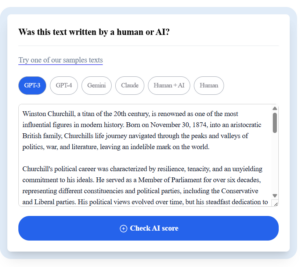
10. Scribbr 

Scribbr provides a free AI detector to identify AI-generated content. It’s a useful tool for students, educators, and bloggers. 

Scribbr-AI-detector-tool

Pros 

  • It can detect AI content from ChatGPT 3.5, ChatGPT 4, and Gemini within seconds. 
  • It gives a percentage of AI-generated content. 
  • You can use it to perform unlimited AI checks. 
  • It has a user-friendly interface where you just need to paste the text for identifying AI content. 

Cons 

  • It can identify AI content for only up to 500 words at a time. 
  • The free version doesn’t have the option to upload multiple files for analyzing AI-generated content. 
  • It doesn’t include additional options to humanize the content like other tools. 
  • It’s not completely accurate and can flag human-written content as AI content. 

Price: This is a free AI detector.

AI detectors for plagiarism detection

All AI content detection tools listed above also offer plagiarism detection features. However, Copyleaks is one of the most well-known tools for detecting plagiarism. It provides a similarity report to help users locate potentially plagiarized content. You can compare the features of all the top 10 tools to decide which is the most suitable for your content. 

AI content detector tools for SEO 

SEO professionals and website owners can use AI content detector to ensure their site’s content appears human-written. Tools like Undetectable AI and Winston AI are particularly useful for this purpose. 

Undetectable AI provides a report on the percentage of AI-generated content. This helps to identify AI-generated content and optimize it for SEO. On the other hand, Winston AI identifies potential sources of duplicate content. This is beneficial for identifying content for SEO. 

Detecting AI-written essays 

Tools like GPTZero are beneficial for detecting AI-written essays.GPTZero helps to identify the vocabulary most commonly used in content written by AI. This helps to identify AI-written content easily. It further ranks the phrases used in AI-generated content based on their frequency. This can also help to detect AI-written essays. 

Comparison of AI detection tools 

Browse through the following table for a comparison of the tools’ additional features!

This concludes our list of AI detector tools. Now that you know the best AI detectors, you can start thinking about which one to choose. By comparing the pros and cons of the best AI checkers, you can select the perfect one. However, these tools might not provide in-depth feedback about your content’s quality.  

At PaperTrue, we provide expert editing and proofreading services for writers, students, researchers, and businesses. With this, we also check the content for plagiarism. 

Here are some articles you might find useful: 

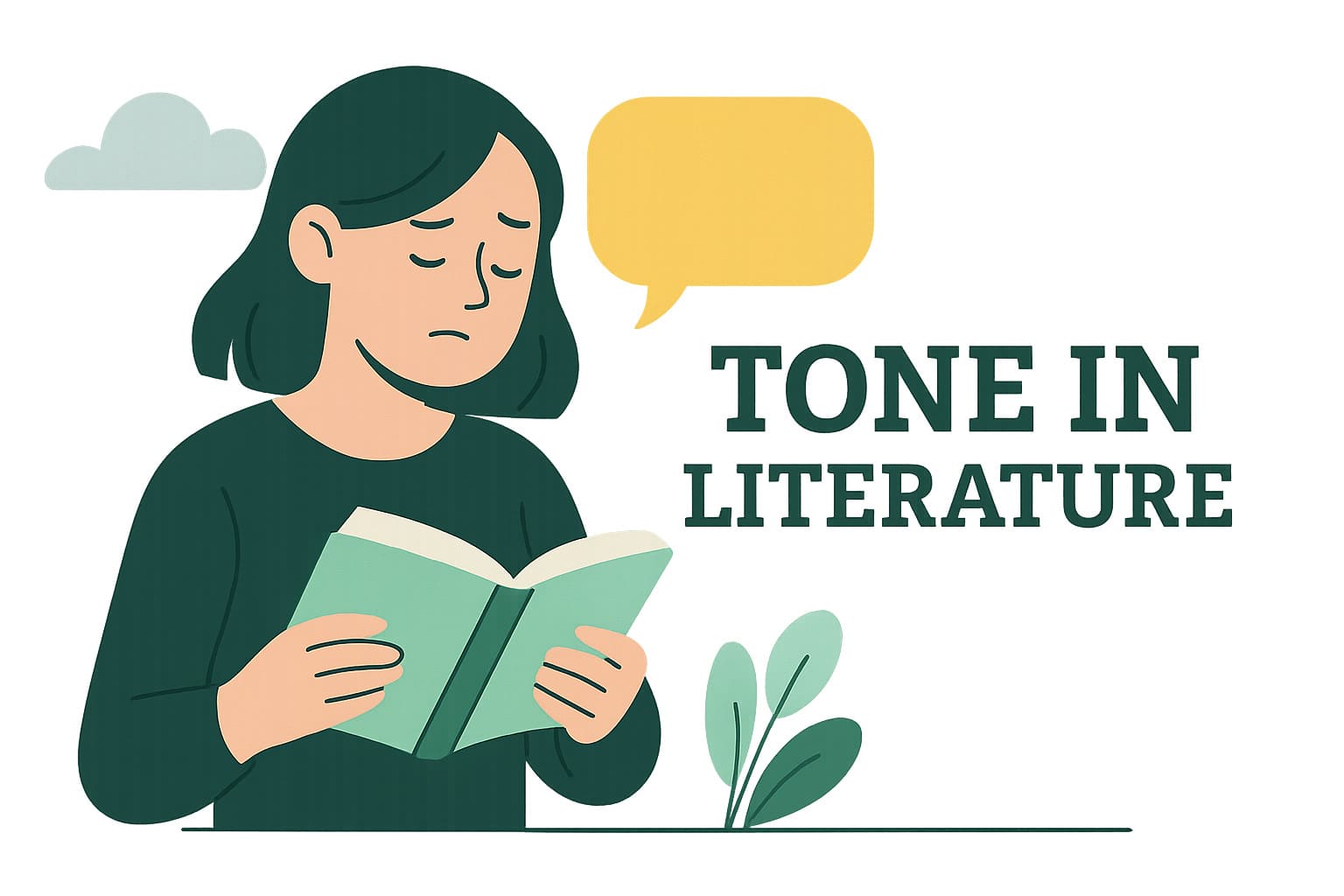
Tone in Literature: Meaning, Tips, and Examples

Have you noticed that while different books may belong to the same genre, they create different emotional climates that affect your mood as you read the book, and consequently, the way you relate to the story and characters?

This is because the author has deliberately set a certain tone that might remain constant or change throughout the story. The tone can affect the reader’s mood and their perception of the book. A skilled author effectively manipulates tone to create an environment conducive to furthering the narrative.

Here’s a detailed guide to what tone is, how to use it, and practical examples to help you relate.

Have You Used Tone Effectively in Your Manuscript? Check With Experts! Get Started

What is tone in literature and why it matters

‘Tone’ in literature can be defined as the author’s attitude towards the subject or audience, expressed through word choice, style, and detail. It sets the base of the narrative and influences the way the reader engages with the work. Think of it like body language, but in writing—it shapes the way you feel about the story. For example, in the classic Pride and Prejudice, Jane Austen uses a witty, playful tone to both criticise and amuse.

Difference between tone and mood

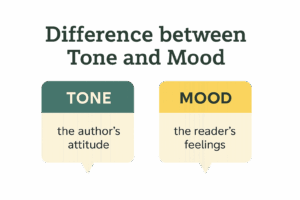
It is easy to get confused between tone and mood, mistaking them for each other or using the two terms interchangeably. However, there is a subtle difference, and it is important to keep this in mind to effectively invoke the desired reaction in the reader. Tone refers to the writer’s attitude—how they approach the narrative, the mental voice they create while narrating the story. Mood, on the other hand, is the feeling created for the reader—a setting of the stage, so to speak, using a host of literary techniques and imagery. 

You can differentiate between tone and mood by asking the following questions:

Tone: How does the author feel about this?

Mood: How does this make me feel?

Difference between tone and mood

Observing the tone also gives you a good insight into the author’s personal feelings about his characters and the subject of his work. It is important to avoid confusing this with mood, which is how the stage is set for the reader. For example, Edgar Allan Poe’s The Raven has a mournful tone but creates a haunting mood.

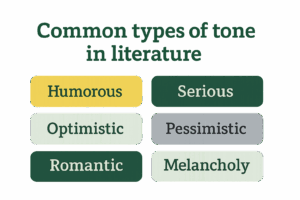
Common types of tone in literature

Tone plays a major role in helping the reader understand and relate to the story. By mirroring how the author feels about the work, it subtly judges the reader in the right direction when it comes to their approach to and understanding of the work. Authors employ different tones depending on the genre and subject of the work, for example, humorous, formal, informal, sarcastic, optimistic, pessimistic, nostalgic, angry, and somber.

If, as a writer, you find the different types of tone confusing and are not sure which to use, it would help to create tone categories to help you match the tone to the corresponding genre and choose which would be most appropriate. You also need to keep in mind the subject matter and genre of the book, and how you want the reader to approach it. For example, George Orwell’s Animal Farm carries a satirical tone critiquing political systems, and has been perceived as such by generations of readers.

Common types of tone in literature

How authors create tone

Creating tone is a subtle and nuanced process that requires a combination of deliberate choices and a skilled sense of narrative. Here are some practical tips that authors use when creating tone:

1. Word choice (diction): Authors have to be deliberate in their choice of words as it must be synchronous with the genre and subject matter of the book. For example, a lighthearted contemporary romance could use more informal language, whereas an academic book must employ a more formal and serious tone.

2. Sentence structure: Sentence structure is like music—the use of long and short sentences creates a medley that sets the tone of the work. For example, if the author wants to luxuriate in description and set a laid-back, meandering tone, it would help to use long and flowing sentences. On the other hand, short and abrupt sentences are useful to convey anger, frustration, and other negative emotions.

3. Imagery: The use of imagery plays a major role in setting the tone of the work and affecting the reader’s perception. Positive imagery, such as descriptions of sunshine and nature in full bloom, creates an uplifted, bright tone, while negative imagery, such as descriptions of dark, cramped spaces, ugliness, and dullness, puts the reader in a more negative frame of mind.

4. Details included or omitted: Different authors have different approaches to setting the tone of their work. While L.M. Montgomery—the author of the Anne of Green Gables series—writes detailed, flowery descriptions that set a happy, whimsical tone, whereas in Of Mice and Men, John Steinbeck uses simple, direct diction that is unembellished with unnecessary frills and sets a realistic, sometimes grim tone. 

How to identify tone when reading

As a reader, here is a step-by-step guide to identifying tone:

1. Read a passage aloud—note emotional reactions. Does the work make you feel happy and uplifted? Does it create a feeling of unrest and anxiety? Asking these questions will help you identify the tone of the work.

2. Highlight words with strong connotations. Certain descriptions contain keywords that help you, as a reader, relate to and identify the tone. These are usually adjectives used to describe the characters and set the scene.

3. Look at imagery and pacing. If the author uses light, uplifting imagery, such as descriptions of nature, and uses long, meandering language that creates a leisurely pace, it helps the reader identify the possibly romantic or whimsical tone of the work.

4. Consider context—historical, cultural, or character perspective. The kind of language used depends to a large extent on the setting and point of view so as to avoid being asynchronous. It also plays a major role in helping the reader understand the character’s personality and convictions. For example, in To Kill a Mockingbird, Harper Lee’s respectful but firm tone in Atticus’s courtroom speech signals moral conviction.

How tone influences the reader

As mentioned earlier, tone plays a major role in influencing how the reader feels about and relates to the work. It acts as a sort of guideline that shapes meaning, trust, and emotional connection. It is also highly dynamic—a change in tone can alter the interpretation of the same event. This is especially useful when narrating the same event from the point of view of two different characters. For example, a scene described with ‘sunlight streamed’ feels hopeful, whereas ‘sunlight glared’ feels oppressive.

Changing tone for effect

Authors often cleverly shift tone to match plot developments. This can be done in a smooth and seamless manner with changes in diction, pace, or detail during turning points, and can subtly shift the narrative and the way the reader feels about it. For example, in The Great Gatsby, F. Scott Fitzgerald shifts from a romantic tone full of possibility early on to a more cynical tone by the end, when the narrator and reader both feel aged by the events of the story.

Using tone in your own writing

Deciding on the tone to use in your own writing can be an exciting process. There are a multitude of options to choose from, and here are some tips that will help you zero in on the most effective options:

1. Decide tone before you begin drafting. If you are going to write a murder mystery, think about the era and setting of the work. If your protagonist is a police inspector from, say, the 1930s, the tone should be clipped, clinical, and pragmatic, but if they are a young, amateur detective a la Nancy Drew, the tone can be light, curious, and adventurous.

2. Match tone to your audience and purpose. Who is the target audience of your work? It is important to tailor the tone to suit their taste so that you do not lose readers. A children’s book can have a playful, whimsical tone, whereas a work of historical nonfiction marketed towards adults needs a more measured, scholarly tone.

3. Read aloud to confirm it fits your intent. This is a great way to put yourself in the shoes of the reader and see if your tone creates the desired effect. If reading aloud to yourself fails to create the desired effect, ask a trusted friend or colleague to serve as your subject and read aloud to them—their perception of and reaction towards your work will help you see if you have employed your chosen tone effectively.

Setting the tone of your work is a conscious, deliberate process that can have long-term implications on how both you and your work are remembered. Using our tips, you can make a choice that will ensure your book hits the sweet spot with your target audience!

PaperTrue offers expert, hassle-free book self-publishing services that allow you to get your manuscript edited and published by professionals. Check them out!

Here are some more resources that may help you:

How to Write a Speech that Inspires (With Examples)

Do you have an important occasion coming up, but are unsure as to how to begin writing your speech? Or do you just want to learn to write the perfect speech anyway—just in case it comes in handy someday?

Well, you’re in the right place—our comprehensive guide will teach you (with examples) how to write the perfect speech that inspires your audience.

Want to Check if Your Speech is Grammatically Correct? Get Expert Editing! Get Started

Why writing a good speech matters 

Writing a good speech is all about predicting and delivering the right impact to your audience. In order to do this effectively, you will need to keep the following factors in mind:

  1. Purpose: Why have you been called upon to deliver a speech? What are the key points or arguments you are expected to make? Keeping these in mind will help you flesh out your speech effectively.
  2. Audience profile: A good orator knows how to adapt their language, tone, and content to suit their audience. You cannot speak to children the same way you do to adults, or to teens the way you would at a business conclave. It is important to keep the profile of your audience in mind when writing your speech.
  3. Nature of the event: You cannot deliver jokes at a speech meant to be made at a funeral, nor can you bring a sombre mood to a wedding. It is important to tailor your speech to suit the nature of the event.
  4. Duration: Are there other people going to be making speeches, too? Is the event running on a tight schedule? It would not do to overshoot your time limit, so keep that in mind when preparing your speech.

When you take care of the above points, you will craft a speech that could help you influence young minds, bring cheer to a special occasion, or make a poignant point on an important day. A good speech is like a cherry on the icing of an event—it brings everything together, and remains a lasting memory.

Now that these essential points are in place, let us dive into the mechanics of how to write an impactful speech!

How to write a speech

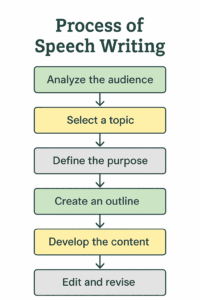
Process of speech writing

Know your audience

As mentioned above, it is very important to get the profile of your audience right before you begin writing your speech. This will influence the kind of language you use, your tone, the kind of humour you use, and whether or not the speech should get political. For example, a speech aimed towards educating teens about career options should be practical, yet upbeat and motivational, while providing useful tips in bite-sized chunks that do not drain their attention span. On the other hand, a speech at a wedding can be sentimental, humorous, and can have a more personal tone, including anecdotes that involve the bride and groom.

Define the purpose of your speech

Is your speech meant to rouse patriotism in the hearts of the listeners and motivate them to march out to battle? Or is it meant as a pre-match pep talk for a basketball team? Clearly defining the purpose of your speech influences the way you structure it and helps you further outline what points you wish to make. It would also help to create an outline of your key points so that both you and your audience are prepared for what is to come.

Research your topic thoroughly

This might seem like a no-brainer, but when you give a speech, it is important to sound like you know what you’re talking about. 

If your topic is about a person/people, eg, a wedding or birthday toast, ensure you have all the necessary information about the person, including fun anecdotes in place. On the other hand, if you are going to speak on a more technical topic, you might have to do some in-depth research into it. It would help to keep the main points in bullet form to refer to, so that you don’t forget.

Structure your speech for maximum impact

It is important to deliver your points effectively while keeping your audience’s interest. The best way to do this is to allocate a certain structure to your speech.

  1. Introduction: As the name suggests, this involves introducing your topic effectively—whether with a quote, a joke, or an anecdote. A good build-up helps you to plunge into the main points seamlessly.
  2. Body: The body of the speech is where you will elaborate on your main argument. Ensure it follows a logical structure and avoid rambling or going off-track—keep in mind your key points and elaborate on them.
  3. Conclusion: This part of your speech should sum up your argument, tie up loose ends, and give the listener a sense of closure.

Write for the ear, not just the page

Ensure that your language and tone are pleasant and easily comprehensible to the audience. Additionally, avoid using coarse and abrasive language that could potentially turn against you. Employ methods such as alliteration and imagery to paint a vivid mental picture for the audience and keep them engaged.

Personalise your speech 

While it is all very well to state facts, bringing in a personal touch makes your speech more memorable to the audience. Speak about your experiences, get vulnerable (if you are comfortable doing so), or share a funny anecdote that will help the audience connect with you as a person talking to them, and not just someone talking at them.

The final touches

In order to ensure your speech is truly flawless, it would be advisable to edit and refine it. You can either do this yourself or hire the services of a professional editor—a fresh perspective will help you catch any errors and fix your grammar to ensure your speech is glitch-free.

Practice makes perfect

Giving a speech can be a scary business, but it is important to remember that practice makes perfect. Memorise your speech if possible, or note down the key points for reference, and recite it out loud as many times as possible, focusing on your tone, inflections, and expressions. You can also look into a mirror to observe yourself as you speak, or ask a friend or family member to serve as a dummy audience.

Use public speaking techniques

Using public speaking techniques will help you pack a punch when you deliver your speech—they will help you come across as confident and collected, and as someone with a strong grip on their topic. Here are some public speaking techniques to consider:

  1. Make eye contact, but don’t stare fixedly at one person—allow your eyes to occasionally connect with various audience members, as this will help them feel more connected with your speech.
  2. Get your audience to interact with you—ask them questions, invite them to ask you questions at the end of your speech—this will help them warm up to you and make your speech a more memorable experience for them.
  3. Voice modulation is very important, as it ensures you sound pleasant and easy to understand—the audience should neither have to strain to hear you, nor should your voice be gratingly loud.
  4. Using hand gestures can also help people better relate to what you’re saying as they create a wider range of expression for you, and help you put across your point more emphatically.

End your speech with a memorable closing

As mentioned earlier in this article, an effective conclusion is the ideal way to wrap up your points. Summarise your points briefly to help your audience remember them, and end on an upbeat/positive/poignant note (depending on the occasion) that will stay with them forever.

Speech Examples

Example 1: Graduation speech

“The Power of Unfinished Stories”

Three years ago, I stood at the entrance of this university with a half-empty suitcase and a head full of doubts. Today, I realize we all arrived with the same fears—and we’re leaving with something far more valuable than answers. We’re leaving with better questions.

Every failed experiment taught us persistence. Every all-nighter taught us dedication. Every group project—even the disastrous ones—taught us that success is rarely a solo journey.

But here’s the truth about graduation: you’re not finishing your story today. You’re simply picking up the pen to write the next chapter. Maria is heading to teach in rural communities. James is launching a clean water startup. These aren’t endings—they’re bold beginnings.

Class of 2025, our stories are unfinished, our pages are blank, and our pens are full of ink. Let’s write stories that inspire the next generation to imagine what’s possible.

Congratulations, graduates. Now go write something extraordinary.

Example 2: Best man wedding speech

“From Roommates to Soulmates”

Good evening! I’m Mike, Tom’s best friend since college—which means I’ve seen him at his worst. Like when he tried to impress a girl by cooking dinner and nearly burned down our dorm. Sarah, that’s why he always insists on takeout!

But seriously, what struck me most about Tom and Sarah wasn’t the grand gestures. It was the small things. How Tom’s face lights up when Sarah enters a room. How Sarah actually laughs at Tom’s terrible dad jokes. How they turn grocery shopping into an adventure.

The night after their first date, Tom came home with this goofy smile that didn’t leave for weeks. That’s when I knew Sarah was the one who made my best friend finally understand what all those love songs were about.

So raise your glasses! To Tom and Sarah—may your love story be filled with laughter, adventure, and just enough burnt dinners to keep things interesting! Cheers!

Like any other kind of writing, writing a speech is an art—one that engages the senses of sight and hearing too, once it is time to deliver it, so it is important to ensure you hit the sweet spot that makes your audience feel like they have just listened to something of value.

Do you enjoy writing? PaperTrue offers expert, hassle-free book self-publishing services that allow you to get your work edited and published by professionals. Check them out!

Here are some more resources that may help you:

Top 10 Book Printing Services for Authors in 2025

Want to see the first printed copy of your book? Explore all the features of the best services for printing your own book! To help you decide, we’ve added information about book printing prices. 

We’ve also answered many questions you may have, such as: What are the binding options for printing my book? Whether you want to print hardcovers or paperbacks, we’ve got you covered. So without further ado, let’s delve into the details! 

Get expert book printing services today!

Here are the best book printing companies of 2025: 

1. PaperTrue 

PaperTrue is a trusted self-publishing company that offers expert book printing services. Established in 2014, they have a rating of 4.8 on Google. They offer several printing options such as perfect bound, case bound, and jacket laminate. With this, they perform perfect typesetting for both hardcover and paperback books. 

PaperTrue’s fast turnaround time enables customers to receive printed copies in 2-3 days! By ensuring high-quality images and text, they make your book look professional. With this, PaperTrue also provides editing and proofreading, book cover design, and eBook conversion services. It costs $12 per copy to print a 200-page book. 

Features:

  • Editing, proofreading & complimentary manuscript critique
  • Typesetting in PDF, ePub, and MOBI formats
  • Custom book cover design (front, back, spine, dust jacket)
  • Print on demand: paperback, hardcover, color, or B/W
  • Online distribution: Amazon, Barnes & Noble, Lulu, Kobo, Apple Books
  • Add-ons: ISBN, barcode, audiobook creation, marketing kit

Pricing:

  • Basic Package: Editing + design from $299
  • Standard Package: Includes ISBN + printing + distribution from $599
  • Premium Package: Includes audiobook + marketing kit from $999

2. BookBaby 

BookBaby offers the best online book printing services for paperback and hardback books. They use printing presses like HP Indigo and Xeikon to ensure high-quality printing. BookBaby can print more than five thousand books in less than 2 weeks. They also offer several glossy and matte hardcover options for your book. 

They print books in the USA. Their team of experts ensures the perfect bookbinding and superior photo-quality images for books. Along with book printing, Book provides book cover design and eBook conversion services. It costs $17.43 per copy to print a 200-page book on BookBaby. 

Features:

  • Premium printing presses (HP Indigo, Xeikon)
  • Hardcover, paperback, matte & glossy finishes
  • Book cover design & eBook conversion
  • Distribution to Amazon, B&N, Ingram, Apple Books
  • Bulk printing up to 5,000+ copies

Pricing:

  • From $17.43 per copy (200-page book, paperback)
  • POD and bulk options available

3. Lulu 

A popular self-publishing platform, Lulu provides affordable book printing services. They include several options such as case wrap with a glossy cover, A5 paperbacks, matte finish, and stiff cover. Whether you desire black-and-white or colored printing, they can do it for you!

Some of the popular standard book sizes Lulu offers are 5.83 x 8.27 inches, 6 x 9 inches, and 8.5 x 11 inches. Lulu also gives you the option to select a book size and download a free book design template. To print your book, you need to create your account on Lulu. It costs $7.51 to print a novella of 200 pages. 

Features:

  • 3,000+ combinations of sizes, paper, and binding
  • Options: A5, US Trade, US Letter, photo books, cookbooks, children’s books
  • POD: Print 1 copy or 1000+
  • eBook publishing (EPUB, PDF)
  • Global distribution via Lulu Direct, Amazon, and 40,000 retailers

Pricing:

  • A5 paperback (200 pages, B/W) from $2.55
  • US Trade (6×9) from $4.11
  • Hardcover (color) from $11.43

4. Blurb 

Blurb is one of the top self-publishing companies that provides book printing services online. They offer templates for cookbooks, family books, photo books, travel books, baby books, and portfolio books. They use various tools such as Adobe InDesign and BookWright for high-quality books. 

Some of the book sizes Blurb provides are 7 x 7 inches and 10 x 8 inches. Blurb gives customers the option of offset printing of 750 copies. You can also request a custom quote to print more books. The cost of printing a book of 200 pages with a soft cover is $12.03. 

Features:

  • Bulk orders 100–50,000+ copies
  • Trade books, photo books, magazines, notebooks
  • Offset, inkjet, and toner options
  • Strategic consultation for bulk projects
  • Discounted rates for crowdfunding & Kickstarter projects

Pricing:

  • Softcover trade books from $7–$10 per copy (bulk orders)
  • Hardcover photo books from $20+ per copy (bulk orders)
  • Custom quotes for 100+ copies

5. Alpha Graphics 

From design to bookbinding, Alpha Graphics provides various online book printing services. You can select from binding types like Rivet, side-sewn, saddle stitching, and spiral binding. With this, Alpha Graphics also gives finishing options like aqueous coating, UV coating, and clear or tinted varnishing. 

Alpha Graphics also creates your book’s digital version for online platforms like Amazon KDP and Apple Books. To understand the book printing costs involved, you need to upload your book file to their website. 

Features:

  • Binding options: Spiral, coil, wire-o, comb, hardcover, rivet, sewn
  • Finishes: Aqueous coating, UV coating, varnish
  • POD & bulk printing
  • eBook conversion for Kindle, Nook, iPad
  • Fulfillment & shipping services

Pricing: Quote-based (depends on size, binding, and volume)

6. InterPress Global

Located in Florida, InterPress Global is an expert book printing company. Their team helps you select the perfect book format, layout, and design. They specialize in printing coffee table books, children’s books, journals, religious books, art books, and graphic novels. 

To provide the best book printing services, they use technologies such as computerized sewing machines and fully automatic casemakers. With this, they can assist in creating the perfect eBook for online distribution. Whether you desire a hardcover, a softcover, or a leather-covered book, they can print it for you! 

Features:

  • Hardcover, softcover, and leather cover options
  • Coffee table, art, photography, journals, and graphic novels
  • Advanced printing: computerized sewing, casemakers
  • eBook creation for digital distribution

Pricing: Quote-based (custom projects only)

7. Burnett Print Group 

Burnett Print Group is one of the best book printing services in Iowa, USA. They offer printing for children’s books, photography books, along other genres of fiction and nonfiction. 

They provide various printing options such as softcover, hardcover, perfect bound, and case bound. With this, they also have options for foil stamping and embossing on books. They have printed various books like Managing Like a Boss by Les J. Goodwin and The Art of Tim Burton by Steeles Publishing. To ensure high-quality printing, Burnett Print Group has partnered with Iocolor, a book printing company in Seattle. 

Features:

  • Hardcover, softcover, perfect bound, case bound
  • Foil stamping, embossing, and luxury finishes
  • Specializes in photography, fine art, and children’s books
  • Also handles packaging, fragrance, and promotional print products

Pricing: Quote-based

8. Cushing-Malloy 

Cushing-Malloy is one of the leading online book printing companies in Michigan. Depending on the requirements, it can print from 300-50,000 book copies. Cushing-Malloy has various printing options such as foil stamping, embossing, spot varnish, and lay-flat film lamination. 

If you want a hardbound, you can select from binding options like case adhesive, case Smyth sewn, drill, PUR, round cornering, and shrink wrap. Book printing and binding services for soft-bound include PUR soft cover, Smyth sewn, saddle stitch, and notch. Some of the standard trim sizes they offer are 6 x 9, 7 x 10, and 4-1/4 x 7. 

Features:

  • Offset printing: 300–50,000 copies
  • Sheet-fed printing (cost-effective for medium runs)
  • Binding: Softcover (perfect, PUR, saddle stitch), Hardcover (Smyth sewn, adhesive)
  • Trim sizes: 4¼×7 to 8½×11 inches
  • Finishes: Foil stamping, embossing, lamination

Pricing: Quote-based (offset jobs)

9. Printing CEO 

Based in California, Printing CEO offers both offset and digital printing services. They offer printing for hardcover and paperback books with quick turnaround times. Whether you want to print photo books, magazines, fiction, or nonfiction books, they can do it for you! 

Depending on the requirements, printing presses used can vary from 1-color to 10-color. Their team ensures the perfect design and formatting while printing your book. They also provide Variable Data Printing (VDP), where text and images can be changed or personalized. 

Features:

  • Offset & digital printing (1–10 color presses)
  • VDP (Variable Data Printing) for personalization
  • Products: Books, brochures, catalogs, direct mail, presentations
  • Large format printing (banners, posters, displays)
  • Graphic design & project management included

Pricing: Quote-based

10. Walker360 

With 60+ years of experience, Walker360 offers the best options for printing a book. You can choose between digital inkjet printing, variable data printing, and print-on-demand. They have quick turnaround times and offer 24/7 customer support. 

Their expert team can also customize texts, images, and graphics to reduce costs (if required). Their binding options include saddle stitching, perfect bound, spiral bound, and wire bound (coil binding). Through their 360Express Portal, you can order as many copies as you want. 

Features:

  • Digital inkjet, POD, and VDP printing
  • Binding: Saddle stitch, perfect bound, spiral, wire-o
  • 360Express online ordering portal (24/7 access)
  • Direct mail and fulfillment services
  • 75+ years in business, rated top 1% of U.S. printers

Pricing: Quote-based (POD and bulk orders)

Now that you know the best services for printing your own book, you can select one. You don’t need to Google “book printing services near me” anymore. You can check the reviews of these companies for book printing online. By inquiring about the costs in detail, you can select an affordable book printing service. 

At PaperTrue, we offer expert printing services to make your book ready for distribution. If you have any queries about: “What is the process for printing my book?”, you can always reach out! We also offer self-publishing services such as securing an ISBN, creating a copyright page, and online book distribution. 

Here are some other articles you might find interesting: 

100+ Writing Prompts for College Students (10+ Categories!)

Are you a college student looking to improve your writing skills? Look no further! This article includes 100+ writing prompts on technology, art, science, sports, personal growth, history, leadership, and more! 

With this, we’ve also included a special section of fun writing prompts for students. So let’s explore these amazing writing prompts!  

Also, if you ever feel stuck or need professional guidance, you can also turn to a reliable paper writer service that helps students organize ideas, structure essays, and polish academic work.

Elevate your writing with professional editing services!

1. Social issues and challenges 

1) Write an essay about the importance of gender equality and the steps to achieve gender equality. 

2) Craft an article about the rise of AI tools and how they are changing society. 

3) Write about democracy’s challenges due to disinformation and suggest solutions. 

4) Analyze the root causes of homelessness in urban areas and suggest innovative approaches to address this issue.

5) Describe how the rising prices of commodities (inflation) have led to an increase in the gap between the rich and the poor. Suggest what actions the government must implement. 

6) Elaborate on the impact of using mobile and computer technologies on mental health. 

7) Explain the importance of education in bringing social change. 

8) Describe the impact of climate change in your city and suggest solutions. 

9) Explore the role of art and culture in transforming society for the better. 

10) Discuss the economic, social, and cultural impact of immigration in the USA. 

2. Personal growth and self-reflection

11) Describe a difficult decision that you made and its positive impact. 

12) Reflect on how you worked towards achieving success and how you planned for it. 

13) Elaborate on how the experience of hearing a speech from a well-known celebrity changed your life. 

14) Describe an experience when you stepped outside of your comfort zone and took a risk.

15) Write about a skill or talent that you have developed and how it helped you in your personal life. 

16) Reflect on a time when you had to work as a part of a team and what you learned. 

17) Describe a time when you had to face your fear and the strategies you took to conquer your fear. 

18) Write about a time when you forgave someone for making a mistake and how it made you feel better. 

19) Elaborate on an incident that made you change a bad habit for the better. 

20) Reflect on an incident where there was a misunderstanding due to the lack of proper communication. What steps did you take to ensure proper communication? 

3. Technology and innovation

21) Discuss the role of technology in helping the world face the challenge of climate change. 

22) Explain the impact of robotics on fields such as healthcare, education, and customer service.

23) Analyze the impact of facial recognition technology on the world. 

24) Explore the potential of virtual and augmented reality technologies in education and entertainment. 

25) Explore the potential of wearable technology (like smart watches) to improve health. 

26) Examine the impact of 3D printing on manufacturing, supply chains, and enhancing production.

27) Describe the potential of blockchain technology in supply chain management, voting systems, or healthcare.

28) Explore the role of technology in improving communication.

29) Examine the potential of voice assistants like Alexa and Siri and AI writing assistants

30) Analyze the potential of mobile health apps in enhancing health and promoting easy access to medicines. 

Now let’s see some of the best creative writing prompts for students! 

4. Arts, culture, and creativity

31) Write a short story about a mad artist who brings change through his paintings. 

32) Compose a series of haiku poems inspired by seasons like summer, winter, autumn, and spring. 

33) Create a dialogue between two street artists discussing the importance of public art in society.

34) Write a flash fiction story about a meteor that falls in a village and its impact on the villagers. 

35) Pen a descriptive essay about a cultural food festival and the stories and traditions behind each dish.

36) Develop a short story about a time traveler who visits the 18th century and interacts with famous musicians and artists.

37) Craft a short story about a photographer who finds a photograph of a mysterious treasure, resulting in an exciting adventure.

38) Describe the art form of street theater and suggest strategies to promote it. 

39) Write about a detective team of English, Chinese, Australian, and Japanese officers that solve a case despite their cultural differences. 

40) Create a dialogue between two art critics discussing the merits and controversies of a controversial painting. 

Check out the environment-related writing prompts for students given below!

5. Environment 

41) Examine the consequences of deforestation and propose strategies for protecting forests worldwide.

42) Discuss the impact of plastic pollution and suggest innovative solutions for reducing plastic waste.

43) Analyze the role of eco-tourism in preserving the environment. 

44) Discuss the impact of meat consumption on the environment and explore the benefits of plant-based diets.

45) Explore the potential of electric vehicles in reducing carbon emissions.

46) Elaborate on strategies to conserve water and what steps should be taken at a global level to save water. 

47) Discuss the impact of electronic waste on the environment and propose strategies for waste management.

48) Explain the importance of recycling and propose ways to encourage more people to recycle. 

49) Discuss how renewable energy sources like solar and wind energy can help to conserve the environment. 

50) Describe various strategies to reduce soil erosion and suggest sustainable farming practices. 

Browse to explore science-related creative writing prompts for students! 

6. Science 

51) Explain the importance of genetic and DNA research in treating and preventing diseases. 

52) Discuss how scientific research has helped to enhance space research. 

53) Explore the benefits of collaboration between scientists belonging to different fields for developing innovative solutions. 

54) Describe how scientific technologies have revolutionized the transport industry. 

55) Explain various strategies related to how scientific innovation can be encouraged in schools and colleges. 

56) Pen a blog about how scientific discoveries have helped in waste management. 

57) Write an article about how chemistry research has led to better safety guidelines in industries. 

58) Discuss the potential of nanotechnology in electronics.

59) Analyze the importance of simulation and mention various simulation technologies to encourage experimentation. 

60) Explain the importance of various advanced technologies, including encryption technologies in ensuring cybersecurity. 

For sports lovers, the next section explores sports-themed good writing prompts for college students! 

7. Sports

61) Describe the efforts of the Olympics 2024 to promote sports like skateboarding and climbing. 

62) Give your opinion about how sports like judo and taekwondo help to encourage fitness. 

63) Explore the development of kite flying as a sport and its huge potential. 

64) Write about Simone Biles’ amazing return to gymnastics and why it is inspiring. 

65) Discuss how sports help to develop teamwork and leadership skills in students. 

66) Write about your favorite sport and suggest strategies to promote it. 

67) Pen an article about an unforgettable story about sportsmanship and fair play that you’ll always remember. 

68) Analyze the importance and role of sports journalism in shaping people’s opinions. Suggest ways to promote sports journalism. 

69) Explore the challenges, pros, and cons of hosting sports events on a global scale. Suggest strategies to face the challenges better. 

70) Describe the impact of technology on college sports, including wearable devices, social media, and video analysis. 

Want to write about travel and adventure? Get ready to explore creative writing prompts for college students inspired by these themes! 

8. Travel and adventure

71) Write about the growing popularity of solo travel and workations and how they can be encouraged. 

72) Describe a life-changing travel experience in detail. 

73) Explore the development of adventure tourism and list the top 5 spots famous for adventure tourism. 

74) Craft an article about your favorite World Heritage site that you’ve visited/would like to visit in the future. 

75) Give 20 tips about how to travel with a tight financial budget with limited resources to explore new destinations. 

76) Analyze the negative impact of over-tourism in famous tourist destinations. Suggest strategies to reduce negative consequences. 

77) Describe the importance of local customs and traditions while traveling to a new country. 

78) Write an essay on the importance of historical tourism and suggest how it can be encouraged. 

79) Explore how travel and tourism foster understanding between people belonging to different cultures. 

80) Write about how you faced serious obstacles and challenges while traveling. 

9. History 

81) Analyze the role of Nelson Mandela in the struggle against apartheid in South Africa and his lasting impact. 

82) Discuss the role of Mao Zedong in the Chinese Communist Revolution and the transformation of modern China.

83) Explore the life and achievements of Leonardo da Vinci and his contributions to art, science, and engineering.

84) Write about a historical figure that inspires you the most and why. 

85) Examine the impact of World War 1 and World War 2 on society. 

86) Explain the achievements of Albert Einstein and his contributions to physics.

87) Examine the causes and consequences of the Cold War between Russia and the USA in detail. 

88) Discuss the impact of the Civil Rights Movement in the United States. Explore the role of leaders like Martin Luther King Jr. and Rosa Parks.

89) Explore the significance of the Silk Route in facilitating cultural exchange and trade between East and West.

90) Explore the life and legacy of Mahatma Gandhi, his philosophy of non-violence, and its impact. 

Now let’s see some writing prompts for college students about education and learning. 

10. Education and learning

91) Describe the importance of online courses and apps in learning. 

92) Write about your experience in learning a new language and how it helped you. 

93) Reflect on your most difficult exam and what you learned from the experience.  

94) Write a short article about a teacher who positively impacted your education. 

95) Analyze all the pros and cons of using technology for learning. 

96) Describe the benefits of studying multiple subjects in college.

97) Elaborate on the importance of time management and describe any 5 time management strategies that helped you learn. 

98) Discuss the role of extra-curricular activities like arts, crafts, and sports in personality development. 

99) Reflect on an experience where failure while learning encouraged you to perform better. 

100) Elaborate on strategies and learning methods through which colleges can encourage creativity through education. 

101) Explain how learning in groups and through practical projects can help gain knowledge. 

11. Leadership and collaboration

102) Describe various strategies for developing leadership skills through education. 

103) Write about a leader who inspired you the most. 

104) Explain the types and impact of leadership style on team performance. 

105) Analyze the impact of stress and burnout on leadership and collaboration. Suggest strategies for enhancing health and resilience within teams.

106) Examine the role of creativity and innovation in leadership and collaboration. Discuss strategies through which leaders can encourage creativity among team members. 

107) Describe strategies using which leaders can bridge generation gaps and encourage diverse perspectives in teams. 

108) Explain the importance of storytelling in leadership. Describe how stories can be used to inspire team members. 

109) Analyze the impact of cross-cultural differences on leadership. Mention strategies using which leaders can ensure clear communication in culturally diverse teams. 

110) Examine the role of networking and relationship-building in leadership and collaboration. Suggest strategies for building professional networks. 

111) Discuss the importance of accountability and ownership in leadership and collaboration. Recommend 10 strategies for fostering a sense of responsibility and commitment within teams.

Browse through the next section for fun writing prompts for students! 

12. Fun writing prompts 

112) Describe a day when a magical genie agrees to grant 5 wishes. What would you ask for? 

113) Imagine you could visit any fictional world in a book/movie of your choice. Which fictional world would you choose and what would you do?  

114) Pen a story, imagining yourself as a superhero. What superpowers would you choose and what would you do? 

115) Imagine and describe your day as a famous inventor. What would you invent and why? 

116) If you could have dinner with five famous personalities, who would they be and why? 

117) Write a story about a magical dream that surprisingly came true. 

118) Pen a story about a road trip that takes an unexpected turn, leading to a shocking decision. 

119) Write a letter to your best friend, expressing gratitude and remembering all the wonderful memories spent together. 

120) If you could trade places with someone and live someone else’s life for a day, who would it be and why? 

121) Pen a story where whatever you say starts happening in reality. What happens next? 

Now let’s see some interesting writing prompts for ESL students! 

13. Good writing prompts for ESL students 

122) Write about your favorite food and why you enjoy it so much. 

123) Describe a memorable celebration you were part of and what made it special. 

124) Pen an article about a circus you visited and what you experienced. 

125) Explain about your dream house in detail. 

126) Write about your favorite book/TV Show/movie and explain why you liked it. 

127) Describe your experience playing a memorable video game and why it is special for you. 

128) Pen some words about the festival you love the most and why. 

129) Write in detail about your trip to an amusement park and its unique features. 

130) Describe a music festival you went to and why it was unforgettable for you. 

131) Pen your experience about a time you helped someone and how it made you feel. 

Now that you know the best creative writing prompts for students, you can use them. Once you complete writing, the next step will be to edit the text. As experts in editing and proofreading services, we’d love to help you perfect your text! 

Here are some other useful resources for you: 

How to Become a Ghostwriter: Complete Career Guide

Do you want to become a ghostwriter, but find yourself a novice who needs to learn the ropes? 

You’re in the right place—our complete guide on how to become a ghostwriter will teach you about getting clients, building your portfolio, navigating rates and payments, and much more.

Want to Become a Ghostwriter? Get Expert Editorial Services Now! Get Started

What is a ghostwriter?

Let us begin by defining the term ‘ghostwriter’ and what it entails.

A ghostwriter is essentially a paid employee hired by a publishing firm or an individual to write books that will not be published under their own name. The books would either be published under the name of a fictional author (eg. Carolyn Keene of the Nancy Drew series, or Franklin W. Dixon of The Hardy Boys), or under the name of a famous celebrity or CEO who may not have the time to sit down and write themselves (eg. Spare by Prince Harry, or Nineteen Steps by Millie Bobby Brown), or simply for an individual who wants to get published, but does not have the necessary writing acumen.

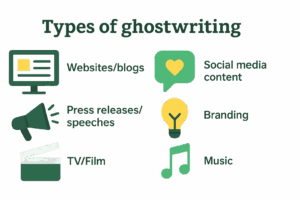
Learn more about its meaning and types in our ‘What Is Ghostwriting?’ article. 

Essential skills for ghostwriters

In order to become a ghostwriter, here are a few essential skills you need to have in your arsenal:

1. Adaptability: First and foremost, a ghostwriter should not get stuck in one genre. As a ghostwriter, you must be able to adapt to different genres (romance, mystery, biography, etc.) to suit your client’s requirements. The more flexible you are, the more work you will generate. You should also be able to change the tone of your writing to fit the genre you are currently working on.

2. Voice mimicry: Each client has a unique ‘voice’. As a ghostwriter, it is your duty to listen carefully to the way they speak, observe the way they type their text messages and emails, analyse the jargon they frequently use, and try to mimic that voice as closely as possible in your work so that it looks believable as the client’s work.

3. Patience and practice: Ghostwriting projects can be spread over months, as clients may require you to write entire books that span tens of thousands of words. It is important to be patient and also frequently practice your writing skills by giving yourself short writing assignments to fit into different genres to keep your skills polished.

4. Interview skills: The ghostwriter and client usually have long conversations in the interview format that help the former understand the tone and content of the latter’s work. As a ghostwriter, it is important to ask your client pertinent and thoughtful questions that will unlock memories that could be key to your project.

5. Discretion: Finally, not all clients would want to admit to the fact that they have hired a ghostwriter. While some may credit their ghostwriter, others may not (the legalities of this can be worked out in your contract with your client), so it is important for you, especially if you’re working with a famous personality, to maintain discretion about the project if they do not want it known that they have hired a ghostwriter’s services.

How to become a ghostwriter

Building your foundation

Once you have your basic skillset in place, here’s how to build a strong foundation in the ghostwriting business:

1. Develop your writing portfolio: Create sample pieces across genres in different styles (eg, business, memoir, self-help), and also write imaginary client pieces (eg, one chapter of a romance novel, biography, business book, etc.) to show future clients who may ask to see samples of your work before signing you on. This saves you the time and effort of creating new samples for every client who comes your way.

2. Build an online presence: Next, build a blog, social media page, or website where you showcase samples of your writing, share basic rates, and display your professional contact details so clients can get in touch. 

3. Choose a niche (or start broad): You could either choose a specific niche (eg, biographies, blog posts, speeches) to get started, or choose to be open to writing in all categories—whichever you are comfortable with, and will help you target clients in the beginning.

Setting up your ghostwriting business

Like any other business, setting up a ghostwriting business involves a certain amount of paperwork and legal hoop-jumping. Let us make it easy for you:

1. Decide your business structure: Whether as a sole proprietorship or LLC, study different business structures and choose the one that best suits your needs.

2. Contracts and NDA templates: Draft some sample templates of contracts outlining the scope of your work and what you would like your clients to sign before beginning the project, and look into framing a non-disclosure agreement (NDA) to protect your client’s privacy.

3. Copyright and royalties: Choose your business model—would you want to work for hire and get paid per word, or receive a cut of the client’s royalties once the work is published? While the former is suitable for shorter projects or when working with lesser-known clients, the latter helps when working with a client (eg, a celebrity) whose book is going to do big business. 

4. Pricing your services: Take stock of your skills and price your services right—they should not be prohibitively expensive, nor should they cut you short. 

How to get your first clients

Like any other business, ghostwriting services need a combination of online marketing, good word-of-mouth publicity, and visibility to take off. Here are some tips on how to get your first clients:

1. Starting small to build credibility 

Offer your services to local business owners, small businesses, and individuals, and collect testimonials from them in exchange for a discount on your work. You can also reach out to professionals on LinkedIn with a sizeable number of followers and offer to help them write LinkedIn posts to connect better with their followers. If your clients are satisfied with your work, word-of-mouth publicity will generate more work.

2. Online marketing

Create a social media page, blog, or LinkedIn account where you create an appealing profile for yourself and advertise your services using appropriate keywords to grab eyeballs. 

3. Using freelance platforms for beginner ghostwriters

Join online platforms like Upwork, Fiverr, and Contently to put yourself out there and be aware of new ghostwriting opportunities. You can create online profiles for yourself that highlight your versatility, thereby helping you bag diverse projects.

4. Networking to find ghostwriting opportunities

Reach out to publishing houses and literary agents, join professional writing organisations, and attend business events where you are likely to meet potential clients.

The client process

Working with a client can be a methodical, organised process if you follow the following steps: 

1. Consultation

This is the initial conversation between the client and the ghostwriter where the client outlines the brief of the project and shares preliminary information, while the ghostwriter shares their portfolio with the client and determines if they are a good fit for the project.

2. Contract

Once the client and ghostwriter are both on board, the ghostwriter prepares a proposal that outlines the details of the project, and the two parties sign a contract that clearly outlines the scope of the work, deliverables, deadlines, confidentiality clauses (if any), and payments.

3. Interview

The ghostwriter and client sit down for multiple interviews where the latter shares detailed information that would constitute the bulk of the project, while the former takes notes, identifying the topic, tone, expectations, etc.

4. Writing

Once the material has been collected, the ghostwriter begins writing, sharing the draft chapters with the client at agreed-upon intervals. There may be a little fine-tuning required, and once the complete manuscript is ready, the client makes either the complete or final installment of the payment, and the ghostwriter submits the manuscript.

5. Follow-up

The client may have questions, feedback, or requests for revisions, which must adhere to the terms regarding the number of permissible revisions that are mentioned in the contract to ensure the project is completed smoothly, avoiding too much back-and-forth, and ensuring client satisfaction.

Marketing yourself as a ghostwriter without breaking confidentiality

Marketing yourself as a ghostwriter can be tricky—how do you showcase your skills without betraying client confidentiality? Here are some essential tips:

1. Online presence: Building your online presence goes a long way in establishing your career and helping you find more clients. In addition to social media sites, consider marketing yourself on a website or blog, and optimizing your LinkedIn with posts and keywords related to ghostwriting.

2. Client testimonials: Ask your clients if they are open to providing testimonials with previously agreed-upon wording that you can display on your online platforms.

3. Permission to mention client types: Ask your clients for permission to cite your client base without taking names, eg, ‘Worked with Fortune 500 CEOS’, as this will help potential clients get an idea of your standards and will build credibility.

4. Guest posts: Write guest posts for newspapers, websites, blogs, and other professional ghostwriting forums to establish yourself as someone with experience and knowledge in the field.

Scaling your ghostwriting business

In the field of ghostwriting, there are certain signs that you have become successful—you are a regular on the roster of publishing houses and literary agents, you receive back-to-back projects from the same clients, and people are willing to pay more than basic rates for your services. Here’s how to ride the wave and scale up your business:

1. Increase your rates: While a dramatic change in your rates might lose you clients, gradually scaling up will show that your services are of high quality and in demand.

2. Retainer contract: Draft a retainer contract to lay down the terms of work for back-to-back projects from the same client, either standalone projects or a series.

3. Target your industry: Now, you can afford to focus on crafting projects for the industry you are truly passionate about, and sharpen your services in that direction.

4. Premium clients: Once you have a certain degree of success and stability, you will be in a position to cherry-pick your clients and projects, giving you the opportunity to work with high-profile names that will pay better.

Common challenges in ghostwriting and solutions

Here are some common challenges faced by ghostwriters and how to overcome them:

1. Difficult clients

Often, you come across difficult clients who are unable to articulate their vision for the project. In these situations, it is best to be prepared with an extensive list of questions—both general and specific—that would help you get them talking and give you the answers you need.

2. Maintaining multiple voices

If you’re ever working on multiple projects simultaneously, it might be difficult to switch voices as you turn from one project to the other. This can be handled by maintaining separate stylesheets for each client that you can read and use to get yourself in the zone.

3. Scope creep and endless revisions

Some clients are difficult to please or tend to change their minds, leading to endless rounds of revisions and the danger of the project exceeding the agreed-upon scope of work. To prevent this, make sure the number and scope of revisions you will allow are clearly nailed down in your contract.

Tools and resources for ghostwriters

Once you have set up your business and started drawing clients, here are some tools and resources to invest in that would help you run your ghostwriting business smoothly:

1. Software

Investing in software like transcription tools, grammar checkers, and project management would help you convert your client’s interviews from speech to text, help quickly identify grammatical errors, and manage your workflow smoothly. Some examples are TurboScribe, Grammarly, and Pega.

2. Recording equipment

Client interviews can typically be long, going into hours, and take up a lot of space on your phone. It would be wise to invest in good-quality recording equipment to streamline the process and help you work efficiently.

3. Reference materials

Purchasing style guides, checking our industry publications, or simply reading other ghostwritten work will help you stay abreast of the latest industry norms and standards and can work as a quick guide for similar projects.

4. Professional development

Finally, there is nothing wrong with investing in yourself. Signing up for courses and workshops or joining a ghostwriting association will help you connect with fellow professionals and upskill your professional capabilities, thereby helping you grow your business.

Ghostwriting is a highly lucrative and sought-after field where you can work with important people, make important contacts, and use and develop your writing skills. We wish you the very best with your journey!

PaperTrue offers expert, hassle-free book self-publishing services that allow you to get your ghostwritten manuscript edited and published by professionals. Check them out!

Here are some more resources that may help you:

What is Ghostwriting? Meaning and Examples

Do you want to become a writer, but are not quite sure where to get started?

Are you brimming with the urge to produce books, but struggle with finding the right plotline or topic?

Never fear—we have the perfect career for you that will provide you with all the guidelines and pointers you need, and still help you write.

Want to Become a Ghostwriter? Get Expert Editorial Services Now! Get Started

Who are ghostwriters?

Have you ever read a hugely popular series with a seemingly bottomless list of titles (eg, Nancy Drew and The Hardy Boys), and wondered how one author had the time to write over 50 titles in a seemingly short span of time?

Did you, at any point, come across books written by celebrities and CEOs who seem to lead super busy, jet-setting lives, and wonder how, in addition to their work and public appearances, they had the time to write?

This is where ghostwriters come in.

A ghostwriter is essentially a paid employee hired by a publishing firm or an individual to write books that will not be published under their own name. The books would either be published under the name of a fictional author (eg. Carolyn Keene of the Nancy Drew series, or Franklin W. Dixon of The Hardy Boys), or under the name of a famous celebrity or CEO who may not have the time to sit down and write themselves (eg. Spare by Prince Harry, or Nineteen Steps by Millie Bobby Brown). 

The process of ghostwriting

The former category is fairly straightforward—books in a series are churned out by an army of ghostwriters, and all the plotlines adhere to a certain tried-and-tested formula that works with the audience. These books are then published by the parent company under the name of the fictional writer and shipped to bookstores. Many popular TV series and movies catering to teenagers also write spin-offs from the main series in this manner. 

In the case of the latter, there are more steps to the process:

  1. The ghostwriter and the client sit down for several interviews where the client provides the ghostwriter with all the information that needs to go in the book. 
  2. The client may provide photographs, recordings, documents, and anything else that would help the ghostwriter understand their background and the purpose of the book
  3. The ghostwriter, in turn, makes keen observations of the client in order to get their tone and message right. 
  4. The ghostwriter then creates an outline of the book, which is approved by the client.
  5. There is often a lot of back-and-forth, with sample chapters by the ghostwriter being vetted by the client before going further. 
  6. Then, once the project is complete, the client gives their final approval, and the manuscript is submitted to the publisher.

Types of ghostwriting

Types of Ghostwriting

Contrary to popular belief, ghostwriting is not limited to writing books. Here are some different types of ghostwriting options that you can explore:

1. Websites/blogs

Many organisations require ghostwriters to produce content on pre-approved topics for their websites or blogs, usually as crisp, readable pieces of text organised in bullet points or as an essay for their target audience. 

2. Social media content 

Many celebrities hire ghostwriters to write posts and captions for their social media to ensure they sound coherent and politically correct.

3. Press releases/speeches

Politicians and other figures often need ghostwriters to help write their press releases and speeches based on pre-approved points. This is also important when the politician has to speak in an unfamiliar language.

4. Branding 

Many companies hire ghostwriters to help work on their branding content.

5. TV/film 

Ghostwriters are often enlisted to write scripts for television and film by various production houses.

6. Music

Bands and singers often hire ghostwriters to help brainstorm ideas and write songs that fit their image.

Ghostwriting beyond books

Interestingly, it is not just books that are ghostwritten these days. In addition to CEOs, actors, athletes, etc., companies, politicians, and thought leaders also hire ghostwriters to do the following:

  1. Write press releases based on their brief
  2. Help draft speeches and policy papers
  3. Assist in articulating ideas effectively
  4. Create content for branding and marketing

In addition to a lack of time, the client may also simply lack the writing skills to articulate their points effectively and put them across with polish, and so hire a ghostwriter or ghostwriting services to do it for them.

How does ghostwriting work (Payments and credits)

When it comes to ghostwriting, credits and transparency can be something of a gray area—the terms of the work need to be extremely clear between the client and the ghostwriter, put down in a written contract and signed, to avoid any possible exploitation later.

If you plan to become a ghostwriter, it would be wise to draw up a contract for your future clients to sign that hashes out all the details regarding timelines, submission deadlines, credits, and charges for rewriting, if any. This will help you have an open discussion with your potential clients before committing to a project and having disagreements due to differing expectations later.

It is also very important to have your charges sorted before you begin the project. Some important points to consider are:

  1. Are you charging per word?
  2. How much will you charge for the overall project?
  3. The client’s budget
  4. Payment timelines—will you receive an advance before beginning the project, or smaller payments at regular intervals, say, after every five chapters are submitted?
  5. Do you expect the client to make the final payment before the complete manuscript is submitted? (Tip: It is advisable to do this to avoid the client defaulting on payments once they have received the finished manuscript.)

Benefits of ghostwriting

The benefits of ghostwriting are fourfold:

For the client: It’s a great way to get their idea written down in a coherent and professional manner when they are running short of time or do not have the necessary writing skills themselves.

For the ghostwriter: It is excellent practice for the future (if they plan to write books under their own name someday) and helps sharpen their writing skills.

For the publisher: It helps them access well-written content from credible and well-known names that will boost their sales numbers.

For the reader: It gives them access to insights and stories from celebrities they follow and helps them gain perspective into the celebrities’ professional and personal lives.

Ethical considerations and controversies

When it comes to the ethics of ghostwriting, a lot depends on consent and agreement between the client and the ghostwriter. Here are some important points to keep in mind before beginning a project to avoid legal hassles later:

1. Transparency 

Whether or not the ghostwriter should be credited depends entirely on the mutual agreement between the ghostwriter and the client. Some choose not to credit the ghostwriter at all, others credit their ghostwriter as a co-author, and still more credit the ghostwriter in small print within the book, while the client’s name appears on the cover. Clearly agree upon whichever approach you and your client choose to take in your contract before the project begins.

2. Authenticity

If a client (usually a celebrity) claims to be providing authentic, personally written anecdotes to their readers through their book, it is preferable not to use a ghostwriter so as to avoid duping the reader. If a ghostwriter absolutely must be used, then giving credit is important to avoid giving the readers the wrong impression.

3. Academic ghostwriting

Ghostwriting in the academic field is an absolute no-no. Research papers to be published in academic journals, theses, and other forms of academic writing absolutely must be written by the original author, as it is based on their research, and their credibility hinges on how effectively they can communicate their research findings. While it is fine for academic authors to employ the services of an editor to polish their work, they cannot hire a ghostwriter, as this would lead them into the murky world of plagiarism, where they claim someone else’s writing as their own original work.

4. Recognition 

If you feel that you are likely to want recognition for your writing and would feel resentful when you see your client’s name on a book you actually wrote, then ghostwriting is not the career for you. It is very important to remember that ghostwriters usually work in the background, and it is the client who gets the recognition for the work, so if that does not work for you, it would be best to author original books under your own name.

To sum it up, ghostwriting is a highly nuanced business that requires not just writing prowess but also tact, diplomacy, and sensitivity when dealing with different kinds of clients and projects. If you feel that you embody these qualities, get in touch with a publishing house or advertise your ghostwriting services online today!

PaperTrue offers expert, hassle-free book self-publishing services that allow you to get your manuscript edited and published by professionals. Check them out!

Here are some more resources:

10 Best PDF Editors of 2025 (Free + Paid) | Pros & Cons

Nowadays, PDFs have become the standard format for sharing files and documents. Finding a good PDF editor can make a huge difference in working with PDFs. Whether you’re handling sensitive documents, submitting assignments, or crafting business proposals, the need for reliable PDF editing software cannot be overstated. Many PDF editors also allow you to convert files from one format to another, enhancing their versatility.

This guide will delve into the top PDF editors, highlighting their features, pros, cons, and the platforms they support. Certain PDF editors are specifically tailored for Windows users, offering advanced editing options and enhanced document management capabilities. So let’s help you find the perfect tool for your document management needs!

Perfect your PDF. Get premium editing services

What is PDF editing?

PDF editing is the editing of Portable Document Format (PDF) files that are very important for business professionals. PDF files are widely used for sharing and exchanging documents due to their ease of use, security, and compatibility across various devices. However, editing PDFs can be challenging, especially for those without the right tools. A good PDF editor should allow users to edit text, images, and other elements within a PDF document, as well as provide features like conversion, annotation, and security. In this article, we will explore the world of PDF editing, discussing the key features to look for in a PDF editor, how to choose the best one for your needs, and highlighting some of the top PDF editors available.

1. Adobe Acrobat

Adobe Acrobat is synonymous with PDF management, and its online PDF text editor lives up to the brand’s reputation. Adobe Acrobat is also available as a desktop app for various platforms, including Mac and Windows. It offers robust tools for editing, annotating, and converting PDFs. Designed for professionals who need reliability and advanced features, Adobe Acrobat is the best free PDF editor.

Adobe Acrobat PDF editor.

Pros

  • Comprehensive feature set with sticky notes and highlight options. 
  • Seamless integration with other Adobe products and the Adobe Creative Cloud.
  • Provides a drawing tool to freehand draw anything, including circles and arrows.

Cons

  • Higher cost compared to others, with plans starting at US$19.99/month.
  • It may be complex for beginners.

Platforms: Web, Mac, Windows, and Linux.

2. iLovePDF

This tool offers straightforward and accessible PDF editing capabilities directly in your web browser. As one of the popular free PDF editors, iLovePDF provides a range of options and advantages for users, making it an excellent choice for quick edits, such as text manipulation and image adjustment. It’s an excellent option for quick edits, such as text manipulation and image adjustment. Whether you’re a student needing to adjust a few lines of text or a professional preparing a report, this free online PDF editor provides the tools you need to get the job done efficiently and effectively.

iLovePDF PDF editor.Pros

  • User-friendly interface.
  • No software installation is required.
  • More than 15 PDF tools for optimizing, converting, and security are available.

Cons

  • Less advanced in the depth of editing, graphic manipulation, and advanced content management available in desktop applications.
  • Uploading sensitive documents to a third-party website may raise privacy concerns.

Platforms: Web

3. Smallpdf

Smallpdf offers a suite of PDF tools in a clean, web-based interface, making it easy to handle any PDF file. It is particularly popular for its file conversion services, alongside basic editing tools like merge, split, and compress. It provides a user-friendly experience, making it a top choice for those looking for a free PDF editor with essential editing capabilities.

Smallpdf PDF editor.Pros

  • All file transfers are secured through advanced TLS encryption.
  • Free all-in-one converter to and from PDF.
  • Provides up to 21 different PDF editing options.

Cons 

  • The free version has usage limits and does not provide features like file storage, unlimited document downloads, and customer support.
  • The lack of customization options may limit the usefulness of the service for users with highly specific or technical requirements.

Platforms: Web, Android, iOS

4. PDFfiller

PDFfiller is a comprehensive online PDF editor suitable for businesses that require form filling, document management, and signature collection. Most PDF editors provide a standard feature set, emphasizing functionality and usability. It provides robust features for managing documents, allowing businesses to streamline their workflow efficiently. With PDFfiller, businesses can edit, sign, store, and share PDF documents securely, making it an ideal choice for organizations looking for an all-in-one solution.

PDFfiller PDF editor.Pros

  • Extensive editing tools for conversion, splitting, exporting, and reordering your PDFs.
  • Supports electronic signatures.
  • It provides an option to password-protect your documents.

Cons

  • Subscription-based with a higher price tag starting at US $20/month.
  • It can be overwhelming due to feature density.

Platforms: Web, Windows, Android, iOS

5. PDF2GO

PDF2GO is a versatile free online PDF editor and tool that leverages the functionality of the PDF format to allow you to edit, convert, optimize, and repair PDF files directly in your browser. With PDF2GO, you can seamlessly modify and fix PDF files without the need for any additional software.

PDF2GO PDF editor.Pros

  • It has many tools for editing, improving, and converting PDFs.
  • No account is needed for using the various features.
  • Supports various types of devices and browsers like Google Chrome, Mozilla Firefox, etc.

Cons

  • A bit of a slower processing time for larger files.
  • A cluttered interface can make it difficult to use for new users.

Platforms: Web, Android, iOS

6. Xodo

Xodo is a free, high-performance PDF online editor and viewer with a strong focus on collaboration and sharing. Xodo allows users to convert PDFs into an editable format for direct editing. Xodo serves as a versatile online PDF editor with its annotation tool and cloud integration features. 

Xodo PDF Editor.Pros

  • Syncs with Google Drive and Dropbox.
  • Has many features for editing, converting, and organizing PDFs.
  • The website also features a blog with steps on how to use the various PDF editing options.

Cons

  • The mobile interface can be tricky to navigate.
  • The unpaid version has only 1 use per day, and users need to buy a premium version for unlimited usage.

Platforms: Web, Android, iOS

7. Sejda

Sejda provides users with versatile PDF editing software, available both online and as a desktop application. It’s renowned for its user-friendly interface and comprehensive range of essential PDF editing features. New text can be added anywhere on a PDF page, and also add hyperlinks to web URLs or internal pages using Sejda PDF editing software. 

Sejda PDF Editor.Pros

  • Clean interface.
  • Provides various features to whiteout PDF, add shapes, and include form fields in your PDF.
  • Gives a step-by-step explanation of how to use the PDF editing software.

Cons

  • Limited free usage per day.
  • Limited file size for uploads.

Platforms: Web, Desktop, Windows, Mac

8. PDFescape

PDFescape offers a user-friendly free PDF editor. It allows users to add comments and annotations, enhancing document review processes. It allows users to make quick modifications such as adding text, images, and links to their PDF documents. PDFescape is an ideal choice for anyone seeking to edit PDFs without additional software installations or purchases.

PDFescape PDF editor.Pros

  • Free to use, no signup account required.
  • Has an online PDF editor as well as free PDF editing software. 
  • It is available for use in different languages like English, French, German, and Italian.

Cons

  • Advanced features like print to PDF and adding watermarks to PDFs require payment.
  • Fewer features are available in the free version compared to other PDF editors.

Platforms: Web, Android, iOS, Windows

9. Foxit

Foxit offers a professional PDF editor that stands out as a favorite among businesses worldwide. This powerful PDF editing software can manage different file types, emphasizing its versatility. This powerful PDF editing software empowers users to create, edit, annotate, and manage PDF documents with ease. It is an indispensable tool for professionals and businesses alike seeking precise control over their digital documents.

Foxit PDF editor.Pros

  • Provides free apps for converting, merging, and compressing PDFs.
  • Has strong security options and volume licensing.
  • An AI-based document redaction option is available for users who don’t know how to edit their text but don’t know the exact words to redact in advance.

Cons

  • The steep learning curve for new users.
  • Higher cost for the premium packages, compared to some competitors.

Platforms: Windows, Mac

10. PDF Reader Pro

PDF Reader Pro is an all-in-one PDF solution offering robust editing, annotation, and document management tools across platforms. Designed for both casual users and professionals, it supports features like OCR, form filling, redaction, text editing, and more. Its clean interface and cross-device compatibility make it a reliable alternative to more expensive PDF editors. For enterprise and team-level needs, the company also offers LynxPDF — a scalable PDF editor tailored to business workflows.

PDF Reader Pro PDF editing tool

Pros

  • Full-featured editor with support for OCR, redaction, and AI tools.
  • Available on macOS, Windows, iOS, and Android.
  • One-time purchase option with no recurring fees

Cons

  • Some advanced features are locked behind a paid version.
  • Limited collaboration tools for teams unless using LynxPDF.

Platforms: macOS, Windows, iOS, Android

Deciding which PDF editor is best for you comes down to what you need it for—whether it’s simple text changes, organizing documents, or working together smoothly. With choices ranging from powerful programs like Adobe Acrobat to user-friendly online tools like iLovePDF and Smallpdf, there’s something out there to suit every kind of task.

Keep in mind that even though digital tools are helpful, nothing beats the touch of human expertise. You can take the help of professional editing and proofreading services like PaperTrue. We ensure your documents are not just technically correct but also polished to perfection!

Keep reading for more resources:

How to Copyright Your Book?

If you’ve thought about copyrighting your book, you’re on the right path.

Explore more