Newsletter Sign Up

Then vs. Than: How to Use Each in a Sentence

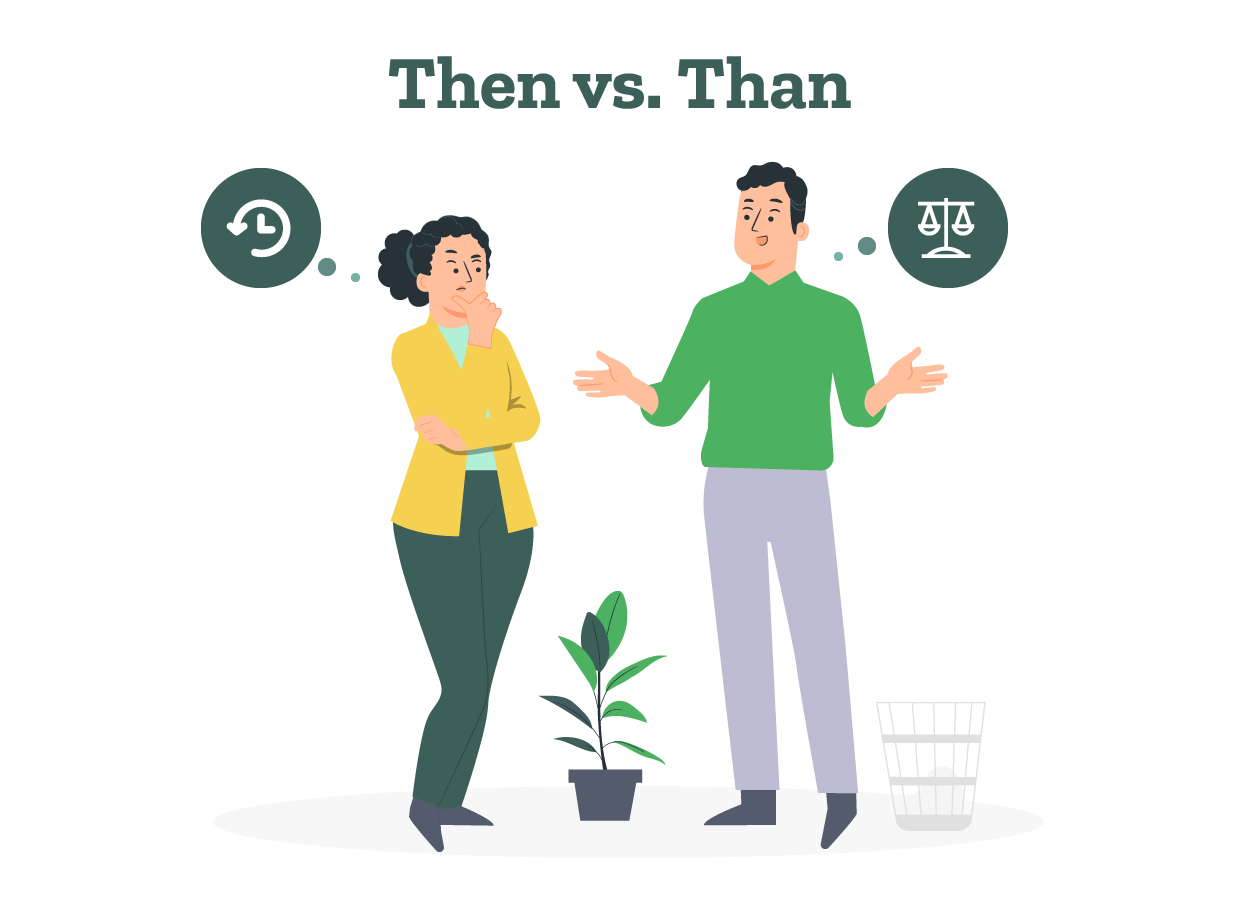
Then vs. than, a word duo that is most often mixed up. These pesky four-letter words are so similar when it comes to spelling and pronunciation that even native speakers are prone to messing up. Although ‘then’ and ‘than’ are pronounced differently, their similar sound often leads to confusion.

This is understandable since they’re also amongst the 100 most commonly used words in the English language. So, using them incorrectly is one of the most common grammar mistakes! It is important to be aware of these common mistakes to improve clarity in writing and speech. If you’ve also been making this mistake, it’s better late than (then?) never to understand how they work. Let’s begin!

Are you facing vocabulary errors? Let our editors help you write better. Get Started

What is the difference between then and than?

Although they’re often mixed up, there is a significant difference between then and than: Then is mostly used as an adverb while than is mostly used as a conjunction. Then functions as an adverb indicating time or sequence, while than is a conjunction used for comparisons.

Then indicates a period of time in the past or future. 

Back then, we used to live in Colorado.

Let’s have a quick meal and then watch Drag Race.”

Synonyms: During that period, after, later

Apart from time, then can also be used to indicate consequences.

If you want to join us for the movie, then I’ll be happy to pick you up.

Synonyms: Provided, only if, unless

Although then is most often used as an adverb, it can also be used as an adjective (then-professor, then-CEO). 

You may be wondering, “Is then a conjunction, or can it be used as one?” The answer is no. However, than is certainly a conjunction. In some formal contexts, than can also function as a preposition, especially when followed by pronouns in the objective case.

Than is predominantly used as a conjunction to compare two different ideas. It indicates an unequal comparison between two or more objects, people, or ideas. Here’s a sentence with than:

I find math tougher to understand than history.

Jellyfish are even older than dinosaurs!

Synonyms: Compared to, instead of, as opposed to

However, the tricky part comes in when than (in some cases) is used in phrases that indicate time. This is pretty similar to how then is used.

No sooner had the train departed than extraverted Sheila began talking to her fellow passengers.

Synonyms: Immediately, instantly, promptly

These words aren’t homophones or homographs, but they’re confused due to the similarity in their spelling and pronunciation. Now that we’ve understood the difference between then and than let’s understand how to use the two. To learn how to use than vs. then, we must take a look at them one at a time.

Where do we use then?

We use then to modify adjectives, nouns, and in most circumstances, verbs. Although uncommon, it is also used in idioms or phrases (then again, and then some, then and there, etc). Many of these are common expressions in both formal and informal speech. Then is also used to indicate time, order, or consequence. It can refer to a specific time when an event will happen or has happened, connecting actions or events in sequence.

Let’s take a closer look at these uses with the help of a few then vs. than example sentences:

Then as a noun

Then can be used in place of the time to indicate specific moments in the past. It is usually used poetically and not in everyday language.

Here are a few examples of then in a sentence:

  • The river of time flows from the now to the then.
  • Charlie couldn’t help but dwell on the then of their breakup.
  • Pamela often reminisced about the then of her childhood.

Then as an adverb

Then is most commonly used as an adverb to place things or events in order. As seen before, then can be used to refer to past or future events.

Here are some examples:

  • I think studying for a bit and then grabbing some ice cream would be more rewarding.
  • The chocolate cake needs to rest for a while and then be eaten. 
  • He went to Peru, then to Germany, and finally returned back to New York last year.

The adverbial clauses if…then and only then can also be used to indicate a stipulation or a consequence. 

Here are a few examples:

  • If you’re going out, then pick up a loaf of bread on the way.
  • You must put in enough work, only then will you succeed
  • If I decide to move abroad, then my dog, Marty, will accompany me.

Then as an adjective

Then can also be used as an adjective to refer to the previous position held by someone or an object or event belonging to a specific period in time.

Here are a few examples:

  • The manuscript’s then-editor suggested significant revisions before publishing.
  • In the photograph, you can see the then-small town before it grew into a bustling city.
  • Among the relics was a stack of then-unknown manuscripts written by the famous author.

Other uses of then

Apart from these three main uses, then can also be used in phrases. In this case then may not always be used to indicate temporal factors.

Take a look:

  • Due to her tardiness, her team manager let her go there and then.
  • I would like a big slice of chocolate cake, but then again, it has too many calories.
  • Margret received multiple warnings, and then some, before becoming the most diligent employee at Goldman and Sachs.

When to use than?

Although than is a conjunction in order to compare two or more unequal things, it is also very commonly used in phrases and proverbs. Than is predominantly used as a conjunction to compare two or more unequal entities. It is also used to express preference between options, such as in the phrase “I would rather do X than Y.” It indicates an unequal comparison between two or more objects, people, or ideas. In many comparisons, the second part of the sentence highlights the alternative or result being compared.

Let’s understand this better with the help of a few examples:

Than as a conjunction

Than is predominantly used as a conjunction to compare two or more unequal entities. It is usually preceded by comparative adjectives such as more, better, worse, faster, and wiser.

Here are a few examples of than in a sentence:

  • I’d rather stay home and read a book than go to a party.
  • The movie was more entertaining than I expected.
  • I heard that party girl Sarah moved to the Himalayas to become a monk, truth is certainly stranger than fiction.

Use of than in phrases

As mentioned above, than can be used in a different context for certain phrases. In rare cases the word than doesn’t function as a conjunction that is used to compare unequal entities. Instead, it is used to indicate an event that took place immediately after something. 

Here are some example phrases of than in a sentence:

  • No sooner had I reached home, than my mother gave me a list of chores to complete.
  • Hardly had I finished my paper, than the evaluator snatched it away. 
  • Scarcely had he received his salary, than he spent it all on shopping trips!

Now that we’ve understood when to use then vs. than, let’s take a look at a few example sentences.

Then vs. than example sentences

Note: It is important to pay close attention to the correct usage of then and than in example sentences, as this can significantly impact your understanding and communication.

While understanding the use of then versus than in phrases, remember that then and than are not used not always used individually.  They are often combined with other words to create phrases. 

Wondering what to use when? A rule of thumb is to watch out for comparative adjectives. Comparative adjectives like more, less, better, and worse are usually followed by than

Whereas then is used after temporal adjectives such as before and after. Let’s understand the appropriate usage of than vs. then in some of these phrases.

Practicing with real-life examples and paying attention to context can make it easier to understand and use these two words correctly. Expanding your vocabulary and practicing with different sentence structures can also help reinforce the distinction between then and than.

For additional practice and helpful exercises, consider visiting a website such as the Towson University website, which offers resources and examples on the correct usage of then and than.

Other then or other than?

Since other involves an element of exclusion the correct word here is than. Whereas other then is grammatically incorrect. 

Other than involves an aspect of comparison which refers to everything apart from. It can be used as a conjunction in place of except, besides, or apart from. Here are a few examples:

  • Other than pineapples, Jeremy is not too fond of any fruit.
  • None of the ideas seemed feasible other than the one proposed by the team leader.
  • Jamil loves all sports, but he excels in none other than basketball.  

More then or more than

More is once again is a term indicating comparison, hence is followed by a than. Whereas, more then is grammatically incorrect. 

More than can also be replaced with synonyms such as over, exceeding or, above. Here are a few examples:

  • More than 100 guests showed up at the wedding venue, which could host no more than 50.
  • Pran had a tough time adjusting to his new job, but he more than made up for it with his consistent efforts.
  • Andrea was much more than just a wealthy lady, she was a self-made, shrewd businesswoman.

Less then or less than

Similar to more, less also indicates comparison and should be followed by than. This renders less then as grammatically incorrect. It is synonymous with under or below. Here are a few examples of how less than can be used in a sentence:

  • The skilled professional charged no less than $100 per consultation.
  • To maintain a healthy lifestyle, it’s essential to consume less than the recommended daily intake of sugar.
  • The temperature outside is less than freezing, so make sure to bundle up before going out.

Then that or than that

The phrases then that and than that are both grammatically correct but serve very different functions. Then that is used to indicate consequence and is sometimes preceded by conditional words such as if and only. For example:

  • If Missy isn’t here yet, then that clearly means she’s working from home.
  • You must maintain a healthy diet and exercise regularly; it’s only then that you’ll see significant results.
  • Study hard for the test! It’s only then that you’ll top your college.

Then that can also be used in place of after that. For example:

  • Timmy had been awfully quiet for ages: It was then that I realized that he might be getting bullied.
  • As I turned around, I saw a hidden path, and it was then that I realized there was more to explore.
  • Priya thought she had lost her phone, but it was then that she discovered she had left it in the car!

On the other hand the phrase than that is generally preceded by comparative adjectives such as more, less, better or worse. Here are a few examples:

  • Ronald is a good-looking chap, but more than that, he is a trustworthy and kind individual.
  • The screen on my new phone is larger, but the battery life is smaller than that of my old one.
  • Instead of resorting to petty arguments, show them that you’re better than that. 

Before then or than

Since before is a temporal adjective, it is followed by then. Hence, before than is  grammatically incorrect. Before then can be substituted with prior to that or preceding that in a sentence. 

Here are a few example sentences using before then:

  • The advent of the internet is a pretty recent phenomenon. Before then, people relied on more rudimentary methods of communication such as letters.
  • The meeting is scheduled for 3 PM, but it would be nice if you could come before then. We can go over the details of our agenda.
  • John hadn’t tried rock climbing before then, but he decided to give it a shot during the adventure trip.

And than or and then

And is a conjunction that is used to connect two or more words, sentences, phrases, or clauses. Since it is used as a connecting conjunction and not a comparative adjective, and is always followed by then. Whereas, and than is grammatically incorrect.

Here are some example sentences:

  • The chef prepared the main course, and then he garnished it with fresh herbs.
  • She locked the door, and then she realized she forgot her keys inside the house.
  • The students lined up, and then they proceeded to enter the classroom one by one.

Tips for Mastering Then and Than

To confidently use “then” and “than,” it’s important to recognize their different meanings and functions. “Then” acts as an adverb, often pointing to a specific point in time or indicating a consequence. For example, “We’ll have breakfast, then go for a walk.” On the other hand, “than” is a conjunction used for comparison, as in “She is taller than her brother.” A helpful way to remember the distinction is to associate “then” with time or events, and “than” with comparisons between two things. Practicing with real-life examples and paying attention to context can make it easier to understand and use these two words correctly. The more you practice, the more natural their correct usage will become.

Practice Exercises

Practicing with targeted exercises is one of the best ways to master the correct usage of “then” and “than.” 

Try fill-in-the-blank sentences, such as: 

“If you finish your homework, _____  you can watch TV” (answer: then)

“He is more patient *** most people” (answer: than). 

Multiple-choice questions and writing prompts that require you to use these two words in context can also reinforce your understanding. 

For example, “She is taller _____  her brother” (answer: than) 

“We’ll eat breakfast, _____ go for a walk” (answer: then). 

By regularly practicing with these types of exercises, you’ll become more confident in distinguishing between “then” and “than,” leading to clearer and more effective communication in both writing and conversation.

Here are some more resources for you:

How to Introduce a Character Effectively

So you’ve started on your new writing project, but can’t seem to find the best way to introduce new characters? Characters are the backbone of a story—be it a novel, a play, a screenplay… and it’s important to introduce your characters in such a way that you immediately grab the reader’s attention and get them invested in that character’s arc or journey. 

Whether they’re a heroic protagonist or the worst of the smarmy villains, if you can make a character appear interesting from the beginning, that’s half your work done!

Get Professional Assistance In Your Writing Journey Today! Learn More

Here’s how you can introduce a character effectively:

Steps to introduce your character

Step 1: Avoid stereotypes

No human being is completely black or white—everyone has shades of grey. Similarly, all heroes have their flaws, and all villains have their redeeming qualities. Introducing a main character as a perfect Mary Sue who’s sweet as sugar and gets along seamlessly with all the others can seem a little boring, and writing a villain who’s irredeemably bad in every situation can be a little predictable.

Step 2: Show, don’t tell

Instead of giving the reader the lowdown on the character’s background, life story, and personality, let the reader figure it out for themselves. As an author, it is important to credit the reader with enough intelligence to come to their own conclusions—most readers dislike being spoonfed. The best way to do this would be to introduce the character in a setting where they are doing something that gives an insight into their character and personality. It could be something as simple as waiting for a coffee order or dramatic, like saving a puppy from being run over by a vehicle—just make sure the character’s personality shines through their actions.

A man saving a puppy - an example of Show, don't tell while introducing a character in a story

Step 3: In medias res

‘In medias res’ means ‘in the middle of action’. Instead of starting the story at the beginning, consider beginning in the middle, with the character involved in some activity that would require an interesting backstory. This is a great way to slowly unravel the events of the story while simultaneously peeling back the layers of your character’s personality, like an onion, making them more interesting to the reader. This is also a super effective way to introduce a character in a screenplay, as it immediately grabs the attention of the audience.

Describing their physical appearance

It’s important to remember that while you, as the author, may have a fully formed image of your character in mind, most readers would not. So, it is important to describe their physical appearance just enough to allow the readers to form a mental image without going overboard and leaving no room for the reader’s own imagination. Here’s a great example of how to introduce a character in a book by physical appearance:

In J.K. Rowling’s Harry Potter and the Order of the Phoenix, Dolores Umbridge is described as an odious character from the start—she is a short, squat woman with iron-grey curls and a broad, pallid face. She dresses in fussy, girlish outfits in shades of pink that do not suit her, wears too many rings on her thick, stubby fingers, and on her head wears a black velvet bow that reminds Harry of a fly perched on a toad. He almost expects her to stick out her tongue and catch the fly!

Dolores Umbridge from Harry Potter. An example of introducing a character through their physical appearance.

This description of her is so clear that the reader is immediately repulsed, forming an unpleasant mental image of a toad-like woman who clearly sees herself as something she is not. It is also unexpected and interesting how a middle-aged villain is depicted as dressed in a youthful, girly style that is usually reserved for young, fresh-faced heroines. It’s also a good idea to introduce a character through another’s eyes—a character that either loves or hates them—to show how they appear to the world.

Describing their voice/smell/mannerisms

Introducing a character through intangible qualities such as their voice, smell, or mannerisms can also offer a deeper insight into their nature and vulnerabilities. While the character of Kate Sheffield (Sharma in the TV show) in the Bridgerton series is initially introduced as a sarcastic spinster, she is also described in the books as smelling of lilies—something that her future love interest, Anthony Bridgerton, notices, lending her character a hidden femininity.

Kate Sharma from Bridgerton. An example of character introduction through mannerisms,

Similarly, a baritone can suggest an authoritative male character, while a squeaky voice can suggest someone young and inexperienced, and not too sure of themselves. Certain mannerisms, like fiddling with a lock of hair, can suggest nervousness, displaying a vulnerability that may not always come out through dialogue. Introducing a character through their voice or mannerisms is also often used on screen in order to create the character’s aura in the mind of the audience.

A few pointers to keep in mind when describing intangible qualities:

  1. Picture the character as a person you might meet in real life, not a caricature. Make them real—neither too perfect nor utterly imperfect—this is the best way to make them believable.
  2. Adding certain details about their voice, mannerisms, and smell also helps the reader to picture and relate to them better. Try to picture the character from the reader’s point of view.
  3. Do not be overly descriptive—provide just enough information to form a clear picture of the characters and allow the readers to flesh out their image themselves. Spoonfeeding every single detail of the description can make a work tiresome to read.

Introducing a character through their behavior

The perfect way to introduce a character with a particularly strong or peculiar personality would be to highlight those traits in their depiction. A great example of this is the whiny, arrogant, self-centered character of Eustace Scrubb in C.S. Lewis’s Narnia series, who is introduced as follows: His name was Eustace Clarence Scrubb, and he almost deserved it. In this way, Lewis manages to introduce a character humorously and immediately grabs the reader’s attention, building curiosity as to what a boy with a name like Eustace Clarence Scrubb could be like.

Eustace Scrub from The chronicles of Narnia. A how to introduce your character in story example through behaviour

Common pitfalls to avoid

Certain common pitfalls can turn an otherwise interesting story into a tedious read. Here’s what to avoid:

  1. Info-dumping on the character’s backstory all at once can often turn an intriguing character into a stale one. Provide just how much information is necessary to introduce the character, and then reveal more in relevant places as the story goes on—this will hook and surprise your readers far better.
  2. Giving your character an unexpected entrance will grab the reader’s interest far better than a clichéd one. For example, you can introduce your main character in an unobtrusive manner but build them up to be the main character, this would help get your reader more interested in them than if they had a flashy, hero-like entrance from the get-go.
  3. Inconsistent characterization is a writer’s worst enemy. Once you create a character, their behavior and decisions should make sense and be consistent. If they are to make a drastically different decision or alter their behavior, there must be a transformative event that brings it on.
  4. Focusing too much on physical appearance and repeatedly describing in detail what a character is wearing/how they’ve done their hair, etc., can take away from the narrative. Once the preliminary introduction is done, only relevant details need to be provided in subsequent scenes to set the tone.

How to introduce a character in a script or screenplay

The best way to introduce a character in a script or screenplay is by putting them in a situation that reveals their personality before any dialogue. It is also important to note that a detailed description is required for main characters only—most scripts/screenplays have between four to seven main characters. Giving detailed introductions to minor characters can detract from the main purpose of the story.

Whether you’re introducing a main character or a villain, in a book, script, or screenplay, it’s all about creating an interesting and memorable character with their own unique quirks who will stay with your reader/audience long after they finish the book or movie!

Check out PaperTrue’s expert self-publishing services and writer support to enhance your writing today! With our expert editors, detailed instructional blogs, and AI-powered services, we can help you turn your manuscript into a published book!

Here are some more resources that may help you:

10 Best AI Story Generators in 2025: Write Captivating Tales

In the age of digital innovation, AI story generators have become powerful tools for writers, helping them overcome creative hurdles and bring their stories to life.

These generators are book-writing tools that work on command, providing a wellspring of inspiration for storytellers. Let’s dive into the world of the 10 best AI story generators, exploring their unique functionalities, usage, and the benefits they offer!

Get specialized editing for your story!

The ten best AI story generators in 2025

Free AI story generators can improve your writing speed and efficiency, and enable you to explore different writing styles and genres and experiment with different narrative perspectives. So, let’s explore the top 10 AI story generators in this section.

1. Jasper AI

Jasper AI story generator Homepage

Jasper AI is a versatile AI tool that helps writers generate high-quality, long-form content. Its advanced language models make it ideal for creating detailed stories. Jasper’s customizable features allow users to adjust tone and style, making it a popular choice among writers. 

It also has an app library that offers templates for story writing. What’s more! There are no word count restrictions. 

Functionality: Provides long-form content generation with customizable tones and styles.

Usage: Best for generating detailed narratives, blog posts, and marketing content.

Benefits: Supports over 25 languages, offers flexible pricing plans, and assists in creating interesting and versatile creative content.

Pricing: Creator Plan – USD 39 per month

2. NovelAI

Novel AI story generator

As the name suggests, NovelAI is an AI story generator that focuses on long-form content. It serves as an excellent companion for authors of novels and scripts seeking a powerful tool to develop intricate storylines. 

NovelAI’s advanced algorithms assist in novel writing. It also helps in character development and plot progression, making it easier to maintain consistency throughout a lengthy narrative.

Functionality: Specializes in long-form content like novels and scripts.

Usage: Assists with character development and maintaining consistent story arcs.

Benefits: An excellent tool for longer projects requiring complex storytelling.

Pricing: Tablet – USD 10 per month

3. ChatGPT

ChatGPT AI story generation tool

ChatGPT, powered by OpenAI’s GPT-4, is well-known for its adaptability and intelligence. It excels in generating human-like stories across various genres, making it a versatile tool for both professional and casual writers. 

From brainstorming ideas to creating complete story drafts, ChatGPT supports diverse creative needs. It has become the tool of choice for storytellers who want innovative storytelling ideas and creative writing solutions.

Functionality: Advanced natural language processing for generating creative, coherent narratives in multiple genres.

Usage: Ideal for brainstorming story ideas, writing dialogues, or completing detailed drafts.

Benefits: Highly flexible, supports multiple languages, and works effectively for writers across experience levels.

Pricing: Can be used for free; paid versions involve paying for 1K or 1M tokens.

4. SudoWrite

SudoWrite AI story generator

Sudowrite, one of the best AI tools for authors, is specifically designed for writers, focusing on creative enhancement. It is an excellent brainstorming tool that offers rewriting and descriptive assistance, helping novelists and screenwriters refine their drafts. 

Sudowrite is a favorite for its ability to add flair to stories, making it a writer’s best friend. Its capabilities extend far beyond basic assistance, allowing writers to craft stories that not only engage but also enthrall their readers.

Functionality: Rewrites drafts, generates descriptive language, and brainstorms plot ideas.

Usage: Ideal for refining drafts and exploring fresh perspectives in storytelling.

Benefits: Tailored for novelists and screenwriters looking to polish and expand their ideas.

Pricing: USD 10 per month for 225,000 credits per month (Hobby & Student plan)

5. Hix.AI

A screen of the Hix.AI story generator.

Hix.AI is a sophisticated AI story generator that prides itself on its deep learning model algorithms. As a story plot generator, it’s designed to understand the nuances of narrative structure, ensuring that the stories it generates have a cohesive flow. 

This tool is particularly helpful for writers looking for a more structured approach to story crafting. It provides a solid framework for further story development.

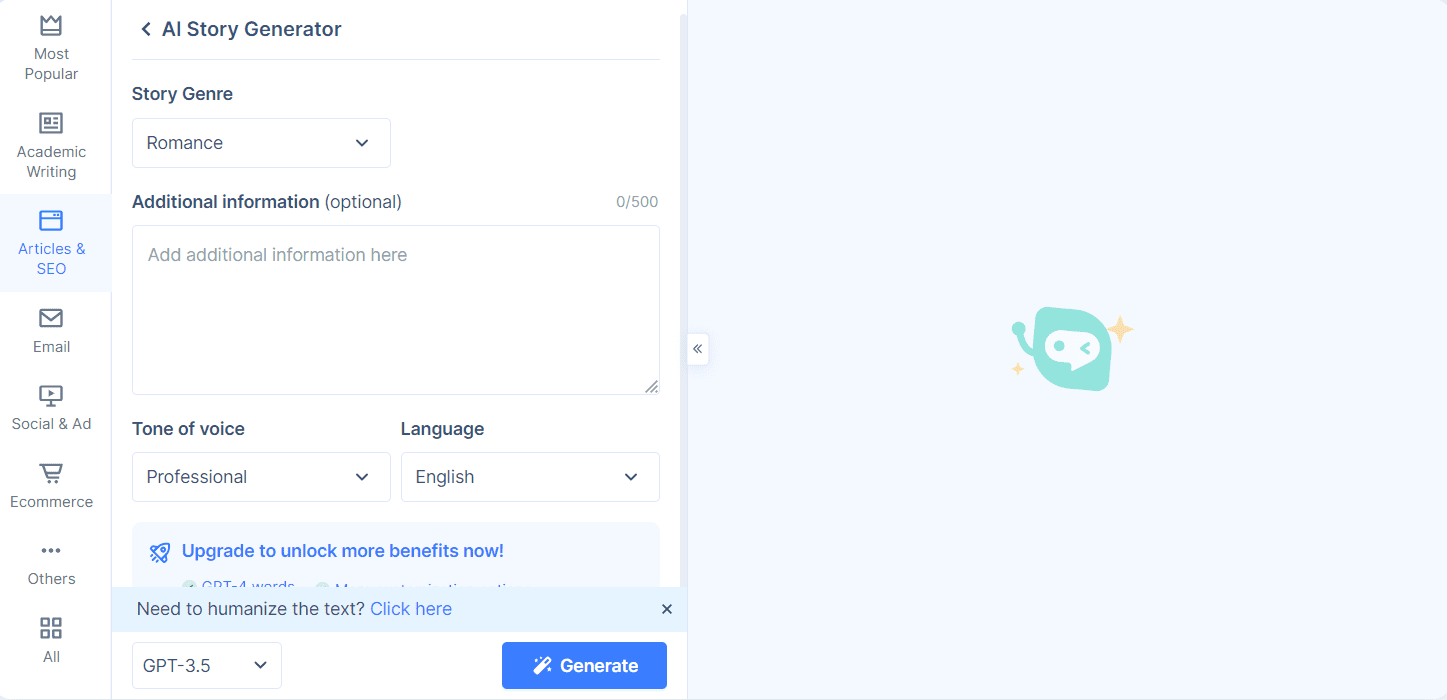
Functionality: Provides options for genre selection, tone of voice, and language selection.

Usage: It provides a solid framework for story development.

Benefits: Ideal for writers seeking a structured approach to their narratives.

Pricing: Basic – USD 7.99 per month

6. Simplified

A screen of the Simplified AI story generator.

Simplified’s AI story generator is all about making the process of story creation as easy as possible. With a focus on convenience, this free AI story generator helps writers quickly come up with ideas and expand them into full-fledged stories. 

It also provides an option of using free story templates. It’s a great solution for those who want to turn a spark of inspiration into narrative creativity.

Functionality: Focuses on ease of use and rapid story creation.

Usage: Turns brief ideas into detailed stories.

Benefits: Perfect for quick story drafting with minimal input.

Pricing: Free for personal use.

7. Plot Factory

Plot Factory AI story generator

Plot Factory is a structured AI story generator that helps writers organize and develop their stories. It offers tools for managing characters, settings, and other elements, ensuring consistency throughout the narrative. It also includes AI-generated outlines and text-to-speech capabilities for easy drafting and editing.

Functionality: Organizes story elements and generates AI-powered outlines.

Usage: Ideal for writers looking for a structured approach to story development.

Benefits: Ensures continuity with a digital storage system for story elements, provides AI-generated outlines and includes text-to-speech functionality for easier editing.

Pricing: The basic version is free to use.

8. Perchance

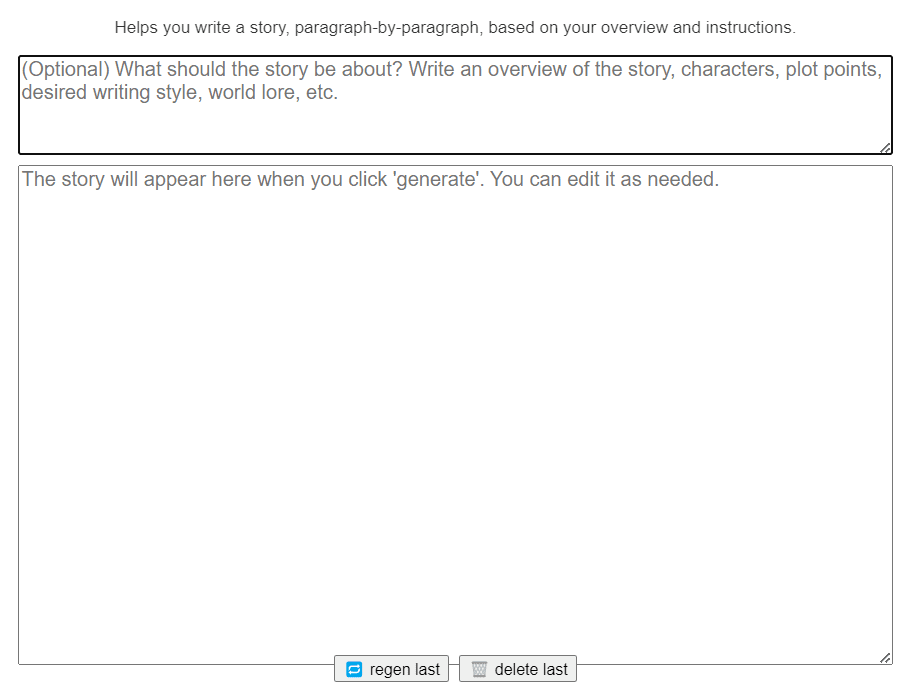
A screen of the Perchance AI story generator.

Perchance offers a unique spin on the free AI story generator with its random story generator. It’s designed to produce surprising and unexpected plot twists, making it an excellent tool for writers who enjoy a fluke in their storytelling. The generator is perfect for anyone looking to break free from conventional plot outlines.

Functionality: Produces content paragraph-wise and is customizable.

Usage: Generates stories with a higher degree of randomness.

Benefits: Suited for writers looking to explore unique and unconventional plots.

Pricing: Free to use.

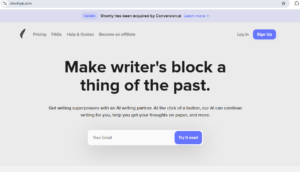
9. ShortlyAI

ShortlyAI story generator

ShortlyAI is designed for writers who need help drafting long-form content quickly. This AI writing assistant simplifies the writing process by offering suggestions, enhancing narratives, and generating text based on the user’s prompts. 

Its minimalist interface allows for distraction-free writing, helping users focus on content creation rather than formatting. With no word count limitations, this is a great tool for those who find themselves frequently in need of reliable writing support. 

Functionality: Focuses on generating long-form content and enhancing narrative flow.

Usage: Best for writers who need assistance with drafting or expanding upon story ideas.

Benefits: Offers a clean interface, is easy to use, and helps writers produce long-form content faster.

Pricing: The Annual Plan costs USD 65

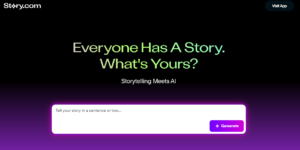
10. Story.com

Story.com AI story generator

Story.com is a comprehensive AI storytelling platform that helps writers build stories in an engaging and interactive way. It allows users to create complex narratives with dynamic characters, settings, and plotlines. With its user-friendly interface and AI-driven prompts, 

This tool makes it easier to structure stories and develop compelling narratives, making it a great tool for novelists, game developers, and screenwriters.

Functionality: Focuses on story development with interactive character and plot creation tools.

Usage: Ideal for writers, game developers, and screenwriters looking to create detailed narratives.

Benefits: Offers AI-driven plot suggestions and character development, making it easy to structure and enhance your stories

Pricing: Free to use.

Incorporating these AI-driven tools into your writing process can open up a world of creative possibilities. The benefits are clear: by leveraging the power of AI, writers can push the boundaries of their imagination, explore new genres, and craft stories with an unprecedented level of detail and creativity.

Whether you’re drafting a quick tale with a free short story generator or embarking on a novel with an AI plot generator, the future of storytelling looks bright with AI as a collaborative partner. Also, as a provider of expert editing and proofreading services, PaperTrue is always here to help you enhance your stories!

Here are some more useful articles for you:

What Is an Appendix In a Paper?

Have you ever wondered about those extra sections at the end of academic papers? They are called appendices. When writing academic or research papers, additional details, data, and supportive information are included to enrich the primary text, but their vastness typically overwhelms readers. 

So, what is the solution? This is where you can make an appendix to accommodate this information. In this post, let us dive into what an appendix is, why it is used, and how to correctly include it in your academic papers.

Can’t Decide what Your Research Paper Lacks? Get a Professional Opinion. Learn More

What is an appendix in a paper? 

An appendix (plural: appendices) is a section at the end of research papers, dissertations, or theses that contains additional or supporting material that strengthens your main argument or content but is not essential to its core message.

An appendix might include raw data, additional tables, or detailed explanations that provide value to readers interested in decoding your research further. However, this additional information does not directly fit into the paper’s body. Hence, it needs to be included in a place where it adds value without affecting the flow of your paper. 

An appendix enables writers to provide various important details without distracting the audience from the research paper’s key focus areas. Appendices enhance clarity and readability for the target audience.

Why use an appendix?

Using an appendix has several benefits that contribute to a well-organized and comprehensive paper. It is a great tool to ensure your work can be presented in a systematic manner, where it becomes clear to your readers that clarity and coherence have been prioritized. 

Here’s why including appendices is often advantageous:

1. Enhanced readability

Appendices offer a place for supplementary information, enabling readers to easily access it if they want to explore the specifics of a matter or topic. It ensures there is zero disruption to the flow of the main text.

2. Efficient organization

By placing extra material in an appendix, you can maintain a streamlined structure in the body of your paper. It allows readers to follow the main argument or analysis smoothly. They can stay unhassled by details that do not contribute directly to the main discussion.

3. Data transparency

If your paper relies on data, including raw data tables or charts in the appendix, it demonstrates transparency. Readers can verify your data and understand your research methodology. It also shows your commitment to quality research work and good research practices. 

4. Comprehensive evidence

Appendices can hold evidence that substantiates your research findings, such as interview transcripts, survey results, or extensive literature references, offering readers more depth than the primary text allows. Such transparency and a detail-oriented approach can significantly enhance the credibility and impact of your research.

What to include in an appendix

Some types of appendices are data, textual, visual, and documentation, among others. An effective appendix contains material directly relevant to your research but not essential to the primary narrative. 

Here are some commonly seen elements that you might need to include for a comprehensive view:

1. Raw data and calculations

Complex data sets, tables, and statistical calculations often fit well in appendices, helping you avoid overwhelming the reader with data in the main body. It prevents information overload and gives the readers useful input related to the key findings and observations of your research. 

2. Detailed descriptions of research instruments

If you used specific tools, surveys, or equipment, include descriptions or even copies of these materials for reference. It enables readers to understand the methodology and replicate the study if needed. 

3. An extended literature review or background information

Relevant articles, background studies, or theoretical frameworks that did not fit into the main text can go in the appendix, enriching your research context. By placing a detailed literature review or background information in the appendix, you can provide an exhaustive overview of the research field.

4. Interview transcripts or survey responses

Appendices are ideal for raw qualitative data, such as interview transcripts or survey responses, that support your findings and claims without burdening the main narrative. Including them in an appendix allows readers to access the raw data and draw their independent conclusions (if needed).

5. Additional graphs, charts, or images

Extra visuals, such as maps or diagrams, that support your points or provide context, can be placed in the appendix.

Appendices are a valuable tool, but they should be used judiciously. It is advisable not to use them as a catch-all for unrelated information. 

Only include items that clarify or strengthen your paper’s main arguments. Also, it is important to plan the contents of the paper well to avoid including irrelevant information in the appendix.

How to format an appendix

Appendices in academic writing are typically formatted with clear labels, such as “Appendix A,” “Appendix B,” and so on, to ensure easy reference within the main text. Each appendix should begin on a new page, with a title centered at the top, followed by the content in a consistent font and size used throughout the document. 

Depending on the type of material, such as tables, charts, or transcripts, additional formatting like numbered headings or explanatory notes may be necessary to maintain clarity and adherence to academic style guidelines like APA, MLA, or Chicago.

For more information about formatting an appendix, read this article: How to Format an Appendix: APA and MLA

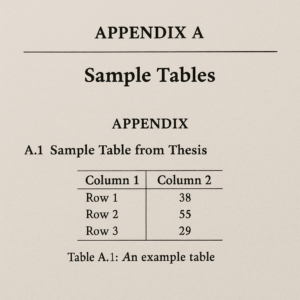
Example of an appendix in a paper

Below is a sample layout that shows the structure of an appendix with various types of content:

Appendix A: Survey Questions

  1. How often do you use public transportation?
    • Daily
    • Weekly
    • Rarely
    • Never

Appendix B: Raw Data for Statistical Analysis

Variable    Mean     Standard Deviation
Age     34.2                   4.7
Income     45K                  10K

This format illustrates how different materials are organized in individual appendices. It makes each section easy to locate and reference in the text.

Example of appendix in a paper

Appendix placement in different paper formats

The placement of an appendix can vary based on the paper type and style guide you are following. 

Typically, the appendix is positioned after the main body text and before the reference list or bibliography. However, depending on the format of your paper, there may be some variation. Let us see how it works. 

  • Research papers: Appendices appear after the references list in APA format, but can vary in MLA and Chicago depending on the length and structure of the research work.
  • Theses and dissertations: Appendices may appear at the very end of the document or after the conclusion, depending on your school or institution’s guidelines.
  • Journal articles: Some journals prefer that appendices be submitted separately or appear after references, so it is essential to follow journal-specific guidelines.

Appendices vs. Footnotes/Endnotes

While appendices are detailed supplementary sections placed at the end of a document or paper, footnotes and endnotes serve different purposes and follow different conventions:

  • Footnotes: They appear at the bottom of each page and are used for brief citations or clarifications that do not fit smoothly into the text.
  • Endnotes: They are similar to footnotes but appear collectively at the end of a chapter or paper, allowing for brief explanatory notes without disrupting the text.

On the other hand, appendices are suitable for lengthy information, may span multiple pages, and require separate arrangements. Using appendices instead of footnotes helps present larger bodies of data or support documentation without cluttering the main text.

So, at the end of this discussion about what is an appendix in a research paper, we can conclude that it is a critical component for sharing detailed data and supporting information without disturbing content flow and readability. Mastering how to format an appendix and correctly including the right information makes your work look more professional. 

Whatever style guide you might be required to follow, including appendices in the correct format ensures you can present a thorough, well-supported research narrative. 

Incorporating an appendix can add immense value to your paper by making it comprehensive and reader-friendly. Follow these steps for research papers, theses, and journal articles, and let us know how it worked out for you. Did it make a lasting impact on your audience? 

If you need assistance ensuring your paper is polished and professionally formatted, consider PaperTrue’s editing and proofreading services. Our expert editors can refine your work, improve content clarity and cohesion, and help you meet academic standards.

Here are some articles you might want to check out: 

What is Academic Editing? Meaning, Types & Importance

Have you ever wondered what academic editing is and how it can help you? In this article, we’ll explore the basics of academic editing and its benefits for students, researchers, and academics.

So, what is academic editing? To put it simply, it’s a process to enhance various aspects of academic writing. This includes sentence structure, spelling, grammar, word choice, writing style, and tone. So let’s start by learning about the types of academic editing services.

Get Professional Academic Editing for Your Text! Get Started

Types of academic editing services 

Substantive editing, copyediting, and proofreading are the three types of academic editing services. The types of editing services required will differ depending on the customer’s specific goals. 

For example, customers who have well-structured and clear documents but need help with grammar and style would benefit from selecting copyediting. 

Let’s understand all these types of editing in detail! 

1. Substantive editing 

Substantive editing, also known as developmental editing, focuses on the big-picture aspects of your work. This includes the overall structure, logical flow, and clarity of your arguments. 

A substantive editor will provide suggestions for reorganizing paragraphs, clarifying unclear concepts, or elaborating on key points wherever required. 

2. Copyediting 

Copyediting is a detailed process that involves reviewing a document line by line. Copy editors check for grammar, spelling, and punctuation errors. 

They also focus on improving sentence structure, word choice, and overall readability. Many copy editors also perform a fact check and determine if the content follows the required style guide (APA, MLA, Chicago, or other). 

3. Proofreading

Proofreading is the final step of preparing the text for submission or publication. It involves reviewing the text to correct any remaining errors in grammar, punctuation, spelling, and formatting. 

Who needs academic editing? 

Professors, lecturers, and other academic staff who are writing books, articles, or teaching materials require academic editing. Also, academics who are not native English speakers need help with language and style.

Academic editing is also required by: 

1. Students 

Undergraduate and graduate students writing essays, research papers, or dissertations require academic editing. These students wish to improve their grades and need help with language and grammar.

2. Researchers

Researchers preparing articles for publication in academic journals or conferences need the help of academic editors to refine their writing. Also, researchers applying for grants or funding who need to submit polished proposals require academic editing.

3. Professionals 

This includes professionals in fields such as medicine, law, or business who are writing reports, proposals, or other documents with an academic focus. These professionals want to ensure their writing is professional, accurate, and well-structured.

Benefits of academic editing

The biggest benefit is that editing services can help save you time. They can quickly identify and correct errors, freeing you to focus on other important aspects. 

Some other benefits of academic editing are: 

1. Improved clarity and conciseness

Academic editing helps you express your ideas more clearly and concisely. Editors fix any awkward phrasing, rambling sentences, and unnecessary words, making your writing easier to understand. 

2. Enhanced structure and organization

A good editor will help you organize your thoughts logically. They’ll ensure your arguments flow smoothly, your sections are well-structured, and your overall presentation looks professional and polished. 

3. Error correction

Academic editors meticulously check for grammatical errors, typos, punctuation mistakes, and inconsistencies in style. A polished manuscript free from errors demonstrates attention to detail and professionalism.

4. Improved style and tone

Academic editing helps you refine your writing style to match the conventions of your field. Editors ensure your tone is appropriate for your audience and purpose. For example, they make sure that the tone is formal for a research paper or informal for a creative writing assignment. 

5. Enhanced credibility and impact

High-quality writing enhances your credibility as a researcher or scholar. A well-edited manuscript demonstrates your commitment to excellence and professionalism, making your work more impactful and influential. Clear and concise writing allows your research to speak for itself.

6. Increased chances of publication

A professionally edited manuscript is more likely to be accepted for publication in academic journals or conferences. Editors help you meet the high standards expected by academic publishers and reviewers, increasing your chances of success. 

Let’s understand in detail how academic editing can lead to publication success! 

How academic editing improves publication success? 

Professional editors help you present your ideas in a clear and organized way. This makes it easier for readers to understand your work. 

Some other advantages of academic editing are: 

1. Better language and style

Editors improve your language and writing style to fit academic writing standards. They help you keep a formal and objective tone and remove unnecessary words or repetition. With this, they also ensure that your manuscript has no grammar, spelling, or punctuation mistakes.

2. Ensure good structure and flow 

They make sure your manuscript is well-structured and has a strong flow, making it more impactful and convincing.

3. Following journal rules

Each academic journal has specific rules for formatting, citing sources, and organizing your manuscript. Editors make sure your manuscript follows these rules, lowering the chance of rejection.

4. Addressing reviewer questions

Experienced editors can help you predict and address potential questions or concerns that reviewers may have. They give you objective feedback on the strengths and weaknesses of your work, helping you fix issues and make your arguments stronger.

5. Professional and credible

A well-edited manuscript shows professionalism and attention to detail. It proves your commitment to producing high-quality research and increases your credibility as a researcher in your field.

Best practices for choosing the right academic editing services 

One of the best practices is to look for editors with expertise in your field. They will be familiar with the terminology, conventions, and expectations of your discipline.

Some other best practices for choosing proofreading and editing services are: 

1. Check the qualifications and experience of the editors. Look for editors with advanced degrees, professional editing certifications, and a track record of working with academic manuscripts.

2. Read testimonials and reviews from previous clients to understand the quality and reliability of the editing service. You can browse through reviews on the company’s website, social media platforms, and review sites like Trustpilot and SiteJabber. 

3. Analyze the communication channels and turnaround times offered by editing services. This will help you ensure that the editing service offers clear communication and timely delivery. 

4. Compare prices and features from different language editing services to ensure you’re getting a fair deal.

5. Look for editing services that offer a sample edit or a trial period. This allows you to assess the quality of their work before committing to the full service.

Academic editing is a valuable tool for anyone involved in academic writing. By selecting the best academic editing services, you can make your text more engaging for readers.

At PaperTrue, we provide professional academic editing services for all types of academic documents. This includes editing theses, dissertations, essays, research papers, assignments, journal articles, etc. 

Need more information about our services? Explore our website and get in touch with us!  

Here are some useful resources for you: 

How to Create the Perfect Book Trailer for Free

As an author, your job is not limited to simply writing a book—in this highly competitive market where some books become bestsellers overnight and others struggle to gain a foothold in the market, it’s all about visibility. As the face of your book, you, as the author, also need to have a solid plan in place to promote it—some authors reach out to Instagram book bloggers while others hope to grab eyeballs on #Booktok.

Either way, given how much time people spend online, the visual medium is non-negotiable when it comes to promoting your book. Just like how movies and TV shows build their audience through trailers, a growing trend is for authors to invest in a book trailer to offer a sneak peek at their new work.

Get Professional Assistance in Your Publishing Journey Today! Learn More

What is a book trailer?

As the name suggests, a book trailer is a short-format video (ideally not longer than 60 or 90 seconds). It builds the atmosphere of the book, introduces the main characters, hints at the conflict, and winds up with a question or cliffhanger that leaves the viewer wanting answers. The goal is to create excitement and curiosity, so that the viewer immediately picks up their phone or heads to their nearest bookstore to pick up a copy of your book!

This book trailer is usually shared on social media—Facebook, Instagram, LinkedIn, YouTube, TikTok—wherever the target audience hangs out online and is likely to see it. If it’s a young adult book, Instagram and TikTok are ideal platforms, but if it is a business book that is more likely to interest working professionals, LinkedIn is the way to go.

How to make your book trailer appealing

The trick is in knowing your audience. For example, a romance novel would do well with soft colors that are pleasing to the eye, upbeat background music, and an overall cheerful tone. A cookbook, on the other hand, would do well in a more domestic setting—think rustic farmhouse or cottagecore, with plenty of gingham, graphics of delicious dishes, and a feel-good vibe. It’s important to remember not to give away too much about your book in the trailer—only share enough to leave the viewer wanting more!

How to create a book trailer for free

Now that we have the basics down, we get to the most important question: how do you go about creating a book trailer? The good news is that it is fairly easy—you do not need to hire a graphic designer or scroll through endless videos on YouTube or even invest in expensive software. Free apps like Canva are extremely useful—they offer a wide range of templates, music choices, and graphics to help even a tech novice construct a visually and aesthetically appealing book trailer! 

Here’s how to create the perfect book trailer:

  1. First, have the points ready for each slide—start by introducing your book and characters using appealing graphics that correspond with the text.
  2. Next, share just enough information about the story to leave the audience wanting more. End the trailer with a question or on a cliffhanger to build interest and suspense.
  3. Finally, you can adjust the speed of the slides, layer effects, and add a background score that suits the tone and theme of the book. You can then download your video in the MP4 format, making it suitable for upload to all social media sites and messaging platforms. 

Great book trailer examples

Got your concept ready, but not sure whether it will make an impact or land right with the audience? No problem—YouTube offers a variety of book trailers that you can view for free. You can study their features, graphics, and the audience response based on likes, comments, and shares, and use this information to tailor your own book trailer to make waves on the right platforms! 

Here are some examples of great book trailers from various genres that will help you get an idea of what’s popular right now:

Suspense/Thriller

Watching you book trailer example

A book trailer that is currently making waves in the suspense and thriller segment is the one for Watching You by Lisa Jewell, published by Penguin Books South Africa. Its dark graphics, haunting soundtrack, and eerie theme create an aura of uneasiness that works perfectly with the book’s plot. Rave reviews by early readers and high ratings by bestselling authors round up the trailer perfectly, adding to the book’s credibility and giving viewers that extra push to pick it up.

Watching You by Lisa Jewell (Penguin Books South Africa): Book Trailer: Watching You

Romance

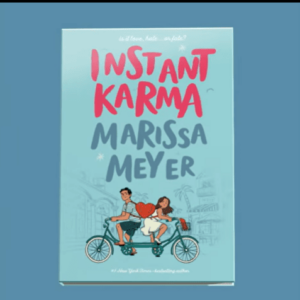
Instant Karma book trailer example

The short and snappy book trailer for Instant Karma by Marissa Meyer is a great example of how you don’t need a big budget or a fancy design app to create an impact. Bright, colorful graphics, an upbeat background score, and a hint of a will-they, won’t-they, enemies-to-lovers romance make an instant impression on the viewer.

Instant Karma by Marissa Meyer (Fierce Reads YA): Book Trailer: Instant Karma

Horror

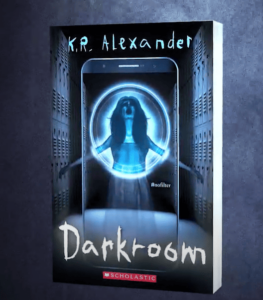
Dark room book trailer example

Ever seen a compelling book trailer for a horror novel aimed at digital-age preteens? The trailer for K.R. Alexander’s Dark Room gets it absolutely right with a mix of suspense, fear (but not too much!), and a voice-over that seems to be talking directly to you, encouraging you to download the Dark Room app and take part in its paranormal challenges… while simultaneously warning you of the consequences. 

Dark Room by K.R. Alexander (Scholastic Books): Book Trailer: Dark Room

Mythology

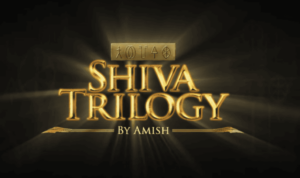
Shiva Trilogy book trailer example

A book set in the world of mythology needs compelling graphics, a strong character introduction, and an arresting background score to capture the viewer’s interest. Indian author Amish’s trailer for his Shiva trilogy does all of this and more. A more high-end trailer, it creates the setting using intricate graphics and uses models or actors to portray its main characters. However, if this seems daunting or expensive, do not worry! A book’s trailer is all about grabbing the interest of potential readers, and this can be achieved using free design apps like Canva. All you need to do is set the right background theme, select appropriate music from the app’s library (or upload your own), and pen a short and compelling backstory for your protagonists!

The Shiva Trilogy by Amish (HarperCollins India): Series Trailer 1: The Shiva Trilogy

Top 5 book trailer makers

  1. Canva: The OG editing tool that has a wide gallery of templates and graphics that extend to book trailers as well, Canva is easy to use for beginners and creates good quality videos that can be exported to and uploaded on a variety of online platforms.
  2. Adobe Rush: A tool so simple that anyone can use it, Adobe Rush offers a robust trailer-making experience that allows you to choose from a wide variety of music, slide speeds, voiceover options, and more.
  3. Instagram Reels: If you plan to film a book trailer using human models, Instagram Reels is the place to go! Here, you have access to a wide variety of editing tools and music, and can create vertical trailers that will perform well on Instagram, YouTube Shorts, Facebook, WhatsApp stories, and so on.
  4. Animaker: An online trailer maker with hundreds of free templates, Animaker has an extensive gallery of images and graphics that authors and publishers can use to craft a compelling book trailer that is bound to grab eyeballs.
  5. FlexClip: An easy-to-use online trailer maker, FlexClip offers a wide variety of free templates that can be easily edited and honed using a simple drag-and-drop interface. It has an extensive toolkit and AI assistance to elevate your book trailer from good to amazing!

Now that you know the perfect recipe to grab the viewers’ attention and keep them engaged, you can get started on crafting the perfect trailer for your book. Happy creating!

Check out PaperTrue’s expert publishing services and writer support to enhance your writing today! With our expert editors, detailed instructional blogs, and AI-powered services, we can help you bring your book the visibility it deserves!

Here are some more resources that may help you:

How to Write A Legal Document in 6 Easy Steps

Crafting a legal document requires attention to detail, clarity, and an understanding of legal principles. Hence, writing a legal paper can be challenging, especially for beginners. In this blog, you’ll learn 7 useful strategies for polishing your legal paper. 

For beginners, we’ve explained how to write a legal paper from scratch in 6 simple steps. Before performing these 6 steps, it’s important to prepare for the writing process. Let’s understand this pre-writing process!

Ensure Your Legal Documents Are Error-Free! Get Started

How to prepare legal documents 

An important step in preparing legal documents is to select a platform or software for writing legal documents. You can use Microsoft, Google Docs, or legal document writing software like Clio or Smokeball for this. 

Some other steps for preparing the writing legal document are: 

1. Define the document’s purpose and target audience 

Before you write a single word, ask yourself: What is the purpose of the legal documents I’m drafting? Is it to inform, persuade, instruct, or record something? 

Understand the goal you wish to achieve through the legal document. For example, is it a letter requesting information, a report summarizing findings, or a contract outlining an agreement? This will help you create a document outline. 

2. Keep in mind the document’s target audience 

Think about: Who will be reading this document? Their understanding of the subject matter will influence your writing style. For example, a document for experts will use a different language from one for the general public. 

3. Choose an appropriate format and structure 

The first step is identifying the type of legal document you need. Are you creating a contract, a will, a lease agreement, a power of attorney, a complaint, or something else? This will help you decide about the legal document structure. 

Each document type has a specific purpose and a standard format. Using the wrong type will not help you achieve your goals. 

4. Research relevant laws and requirements 

Determine which laws and regulations apply to your document. This may involve federal, state, or local laws, depending on the subject matter. 

Use online legal databases (like Westlaw or LexisNexis) to access statutes, case law, and regulations. These databases provide comprehensive legal information, helping in legal research and drafting. 

5. Review existing documents

Analyze similar documents to see how they address relevant legal issues. This can provide valuable insights into standard clauses and formatting

How to write a legal document 

The first step for writing a legal document is to create a first draft. The following are important pointers to create the first draft: 

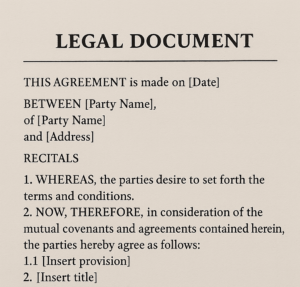
1. Create a title and purpose statement 

Give your document a clear and concise title that tells the reader what it’s about. For example, if the document is about renting a flat, the title “Rental Agreement” can be used. In contrast, if the document is for a project proposal, the title “Project Proposal” can be used. After the title, add a purpose statement that explains why you’re creating the document and what it aims to achieve. 

Here is an example: 

This document outlines the terms and conditions of employment between Vista Industries and Mr. Alfred Jones. It establishes the rights, responsibilities, and obligations of both parties during the course of employment.”

2. Divide the content into main and sub-sections 

Organize your information into logical sections and subsections. This makes your document easier to read and understand. For example, you can create separate sections for obligations, rights, and conditions. Use headings and subheadings to break up the text and guide the reader. 

3. Include important definitions and terms 

If you use any specialized words or terms that might be unfamiliar to your reader, define them clearly. This ensures everyone understands what you mean. You can do this within the text itself or create a separate glossary of terms at the end.

4. Include signatures and dates 

For legally binding documents, signatures show that everyone agrees to the terms. In contrast, dates show when the document was signed and when the agreement took effect. Make sure there’s enough space for signatures and dates. Also, indicate clearly who should sign where.

One of the most important components of a well-written legal document is legal clauses and provisions. Let’s explore this step! 

5. Include all necessary legal clauses and provisions 

If your document is a legal agreement (contract, lease, etc.), it needs specific clauses to make it legally binding. This includes information about the obligations and penalties wherever required.  

The most accurate method is to directly quote the relevant clause or provision within your document. Enclose the quoted text in quotation marks and cite the source properly.

For longer clauses or provisions, it’s often clearer to present them as a separate paragraph or section, clearly labeled and cited.

Note: If a clause is short and easily integrated into your sentence, you can incorporate it directly without quotation marks. However, it’s important to still cite the source. 

6. Edit and proofread 

Check the document carefully for any spelling, punctuation, and grammar errors. Also, double-check all facts, figures, and dates for accuracy. 

Plus, you need to ensure that the document is well-formatted and easy to read. This involves checking line spacing, margins, headers, footers, page numbers, etc. 

Example of how to write a legal document

Tips for effective legal writing 

For clear legal writing, avoid double negatives or other complex negations. Instead, use clear, direct language. For example, instead of saying “not uncommon”, you can say “common”. 

Some other tips for effective legal writing are: 

1. Prioritize clarity over complexity 

Avoid the use of overly technical language and jargon wherever possible. Use simple words and phrases that are easy to grasp. Remember, the goal is to make the document accessible to everyone. You can use online dictionaries like Nolo’s Plain-English Law Dictionary to ensure plain language legal writing. 

2. Avoid ambiguity with specific wording 

Make sure your wording is precise and specific to avoid any confusion or misinterpretation. Instead of using vague terms like “soon” or “reasonable,” use specific time frames or measurable criteria. 

For example, say “within 30 days” or “not exceeding $500.” This helps prevent disputes or misunderstandings later on.

3. Use active voice for direct statements 

Writing in the active voice means the subject of the sentence, who performs the action, is mentioned first. For example, instead of saying “The payment will be made by the client,” say “The client will make the payment.” This helps identify who is responsible for each action.

4. Remove unnecessary words 

Cut out any words that don’t add meaning or clarity. Every word should serve a purpose. Avoid phrases like “due to the fact that” (use “because” instead), “in the event that” (use “if” instead), or “at this point in time” (use “now” instead).  

5. Give character names wherever relevant 

When referring to people in your document, use their names or specific titles instead of generic terms like “he,” “she,” or “they.” This helps make the document more precise and avoids confusion, especially if you’re referring to multiple people.

6. Pay attention to the tone 

Decide the tone depending on the type of legal document. Maintaining a professional, impartial tone is crucial for documents like contracts, legal notices, and court filings. These documents should be free of emotional language, slang, or jokes, as they are meant to convey information clearly and objectively. 

However, some legal documents, such as client communications, legal blog posts, or educational materials, might not require neutrality. They can benefit from a more engaging or persuasive tone. 

7. Maintain simplicity and consistency

Following these key principles of legal writing is crucial for creating professional legal documents. A good practice is to start with the most important information and then provide supporting details. You can also use numbered or bulleted lists to break down complex information into simple points. 

Another good practice is to be consistent in the use of legal terms. Avoid using multiple terms for the same idea, as this can cause confusion. Instead, choose specific terms for key concepts and use them consistently throughout the document. 

Also, if you must use acronyms or abbreviations, define them the first time they appear and use them consistently thereafter.

You can refer to this step-by-step guide to writing a legal document while creating a first draft. However, it’s important to have the text edited and proofread by experts to eliminate any language errors. 

At PaperTrue, we can help you achieve this goal. We provide expert legal editing and proofreading services to elevate your legal document. 

Explore our website and get in touch to learn more about our services! 

What Is an Adverb? Definition, Types, & Practical Examples
Hey there! Want to know about adverbs? You’re in the right place! Our guide will take you through everything you need to know about adverbs. So let’s dive in and explore what adverbs are, different types of adverbs, an adverb definition and examples, and so much more. 

Plus, we’ve got some fun bonuses lined up, including a list of adverbs ending in “ly” and a peek into the word history of adverbs. Let’s start with an easy adverb definition!

Perfect your adverbs and enhance your writing! 

What is an adverb?

An adverb is a word that modifies or provides more information about a verb, adjective, or another adverb. Adverb answers include questions such as when, where, how, how much, and how often, helping clarify the circumstances of actions in a sentence.

An adverb modifies verbs, adjectives, and other adverbs. Adverbs modifying verbs can describe how, when, where, why, how often, or how much an action is performed. For example, in “She runs quickly,” the word “quickly” is an adverb because it shows how she runs. 

Knowing adverbs’ meaning helps us understand how they add flavor and clarity to our sentences.

Here are a few adverbs that are commonly used. Many adverbs end in -ly, but not all. Common adverbs include those in the following list:

How (Manner): Quickly, slowly, roughly

When (Time): Now, later, someday

Where (Place): Here, outside, there

How much (Degree): Very, almost, quite

Here’s a most commonly used “ly” adverbs list:

  • Softly
  • Rapidly
  • Easily
  • Happily

Many adverbs are formed by adding -ly to adjectives. Almost all adverbs can be used in degrees of comparison to express varying degrees of action or quality.

Now that we’ve understood how to define adverbs and seen a list of adverbs that are commonly used, let’s look at more adverb examples and adverb sentences to better understand the concept!

Examples of adverbs

Quietly, the thief entered your room. (The adverb is ‘quietly’.)

She happily accepted the award. (The adverb is ‘happily’.)

The flowers will bloom soon. (The adverb is ‘soon’.)

We looked everywhere for the lost keys. (The adverb is ‘everywhere’.)

One of the eight parts of speech, adverbs, is an important part of forming sentences.

What are parts of speech? 

Parts of speech are specific roles and functions of a word in the English language. Noun, verb, adjective, adverb, pronoun, preposition, conjunction, and interjection are the eight parts of speech. 

How to use adverbs in a sentence

Where you place an adverb in a sentence can change both the meaning and the emphasis of your message. In general, adverbs should be positioned as close as possible to the word they modify—whether that’s a verb, adjective, or another adverb.

For example, in “She quickly finished her homework,” the adverb “quickly” is placed right before the verb “finished,” making it clear that the speed applies to the action of finishing. If you move the adverb, the meaning can shift: “She finished her homework quickly” still modifies the verb, but the emphasis is slightly different.

Adverbs can also appear at the beginning or end of a sentence, especially when you want to modify the entire sentence or add emphasis. These are called sentence adverbs. For instance, “Fortunately, the rain stopped before the picnic” uses “fortunately” to modify the entire sentence, expressing the speaker’s attitude about the event. Similarly, “Honestly, I didn’t expect that result” uses “honestly” as a sentence adverb.

Here are a few more examples of adverb placement:

  • “Tomorrow, we will start the project.” (adverb at the beginning, modifying the entire sentence)
  • “We will start the project tomorrow.” (adverb at the end, modifying the verb phrase)
  • “She almost always arrives on time.” (adverb modifying another adverb)

The context and meaning you want to convey will help you decide where to place your adverb. Just remember: the closer the adverb is to the word it modifies, the clearer your sentence will be!

Tip: Using adverbs correctly in your sentences helps clarify meaning and ensures your writing is both clear and professional.

To further solidify our understanding, let’s look at some examples of adverb sentences:

He gently placed the book on the table. 

Gently is an adverb that describes the verb ‘placed’. 

How was the book placed? – gently


We will go to the park tomorrow.

Tomorrow is an adverb that describes the verb ‘go’. 

When will we go to the park? – tomorrow


She left the keys there.

There is an adverb that describes the verb ‘left’.

Where did she leave the keys? – There

Word history of adverbs.

Adverb vs. adjective

One common area of grammar mistakes is the difference between adverbs and adjectives. While adjectives describe nouns (e.g., a beautiful flower), adverbs modify verbs, adjectives, and other adverbs, as discussed. Remember, adjectives and adverbs serve different functions and cannot be used interchangeably. 

Adjective: She has a beautiful voice. (‘Beautiful’ describes the noun ‘voice’)

Adverb: She sings beautifully. (‘Beautifully’ describes the verb ‘sings’)

Adverb vs. verb

Another crucial distinction is between adverbs and verbs. Verbs indicate actions or states of being (e.g., run, be), while adverbs provide additional information about how those actions are carried out. 

Verb: She sings every day. (‘Sings’ describes the action ‘She’ is doing)

Adverb: She sings beautifully. (‘Beautifully’ describes the verb ‘sings’)

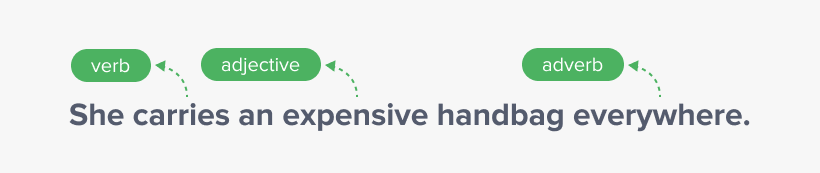
Some sentences can also consist of adjectives, adverbs, and verbs, at the same time.

A sentence having a verb, an adjective, and an adverb together.

Quick Quiz

She washes her clothes often. (Is ‘often’ an adverb or adjective?)

Adjective

Adverb

The baby is always happy. (Is ‘always’ an adverb or verb?)

Verb

Adverb

I’d rather not go out tonight; I need some rest (Is ‘rather’ an adverb or adjective?)

Adjective

Adverb

Types of adverbs

Adverbs are modifiers, as they modify verbs, adjectives, or other adverbs to add detail or clarity. Some adverbs are made up of more than one word, such as adverbial phrases or clauses, which serve similar grammatical functions. Adverbs can be categorized into several types based on their functions and the kind of information they provide. Here’s an overview of some of the main types of adverbs with their examples:

1. Adverbs of manner (How?)

These describe how an action is performed. These often end in “ly” but not always.

Ms. James spoke quickly. (How did Ms. James speak? – quickly)

He plays guitar badly. (How does he play the guitar? – badly)

2. Adverbs of time (When?)

They tell us when an action occurs.

I met him yesterday. (When did I meet him? – yesterday)

We will leave soon. (When will we leave? – soon)

3. Adverbs of place (Where?)

They indicate where an action takes place. These are usually the adverbs that don’t end in “ly”.

Come here. (Where to come? – here)

Flowers are blooming everywhere. (Where are flowers blooming? – everywhere)

4. Adverbs of degree (How much?)

They express the intensity or degree of an action or an adjective.

He was almost finished with his paper. (How much was he finished? – almost)

It is quite cold outside. (How cold is it outside? – quite)

5. Adverbs of frequency (How often?)

They describe how often an action occurs; in other words, adverbs of frequency describe the regularity or frequency of an action.

She often forgets her keys. (How often does she forget her keys? – often)

He always wakes up early. (How often does he wake up early? – always) 

6. Conjunctive adverbs

They are used to connect two independent clauses or sentences, showing the relationship between them. They often indicate things like cause and effect, contrast, or sequence.

He was ill, therefore, he went to the doctor. (‘Therefore’ joins two sentences.)

There was a fire, however, nobody was injured. (‘However’ joins two sentences.)

7. Superlative adverbs

They are used to compare three or more actions, indicating the highest degree or extent of the action.

Of all the boys, he jumped the highest. (‘Highest’ is the highest degree of ‘high’.)

Out of all, she practiced the most. (‘Most’ is the highest degree of ‘more’.)

8. Relative adverbs

They introduce relative clauses, connecting them to the rest of the sentence and referring to a time, place, or reason.

This is the house where I grew up. (‘Where’ relates the first clause with a place.)

I remember the day when we first met. (‘When’ relates the first clause with time.)

9. Interrogative adverbs

They are used to ask questions about manner, time, place, or reason.

Why are you late? (‘Why’ interrogates the action of being ‘late’.)

How did she solve the problem? (‘How’ interrogates the action of ‘solving’.)

10. Adverbs of certainty

They indicate the level of certainty regarding an action or event.

He will certainly attend the meeting. (‘Certainly’ shows the level of certainty.)

They are probably moving next month. (‘Probably’ shows a level of certainty.)

Adverbial phrases

Adverbial phrases are groups of words that work together to function as an adverb, modifying verbs, adjectives, or even other adverbs in a sentence. Unlike single-word adverbs, adverbial phrases can provide richer detail about the manner, time, place, frequency, or degree of an action.

Adverbial phrases can take several forms. One common type is the prepositional phrase, such as “in the morning,” “at the beach,” or “with great care.” For example, in “I went to the store in the morning,” the phrase “in the morning” is an adverbial phrase modifying the verb “went,” telling us when the action happened.

Infinitive phrases can also act as adverbial phrases. In “She paused to think,” the phrase “to think” explains why she paused, modifying the verb “paused.”

Adverbial clauses, which contain a subject and a verb, can also serve this function. For instance, “Because I was tired, I went home early.” Here, “Because I was tired” is an adverbial clause explaining the reason for going home.

Adverbial phrases add depth and variety to your writing by allowing you to describe actions, adjectives, or even other adverbs in more detail. Here are some more examples:

  • “He spoke with confidence.” (modifies the verb “spoke”)
  • “She finished the test in record time.” (modifies the verb “finished”)
  • “They arrived just before sunset.” (modifies the verb “arrived”)

By using adverbial phrases, you can make your sentences more interesting and informative, helping your readers understand exactly how, when, where, or why something happens

When to avoid adverbs

Adverbs can be powerful tools, but using them carelessly can weaken your writing. One common pitfall is using adverbs to modify linking verbs like “feel,” “seem,” or “be.” For example, “I feel strongly about this issue” uses the adverb “strongly” with the linking verb “feel,” but a more vivid verb, like “I am passionate about this issue,” often makes your writing stronger and more direct.

Another issue is relying on adverbs to tell rather than show. For instance, “She spoke loudly” tells the reader how she spoke, but it’s more engaging to show the action: “Her voice echoed through the hall.” Overusing adverbs like “very,” “really,” or “extremely” can also make your writing less precise. Instead of “The music was very loud,” try “The music was deafening” for a more impactful description.

Here are some tips to avoid common adverb pitfalls:

  • Use strong, specific verbs instead of pairing weak verbs with adverbs. (“She ran quickly” → “She sprinted.”)
  • Be cautious with adverbs modifying linking verbs; often, an adjective or a more descriptive verb is better.
  • Show, don’t just tell—use vivid imagery and action instead of relying on adverbs.
  • Limit repetitive adverbs like “very,” “really,” and “extremely” to keep your writing crisp.

By using adverbs thoughtfully and sparingly, you’ll make your writing clearer, more engaging, and more effective.

Now that you’re equipped with knowledge about what adverbs are, their types, examples, and more, you’re well on your way to mastering this essential part of speech. It can be your allies in clarity and creativity.

As experts in editing and proofreading services, PaperTrue is always here to make your writing shine. So keep experimenting with these linguistic gems, and watch your language skills flourish!

Here are some more useful resources for you:

Structure of an Essay: 5 Tips to Write an Outstanding Essay

A strong essay should be impactful. The secret to writing an outstanding essay lies in understanding how to structure an essay effectively. No more staring at a blank page, wondering where to begin! 

Generally, essays follow a clear structure that helps organize ideas and arguments effectively.

With the right structure of an essay, you can transform your jumbled thoughts into a coherent, engaging masterpiece. This guide is your one-stop shop for understanding the structure of an essay, its basic components, and how to craft each section for maximum impact. This article provides an overview of essay structure to help you get started. Let’s dive in!

Want the best structure and editing for your essay? We can help!

What is the structure of an essay?

The structure of an essay is the way it is organized to present ideas clearly and logically. It helps define the main argument or thesis of your writing. It is your blueprint, providing a clear roadmap for your ideas. It ensures that your arguments flow logically, making it easier for the reader to follow. A well-structured essay allows you to communicate a clear idea to your reader.

How to structure an essay: 3 crucial parts

Structure of an essay

Every essay, regardless of topic or type, rests on the following structure of an essay outline:

  • Introduction: This is where you grab the reader’s attention and set the stage for your argument. In this section, what will be covered includes the background information and the thesis statement.
  • Main body: This is where you develop your argument with evidence, examples, and analysis. The main points and supporting details covered here form the core of your essay.
  • Conclusion: This is where you summarize your key points and leave a lasting impression on the reader. The conclusion covers the final thoughts and reinforces the argument presented.

Understanding the structure of most essays helps students organize their ideas and improve their academic writing.

Creating an outline: Organizing your ideas for clarity

Before you start writing, taking the time to create an outline is essential for organizing your ideas and ensuring your essay is structured for maximum clarity. An outline acts as a roadmap, helping you arrange your main points and supporting details in a logical order. Begin by listing the key ideas or main points you want to present in your essay. Then, break each point down into smaller, more specific ideas or examples that will form the basis of your body paragraphs. Arrange these points in a sequence that best supports your argument and makes sense to the reader. Use your outline to plan transitions between paragraphs, ensuring a smooth flow of ideas from one section to the next.

Now, let’s decode each part in depth with the structure of an essay example.

The introduction

The introduction is the start of the essay, where you introduce the topic and present your main idea or thesis. You need a captivating hook to reel your reader in. The introduction presents the topic and main argument, and should capture the reader’s interest from the very beginning. Here’s how to structure an essay introduction:

  1. Begin with a hook in the first sentence—a thought-provoking question, a surprising statistic, or a relevant anecdote—anything that grabs the reader’s attention and makes them want to read more.
  2. Provide some necessary background information on your topic, defining key terms and establishing the context for your argument.
  3. Present the main argument of your essay in one or two sentences. Make sure the introduction addresses the essay question and that your thesis statement clearly answers the main question or prompt.

For example:

Topic: The Impact of Social Media on Communication

Introduction:

“Is social media connecting us or isolating us? With billions of users worldwide, platforms like Facebook and Instagram have become integral to how we communicate. However, this digital revolution has sparked debate about its impact on our relationships and communication skills. This essay will argue that while social media offers convenience and connectivity, its overuse can hinder face-to-face interaction and lead to superficial relationships.”

The body paragraphs

The body is the middle part, where you provide details, explanations, and examples to support your main idea. This is also where the discussion of your main points takes place, allowing you to thoroughly examine and elaborate on your thesis. While writing an essay, this section is usually divided into several paragraphs, each focusing on a specific point. Here’s how to structure an essay body:

  1. Begin each paragraph with a clear topic sentence that introduces the main idea of that paragraph.
  2. Support your topic sentences with strong evidence—facts, statistics, examples, expert opinions, or anecdotes. Always provide evidence to strengthen your arguments.
  3. Don’t just present evidence; analyze it! Add a sentence that describes how to interpret or break down the evidence and explains the importance of connecting the evidence to your overall argument.
  4. Use transition words and phrases (e.g., however, furthermore, in contrast) to connect your paragraphs and create a smooth flow of ideas, and use them to link your points back to your main argument or to the next idea.

For example:

Body Paragraph:

“One significant impact of social media on communication is the decline of face-to-face interaction. Studies have shown that people who spend excessive time on social media are more likely to experience feelings of loneliness and social isolation (Smith, 2022). This is because online interactions often lack the nonverbal cues, such as facial expressions and body language, that are crucial for building meaningful connections. As a result, excessive social media use can lead to a decline in empathy and social skills, making it challenging to navigate real-world social situations.”

The conclusion

The conclusion is the final paragraph of the essay, where you summarize your main points and restate the main idea or thesis in a new way. It provides a closure to the essay. This section also explains the purpose of the conclusion: to reinforce your argument, clarify your stance, and leave a lasting impression on the reader. Here’s how to structure an essay conclusion:

  1. Remind the reader of your main argument, using fresh language to avoid sounding redundant.
  2. Briefly recap the main points you discussed in the body, highlighting their significance and the importance of your argument.
  3. Leave the reader with something to ponder—a call to action, a prediction for the future, or a broader implication of your argument, or by expressing your opinion clearly.

For example:

Conclusion:

“In conclusion, while social media has undoubtedly transformed how we communicate, its impact is not without drawbacks. The convenience of digital connection should not come at the expense of real-life interaction and the development of essential social skills. By striking a balance between the digital and physical worlds, we can harness the benefits of social media while mitigating its potential negative consequences.”

Essay structure examples: Different essays, different approaches

Remember, the structure of an essay can vary slightly depending on the type of essay you’re writing. Here are a few examples:

  1. Argumentative essay structure

Introduction: Hook, background, thesis statement

Body:

Paragraph 1: Strongest argument supporting your thesis

Paragraph 2: The Second strongest argument supporting your thesis

Paragraph 3: Counterargument and refutation

Paragraph 4: The Third strongest argument supporting your thesis

Conclusion: Restate the thesis statement, summarize key arguments, and add a concluding statement.

  1. Compare and contrast essay structure

Introduction: Write the hook, introduce the two subjects, and the thesis statement.

Body: You can choose either a point-by-point or subject-by-subject structure.

    • Point-by-Point: Discuss one point of comparison for both subjects in each paragraph.
    • Subject-by-Subject: Discuss all points for one subject, then all points for the other subject.

Conclusion: Restate the thesis, summarize key similarities and differences, and the concluding statement.

  1. Narrative essay structure:

Introduction: Write the hook, set the stage, and introduce the experience that you want to narrate.

Body: Chronologically narrate the experience, using vivid language and sensory details.

Conclusion: Reflect on the significance of the experience, what you learned, or how it changed you.

Before we move on to the essay structure template, here are some helpful tips to make your essay structure complete:

5 Practical tips to elevate your essay structure

  • Outline before you write: The structure of an essay outline is your best friend! Sketching out your main points and supporting evidence before you start writing will save you time and ensure a more organized essay.
  • Use strong topic sentences: Think of topic sentences as mini-thesis statements for each paragraph. They should clearly state the main point of the paragraph and connect back to your overall argument.
  • Vary your sentence structure: Avoid monotony by using a mix of simple, compound, and complex sentences.
  • Read aloud: Reading your essay aloud can help you identify awkward phrasing, grammatical errors, and areas where the flow of ideas could be improved. You can also use grammar checkers to identify any underlying grammar flaws.
  • Proofreading and editing: At the end, proofread your essay thoroughly. It can help you find any small mistakes in your essay structure. If required, edit your essay to make sure there are no errors present. There are many great essay editing services available that can help you with this.

Use the free essay structure template as a starting point for your essay structure outline.

Structure of an essay: Free template

Using essay writing tools

In today’s digital age, a variety of essay writing tools are available to help streamline the writing process. AI essay writers can generate text, suggest topics, and even provide grammar and style suggestions.

Essay checkers can be invaluable for checking plagiarism and improving your content. AI detectors can help in ensuring your work is original. Remember, while these tools can be helpful, they should never replace your own critical thinking and writing skills.

Mastering the structure of an essay is a game-changer for any writer. By understanding the key elements and employing the strategies outlined in this guide, you can transform your essays from mediocre to magnificent.

If you ever need an extra pair of eyes to polish your work to perfection, consider PaperTrue’s expert editing and proofreading services. We’ll make sure your essays are exceptionally edited!

We’ve written more useful articles on essays; find them here:

How to Copyright Your Book?

If you’ve thought about copyrighting your book, you’re on the right path.

Explore more