Newsletter Sign Up

Exploring Writing Styles: Meaning, Types, and Examples

Have you ever wondered what makes Agatha Christie’s writing different from Dan Brown’s writing? Writing styles are what makes them unique! Even though their literary genres are the same, both these famous authors have different writing styles. 

Understanding what are writing styles and their different types will help you find your own. In this blog, we will understand the meaning of writing styles and types of writing styles with their examples. So get ready to find your style and improve your writing!

Whatever your writing style, we’ll edit it to precision!

What is a writing style?

A writing style is simply the unique way a writer expresses their ideas and crafts their prose. It’s like their personal signature or fingerprint on the page. A writer’s style can be influenced by factors such as their personality, experiences, target audience, and the purpose of their writing.

Different writing styles can evoke various tones and feelings in the reader, making the piece more engaging, persuasive, or informative. Each style has its own characteristics and techniques that writers use to effectively communicate their message. Mastering different writing styles can make you capable of tackling any writing task that comes your way.

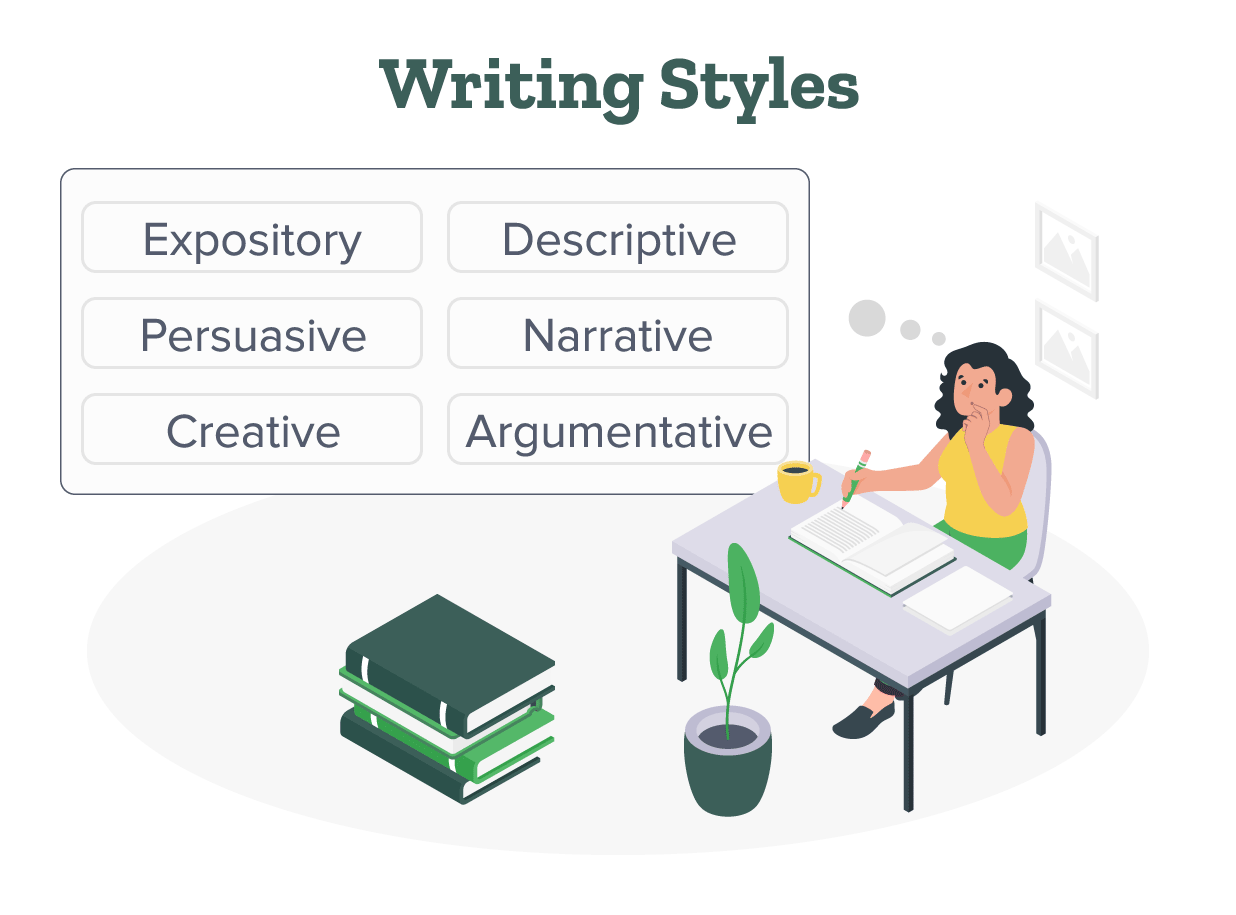
Here’s a list of the most common and important styles of writing:

  • Expository writing style
  • Descriptive writing style
  • Persuasive writing style
  • Narrative writing style
  • Creative writing style
  • Argumentative writing style

Let’s look at these different types of writing styles in depth!

Types of writing styles

We will explore the types and writing style examples to learn more about them. At the end of each writing style is a worksheet for your practice!

1. Expository writing style

Expository writing serves to inform, explain, or clarify ideas and concepts. Its primary goal is to deliver information clearly and concisely without the influence of the writer’s own opinions. This style of writing is foundational in academic and technical settings, where understanding and precision are paramount. 

It is used in writing expository essays, textbooks, business reports, manuals, and articles that aim to educate and inform the reader about a particular subject.

An example of expository writing style:

A journal article explaining the process of photosynthesis.

Photosynthesis is the remarkable biochemical process by which plants convert sunlight into chemical energy. It occurs in the chloroplasts, where sunlight and carbon dioxide are transformed into glucose and oxygen through a series of reactions. This process not only fuels the plant’s own growth but also sustains life on Earth by producing vital oxygen and forming the base of the food chain.

The article provides a straightforward explanation of how photosynthesis works without offering opinions or arguments.

Use this worksheet to practice expository writing style: 

Expository Writing Style Worksheet 

2. Descriptive writing style

The primary purpose of descriptive writing is to provide a detailed sensory experience for the reader. It uses rich and evocative language to describe the subject matter in a way that the reader can visualize or imagine vividly. Descriptive writing serves to immerse the reader in the scene or topic, allowing them to feel as if they are part of the setting or event being described. 

It is often used in fiction, poetry, journal entries, descriptive essays, and nature writing, as well as in certain types of journalistic and academic writing where detailed descriptions are necessary.

An example of a descriptive writing style: 

The description of a puppy.

The small puppy was fluffy, with fur as white as snow. Its bright blue eyes sparkled with curiosity as it playfully wagged its tiny tail. The soft jingle of its collar could be heard as it bounced around the sunny backyard, exploring every corner with excitement.

The description uses picturesque language to describe the puppy, making the reader imagine the experience of actually seeing the puppy.

Use this worksheet to practice descriptive writing style: 

Descriptive Writing Style Worksheet

3. Persuasive writing style

The purpose of persuasive writing is to convince or persuade the reader to agree with the writer’s point of view or to take a specific action. Persuasive writers use emotional appeals, logical arguments, and credible evidence to build their case. The effectiveness of persuasive writing lies in its ability to influence the reader’s beliefs or behaviors.

This style of writing is essential in law, advertising, political speeches, and opinion pieces.

An example of a persuasive writing style:

A speech advocating for climate change action.

Today, we stand at a crossroads. The evidence of climate change is undeniable, and its effects are devastating. We have the power to change this trajectory. By investing in renewable energy and reducing our carbon footprint, we can safeguard our planet for future generations. The time for debate has passed; now is the time for action.

The speech uses compelling language to convince the audience of the urgency of addressing climate change and suggests clear actions to be taken.

Use this worksheet to practice persuasive writing style:

Persuasive Writing Style Worksheet

4. Narrative writing style

Narrative writing serves to tell a story or to relay events in an organized, chronological manner. It is used to engage the reader by presenting a compelling tale, often to entertain, educate, or convey a particular theme or moral.

In addition to entertainment, narratives can be used to preserve history, as in the case of memoirs or biographies. It can also be used in narrative essays to share personal experiences in a relatable way or to explore complex ideas through literary devices.

An example of a narrative writing style:

A personal anecdote in a college application essay.

Back when I was eleven, a run-down piano in the community hall called out to me, its keys worn from years of neglect. Despite its decrepit state, I saw potential. Day by day, I cleaned and tuned it, and soon, my fingers danced across the keys, bringing life to melodies that had long been silent. That piano wasn’t just an instrument; it was my first step toward a lifelong passion for music.

The essay provides a narrative of personal growth and discovery centered around the piano, offering insight into the writer’s character and history.

Use this worksheet to practice narrative writing style:

Narrative Writing Style Worksheet 

5. Creative writing style

Creative writing’s purpose is to entertain, provoke thought, express feelings, and stretch the imagination of the reader. It’s a way for writers to express themselves creatively by talking about all sorts of human experiences, like wild adventures, deep thoughts, or trying out new ideas. Creative writing can help us understand what it’s like to be human, share stories that touch our hearts, or just give us a break from everyday life.

It includes genres such as fiction, poetry, drama, and other creative forms where the writer’s voice and style are integral to the work’s impact and appeal.

An example of creative writing style:

A short story opening in a literary magazine.

When Luna opened the antique locket, she didn’t expect to find the ocean. But there it was, a drop of the sea, trapped behind glass, its tiny waves crashing against the metal shores. As she peered closer, the sound of distant gulls filled her ears, and the scent of saltwater wafted through the air. Luna blinked, and for a moment, she was no longer in her grandmother’s attic.

This piece uses imaginative elements and detailed imagery to engage the reader and tell a story.

Use this worksheet to practice creative writing style: 

Creative Writing Style Worksheet

6. Argumentative writing style

The purpose of argumentative writing is to present a reasoned argument in favor of a particular position or point of view. This style of writing is analytical and persuasive. It requires the writer to clearly articulate their stance on an issue and support it with evidence, logic, and reasoning. Argumentative writing uses facts and logic, not emotions, to persuade. It encourages critical thinking by presenting multiple viewpoints and debunking opposing arguments.

Argumentative writing is critical in areas such as academic research, opinion-editorial pieces, argumentative essays, legal cases, and public debates.

An example of argumentative writing style: 

An editorial arguing for the preservation of historical buildings.

The city council must act now to protect our historic buildings. These structures are not mere edifices of brick and mortar; they are the embodiment of our community’s rich heritage and cultural identity. Critics may argue that development is essential for economic growth, but must progress come at the cost of our past? Surely, we can find a balance that honors both our history and our future aspirations. Preserving these landmarks is not a blockade to modernization—it is an act of respect for the narrative that has shaped us.

The editorial presents a clear argument for the preservation of historic buildings, addressing potential counterarguments about economic development and proposing a balanced solution. 

Use this worksheet to practice argumentative writing style: 

Argumentative Writing Style Worksheet 

Tips for adapting your writing style

  • Know your purpose:  Make sure you know what you want to accomplish with your writing.
  • Understand your audience: Adjust your style to fit the people who will read your writing.
  • Use appropriate language: Choose words that match your audience and purpose, whether that means using formal or informal language, technical terms, or simpler words.
  • Maintain Flexibility: Be ready to adjust your writing based on feedback and how well it’s working.
  • Practice Consistently: The more you write, the better you’ll get at adjusting your style naturally.

Adapting to a writing style will give an edge to your writing and make your work stand out. Remember, adapting your writing style is not about losing your voice; it’s about expressing your ideas most effectively for a particular context.

Whatever your writing style, always make sure to revise and edit your writing to keep it perfect. As experts in editing and proofreading services, PaperTrue can help you make your writing flawless and error-free!

Want to read more? Here are some articles for you:

Expert Formatting Tips on MS Word for Dissertations

Writing a dissertation is a monumental task, but formatting it properly in Microsoft Word doesn’t have to add to the stress. With a few key tips and tricks, you can easily set up your dissertation document to meet all the necessary requirements and create a polished, professional final product.

Get specialized formatting for your dissertation!

Here are 7 essential MS Word formatting tips to help you ace your dissertation in 2024:

1. Master footnotes and endnotes

Inserting footnotes and endnotes is a breeze in Word. Simply place your cursor where the note should go, head to the References tab, and click “Insert Footnote” or “Insert Endnote”. Expand the Footnotes section to access additional customization options for your notes.

2. Utilize cross-references

When referencing figures, tables, sections, or page numbers in your text, make your life easier by using Word’s cross-reference tool. This way, if anything gets renumbered, the in-text references will automatically update. You’ll find Cross-references under the Captions button on the References tab.

3. Apply the right citation style

Different fields and institutions require different citation styles like APA, MLA, Chicago, and more. Word has built-in tools to help you apply and customize styles. Select your text, go to the Citations & Bibliography section, and choose the appropriate style from the menu.

4. Create custom templates

Set up your dissertation template with the correct margins, styles, numbering, etc. and save it as a Word Template file. Then you can easily create new documents with all your presets ready to go. Modify the template and all new docs will reflect the changes.

5. Use master documents

Keep chapters as separate documents while working on them for easier editing and review. Then combine them into one master document at the end. In your first chapter file, place the cursor at the end, go to Insert > Text > Object > Text from File, and select the next chapter to append. Repeat for all chapters.

6. Add automatic page numbers

Word makes it simple to add page numbers in your chosen style, either throughout the document or section-by-section. Go to the Insert tab, open the Header & Footer section, click Page Number, and select your preferred options.

7. Generate automatic tables of contents

Once you’ve applied Heading 1, Heading 2, etc. styles to your chapter titles, headings, and subheadings, let Word do the rest. Place your cursor where the table of contents should appear, go to References > Table of Contents, and click the style you want. Customize headings to include via the Table of Contents options box.

By implementing these 7 essential formatting tips, you’ll be able to create a pristine, perfectly structured dissertation in Microsoft Word. For additional support, consider utilizing professional dissertation formatting services to ensure your document meets every requirement and is ready for submission.

After you’ve finished writing and formatting, academic editing and proofreading services like PaperTrue can provide an extra level of review, polishing your content and checking your adherence to formatting guidelines. With the right tools, tips, and support, you’ll submit a top-notch dissertation!

Here are some more useful resources for you:

What Is Copyediting and What Does a Copyeditor Do?

Ever wondered how your favorite books, articles, or website content stay so well-written? It’s all thanks to the hard work of copyeditors. Behind each well-crafted piece is the magic of copyediting! 

Let’s dive into the interesting world of copyediting together as we explore the meaning of copyediting, its types, and what a copyeditor does. So get your red pen (or virtual highlighter) ready as we uncover the secrets of copyediting! 

Get professional editing for your copy!

Let’s understand what is copyediting with an easy copyediting definition:

What is copyediting

Copyediting is the process of reviewing and refining written material to ensure clarity, coherence, consistency, and correctness. To some, this may seem a very basic definition of copy editing, but at its core, this is precisely the service undertaken by a copy editor.

While copyediting is largely mechanical in nature, it may incorporate some additional checks depending on the document being edited. Think of it as quality control where every punctuation mark is scrutinized to perfection. Copy editing is a prominent type of editing throughout various industries.

To understand the concept further, we will look at the types of copyediting along with their examples:

Types of copyediting

Substantive editing

A substantive edit under copy editing is a macro-review of the entire document for refined readability, consistency, style, and clarity. In this check, the copy editor goes through different sections and subsections of your document, considering it as a whole.

This is different from developmental editing, where an editor works with you to improve the intrinsic quality of your content. Developmental editing ensures that your content is of the highest possible value to your reader, while substantive editing ensures that it is easy to read and understand.

An example of substantive editing would be restructuring and editing a manuscript to improve the narrative flow or reorganizing the sections of a research paper for better coherence.

Line editing

Line editing involves restructuring sentences, smoothing out transitions, and refining language to enhance the reader’s experience. In this type of copyediting, the focus shifts to improving the flow, clarity, and overall readability of the text.

For instance, rephrasing complex sentences while editing a novel to make them more understandable or trimming redundant phrases in a book marketing brochure.

Mechanical editing

Mechanical editing is what people popularly imagine editing to be: marking up mistakes in grammar, incorrect spelling and punctuation, awkward phrasing, and run-on sentences. It gives you an error-free document that only requires proofreading before it can be published or submitted.

So how is copy editing different from proofreading? Both copy editing and proofreading check for mechanical errors in language, but copy editing is far more extensive than proofreading!

An example of mechanical copy editing is fixing grammatical errors in a manuscript or ensuring consistency in punctuation usage throughout a document.

Proofreading

This is the final stage of the editing process, focusing on catching typos, grammatical errors, and formatting inconsistencies.

For example, correcting spelling mistakes in a professional email or ensuring proper citation formatting in an academic paper.

Quick Quiz

Test your copyediting prowess with our fun quiz! Can you spot the errors in these sentences? 

  1. Their are many peoples who enjoy going to the park on weekends, but some prefer staying indoors.
  2. The companys new product line, which was launched last month, have received positive feedback from customers.
  3. She is taller then her sister, but she is not as taller as her brother.

What does a copyeditor do?

So, what exactly does a copy editor do? They meticulously pore over every word, sentence, and paragraph, armed with a keen eye for detail. Here is a glimpse of what they do:

Polishing prose

Copyeditors fine-tune the language to ensure clarity, coherence, and consistency. They fix grammatical errors, eliminate jargon, and rephrase sentences if required, to make the text shine.

Fact-checking

They verify the accuracy of the information, ensuring that all facts, figures, and references are correct and properly cited.

Style guide adherence

Copyeditors follow established style guides (such as APA style, Chicago style, or MLA style ) to maintain consistency in formatting, punctuation, and citation style.

Communication

They collaborate closely with authors, writers, and other stakeholders to understand their goals, preferences, and intended audience, ensuring that the final product meets their expectations.

Do you want to copy edit a text on your own or want to become a copy editor yourself? Here are a few simple tips you can use:

How to copy edit?

1. Start with a fresh perspective

Approach the text with fresh eyes, as if you’re seeing it for the first time. This helps you identify errors and inconsistencies more effectively.

2. Read aloud

Reading the text aloud can help you catch awkward phrasing, repetition, and grammatical errors that may have slipped under the radar.

3. Focus on the basics

Begin by checking for spelling, grammar, punctuation, and formatting errors. Pay attention to common pitfalls like misplaced modifiers, subject-verb agreement, and punctuation misuse.

4. Ensure clarity and coherence

Make sure the text flows smoothly and logically. Clarify ambiguous sentences, eliminate unnecessary repetition, and ensure that each paragraph transitions seamlessly to the next.

5. Fact-check

Verify the accuracy of names, dates, statistics, and other factual information. Cross-reference sources and citations to ensure credibility and reliability.

6. Check consistency

Maintain consistency in spelling, capitalization, abbreviations, and formatting throughout the text. Refer to style guides (such as APA Style, Chicago Manual of Style, or specific house styles) for guidance.

7. Trim extra words

Be ruthless when it comes to trimming unnecessary words, phrases, and paragraphs. Aim for clarity and conciseness without sacrificing the essence of the message.

8. Respect the author’s voice

While copyediting involves refining the text, it’s important to preserve the author’s unique voice and style. Avoid imposing your own writing preferences and respect the author’s creative choices.

9. Use tools wisely

Take advantage of technology to streamline the editing process. Language correctors, grammar checkers, and editing software can help identify errors and inconsistencies, but always use them as aids rather than replacements for human judgment.

10. Seek feedback

Don’t hesitate to seek feedback from peers, colleagues, or mentors. Fresh perspectives can uncover blind spots and improve the overall quality of the editing process.

In today’s digital age, the role of AI in copyediting is also gaining prominence. AI content editing tools can assist copyeditors by identifying common errors, suggesting improvements, and streamlining the editing process. However, human expertise and intuition remain invaluable in maintaining the artistry and nuance of language!

As experts in editing and proofreading services, PaperTrue can be your perfect partner in editing. Our team of expert editors will polish your text and make it ready for presentation!

Here are some more resources for you:

Best ChatGPT Prompts for Academic Writing (100+ Prompts!)

If you’re wondering about how to use ChatGPT for research, your search ends here! Browse through our 100+ ChatGpt prompts for academic writing. Whether you want to write an abstract, a literature review, or an introduction, these prompts will help. 

We’ve added practical prompts for writing the research methodology, experiments, results, discussion, and conclusion for your paper. With this, we’ve also included a bonus section of ChatGPT prompts for essays. So without further delay, let’s begin! 

Get your paper edited by skilled academic editors!

Best ChatGPT prompts for deciding the topic and title

1. Give examples of the new trends in Healthcare which can be interesting research topics for a research paper

2. Analyze if there are any gaps in the study of [Insert Topic name] and suggest potential research topics. 

3. Recommend topics to study [Insert topic name] using both, quantitative and qualitative research methodologies

4. Analyze whether the scope of the topic [Insert topic name] is broad enough and recommend related topics on which I can write. 

5. Compare the following topics and help me decide which is better, based on which topics have greater scope and relevance: 1) [Insert Topic 1 title] 2) [Insert Topic 2 title] 3) [Insert Topic 3 Name] 

6. Give 10 titles for the following topic based on the following topic idea and research purpose- [Insert data about the topic idea and research purpose] 

7. Provide 10 title suggestions based on the following research purpose and findings: [Insert data about the research statement and findings]. 

8. Give 5 alternatives for the following title without changing the meaning- [Insert the title]. 

9. Provide 5 title suggestions on the topic [Insert topic name] and include the keyword [Insert keyword] in all title suggestions. 

10. Analyze the following abstract and provide 10 title alternatives for the research paper based on the abstract- [Insert data about the abstract]. 

Best ChatGPT prompts for writing an introduction 

11. Provide a background on the topic [Insert topic name] to write an introduction of an argumentative paper which aims to [Insert data about aims] 

12. Give examples of how to make the following opening statement of the introduction more engaging- [Insert the opening statement] 

13. Describe how the research on [Insert research topic and aims] effectively fills a gap in existing research. 

14. Mention the previous research and important contributions of key researchers that cannot be ignored while writing a research paper that investigates ‘The impact of immigration on mental health’. 

15. For writing an introduction, determine what are the limitations of the research done using the following methods and tests- [Insert data about the research methods and tests]. 

16. Refine and make the language more concise for the following limitations of the research study- [Insert information about the limitations of the research]. 

17. Explain the importance and relevance of the research on [Insert research topic and aims] for writing an introduction on this topic. 

18. Tell me how I should include the following hypothesis in my research introduction for the topic [Insert topic name]- [Write down the research hypothesis]. 

19. Explain how I can give a brief overview in my research paper introduction of the following information:  [Insert information about what every chapter and section of the paper will describe]. 

20. Give an example of how to write an introduction for an empirical paper on the topic [Insert the topic name]. 

Using ChatGPT for research can also help you to write the perfect literature review. Let’s explore the next section to learn more! 

Best ChatGPT prompts for writing a literature review 

21. Provide the most important contributions by researchers on the topic [Insert topic name] that are highly relevant. 

22. Identify which themes and concepts about the topic [Insert topic name] are common and recurring. 

23. Tell me if there are any influential theories or studies that changed the direction of research related to the topic [Insert topic name].

24. Explain if there are any debates, controversies, and contradictions related to the topic [insert topic name].

25. Describe any trends and patterns about the topic ‘Tourism’ that must be included in the literature review for research that aims to study ‘The impact of pollution on tourism’. 

26. Determine if there are any gaps in literature and research related to the topic [Insert topic name] that need to be addressed. 

27. Tell me any important qualitative research that has been undertaken in the field of ‘Psychology’ related to ‘The role of race in educational psychology’ and name commonly cited researchers for this topic. 

28. Which are the quantitative researches already conducted to analyze [Insert research purpose]? 

29. Summarize the following contributions of researchers and include the most important contributions for a literature review on [Insert topic name]- [Insert data about other research conducted]. 

30. Give me a list of magazines, journals, databases, and academic research resources to find research related to [Insert topic name and aims]. 

31. Explain which theories and models are related and relevant to the following research question- [Insert the research question]. 

Browse through the next section and understand more about how to use ChatGPT to write a research paper. 

Best ChatGPT prompts for writing the research methodology 

32. Give a sample template of how to structure and outline the research methodology section and include the following data- [Insert all data about research methods used, tests conducted, software, tools and materials used, ethical considerations, and steps taken to eliminate biases]. 

33. Enhance and summarize the following data that explains the research purpose, primary research, and secondary research– [Insert information about the research aims, primary and secondary research]. 

34. Refine the information given below that explains how steps were taken to eliminate any biases during the research- [Insert data about the measures taken to avoid biases]. 

35. Give the advantages of the tests [Name tests] undertaken to analyze [Insert information about the dependent and independent variables analyzed]. 

36. Analyze the following data about the surveys conducted and the sampling methods and suggest how to include it in the research methodology section of an academic paper- [Insert data about the surveys and sampling methods]. 

37. Refine the language of the following information about qualitative methods like interviews, and focus groups- [Paste data about focus groups and interviews conducted]. 

38. Improve the language of the data given below that explains the ethical considerations involved in selecting the research methods- [Insert data about the ethical considerations]. 

39. Explain how the following information about experimental data gathered by manipulating variables can be included in the research methodology- [Insert information about the experimental data]. 

40. Tell me how to include the following information about the criteria used to select the research materials and the date range for the research methodology- [Paste data about the criteria used and the date range]. 

41. Help me to accurately describe the following new approach used to understand a gap in research on the topic [Insert topic name]- [Paste data about the new approach used]. 

Best ChatGPT prompts for the “Results” section 

42. Enhance the language of the following results, and make it more concise- [Insert information about the results]. 

43. Determine whether figures, tables, or graphs can be used to interpret the following results and which method will be the best-  [Insert data about results]. 

44. Analyze the following results and let me know in which order they should be presented in the results section of the academic paper- [insert information about the results]. 

45. Tell me if there are any ambiguous statements in the following results that could be interpreted differently and suggest how to rectify them- [Insert information about the results]. 

46. Give me simpler words for [“Insert the technical word”] and [“Insert the technical word”] to explain the following results: [Insert data about the results containing technical words] 

47. Proofread the following results and highlight any grammar and punctuation errors- [Insert data about the results]. 

48. Explain how should I objectively mention and present the following results that didn’t meet my expectations- [Paste data about the unexpected results]. 

49. Write the following results in the third person’s point of view– [Insert data about results]. 

50. Tell me how the following results can be written in tabular format- [Insert the results]. 

51. Give a template for how to write the results section in APA style

Best ChatGPT prompts to write the discussion section 

52. Interpret the following results and tell me their significance and implications- [Insert data about the results]. 

53. Enhance the language of the following limitations of the study- [Insert data about the limitations]. 

54. Compare the following results and findings with the existing research literature on the topic [Insert topic name]- [Paste information about the results]. 

55. Explain how the following methodological approaches affected the research outcomes: [Insert the methodological approach and outcomes]. 

56. Refine the language of the following information that explains unexpected and surprising findings of the research- [Insert information about the reasons behind unexpected research results]. 

57. Tell me how the following results are relevant in a broader context, for society and further research on the topic [Insert topic name]- [Insert information about the results]. 

58. Provide recommendations for policymakers, practitioners, and suggestions for future results by analyzing the following findings- [Insert information about the research aims and findings]. 

59. Analyze whether the following content for the discussion section has a logical flow and make suggestions to enhance the content flow- [Insert content written for the discussion section]. 

60. Make the language of the following content for the discussion section more clear, concise and eliminate any unnecessary repetitions- [Insert content written for the discussion section]. 

61. Tell me the practical applications of the following results- [Insert information about the findings of the results]. 

Now let’s see some of the best research writing prompts to write the conclusion! 

Best ChatGPT prompts to write the conclusion section 

62. Summarize the following findings of the research paper to write the conclusion on the topic [Insert topic name]- [Insert information about the findings]. 

63. Give examples of how should I start my research paper’s conclusion on the topic [Insert topic name]. 

64. Tell me how should I end my conclusion on a strong note by analyzing the following findings and implications- [Insert information about the findings and implications]. 

65. Give a sample template of how to write a conclusion for an empirical paper. 

66. Create a conclusion of [Insert word count] by analyzing the following findings, implications, recommendations for future research, and key takeaways. 

67. Tell me how should I write a conclusion of an argumentative paper on the topic [Insert topic name and research purpose]. 

68. Determine whether the guideline [Insert guideline] is well implemented in the following conclusion for the research paper- [Insert the conclusion of the research paper]. 

69. Review the conclusion for the topic [Insert topic name] and point out any word choice, syntax, sentence construction, and grammatical errors

70. Explain how I can briefly restate the main research question in the following conclusion for the topic [Insert the topic name]- [Insert the main research question]. 

71. Shorten the following conclusion, include the most important information, and ensure that the conclusion is not more than 300 words- [Insert the conclusion written]. 

Best ChatGPT prompts for creating an abstract 

72. Give me an abstract of 200 words based on the following information: 

  1. Research purpose statement- [Insert data about the research purpose statement]
  2. Research Methodology- [Insert data about the methodology]
  3. Research findings- [Insert data about research] 

73. Summarize the following content for the abstract, and ensure that it isn’t more than 250 words- [Paste content you’ve written for the abstract]. 

74. Give a sample abstract template to create an abstract in Chicago Style for a research paper. 

75. Analyze whether the APA abstract for the topic [Insert topic name] has clarity and suggest improvements- [Paste content about the abstract]. 

76. Identify whether keywords relevant to the topic [Insert topic name] have been included in the following abstract- [Paste content about the abstract] 

77. Suggest keywords relevant to [Insert topic name] which can be added to an abstract by analyzing the following data- [Insert information about the research purpose and findings]. 

78. Review the following abstract for any punctuation, grammar, and word choice errors- [Paste content about the abstract] 

79. Tell me how to include the following research hypothesis for the topic [Insert topic name] in the abstract- [Insert content about the research hypothesis]. 

80. Describe how to include the following research methodology in the abstract in a few words in an engaging manner- [Insert content about the methodology]. 

81. Analyze the following opening sentence of the abstract and provide suggestions of how it can be made more concise and engaging- [Insert the first sentence of the abstract] 

Want to write an engaging introduction? To make your introduction impactful, explore the following ChatGPT prompts for research! 

Best ChatGPT prompts to write the title page of the research paper 

82. Give a sample template of an APA title page on the topic [Insert topic name]. 

83. Create a sample title page that includes the title [“Insert title], Author’s name- [“Insert author’s name”], [Insert the department and university’s name], Instructor- [Insert Instructor’s name, [Insert Course name and number] and due date [Insert the month and year the assignment was submitted]. 

84. Give a template of an MLA title page that includes the main author [Insert the main author’s name], Co-authors- [Insert the co-author’s names], [write the course name and number], Submission date- [Mention the specific date] and the paper title [Insert the title]. 

85. Suggest how should I format the title page of a paper in the Chicago style with examples. 

86. Give a sample template of a title page on the topic [Insert the topic name], ensuring that the following university guidelines are followed- [Insert information about the university’s guidelines]. 

87. Tell me how to include the following author’s note on the topic [Insert topic name] in APA format- [Insert the author note]. 

88. Suggest how should I format my title page in MLA format using Microsoft Word

89. Provide a sample template of a title page in Chicago style with multiple authors who are affiliated with different universities. 

90. List any title page generators that can help me create a title page in MLA format. 

91. Explain all guidelines for creating a title page for a professional paper in APA format. Specify the placement of the page number, running head, title, authors, affiliations, author’s note, and any other relevant information. 

Now let’s see practical research paper prompts to create a References page! 

ChatGPT prompts for the “References” section 

92. Suggest how to format the references in APA style using Microsoft Word. 

93. Arrange the following references in alphabetical order as per the APA style guidelines and correct any errors-  

  1. Reference 1- [Insert reference entry]
  2. Reference 2- [insert reference entry] 
  3. Reference 3- [insert reference entry]

94. Analyze whether the following reference follows the MLA style guidelines- [Insert reference]. 

95. Tell me the guidelines for citing online books in APA with no DOI

96. List the best citation generators I can use to cite references for the topic [Insert topic name]. 

97. Give an example of a sample reference page template in MLA format. 

98. Explain how to cite a Ted Talk in APA format with examples. 

99. Create a citation for a video on Youtube with the title [Insert title], made by [Insert author’s name and initials], posted on [Insert the year, month date ], and URL [insert the video’s URL]. 

100. Suggest methods using which I can find the book [Insert book’s name] DOI for citing the book. 

101. Give a template for how to cite a dissertation in APA style. 

You can also use ChatGPT for academic research while writing an essay. Explore the next section to know more! 

Bonus! ChatGPT prompts for essays  

102. Give practical examples of how to start an essay on the topic [Insert topic name]. 

103. Analyze the argumentative essay and determine whether the essay has clarity and logical flow- [Paste essay]. 

104. Proofread the essay given below and highlight any sentence, grammatical, and word choice errors. 

105. Suggest credible academic resources, magazines, and journals I can use to research the essay topic [Insert topic name]. 

106. Provide a sample outline for writing and formatting an essay in APA format. 

107. Tell me how to enhance the essay conclusion given below and end the conclusion on a strong note- [Insert the essay conclusion]. 

108. Rephrase the following content for inclusion in a descriptive essay without changing the meaning- [Paste content for rephrasing]. 

109. Determine how more evidence can be integrated into the essay [Insert essay topic] to strengthen the argument [Insert what you wish to prove through the essay]. 

110. Tell me how to create a reference page for an essay in MLA format with examples. 

111. Give me the most relevant theories, models, and commonly cited research on the topic [Insert topic name] for writing an expository essay

Now that you know the best ChatGPT prompts for academic writing, you can use them. However, it’s important to exercise caution while using ChatGPT for research papers and cross-check the data received from ChatGPT. Instead of directly pasting the content from ChatGPT, it’s better to write the content in your own words to avoid detection by AI checkers.  

While ChatGPT’s research prompts can help you write your paper, they cannot provide in-depth feedback like what human editors provide. At PaperTrue, we provide expert editing and proofreading services along with in-depth feedback. We not only check your document for plagiarism but also review citations and enhance formatting. Whether you want to improve your essay, thesis, dissertation, lab report, journal article, research paper, or business paper, we can help! 

Here are some articles you might find interesting: 

100 Novel and Book Ideas to Start Your Book Writing Journey

Embarking on a writing journey requires a spark of inspiration and a dash of creativity. Whether you are looking to write your first book or your next bestseller, coming up with fresh ideas can often be challenging. 

This article presents you with 100 ideas for books and novels that will help you craft interesting stories! We have also given ideas for various genres, you can use as a starting point for your books and novels.

Get specialized editing for your story!

Creating a compelling book involves weaving together various elements like characters, themes, settings, plots, and climaxes. Here are some creative writing prompts and book ideas:

Book ideas: Characters

A character can be a good muse for your story. You can use the following ideas to create one character or different types of characters for your books: 

1. A retired private detective in her late sixties has begun to see the ghosts of unsolved cases. She’s witty, sharp-tongued, and has a soft spot for stray animals.

2. A teenage musical prodigy who discovers he can manipulate reality with his music. He struggles with his introverted nature and the pressures of fame.

3. Write about a brilliant but ethically dubious scientist who creates a machine that can extract memories. Her ambition is driven by a personal tragedy – the loss of her daughter.

4. A former soldier turned peace activist in a war-torn country, dealing with PTSD while trying to broker peace among factions.

5. An alien disguised as a human high school teacher, secretly goes to Earth. She judges humanity’s worthiness to join the intergalactic community. She’s compassionate but faces moral dilemmas about her mission.

Tip: To make your character development process easier, you can use character name generators like Reedsy, Hiveword, Writerbuddy, etc.

Book ideas: Themes

The theme of a story is the central element of its narrative. The novel ideas below are for story themes that will give a base to your story:

6. Forgiveness and redemption: Exploring the journey of characters who seek redemption for past mistakes and how they earn forgiveness from others and themselves. Characters will face inner turmoil, wrestling with guilt and shame as they strive to right their wrongs. 

7. Identity and self-discovery: This theme explores the process of characters discovering their true selves. It’s not just about figuring out their name or where they’re from, but also about understanding their beliefs, values, and purpose. Their environment, the challenges they face, and interactions with others all play a role in this journey of self-discovery.

8. The impact of technology on society: This theme delves into how advancements in technology can change the way societies function. It’s not just about gadgets and gizmos; it’s about how technology affects human relationships, how we interact with each other, and even ethical questions about what’s right and wrong in a world increasingly dominated by machines.

9. Survival against odds: Characters find themselves in extreme situations where the odds are stacked against them. It could be a natural disaster like a hurricane or earthquake or a societal collapse where the rules of civilization break down. 

10. Power and corruption: Explore the age-old adage that power corrupts. Whether it’s political power, financial influence, or just plain old authority, this theme examines how individuals are changed by the power they hold or are subjected to. 

Book ideas: Setting

A setting is the geographical location and the time when the story takes place. Settings give a sense of background that readers can understand, and you can use these book ideas for it:

11. Year 2087: A vibrant yet dystopian megacity where technology and human life intertwine with cybernetic enhancements and neon-lit streets.

12. The Forgotten Islands: A mysterious group of islands with ancient ruins, undiscovered creatures, and strange local customs, perfect for an adventure or horror story.

13. Sky city: A futuristic city above the clouds, is dealing with political intrigue, technological advancements, and the threat of aerial beasts.

14. Interstellar colony ship: A massive spaceship on a multi-generational journey to a distant planet, encapsulating a society with its own culture, problems, and class system.

15. Earth in Parallel worlds: Earth, but in a parallel universe where historical events have taken different turns, leading to an entirely different contemporary world.

Tip: Using setting generators like Donjon, Chaotic Shiny, Springhole, etc. will help you get fresh new ideas.

Book ideas: Plot

The book ideas below will help you create a powerful plot for your book or novel:

16. The heist of the century: A group of unlikely allies must steal a well-guarded technological device that controls the weather, only to find out that there are bigger stakes than they imagined.

17. The last game: A developer creates a game that is said to bring about the end of the world. Various forces seek to use it, destroy it, or ensure it’s completed.

18. The memory thief: A detective discovers that people’s memories are being stolen and sold on the black market. She must uncover the culprits before her own memories are targeted.

19. The gate between worlds: A portal to another world opens, and what comes out does not intend to go back. It’s up to a team of scientists and soldiers to stop the invasion and close the portal.

20. The cure: In a world devastated by a relentless virus, a young scientist discovers a potential cure but must navigate a treacherous journey to deliver it to the right hands.

Book ideas: Climax

Writing a climax first can also be an indirect way of creating a novel. You can weave a plot in such a way that it will end in your decided climax. Use these novel ideas for writing the climax:

21. The eclipse ritual: In a world where celestial events grant magical powers, the protagonist must complete a forbidden ritual during a rare solar eclipse to save the dying land. Meanwhile, the enemies converge to stop them, leading to a powerful showdown under the darkened sun.

22. The mind merge: In a futuristic setting where memories can be shared or stolen, the climax involves the protagonist voluntarily linking the mind with the antagonist in a psychic battle. This mental confrontation reveals hidden truths and traumas, ultimately leading to understanding or total destruction.

23. The galactic vote: An alien, fighting for humans, must address an intergalactic council, arguing humanity’s case. The climax occurs during her speech, interspersed with scenes of humans embodying the virtues she describes, swaying the council’s vote on Earth’s fate.

24. The collapse of the underwater city: As political tensions in the underwater city reach a boiling point, a critical structure fails, threatening to flood the city. The climax involves a frantic race against time for the protagonist and allies. They have to repair the damage while navigating through civil unrest and treacherous waters.

25. The symphony’s final note: During the world-ending symphony’s premiere, the composer and his allies must disrupt the event to prevent the apocalypse. The climax unfolds in a chaotic blend of music and magic, where the final note holds the power to either save or doom the world, depending on how it is played.

Tip: If you want a whole story to take inspiration from, that matches your ideas, you can use AI story generators. But remember that originally written stories will always have a human feel that readers will relate to more.

Now let’s explore innovative genre-specific book ideas!

Fantasy novel ideas

26. A world where shadows hold secrets and can be manipulated by a gifted few.

27. A reluctant prince must gather forbidden ancient texts to overthrow a corrupt council.

28. Two rival families control magical wellsprings, and their feud affects the entire realm.

29. A thief discovers a magical artifact that can alter time but at great personal cost.

30. Islands float in the sky, each with unique cultures and mysterious technologies.

Romance novel ideas

31. Two rival coffee shop owners fall in love despite their business animosities.

32. A time traveler and a Victorian lady must navigate their impossible love.

33. An artist falls for a mysterious patron who commissions her for private artworks.

34. Childhood friends to lovers on a road trip that reveals deep secrets.

35. A celebrity and a paparazzo are stuck together in a safe house.

Mystery novel ideas

36. A detective hunts a serial killer who uses ancient rituals to choose victims.

37. A cold case podcast leads to new clues in a decades-old disappearance.

38. Write about a reclusive writer whose death is ruled a suicide, but her notes suggest murder.

39. A series of crimes mimics events from a famous novelist’s books.

40. An amateur sleuth solves murder mysteries using her ability to talk to cats.

Horror novel ideas

41. A family moves into a house where the walls whisper at night.

42. A cursed mirror shows the viewer their death, and one teenager tries to change fate.

43. An explorer on an expedition to an abandoned island finds a cult that never left.

44. A small town is plagued by nightmares that manifest in reality.

45. A photographer captures ghosts on film in an old war zone.

You can get more creepy and bone-chilling book ideas from our article on horror writing prompts!

Dystopian novel ideas

46. A society where emotions are controlled by the state through daily injections.

47. After the oceans rise, new laws dictate who can and cannot live on the little land left.

48. A rebel discovers the truth about a virus that was supposed to save humanity from a disease.

49. A lone survivor in a city of automatons uncovers the fate of humanity.

50. Climate refugees struggle to build a new society in a floating city.

Comic book ideas

51. A superhero battles corporate espionage in a world powered by super-tech.

52. A group of kids with minor superpowers team up to tackle everyday crimes.

53. A retired hero mentors young rebels in a dystopian future.

54. A mystical artifact grants powers that its users struggle to control.

55. A monster disguised as a high school teacher protects students from underground threats.

Children’s book ideas

Writing a children’s book can be tricky but with these ideas, you’ll be well on your way to crafting creative children’s books!

56. A young witch mixes up her spells with humorous results.

57. A group of animals start a detective agency in the forest.

58. A child inventor creates gadgets that accidentally alter the weather.

59. A series of stories about a magical library where books come alive.

60. A young explorer travels the world in a homemade airship.

Graphic novel ideas

61. A bard travels to a war-torn land, using music to heal and inspire hope.

62. A black-and-white detective story set in a city where everyone has superpowers.

63. A historical epic about a forgotten princess reclaiming her throne.

64. An anthology of tales from a post-apocalyptic society rebuilding itself.

65. A scientist uses dreams to investigate crimes in a cybernetic metropolis.

More engaging book ideas to write about

66. A guide to surviving your twenties, filled with humor and advice.

67. A collection of essays on the impact of technology on human relationships.

68. A cookbook for fantasy foods inspired by popular novels.

69. A travelogue detailing a journey through hidden gems of the world.

70. A self-help book on mindfulness techniques for creative people.

71. Write a tale about a series of letters between two lovers separated by galaxies.

72. A magical realism story set in a city where everyone ignores the magic.

73. A historical drama about the builders of the first floating city.

74. A biographical novel about a forgotten inventor whose creations changed the world.

75. A sports drama about a retired athlete who coaches a ragtag team to victory.

76. An anthology of horror tales set in abandoned urban spaces.

77. A political thriller about a journalist uncovering a conspiracy involving renewable energy.

78. A psychological thriller about a psychologist whose patients start disappearing.

79. Craft a family saga spanning four generations, with a secret that could tear them apart.

80. A legal drama about a lawyer fighting for justice in a system rigged against her.

81. A cyberpunk story about hackers fighting to expose corporate corruption.

82. Write about a space opera about a fleet of starships on a dangerous diplomatic mission.

83. A treasure hunt novel set in ancient ruins submerged under the sea.

84. A guidebook for creating beautiful, sustainable home gardens.

85. A historical account of a lesser-known war that changed the course of history.

86. A series of biographies on women pioneers in science and technology.

87. A practical guide on how to start and run a small business in a digital age.

88. Craft a story where a character rediscovers their heritage through magical realism.

89. A thriller centered on a heist at a high-tech billionaire’s island.

90. A saga about the rise and fall of a powerful dynasty in an alternate historical setting.

91. A novel exploring the psychological effects of living in a utopia.

92. A deep-sea adventure uncovering ancient civilizations and their lost technologies.

93. A world where art is forbidden, and a group of rebel artists fight back.

94. Write a series about mythological gods trying to live normal lives in modern society.

95. A world where history is outlawed and one girl finds a forbidden book.

96. A detective can see the final 24 hours of a person’s life by touching an object they own.

97. A magical bus transports kids to different historical events.

98. Citizens must undergo a test to determine their career and status in society.

99. A pilot navigates a plane that unpredictably travels through time.

100. Create a story about a haunted hospital that was abandoned after a mysterious outbreak.

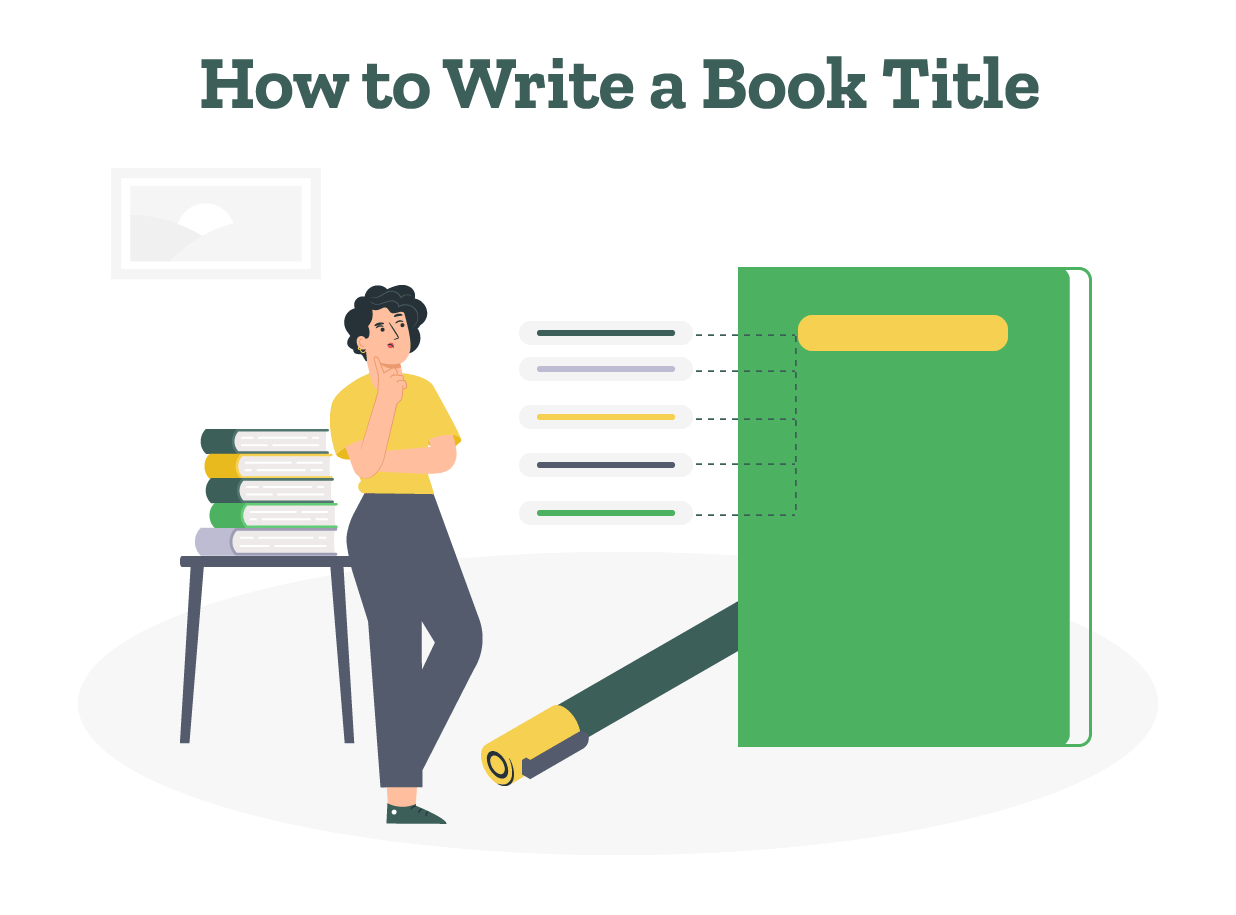
If you’re happy with your book idea but don’t know how to write a title for your book, you can take the help of book title generator tools. You can also use AI writers and book writing tools to manifest your book ideas into real books and stories.

Once you’re done writing your story, you can use book editing services to ensure that your book is error-free. Expert editing and proofreading services offered by PaperTrue can elevate your work from good to unforgettable. Our meticulous attention to detail ensures that your vision is clearly and effectively communicated, making your book ready to captivate and inspire your audience!

Want to know more book stuff? Have a look:

100+ Useful ChatGPT Prompts for Thesis Writing in 2024

While writing a thesis is challenging, we’ve made it easy for you! Browse through our 100+ best ChatGPT prompts for thesis writing. Whether you want to enhance your thesis abstract, introduction, literature review, or methods, these prompts will help! 

To help you refine important sections like the discussion, conclusion, and reference list, we’ve also included useful prompts. Want to perfect your thesis title page, acknowledgments page, and list of tables, figures, and abbreviations? Dive in to explore practical prompts and elevate your thesis! 

Finished writing your thesis using ChatGPT? Get it proofread by experts!

Here are the 101 best ChatGPT prompts for writing a thesis: 

ChatGPT prompts for your thesis title page 

1. List all the elements that are included in a thesis title page. 

2. Give a sample template of a thesis title page for a Master’s thesis with the following details: Title “Impact of Large Language Models on Modern Healthcare,” Author “Alex Johnson,” Supervisor “Dr. Linda Smith,” University “University of Technology,” and the submission date “September 2024.”

3. Craft a sample title page for a Master thesis that captures the essence of a creative writing thesis. The thesis title is “Voices from the Dusk: A Collection of Urban Poetry,” the author “Zoey Thompson,” the mentor “Prof. Jonathan K. Adams,” the institution “Iowa Writers’ Workshop, University of Iowa,” and the expected submission date “January 2025.”

4. Mention all the guidelines for formatting a thesis title page in APA format

5. Give an example of a sample title page template for the topic [Insert thesis title] with multiple authors like [First author’s name], [Second author’s name], [Third Author’s name], Supervisor- [Insert Supervisor’s name], [Insert the Educational Institution and Department’s Names], [Insert the degree’s program’s name], and the submission date: [Insert submission month and year]. 

6. Provide an example of how to format the title on the MLA title page. 

7. Explain how to create an MLA title page in MS Word. 

8. Describe where a copyright statement must be placed on the thesis title page and how it must be worded. 

9. If the university has multiple campuses, how should the specific location of the campus be indicated on the title page? 

10. List any additional elements that might be required on a thesis title page such as a co-advisor’s name, dedication, or any other elements. 

Note: If your university has specified a format like APA, MLA, Chicago, or other, you can specify the format in the prompt (for eg, in MLA format). 

ChatGPT prompts for the acknowledgments page 

11. Explain in detail how to write an acknowledgments page for a thesis. 

12. Provide tips on how to word acknowledgments for financial support in a professional manner. 

13. Give examples of how to thank external experts in a professional manner on the acknowledgments page in a thesis.

14. Give examples of how to recognize the support of friends and family in a professional manner in an acknowledgments page in a thesis.

15. Suggest how to keep research participants anonymous while writing an acknowledgments page for a thesis. 

16. Proofread the thesis and point out all errors in the following content for my acknowledgments page- (Paste your content). 

17. Shorten the following content for my acknowledgments page and make it more concise- [Paste content about acknowledgments]. 

18. Give examples of how to thank my supervisor [Insert supervisor’s name] in the acknowledgments section of a thesis. 

19. List any specific phrases and language conventions that can be used while writing formal acknowledgments for a thesis. 

20. Explain any pitfalls or common mistakes to avoid while writing an acknowledgments page for a thesis. 

Now let us see some of the best thesis prompts for making a list of tables, figures, and abbreviations. 

ChatGPT prompts for creating a list of figures, tables, and abbreviations 

21. Tell me which basic guidelines to follow while creating a list of figures, tables, and abbreviations for a thesis. 

22. Give sample templates for a list of tables, figures, and abbreviations in a thesis. 

23. Compile a list of the following tables for the thesis: 

1. Table 1.1: All Characteristic Traits, Page 3

2. Table 1.2: Personality Traits, Page 5.

24. Make a list of the following abbreviations for the thesis in alphabetical order: WHO: World Health Organization, NATO: North Atlantic Treaty Organization, UN: United Nations, ACLP: Association of Child Life Professionals.

 25. Create a list of the following figures for a thesis: Figure 1.1: Health organizations, Page number 10, Figure 1.2: Educational institutions, Page number 12, Figure 1.3: Industrial organizations, Page number 13.

26. Explain how to create a list of tables, figures, and abbreviations using MS Word

27. Should the list of abbreviations include acronyms only, or should it also include commonly used symbols in the thesis?

28. In cases where a table or figure is referred to by multiple names or has multiple aspects, how should it be represented in the list?

ChatGPT prompts for a thesis introduction 

29. Suggest how to make the following thesis introduction engaging for the topic [Insert topic name]. 

30. Correct any punctuation errors and check grammar in this thesis introduction – [Paste the thesis introduction]. 

31. Suggest how to define the following aims of my research in a better manner in my thesis introduction- [Paste sentences about the aims] 

32. Examine if the following methodological approach to address the research question is clearly worded and refine the language without changing the meaning- [Paste text about how you’ll investigate certain factors to achieve a particular result]. 

33. Suggest how I can enhance the following thesis statement and ensure better clarity- [Insert thesis statement] 

34. Shorten the following thesis statement, make it stronger, and include the most important information- [Insert content about the thesis statement]. 

35. Give the proper sequence of content to be followed while writing a thesis introduction. 

36. How can the introduction be used to demonstrate the relevance of the research to the field and broader societal issues for the topic “Industrial Psychology”? 

37. What are effective ways to transition from the introduction to the main body of the thesis?

38. Give more examples to help me understand how to make the following thesis statement more engaging and concise- [Paste thesis statement] 

After seeing these introduction and thesis statement prompts, let’s see how we can improve the literature review using ChatGPT! 

ChatGPT prompts for writing a literature review 

39. Give a brief overview of the research done on this topic [Insert topic name] and name the people who have made significant contributions to this research topic. 

40. List the commonly cited sources of literature on the topic [Insert topic name]. 

41. Describe any controversies or debates about the following research topic- [Insert topic name] 

42. Analyze and define what are the common themes and focus in all research conducted on this topic- [Insert topic name]. 

43. Provide information about the recent trends on the topic [Insert topic name] for a literature review. 

44. Describe how the research on the following topic addresses a gap in the literature that wasn’t given importance earlier- [Insert research topic and the main objectives of the research] 

45. Provide a list of databases and academic research resources like Google Scholar that I can use to include relevant information for my literature review on the topic [Insert topic name]. 

46. How can I avoid plagiarism while writing a literature review

47. What measures should be taken to maintain an objective and unbiased perspective in the literature review?

48. What strategies can be adopted to effectively conclude the literature review and transition to the next chapter? 

Now let us see ChatGPT prompts for thesis writing which can be used to enhance the Methods section. 

ChatGPT prompts for the “Methods” section in a thesis

49. Help me accurately describe the data collected by using the following methods in my thesis- [Insert data about methods]. 

50. Refine the following information about the participants in the research without changing the meaning- [Insert information about research participants] 

51. Organize the following data for a thesis from the most important to the least important about the materials used, methods, reasons for the methods used, and which tests were performed for research- [Insert data] 

52. Analyze if any important information is missing or if anything more can be added in the following content for the Methods section of a thesis- [Insert data] 

53. Analyze if the following content for the Methods section in a thesis  is well-organized and check the content for grammatical mistakes, discrepancies, and other errors- [Insert all content about the methods] 

54. Help me justify the use of the following research methods to answer the research question [Insert research question]- [Paste information about the research methods used.]  

55. Refine the following content about how the qualitative data was collected and analyzed- [Paste data about the methods used to analyze qualitative data]. 

56. Suggest how to improve the language about the following steps taken to eliminate and minimize biases during the research- [Paste content about the steps taken to eliminate and minimize biases] 

57. Analyze the following data about the variables involved, and how they were measured, and suggest how to include them in the Methods section of the thesis- [Paste content about the variables]. 

58. Tell me how to effectively describe the use of the following software, tools, and their features in the Methods section of a thesis- [Paste content about the software, tools, and their features]. 

Now let’s see the best ChatGPT thesis prompts for writing the results of your research. 

ChatGPT prompts for the “Results” section in a thesis 

59. Interpret the following results accurately- [Insert content about the results] 

60. Organize the following results in a table format for the Results section of a thesis. Write the first heading as Activity and include the words Sleeping, Working, Commuting, Exercising, and Leisure as separate vertical elements of the table. Write the second heading as Mean Hours and include the values 7.4 (1.2), 5.6 (1.8), 1.0 (0.5), 1.2 (0.8), and 2.5 (1.0 ) as separate vertical elements of the table.

61. I have realized that there is a correlation between [Name of variable 1] and [Name of variable 2]. Analyze the following data about this correlation and tell me how I should describe this correlation in the Results section of a thesis- [Paste content about the correlation between both variables]. 

62. Summarize the following statements about the results of my research without changing the meaning- [Paste content about the results] 

63. Explain how I can relate the following findings to the existing literature and research on the topic [Insert Topic name]- [Paste content about the research results]. 

The next section after the results is the discussion section. For this section, we’ve also included ChatGPT thesis prompts to shorten the content and provide a broader perspective on the findings. 

ChatGPT prompts for the “Discussion” section 

64. Explain the implications and significance of my research based on the previous research on the same topic and the following findings- [Paste content about the findings].  

65. Describe how the following unexpected insights and questions can be included in the discussion section for the thesis on [Insert Topic Name]- [Paste statements about the unexpected insights/questions]. 

66. Explain what other limitations of this research can be, by analyzing the following methods using which this research was conducted- [Paste content about methods by which this research was conducted] 

67. Refine the language of the following statements which highlight the limitations of this research- [Paste content about the limitations]. 

68. Summarize the following content for the discussion section and refine the language of the content- [Paste content for the discussion section]. 

69. Analyze the following findings of the research and recommend any future areas for research related to the topic [Insert topic name]- [Paste statements about the findings]. 

70. Explain if there are broader social, ethical, and global implications of the following findings- [Paste content about the findings]. 

71. Describe how the following findings can influence future policies, clinical practices, and educational approaches- [Paste content about the findings]. 

Now, let’s explore some ChatGPT thesis prompts to craft the perfect conclusion! 

ChatGpt prompts for the conclusion 

72. Tell me how to structure the conclusion for my thesis on the topic- [Insert topic name]. 

73. Provide all the basic guidelines and a sample template for writing a conclusion for a thesis for the topic- [Insert the topic name]. 

74. Suggest how the following thesis conclusion can be enhanced- [Paste the thesis conclusion]. 

75. Highlight any grammatical errors or other mistakes in the following conclusion for the thesis- [Paste Text] 

76. Analyze how the following research findings can be beneficial- [Insert statements about research findings]. 

77. Tell me what recommendations can I make for practitioners, policymakers, or other stakeholders in my conclusion based on the following data- [Insert statements about key findings]. 

78. Provide a strong closing statement for the topic [Insert Topic name] by analyzing the following conclusion- [Insert the conclusion] 

79. Suggest how should I acknowledge the limitations of my study in my conclusion- [Paste content about the limitations] 

80. Analyze the following data and determine which is the most important data that I must include in my conclusion- [Paste data about findings, limitations, and future research]. 

81. Shorten the following conclusion I have written and polish the language used- [Paste the conclusion written]. 

82. Provide information about how to format the thesis conclusion in APA format for the topic [Insert topic name]. 

83. Give more examples of how to write the significance of the following findings in my thesis conclusion- [Paste content about the findings]. 

Now let’s see how to use ChatGPT prompts for thesis writing for writing references! 

ChatGpt thesis prompts for the “References” section 

84. Give the format for how to cite a website in APA style

85. Explain and provide examples of how to cite books in APA style

86. Check if the following citation is correctly referenced according to the APA style, 7th edition- [Paste citation] 

87. Analyze whether the following citation for a newspaper article is accurately referenced according to the MLA format– [Paste Citation] 

88. Give examples of how to cite journal articles in MLA format to include in the MLA works cited page. 

89. Provide examples of how to cite Ted Talks and PPTs in APA format

90. Tell me how to cite essays and movies in MLA format

91. Examine if the following citation accurately follows the Chicago style guide– [Insert citation]. 

92. Give all guidelines for formatting a reference page in APA format

93. Provide an APA reference page template.  

Want to understand how to write a thesis abstract using ChatGpt? Browse through the following thesis prompts! 

ChatGPT prompts for creating a thesis abstract 

94. Give a sample MLA abstract template for a thesis of two paragraphs and not more than 200 words for the topic ‘Industrial Psychology’.

95. Provide suggestions to enhance the following abstract for the topic ‘Industrial Psychology’- [Paste abstract content] 

96. Analyze the following abstract written for the topic ‘Personality Development’ for any grammar errors and other mistakes- [Paste abstract content] 

97. Give examples of how to summarize the research methodology in an abstract for a thesis- [Paste content about the research methodology]. 

98. Shorten the content for the following abstract, include the most important matter, and ensure that the abstract is not more than 200 words- [Paste abstract content] 

99. Explain at what stage of thesis writing should a thesis abstract be drafted and give basic guidelines for formatting a thesis abstract. 

100. Are there any disciplinary differences in how a thesis abstract should be written, for example, between the sciences and humanities?

101. What tone and style of writing is most appropriate for a thesis abstract, and how formal should it be?

102. Summarize the main argument for the MLA abstract of my thesis by analyzing the following content- [Insert content about the main argument and purpose]. 

Now that you know the best ChatGPT prompts for thesis writing, you can use them. However, it’s important to exercise caution while using these AI tools as AI-generated content can be easily identified by AI detectors. Hence, it’s better to rephrase any AI-generated content in your own words. 

Once you’ve written your thesis, the next step is to thoroughly proofread and edit your thesis. While there are many AI-paraphrasing tools available, they aren’t as reliable as human editors who offer in-depth feedback. At PaperTrue, we provide expert thesis editing and proofreading services. Whether you want to get the citations checked, enhance your thesis structure, or format your thesis, we can do it for you! 

Here are some articles that you might find interesting: 

What Are Large Language Models and How They Work: Explained!

Large language models (LLMs) are revolutionizing the way we interact with artificial intelligence, particularly in the realm of writing and authorship. These advanced AI systems are not just changing the landscape for writers and authors but are also reshaping our understanding of language processing and generation.

With this article, we aim to illuminate the exciting world of LLMs for writers, authors, and anyone intrigued by the intersection of technology and language. Furthermore, let’s dive deep into what large language models are, how they work, and explore some of the best examples out there.

Elevate your content with expert editing services!

First, let’s understand the large language models’ definition:

What are large language models?

A large language model (LLM) is an advanced AI algorithm trained to understand, interpret, and generate human language. These models process vast amounts of text data to learn language patterns, nuances, and the complex structure of human communication.

Large language models are the engines behind many of the sophisticated AI writer tools, authors use today, from text prediction and content generation to more complex tasks like translation and summarization.

The idea behind naming Large Language Models.

Now that we’ve seen what are large language models, let’s try to understand how large language models work!

What are large language models used for?

Large language models are utilized across various sectors for their ability to understand and generate human-like text, significantly benefiting editing companies, proofreading companies, and formatting services. These models assist in refining content with high accuracy, offering valuable tools for enhancing the clarity, coherence, and overall quality of texts.

Additionally, AI resume builders leverage these models to craft personalized and professional resumes, while AI essay writers provide students and professionals alike with the ability to generate essays on a wide range of topics, ensuring both creativity and adherence to academic source standards. This versatility makes large language models indispensable in today’s digital landscape.

Working of large language models explained

How large language models work can seem like magic at first glance, but it’s all rooted in sophisticated technology and machine learning principles. 

These models are built on an architecture known as Transformers, which is designed to understand the context across long stretches of text. This means they can consider information from earlier in the text while working on a later part, allowing for the generation of content that’s both coherent and contextually relevant.

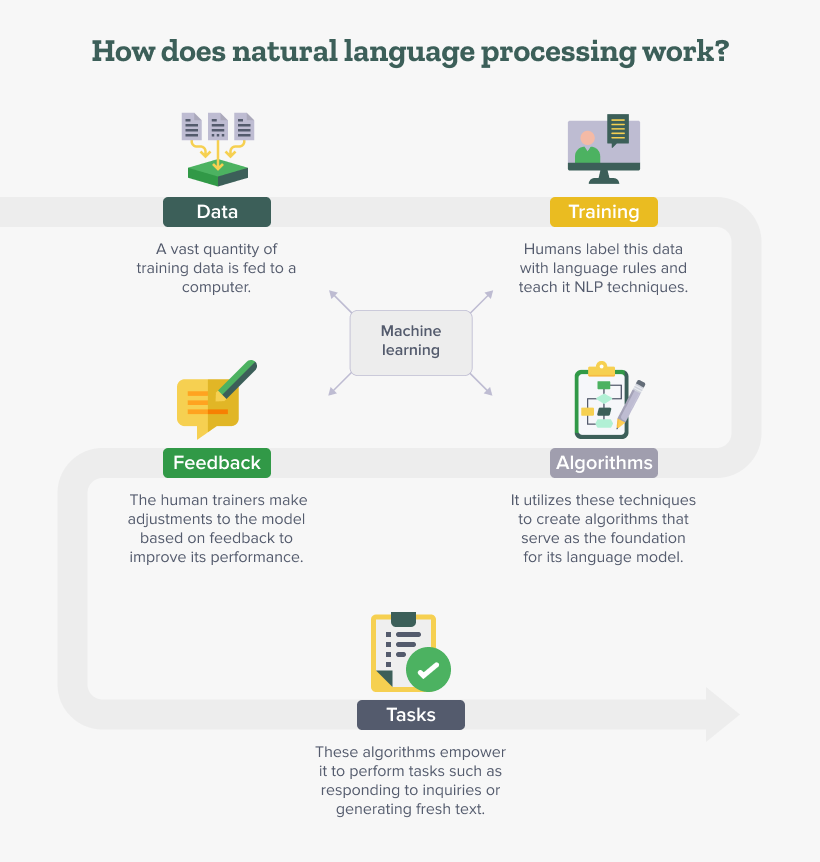
Training these AI large language models involves feeding them vast amounts of text, during which they learn to anticipate what word comes next based on the preceding context. As they process more data, they gradually get better at grasping the nuances of language, crafting text, and even tackling specific tasks like answering questions or summarizing information. This learning process enables them to mimic a deep understanding of language, making them incredibly versatile tools for a variety of applications.

Steps of how natural language processing works.

Exploring large language model examples will make you more familiar with the concept. In the next section, we will list down the 10 best large language models for you!

List of large language models

This list is a mix of paid and free large language models. 

1. GPT-4 (OpenAI)

As a frontrunner in the LLM space, GPT-4 is known for its versatility in generating human-like text, making it a favorite among writers and content creators. Its capacity for understanding context and generating relevant, coherent text on a wide range of topics is particularly beneficial for authors seeking inspiration or assistance in fleshing out their ideas. Using ChatGPT prompts for resumes, books, assignments, etc. makes the tasks like resume writing or novel writing very easy and quick.

2. BERT (Google)

BERT (Bidirectional Encoder Representations from Transformers) revolutionized the way machines understand human language. It focuses on the context of words within a sentence, rather than just the words themselves. Also, this model has significantly improved the performance of Google’s search engine, making it possible to get more accurate search results based on natural language queries. BERT can be used to enhance the performance of AI chatbots.

3. T5 (Google)

The Text-to-Text Transfer Transformer takes a unique approach. It converts all NLP tasks into a text-to-text format, enhancing its applicability across various tasks. For writers, T5 can be a powerful tool for creating summaries of their work or translating content into other languages, broadening their audience reach. Authors can also use this tool to create book summaries.

4. ELECTRA (Google)

This model is efficient in learning more from less data, making it a cost-effective option for many language processing tasks. Consequently, this makes ELECTRA particularly useful for authors working with niche topics where training data might be limited. 

5. RoBERTa (Facebook)

An optimized version of BERT, RoBERTa excels in tasks requiring deep contextual understanding, from sentiment analysis to content classification. 

6. XLNet (Google/CMU)

Outperforming BERT in many benchmarks, XLNet’s permutation-based training method offers a more comprehensive understanding of language context. For writers, this means more sophisticated content generation capabilities, especially in applications requiring a deep understanding of complex subject matter.

7. BART (Facebook)

BART (Bidirectional and Auto-Regressive Transformers) is a natural language processing (NLP) model developed by Facebook. By combining the strengths of both BERT and GPT, BART excels in text generation and comprehension tasks. It is ideal for summarization and translation. 

8. ERNIE (Baidu)

ERNIE (Enhanced Representation through kNowledge Integration) stands out by integrating world knowledge into its training, providing nuanced language understanding. It is a valuable asset for authors needing to incorporate specific factual content accurately in their work.

9. ALBERT (Google)

A lighter version of BERT, ALBERT offers comparable performance with significantly fewer parameters, making it efficient and scalable. Writers interested in deploying language models on less powerful hardware may find ALBERT an appealing option.

10. Megatron (NVIDIA)

Known for its sheer size, Megatron is designed for demanding computational tasks, pushing the boundaries of what LLMs can achieve. For research and development teams in writing and publishing companies, Megatron offers cutting-edge capabilities for analyzing and generating text.

These examples of large language models showcase the diversity and capability of LLMs in improving writing, research, and content creation. Each model has its unique strengths, making them suitable for various tasks, from generating creative writing content to understanding complex queries.

The world of large language models is vast and constantly evolving. It offers writers, authors, and content creators powerful tools to enhance their work. Whether you’re looking for inspiration, assistance in any type of editing, proofreading, translation, or help with plagiarism checking there’s likely an LLM that can meet your needs.

The journey into AI and language models is an ongoing one, with discoveries and advancements around every corner. For writers and authors, embracing these large language models means unlocking new realms of creativity and efficiency in your craft.

As experts in editing and proofreading services, PaperTrue is now leveraging the power of large language models and AI to provide AI-based editing services.

Keep on reading for more useful resources:

How to Write a Book Title (15 Expert Tips + Examples)

Want to write a perfect book title that immediately grabs attention? In this article, we’ve given 15  amazing strategies to create the perfect title. 

With this, we’ve also mentioned useful tools that can give thousands of book title ideas for your book. Whether you want a title for a fiction or nonfiction book, these tips and tools will help. So without wasting time, let’s dive into the details! 

Get professional editing for your book!

Top 15 strategies to write the best book title  

Here’s how to write a book title that readers love: 

1. Use unique or unusual words 

Some ways to do this are: use a thesaurus and combine two words to make a unique word (for e.g. Freakonomics, Spoonbenders). If your main character has a unique name, you can write the name as a book title (for e.g. Frankenstein, Oliver Twist). 

2. Utilize literary devices 

Some literary devices that you can use are: 

  • Alliteration- The same sound is repeated  (for eg, Gone Girl). 
  • Antithesis- Opposite ideas are expressed (for eg, War and Peace). 
  • Paradox- A phrase/ statement that contradicts itself (eg, The Sound of Silence). 
  • Onomatopoeia- Where sounds are used to create an effect (for eg, Boom, Roar, Tick Tock). 
  • Symbolism-  Symbolism is where words represent other concepts, people, or events. For example, To Kill a Mockingbird symbolizes how innocence and good are destroyed. 

3. Take inspiration from other titles and books 

You can research book titles in your book genre. If there is any popular phrase in any famous book/drama that reflects your story, you can list down book name ideas including that phrase. For example, the title The Fault in Our Stars is inspired by Shakespeare’s play Julius Caesar, which has a line, “The fault dear Brutus, is not in our stars, but in ourselves, that we are underlings.” 

If relevant, you can also refer to another famous book in your book title using clever wordplay. For example, the title, Tequila Mockingbird: Cocktails with a Literary Twist is a clever wordplay on the title To Kill a Mockingbird. Another example is the book titled Moby Duck which is a clever wordplay of the title Moby Dick

4. Use numbers to create an impact 

This is a useful strategy, especially for non-fiction books, though numbers can be used in fiction books as well. If you’re writing a book series, using numbers in the title helps in clarity. Some good book names with numbers are 1984, The 7 Habits of Highly Effective People, and The 48 Laws of Power.  

5. Ask a powerful question 

A question as the book title creates curiosity and can be a good strategy for mystery novels, educational children’s books, self-help books, and thought-provoking works. Some examples of such good book titles are: 

  • Where Are the Children? by Mary Higgins Clarke (mystery) 
  • What Color is Your Parachute? by Richard N. Bolles (self-help)       
  • Is Google Making Us Stupid? by Nicholas Carr (thought-provoking work)
  • Do You Know Which Ones Will Grow? by Susan A.Shea (educational children’s book)    

6. Leave room for interpretation 

This refers to creating titles that can have multiple meanings and interpretations. Some examples of book titles that can have multiple meanings are A Clockwork Orange and The Catcher in the Rye

If you’re wondering about how to name a book that has an intriguing plot, it’s simple. Browse through the next tip to understand better! 

7. Hint at the main plot/conflict in the title 

This strategy helps to hook readers to know more about the story. It is especially useful for thrillers, mysteries, and legal dramas. Some examples of good titles for books that reflect the main plot/conflict are: 

  • The Hunger Games by Suzanne Collins (thriller) 
  • The Secret of Shadow Ranch by Carolyn Keene (mystery) 
  • The Lincoln Lawyer by Michael Connelly (legal thriller) 
  • The Girl Who Drank the Moon by Kelly Barnhill (fantasy) 

If you’re doubtful about how to name your book that has references to traditions, and culture, you can try the next tip! 

8. Use cultural references in the title 

If relevant, refer to myths, legends, or cultural traditions in your book title. This makes the title engaging for readers. Some examples of great book titles that have cultural references are: 

  • Ram- Scion of Ikshvaku by Amish Tripathi 
  • Six Crimson Cranes by Elizabeth Lim 
  • The Song of Achilles by Madeline Miller 
  • Anansi Boys by Neil Gaiman

9. Invoke nostalgia among readers 

This strategy can be used when the book is about a particular era, or event which many people have experienced. Some examples of good book titles that invoke nostalgia are: 

  • Summer of ‘69 by Elin Hinderbrand 
  • The Andy Warhol Diaries by Pat Hackett 
  • The Warmth of Other Suns: The Epic Story of America’s Greatest Migration by Isabel Wilkerson 
  • Street Gang: The Complete History of Sesame Street by Michael Davis 

Still doubtful about how to write the title of a book? The next tip will make it simpler for you! 

10. Use book title generators 

Book title generators are advanced tools that can give you several book title ideas. Some of the popular title generators are Reedsy’s Book Title Generator and ToolBaz. You can compare the best book title generators to select the perfect one for your book. 

If you’re confused about how to come up with book titles for a light-hearted book, follow the next tip! 

11. Use humor if relevant 

If your book is lighthearted and funny, you can make the title humorous. Some examples of humorous book name ideas are: 

  • How I Stole Johnny Depp’s Alien Girl Friend by Gary Ghislain 
  • Plato and a Platypus Walk into a Bar: Understanding Philosophy Through Jokes by Thomas Cathcart 
  • This Little Piggy Went to the Liquor Store by A.K. Turner
  • Are You There, Vodka? It’s Me, Chelsea by Chelsea Handler 

12.  Consider the story’s central theme 

This is a useful strategy, especially for travel books, murder mysteries, and detective fiction. Some examples of book titles reflecting the central themes are: 

  • Around the World in Eighty Days by Jules Verne
  • Murder on the Orient Express by Agatha Christie 
  • The Curious Incident of the Dog in the Night-Time by Mark Haddon 
  • The Thursday Murder Club by Richard Osman 

Wondering about how to title a book that is related to a specific person or location? Use the next tip given below! 

 13. Use names in the title 

This strategy is good, especially for non-fiction books like biographies and autobiographies of prominent figures. In fiction, the names of places can be used in the title if the place is the setting of the story. Some examples are: 

  • The Little Coffee Shop of Kabul by Deborah Rodriguez 
  • I am Malala: The Girl Who Stood Up for Education and Was Shot by the Taliban by Malala Yousufzai 
  • Frida: A Biography of Frida Kahlo by Hayden Herrera 
  • The Little Paris Bookshop by Nina George 

If you want to know how to make a book title create an emotional impact, implement the next tip! 

14. Add powerful, emotive words 

By using powerful adjectives, verbs, and nouns in your title, you can attract the readers’ attention. Some examples of book names with power words are:

  • The Grapes of Wrath by John Steinbeck 
  • The Girl Who Kicked the Hornet’s Nest by Stieg Larsson 
  • I Know Why the Caged Bird Sings by Maya Angelou 
  • Brave New World by Aldous Huxley 

Want to create a unique, special title? Here’s how to come up with a book title that creates an impact. 

15. Use a fascinating quote as a title 

If a powerful quote conveys an emotion or a theme of the story, you can use it in your title. Some book title examples that are also examples of quotes are: 

  • And Thereby Hangs a Tale by Jeffrey Archer 
  • Something Wicked This Way Comes by Ray Bradbury 
  • The Fault in Our Stars by John Green 
  • The Sound and the Fury by William Faulkner 

Now that you know how to write a book title, you can begin brainstorming book names. You don’t need to Google: “How to write the title of a book?” After writing the title of the book, the next question is: How to format the title of a book? It’s simple! 

Here’s how to format a book title: 

  • Capitalize the title’s first word 
  • Capitalize all nouns, verbs, adjectives, and adverbs in the title. 
  • Italicize book titles when you are referring to specific works in an article. 

Once you’ve understood the basics of how to format book titles, you can format your book title properly. However, this is just the beginning of your publishing journey. The next steps will be to choose between traditional publishing vs. self-publishing and get your book professionally edited. 

As experts in editing and proofreading services, we’d love to perfect your work. We also provide other services like creating a book cover design, online book distribution, typesetting, book promotion, and securing an ISBN for your book. 

Here are some articles you find interesting: 

Top 10 English Correctors to Perfect Your Text in 2024

Want to perfect your document using the top free and paid tools? In this article, we’ve listed all the important features of the best English correctors. For paid English correctors online, we’ve also given the pricing. 

Several English correctors also provide additional features like paraphrasing, checking plagiarism, and inconsistencies in style. So without any delay, let’s explore in detail! 

Achieve error-free documents with expert editing services!

1. QuillBot 

The web page of QuillBot’s English corrector. 

QuillBot is a free software for English correction online. It thoroughly checks for spelling and grammar mistakes. It also points out any punctuation or word choice errors. 

It can review documents in US, Canadian, British, and Australian English dialects. You can download its Chrome extension for free to use QuillBot for checking documents. 

2. Grammarly 

The web page of Grammarly’s English corrector.

Grammarly is a popular, free software for English sentence correction online. It gives suggestions to rephrase complex and long sentences. With this, it also highlights any passive voice usage and recommends how to simplify sentences. 

Along with a grammar and spelling check, Grammarly also suggests synonyms for repetitive words. Its English text corrector also points out any incorrect capitalization and redundant words. With this, it also provides a readability score for your document. It has a premium version that costs $12 per month. 

3. ProWritingAid 

The web page of ProWritingAid’s English corrector.

ProWritingAid offers one of the best free English sentence correctors. Along with checking grammar, spelling, and punctuation, it also offers suggestions for rephrasing. The free version for English language correction also includes a Word Explorer and a thesaurus. You can find meanings and synonyms using this feature. 

A con is that its free version for English text correction has a 500-word limit. Its paid version provides unlimited grammar checks, 25+ writing analysis reports, and advanced suggestions for style improvements. It also has a paid version that costs $10 per month. 

4. Ginger 

The web page of Ginger’s English corrector.

Ginger is a simple and fast tool for English grammar correction online. By pasting your text, you can review documents in UK and US English. It has a free and a paid version for online English correction. Using Ginger’s free version, you can get 40 suggestions to rephrase your sentences. 

By opting for its paid, premium version, you can check and rephrase any unlimited sentences. The paid version for English writing correction costs $13.99 per month. 

5. Whitesmoke 

The web page of WhiteSmoke’s English corrector.

An effective tool for English sentence correction online, Whitesmoke easily integrates with Microsoft Word and Outlook. It functions on all browsers, Mac, OS, and Windows. Whether you want to rectify grammar errors, spelling mistakes, or remove repetitive words, Whitesmoke can help! 

It also detects any inconsistencies in style and performs a plagiarism check. With this, Whitesmoke also provides a translator and dictionary to enhance vocabulary. This corrector in English also has a premium version that costs $79.95 per year. 

6. LanguageTool 

The web page of LanguageTool’s English corrector.

LanguageTool gives recommendations to rectify any spelling and grammar errors. It also highlights any incorrect dates and inconsistent use of numbers. With this, LanguageTool’s English grammar corrector also points out any wrongly used tenses in the document. 

The paid version identifies subject-verb agreement errors, incorrect word combinations, and repetitive words. Using this English writing corrector, you can click on any sentence to paraphrase it. The premium version for online English correction costs $24.90 per month. 

7. Linguix 

The web page of Linguix’s English corrector.

Linguix is one of the top tools for English correction that you can use across all browsers. It highlights all grammatical, spelling, and word choice errors. It provides statistics on the text quality, words, characters, and reading time. With this, it offers a text quality score for the document. 

A con is that its free version for English correction online doesn’t scan longer texts. Along with a grammar checker, Linguix also provides AI-writing to rephrase your content. The paid version of this English corrector online costs $15 per month. 

8. Scribbr 

The web page of Scribbr’s English corrector.

Scribbr’s free English sentence corrector can scan your text within seconds It reviews your document for any grammatical, spelling, punctuation, and word choice errors. 

Scribbr also rectifies sentence fragments, run-on sentences, subject-verb agreement errors, and parallelism issues. It supports documents of UK, US, Canadian, and Australian English dialects. You can paste or upload the text for English text correction. 

9. Reverso 

The web page of Reverso’s English corrector.

Reverso is an efficient tool for English grammar correction online. It can scan 360 characters at a time for any errors. It can also identify spelling and style errors and rephrase the content. 

Reverso gives you the option to check documents in US or UK English. You can also use Reverso to get synonyms and conjugations of any verb. Its premium version for online English sentence correction costs 9.99 Euros per month. It provides advanced suggestions and unlimited use of its AI-paraphrasing tool

10. PaperRater

The web page of PaperRater’s English corrector.

PaperRater has an online proofreader where you need to paste/upload your text. After filling in all important details such as the education level, what type of paper you’re submitting, and whether you require a plagiarism check, click on the ‘Get Report’ option. PaperRater’s English text corrector will immediately grade your paper and give suggestions for revision. 

This tool also functions as an English grammar corrector and rectifies any misuse of tenses, articles, and capitalization mistakes. With this, it also provides suggestions for better word choice, correcting wrong spellings, and enhancing style. The best part- PaperRater’s tool for online English sentence correction costs nothing! 

Now that you know the top English correctors online, you can select the best one. However, these English correctors might not offer in-depth feedback and editing as human editors. At PaperTrue, we provide expert editing and proofreading services for your document. Whether you want to check essays, dissertations, assignments, research, or business papers, we can help! 

Here are some other articles you might find useful: 

How to Copyright Your Book?

If you’ve thought about copyrighting your book, you’re on the right path.

Explore more